Amir Mahmud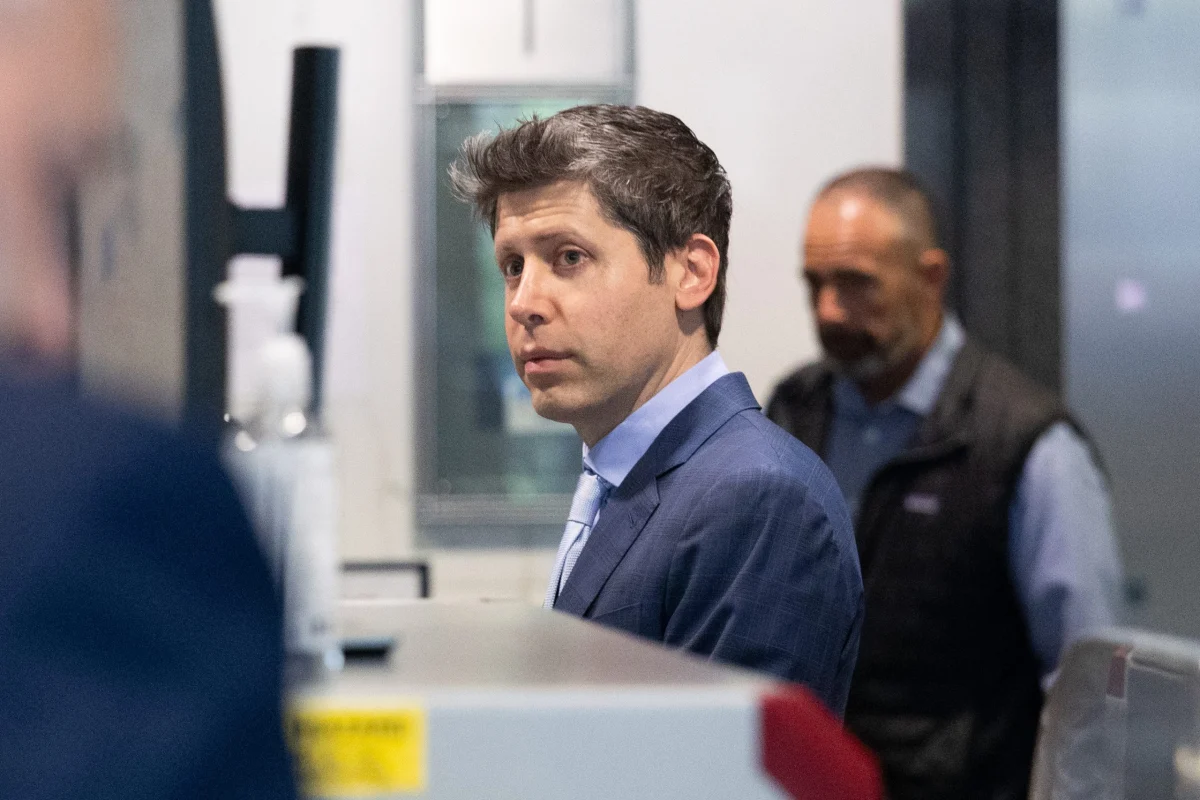
A pivotal legal battle is currently unfolding in a California federal court, casting a spotlight on the leadership and governance structure of OpenAI, one of the world’s most influential artificial intelligence companies. At the heart of this dispute lies the credibility of its chief executive, Sam Altman, whose past statements and recent corporate upheavals are under intense scrutiny. This courtroom drama, initiated by OpenAI co-founder Elon Musk, delves into fundamental questions about the balance between innovation, ethical conduct, and the foundational mission of organizations shaping the future of AI.
The Genesis of a Tech Titan and Its Shifting Mission
To understand the current legal skirmish, it’s essential to revisit OpenAI’s origins and its evolving corporate philosophy. Founded in late 2015 by a consortium of prominent tech figures, including Sam Altman, Elon Musk, and Ilya Sutskever, OpenAI was initially conceived as a non-profit research laboratory dedicated to advancing artificial intelligence in a safe and beneficial way for humanity. Its founding charter explicitly emphasized preventing AI from becoming an uncontrolled force and ensuring its widespread, equitable distribution rather than concentrating power in a few hands. This altruistic vision attracted significant talent and initial funding, with Musk himself contributing substantially.
However, the immense computational demands and specialized expertise required to develop advanced AI models soon presented a challenge to the purely non-profit structure. In 2019, OpenAI announced a significant shift, introducing a "capped-profit" subsidiary. This hybrid model aimed to attract the necessary capital and talent by offering investors a capped return, while theoretically maintaining the non-profit parent organization’s overarching control and mission-driven mandate. This structural change, while enabling rapid progress, also sowed the seeds of future disagreements, particularly with Musk, who argued it deviated from the original non-profit ethos.
The company’s profile exploded onto the global stage in November 2022 with the public release of ChatGPT, a generative AI chatbot that captivated millions with its ability to produce human-like text, answer complex questions, and even write code. ChatGPT’s immediate success underscored the transformative potential of AI but also ignited widespread debates about its societal implications, from job displacement and misinformation to ethical concerns and the urgent need for regulatory frameworks.
Congressional Scrutiny and Financial Disclosures
Against this backdrop of rapid technological advancement and burgeoning public discussion, Sam Altman found himself in the halls of Congress in May 2023. Testifying before a Senate judiciary committee, Altman engaged lawmakers on the critical subject of artificial intelligence regulation. During this session, Senator John Kennedy of Louisiana posed pointed questions regarding the potential for licensing advanced AI models and, notably, whether Altman himself might be qualified to lead a hypothetical federal AI regulatory agency.
Altman’s response, expressing his contentment with his current role, was met with a ripple of amusement in the hearing room. Senator Kennedy then pressed further, inquiring about Altman’s financial compensation and equity stake in OpenAI. Altman’s reply, "I’m paid enough for health insurance. I have no equity in OpenAI," was a categorical denial of direct ownership. Kennedy’s subsequent remark, "You need a lawyer," hinted at the complexities beneath the surface, a complexity now fully exposed in the ongoing litigation.
This seemingly straightforward exchange has become a central point of contention in the current legal proceedings. While Altman’s statement that he holds "no equity" in OpenAI is technically accurate in a direct sense, it failed to disclose an indirect but significant financial exposure. Altman, a seasoned investor known for his deep involvement in the startup ecosystem through his past role as president of Y Combinator, held a limited partner (LP) position in a Y Combinator fund that, in turn, had invested in OpenAI. This indirect financial link, though passive, provided him with an economic interest in OpenAI’s performance. When confronted with this detail in court by Steve Molo, the attorney representing Elon Musk, Altman acknowledged his LP position, asserting that the nature of passive ownership in venture funds is "well understood." However, Molo’s aggressive cross-examination sought to undermine Altman’s congressional testimony, questioning whether he believed Senator Kennedy, a legislator, was sophisticated enough to grasp such nuances without explicit disclosure.
The November "Blip" and its Aftermath
Altman’s credibility was further complicated by the extraordinary events of November 2023, often referred to as the "blip." In a dramatic turn of events that sent shockwaves through the tech world, OpenAI’s then-board of directors abruptly fired Altman as CEO and removed Greg Brockman as chairman, citing a lack of candor in his communications with them. This sudden leadership vacuum created immense instability, triggering an exodus threat from a vast majority of OpenAI’s employees, who declared their intent to follow Altman to a new venture if he was not reinstated. Major investor Microsoft, which had poured billions into OpenAI, also intervened, signaling its support for Altman.
The crisis culminated in Altman’s swift return to the company just days later, alongside a revamped board of directors. However, the reasons behind the initial ouster remain a point of intense debate and a significant focus of the current trial. Former board members Helen Toner and Tasha McCauley, who were part of the board that fired Altman, have testified under oath in the current proceedings, reiterating their concerns about Altman’s transparency. McCauley specifically referred to "a toxic culture of lying" within the company’s leadership. Altman, for his part, has offered a different perspective, suggesting that he doubts the stated reasons were the "full reason" for his termination and emphasizing the board’s quick request for his return.
This episode is crucial to Musk’s lawsuit, as it serves as evidence, in the plaintiffs’ view, that Altman’s personal influence over OpenAI had grown to such an extent that it superseded the authority of its non-profit board. The "blip" raises fundamental questions about the efficacy of OpenAI’s unique governance structure and whether the non-profit entity genuinely maintains control over its rapidly expanding, immensely valuable for-profit arm.
Legal Battle over Governance and Credibility
The lawsuit brought by Elon Musk seeks to compel OpenAI to revert to its original non-profit mission, alleging a breach of the foundational agreement. Central to Musk’s argument is the assertion that OpenAI has strayed from its initial commitment to open-source, beneficial AI for all, instead pursuing profit-driven ventures that potentially concentrate power and technology. The trial, therefore, is not merely a dispute over Altman’s personal truthfulness but a broader examination of OpenAI’s adherence to its stated purpose and its governance model.
During the ongoing proceedings, Molo, Musk’s attorney, presented a litany of accusations against Altman, including sworn statements from former board members Toner and McCauley, as well as testimony from Musk himself and OpenAI co-founder Ilya Sutskever, all alleging instances of Altman misleading or lacking candor. A recent New Yorker article detailing similar concerns about his honesty was also introduced as evidence. OpenAI’s legal team, however, has characterized these efforts as a "character assassination," arguing that little substantive evidence has been presented to advance Musk’s core case regarding the breach of contract.
Witnesses called by OpenAI and Microsoft have staunchly defended the company’s current structure and Altman’s leadership. Microsoft CEO Satya Nadella notably dismissed the November firing as "amateur city," underscoring the disarray it caused and the necessity of Altman’s reinstatement for the company’s stability. Bret Taylor, who assumed the role of OpenAI’s board chair following Altman’s rehiring, testified that his own investigation found no grounds warranting Altman’s termination and that Altman has been "forthright" with him. Dr. Zico Kolter, another board member focused on AI safety, affirmed that his work in this critical area has proceeded without interference since his appointment in 2024.
Yet, Taylor’s testimony also revealed the immense practical constraints faced by the board during the "blip." He conceded that the decision to rehire Altman was driven by the overwhelming reality that his continued absence would have effectively led to the dissolution of OpenAI, with most employees poised to follow him out the door. This revelation underscores the profound influence Altman wields and presents a significant dilemma for the jury and Judge Yvonne Gonzalez Rogers: Can a board truly exert disciplinary authority or even fire a CEO whose departure would effectively dismantle the company?
Broader Implications for AI’s Future
The outcome of this trial extends far beyond the personal credibility of Sam Altman or the corporate structure of OpenAI. It touches upon profound questions about how the most powerful technological advancements of our time will be governed, who will control them, and whether the initial ethical missions of AI development can withstand the pressures of rapid commercialization and immense market value.
The case highlights the inherent tension between the desire for open, beneficial AI and the practical realities of developing cutting-edge technology, which often demands significant capital, top-tier talent, and a competitive edge. The court’s ruling will inevitably influence future corporate governance models in the AI sector, potentially setting precedents for how non-profit and for-profit entities can (or cannot) coexist in such a high-stakes domain.
As the legal proceedings continue, the judge and jury are tasked with weighing not only the specific allegations but also the broader implications of their decision for an industry that is rapidly reshaping society. Altman, when asked in court about his trustworthiness, affirmed, "I believe I am an honest and trustworthy businessperson." Whether this assertion, and OpenAI’s current governance, will satisfy the court and the public remains to be seen, but the trial undeniably represents a critical moment in the ongoing discourse about AI’s future leadership and ethical stewardship.



 Azin Asro