Amir Mahmud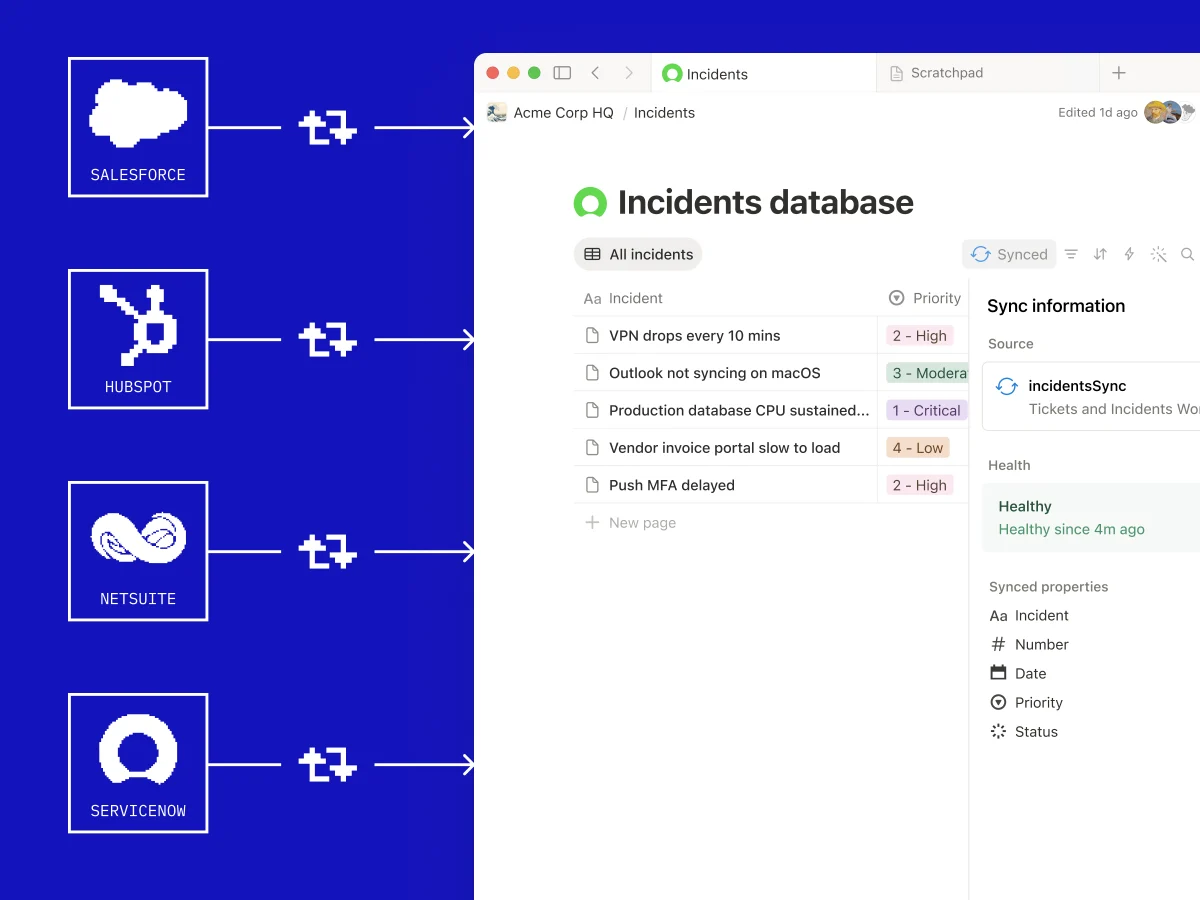
Notion, the popular productivity software company renowned for its versatile workspace and collaborative tools, has introduced a significant evolution in its platform, positioning itself as a central command center for artificial intelligence agents. This strategic pivot, unveiled during a recent live-streamed product announcement, marks Notion’s definitive entry into the "agentic era" of AI, where intelligent systems are designed not just to process information but to take autonomous actions across various applications and data sources. The new developer platform is engineered to extend the capabilities of Notion’s custom AI agents, facilitate seamless integration with external AI agents, and empower teams to construct sophisticated, automated multi-step workflows that can dynamically pull data from virtually any database.
Notion’s Evolution and the Rise of Agentic AI
For years, Notion has cultivated a reputation as an all-in-one workspace, a digital canvas where individuals and teams could organize notes, manage projects, build wikis, and collaborate on documents. Its strength lay in its flexible database functionality and its ability to adapt to diverse organizational needs, effectively serving as a customizable operating system for work. However, the rapidly advancing landscape of artificial intelligence has presented both challenges and opportunities for platforms like Notion. The initial wave of AI integration often involved chatbots or generative text features, enhancing content creation or basic information retrieval within an application.
The current shift, widely dubbed the "agentic era," represents a qualitative leap. AI agents are more than just smart assistants; they are designed to understand complex goals, break them down into sub-tasks, interact with various tools and data sources, and execute actions to achieve those goals with minimal human intervention. This paradigm promises to automate not just individual tasks but entire workflows, fundamentally changing how knowledge work is performed. Recognizing this profound shift, Notion began its journey into this space in February, when it first rolled out its "Custom Agents." These initial AI teammates were designed to handle repetitive, internal tasks within the Notion ecosystem, such as answering frequently asked questions from a knowledge base, compiling routine status updates, or automating simple internal workflows. The company reported a rapid adoption, with customers creating over one million custom agents since their introduction, underscoring the immediate demand for such automation.
However, these early agents, while effective for internal tasks, operated within a constrained environment. They lacked the ability to connect with external data repositories or execute custom, complex logic that extended beyond Notion’s native functionalities. Similarly, external AI agents that businesses might already be utilizing for specialized functions had no direct conduit to interact with the Notion workspace. This often forced teams to resort to cumbersome workarounds, such as deploying third-party automation platforms or developing their own custom scripts and maintaining dedicated infrastructure to bridge these gaps. This fragmented approach introduced inefficiencies and hindered the vision of a truly unified, intelligent workspace.
Ivan Zhao, Notion’s co-founder and CEO, acknowledged these historical limitations during the announcement, stating, "It’s true that, historically, Notion hasn’t been the most developer-focused platform. But things are changing." This statement signals a deliberate and significant strategic reorientation, moving Notion from primarily an application provider to a robust, programmable platform designed to be the nexus of a broader AI-powered ecosystem.
The Core of the New Developer Platform
The newly unveiled Notion Developer Platform is built upon an "orchestration layer" – a sophisticated system designed to coordinate and manage AI work across multiple tools, data sources, and human collaborators. This layer is the technological backbone that transforms Notion from an intelligent note-taker into a dynamic hub where humans and AI agents can seamlessly interact and collaborate. This architecture is crucial for handling the complexity of modern enterprise workflows, which often span dozens of disparate applications and datasets.
The platform introduces several foundational components that collectively enable this transformation:
-
Notion Workers: At the heart of the new platform are Notion Workers, a cloud-based environment that allows customers to deploy their own custom code directly within Notion. This secure sandbox environment ensures that custom logic can run without interfering with other systems, providing a controlled and robust space for development. Workers enable teams to achieve a wide array of functionalities, from synchronizing data from external systems into Notion databases to building highly customized tools that respond to specific business needs. They also facilitate triggering actions via webhooks, automated signals that initiate workflows when specific events occur in other applications. This eliminates the need for organizations to rely on external infrastructure or complex middleware to integrate custom functionalities, streamlining development and deployment. Notably, Notion also highlights the potential for AI coding agents to assist in writing this custom code, further lowering the barrier to entry for teams without extensive development resources. To encourage experimentation and adoption, Notion is making the use of Workers free through August, utilizing the same credit system as Custom Agents thereafter.
-
Database Sync for External Data Sources: A critical enhancement within the Notion Developer Platform is its ability to synchronize external data sources. Leveraging Workers, the database sync feature can pull live data from any third-party database that offers an Application Programming Interface (API). This means data from enterprise systems like Salesforce (CRM), Zendesk (customer support), Postgres (relational database), and countless others can be seamlessly integrated and reflected within Notion databases. This capability is transformative, allowing Notion users to maintain a single, up-to-date source of truth within their workspace, eliminating data silos and the inefficiencies of manual data transfer. As CEO Ivan Zhao articulated, this empowers users to "use your Notion database as a sheer canvas to power both your workflows and your agents," signifying Notion’s evolution into a dynamic, data-driven operational platform.
-
Custom Agent Tools: For scenarios where standard API connections or emerging protocols like MCP (Model Context Protocol – an evolving standard for AI tools to connect to external data and services) are insufficient, Notion allows developers to build agent tools with custom logic. This provides unparalleled flexibility for organizations requiring highly specific integrations or proprietary workflows that demand bespoke solutions.
Seamless External Agent Integration
Beyond enhancing its internal AI capabilities, Notion’s new platform significantly expands its interoperability with the broader AI ecosystem. A key feature allows users to directly interact with external AI agents they utilize, treating them as integral components of their Notion workspace. Users can chat with these external agents, assign them tasks, and track their progress, mirroring the experience of working with Notion’s native custom agents. At launch, Notion has announced support for prominent partner agents such as Claude Code, Cursor, Codex, and Decagon, with plans to continuously expand this list.
For organizations that have developed their own specialized internal AI agents tailored to specific company needs, the platform also provides an External Agent API. This allows enterprises to securely connect their proprietary AI systems with Notion, ensuring that their unique AI investments can contribute to the unified workspace environment. This level of integration is paramount for large organizations that often manage a diverse portfolio of internal and external software solutions.
Developers and agents interact with this comprehensive new Developer Platform primarily through the Notion CLI (Command-Line Interface), a powerful command-line tool designed for developers, available on Notion’s Business and Enterprise Plans. This CLI provides the necessary interface for configuring, deploying, and managing the various components of the platform, catering to the technical needs of enterprise IT teams and developers.
Strategic Implications and Market Dynamics
The launch of the Notion Developer Platform represents a profound strategic shift for the company. By transforming into a programmable platform rather than solely an application, Notion is moving to compete directly with established workflow automation platforms and increasingly, with enterprise AI solution providers. This positioning suggests a future where Notion aims to be the foundational infrastructure for modern, AI-driven knowledge work.
The market for workflow automation and enterprise AI is intensely competitive. Companies like Zapier have long focused on connecting disparate applications, while tech giants such as Microsoft, with its Copilot offerings, are deeply integrating AI into their ubiquitous office suites. Notion’s differentiation lies in its established flexible workspace paradigm, now augmented by a powerful, open, and developer-centric AI orchestration layer. This move allows Notion to capitalize on the growing business imperative to automate complex knowledge tasks and build sophisticated internal AI systems, presenting itself as a holistic solution that ties together agents, custom code, and live data within a single, coherent environment.
The social and cultural impact of such platforms is also significant. As AI agents become more deeply embedded in daily workflows, they promise to unlock unprecedented levels of efficiency, freeing human workers from tedious, repetitive tasks and allowing them to focus on higher-value, creative, and strategic endeavors. This shift, however, also brings challenges related to workforce adaptation, the need for new skills, and critical considerations around data governance, privacy, and the ethical deployment of AI.
The Future of Work with Integrated AI
Notion’s vision, as articulated by Ivan Zhao, is clear and ambitious: "Any data, any tool, any agent – that’s the big picture for the Notion Developer Platform." This statement encapsulates a future where the boundaries between applications blur, and a central workspace intelligently orchestrates information flow and task execution across an entire digital ecosystem. This move signifies Notion’s ambition to be more than just a productivity application; it aspires to be the essential connective tissue for the intelligent enterprise, enabling a new era of collaborative work where human ingenuity is amplified by the power of autonomous AI agents. As businesses continue to navigate the complexities of digital transformation, platforms like Notion’s Developer Platform will play an increasingly pivotal role in shaping the future of how work gets done.






 Azin Asro