Amir Mahmud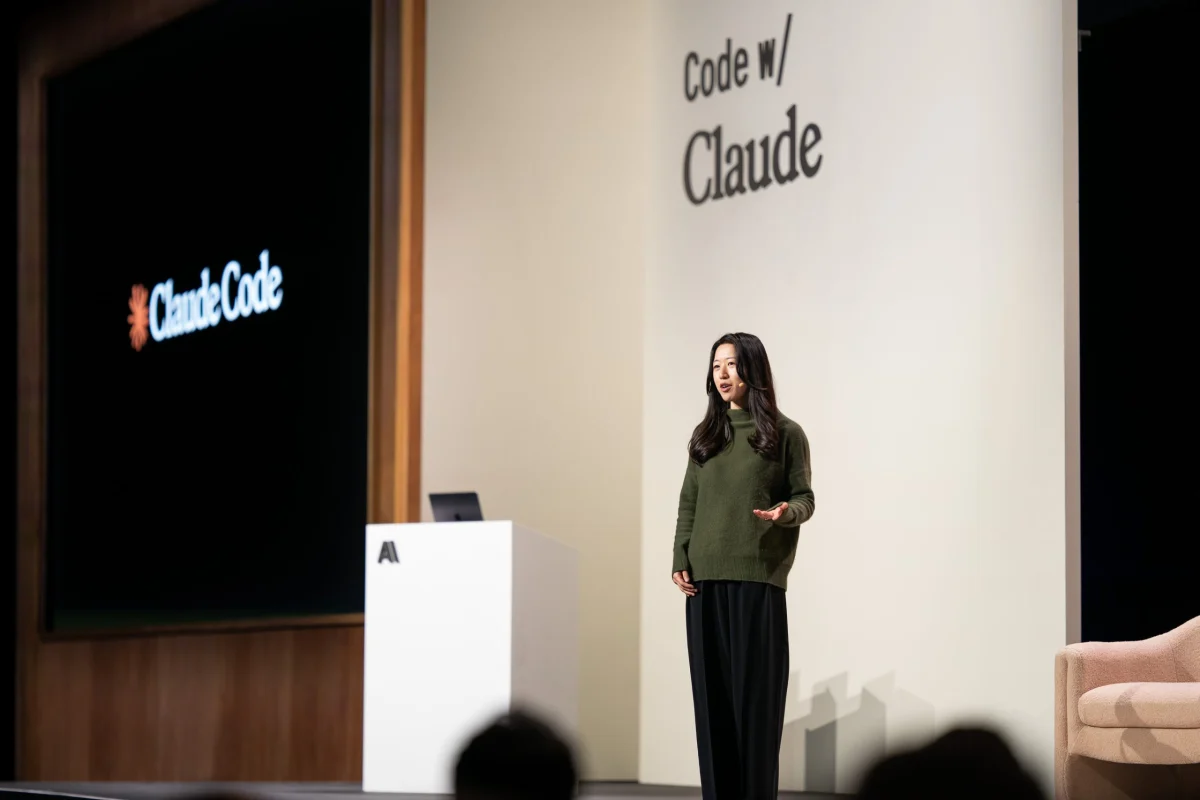
In an era defined by an intense focus on artificial intelligence models, Anthropic is charting an extraordinary course, rapidly solidifying its position as a formidable leader in the technological vanguard. The company finds itself on the precipice of potentially surpassing its closest competitor, OpenAI, as it pursues a massive funding round projected to value it at approximately $950 billion. This figure would place Anthropic ahead of OpenAI’s $854 billion valuation from its March round, underscoring a significant shift in the competitive landscape. Evidence of Anthropic’s growing influence is further demonstrated by recent reports indicating a clear preference for its Claude models among business customers, with the company quadrupling its market share in this segment since May 2025.
Central to this remarkable trajectory is Cat Wu, Anthropic’s head of product for Claude Code and Cowork. Since joining the company in August 2024, Wu has played a pivotal role in guiding Claude through a critical evolutionary phase, transforming it from a fundamental informational chatbot into a sophisticated coding tool and beyond. Her oversight of new feature development, often in collaboration with Boris Cherny, a core technical staff member and the architect of Claude Code, has earned the pair the notable moniker "Anthropic’s Batman and Robin," reflecting their instrumental contributions. Wu recently shared insights into Anthropic’s product strategy and her vision for the future of AI at the second annual Code with Claude conference in San Francisco.
Navigating the AI Frontier: A Competitive Landscape
The current technological landscape is undeniably dominated by artificial intelligence, with companies pouring vast resources into developing ever more capable models. This intense focus is fueled by the transformative potential of generative AI, which promises to disrupt industries, automate complex tasks, and unlock unprecedented levels of creativity and efficiency. The sheer volume of venture capital flowing into AI startups and established players alike signifies the perceived immensity of this opportunity. However, this fervent pursuit also creates an exceptionally competitive environment where differentiation and rapid innovation are paramount for survival and leadership.
Anthropic emerged from this competitive milieu with a distinct philosophical approach. Founded by former OpenAI researchers, the company has consistently emphasized AI safety, reliability, and interpretability, encapsulated in its "Constitutional AI" framework. This approach aims to imbue AI systems with a set of guiding principles, allowing them to self-correct and align with human values, thereby mitigating potential risks. This commitment to safety, alongside a focus on advanced reasoning capabilities, has become a key differentiator in a market increasingly concerned with the ethical implications and societal impact of powerful AI.
The race for market dominance is not merely about valuation; it’s about securing access to vital resources. Enormous funding rounds, such as the one Anthropic is undertaking, are crucial for attracting top talent, acquiring the immense computational power required to train large language models (LLMs), and forging strategic partnerships that can accelerate development and market penetration. While OpenAI, backed by Microsoft, remains a formidable force, Anthropic’s rapid ascent and growing preference among enterprise users signal a diversifying market where businesses are seeking alternatives that align with their specific needs and values, particularly regarding safety and control. The broader ecosystem also includes tech giants like Google with its Gemini models, Meta’s Llama series, and a myriad of specialized startups, all vying for a share of this burgeoning market, making "staying on the exponential" not just a goal, but a strategic imperative.
Relentless Pace: Anthropic’s Development Philosophy
When contemplating product strategy, many companies are inherently reactive, constantly monitoring competitors and adjusting their roadmaps. However, Cat Wu articulates a different philosophy for Anthropic, one rooted in an internal drive for perpetual advancement rather than external comparison. "The main thing that we design for is staying on the exponential," Wu explained, emphasizing the team’s ingrained belief that AI capabilities will continuously improve. This mindset, she posits, allows Anthropic to remain at the cutting edge. From an analytical perspective, this non-competitive stance can foster genuine innovation by preventing a "me-too" product development cycle, enabling the company to focus on groundbreaking research and unique solutions rather than merely catching up. Conversely, a complete disregard for competitors could potentially lead to missed market opportunities or a failure to adapt to evolving user expectations shaped by rival offerings. Yet, for a company operating at the frontier of AI, the argument for focusing on inherent technological progress rather than incremental competitive advantages holds significant weight.
The tangible manifestation of this philosophy is Anthropic’s rapid-fire model releases. The company unveiled at least six new models last year and has already launched nearly as many this year, a pace Wu hopes will continue. This aggressive deployment strategy is driven by the conviction that as models improve, their intelligence should be shared with users as quickly and safely as possible. This rapid iteration allows Anthropic to gather invaluable feedback, refine its offerings, and demonstrate continuous progress in an intensely dynamic field.
A notable example of Anthropic’s thoughtful deployment approach is the "Glasswing" initiative, launched in April. This program provided a select consortium of partner organizations, including industry titans like Amazon, Apple, CrowdStrike, and Microsoft, with early access to Mythos, Anthropic’s advanced cybersecurity model. Unlike many of its other models, Mythos was deliberately not released to the general public. This decision stemmed from Anthropic’s profound concern that the model, designed to scan codebases for software vulnerabilities, possessed a power that could potentially be weaponized by malicious actors. This cautious, controlled release highlights Anthropic’s commitment to its Constitutional AI principles, prioritizing the responsible and ethical deployment of powerful AI capabilities, even if it means foregoing broader market access in the short term. Such strategic decisions underscore Anthropic’s unique position in the AI race, balancing rapid technological advancement with a deep-seated ethical framework.
Redefining Workflows: The Era of AI Agents
The conversation around AI’s impact on work frequently conjures images of job displacement and automation. Cat Wu, however, offers a more nuanced and empowering vision for the future of professional environments: one where human "staff manag[e] fleets of agents." This perspective reframes the relationship between humans and AI from one of replacement to one of augmented collaboration. The immediate concern, naturally, is whether these agents will eventually become so adept that they eclipse human capabilities, "know[ing] the job better than the human."
Wu addresses this apprehension directly, asserting that effective agent management still necessitates human expertise. "I think it is extremely hard to manage agents if you can’t do the job yourself," she stated, underscoring that human managers will remain critical domain experts. She draws a compelling parallel between managing AI agents and managing human teams, highlighting the need to understand errors, clarify instructions, and debug performance issues. This implies a shift in skill sets, where proficiency in human-machine collaboration, critical thinking, and nuanced instruction-giving will become increasingly valuable.
From a broader societal and market perspective, this vision of AI agents could usher in an era of unprecedented productivity. The idea is not necessarily to "cut down on team size" but to amplify human output. Wu envisions AI agents taking on the "tedious" percentage of everyone’s job – tasks such as responding to routine emails, compiling standard reports, managing schedules, or performing data entry. By offloading these repetitive and time-consuming duties, individuals could be freed to focus on higher-level strategic thinking, creative problem-solving, and innovative projects that truly leverage human unique cognitive abilities.
The cultural impact of such a shift could be profound. A workforce less burdened by mundane tasks might experience increased job satisfaction, greater opportunities for skill development, and a renewed focus on purpose-driven work. New roles centered around AI oversight, customization, and ethical governance would likely emerge, further evolving the professional landscape. While concerns about job transformation and the need for continuous upskilling remain valid, Wu’s perspective offers an optimistic outlook where AI serves as a powerful enhancer of human potential, rather than simply a substitute. The challenge lies in ensuring equitable access to these tools and providing the necessary training for a workforce poised to embrace this new mode of collaborative intelligence.
Anticipatory Intelligence: The Proactive AI Leap
Looking ahead to the next six months and beyond, Cat Wu articulated Anthropic’s most exciting frontier: "proactivity." This concept marks a significant evolution in AI capabilities, moving beyond reactive responses and even scheduled automations to a state where AI anticipates user needs before they are explicitly articulated. It represents a paradigm shift in human-computer interaction, promising a more seamless and intuitive experience.
Wu outlined a clear progression of AI interaction:
- Past (last year): Synchronous Development. This involved direct, command-response interactions, where users explicitly prompted AI for information or actions.
- Present (now): Routines and Automation. The current stage sees AI handling repetitive tasks and setting up scheduled automations, such as automatically responding to customer support tickets or generating daily summaries. Users define the routine, and the AI executes it.
- Future (next step): Proactivity. This is where Claude truly understands the user’s work, context, and goals, and then proactively sets up relevant automations or offers assistance without being asked.
Imagine an AI that, based on your calendar, recent communications, and ongoing projects, autonomously gathers relevant documents for an upcoming meeting, drafts a preliminary agenda, or even suggests key discussion points. Instead of waiting for a prompt, the AI could flag a potential deadline conflict, propose a solution, or identify a new opportunity based on information it has processed. For a developer, a proactive AI might identify a recurring error pattern in their code, suggest an optimized function, or even integrate a new library that streamlines their workflow, all before the developer consciously recognizes the need.
The market implications of anticipatory AI are immense. It promises to unlock new levels of efficiency and personalization across industries, from healthcare (proactively suggesting preventative measures based on health data) to finance (identifying investment opportunities or risks) to personal assistance (managing daily tasks and reminders seamlessly). Such systems would integrate deeply into daily workflows, becoming indispensable digital partners.
However, the social and cultural impact of proactive AI also warrants careful consideration. While the benefits of reduced cognitive load and increased productivity are evident, concerns around data privacy and security intensify as AI gains deeper insight into our lives and work. Ethical considerations, such as algorithmic bias influencing proactive suggestions, and the potential for "over-automation" leading to a diminished sense of human agency, will become critical areas for development and regulation. Ensuring transparency in AI’s decision-making process and maintaining user control over anticipatory actions will be paramount to building trust and fostering widespread adoption. This shift demands a thoughtful approach to design, ensuring that AI serves as an intelligent co-pilot, enhancing human capabilities without diminishing human autonomy.
As Anthropic continues its rapid ascent in the highly competitive AI landscape, the vision articulated by Cat Wu underscores a profound evolution in how we interact with intelligent systems. From its foundational commitment to AI safety and its aggressive pace of model development to its forward-looking perspective on AI agents and the ultimate goal of proactive intelligence, Anthropic is actively shaping the contours of tomorrow’s technology. The journey towards AI that anticipates our needs before we even know them represents not just a technological advancement, but a fundamental rethinking of productivity, human-computer collaboration, and the very fabric of our digital existence. The coming years will undoubtedly reveal the full extent of this transformative potential, challenging us to adapt, innovate, and thoughtfully integrate these increasingly intelligent partners into our lives.




 Azin Asro