Azin Asro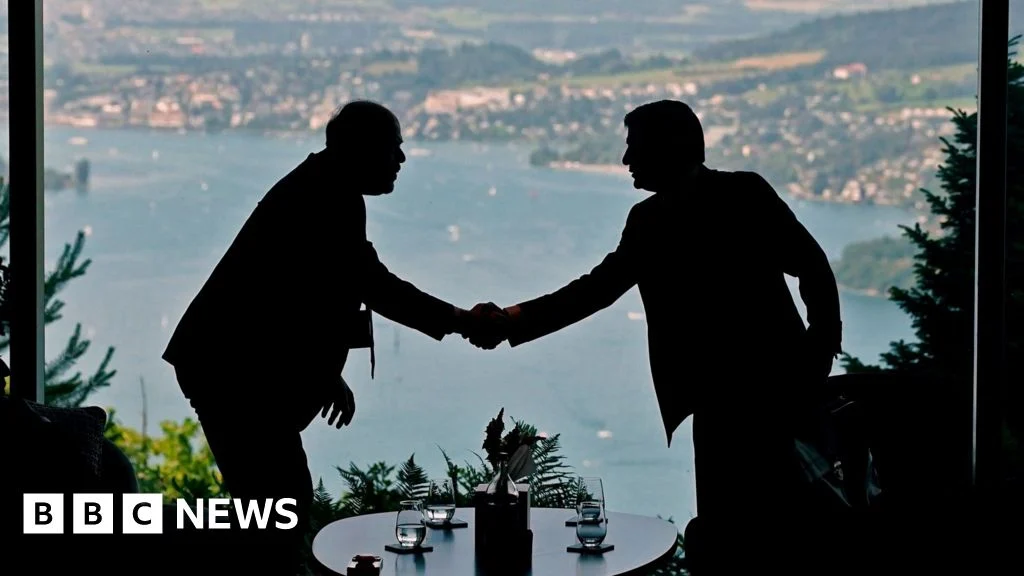
The inaugural round of high-stakes negotiations between the United States and Iran, aimed at de-escalating a recently intensified regional conflict and forging a lasting peace, has concluded with what mediators describe as "encouraging progress." Convening in Switzerland, representatives from both nations, facilitated by Qatar and Pakistan, have established a framework for a comprehensive resolution within the next 60 days, signaling a cautious but palpable shift in the fraught relationship between Washington and Tehran.
A Diplomatic Breakthrough in Lucerne
In a joint statement released early Monday, the mediating nations, Qatar and Pakistan, announced that a newly formed "High Level Committee" had successfully charted a definitive roadmap. This agreement follows an initial Memorandum of Understanding (MoU) signed just last week, which committed both sides to an immediate cessation of hostilities across "all fronts," specifically including the protracted conflict in Lebanon, and the critical reopening of the Strait of Hormuz. Iran’s Foreign Minister, Seyed Abbas Araghchi, publicly affirmed the substantial headway made, posting on social media that "Pakistani and Qatari mediation has delivered major progress to end Lebanon War." He detailed further concessions, including the waiver of oil and petrochemical export restrictions, the lifting of a naval blockade, the release of some frozen Iranian assets, and the launch of a significant reconstruction and development plan for Iran.
Iranian lead negotiators have since departed Switzerland, though technical discussions between the involved parties are slated to continue. A crucial outcome of these talks is the establishment of a "communication line" designed to preempt incidents and miscommunication, thereby ensuring the safe passage of commercial vessels through the strategically vital Strait of Hormuz. Furthermore, the parties agreed to the creation of a "de-confliction cell," involving the United States, Iran, and Lebanon, and facilitated by the mediating countries, with the explicit mandate to halt military operations in Lebanon. Araghchi characterized this innovative mechanism as the "first real test" of the nascent agreement’s efficacy.
The Genesis of a Renewed Conflict
These diplomatic overtures unfold against a backdrop of escalating military engagement, which the original Memorandum of Understanding sought to address. The "war on Iran," explicitly stated as having been mounted by the US alongside Israel on February 28, plunged the region into a direct military confrontation, marking a severe intensification of long-standing animosities. Lebanon was drawn into this wider conflict almost immediately, following the launch of rockets into Israel by the Iran-backed Lebanese armed group Hezbollah. These strikes were reportedly in retaliation for an earlier attack that tragically resulted in the death of Iran’s supreme leader. Israel responded forcefully, initiating a widespread bombing campaign across Lebanon and subsequently occupying approximately 5% of the country’s southern territory, aiming to push Hezbollah fighters away from its northern border. Israeli Prime Minister Benjamin Netanyahu has consistently maintained that Israeli forces would remain in southern Lebanon for as long as deemed necessary to safeguard northern Israel. Conversely, Hezbollah leader Naim Qassem has vehemently rejected any Israeli military presence, vowing that Hezbollah would defend itself against such occupation.
The human toll of this recent escalation has been devastating. Since March 2, the Lebanese health ministry reports at least 4,106 fatalities within Lebanon, a figure that does not differentiate between combatants and civilians. On the Israeli side, authorities have confirmed the deaths of 36 Israeli soldiers and four civilians. This tragic tally underscores the urgency of the current diplomatic efforts, aiming to halt the bloodshed and prevent further destabilization of an already volatile region.
The Strait of Hormuz: A Global Economic Chokepoint
Central to the discussions and a critical barometer of regional stability is the status of the Strait of Hormuz. This narrow waterway, connecting the Persian Gulf to the open ocean, is arguably the world’s most vital oil transit chokepoint. Approximately 20% of the world’s total petroleum consumption, and a significant portion of its liquefied natural gas, passes through this strait. Any disruption to its flow sends immediate tremors through global energy markets, leading to spikes in oil prices and creating profound uncertainty for international shipping and supply chains.
The initial MoU included a commitment from Iran to reopen the Strait of Hormuz, while the U.S. agreed to lift a military blockade on vessels traveling to and from Iranian ports. However, recent events highlight the fragility of these agreements. Following renewed clashes and Israeli air strikes in Lebanon, Iran announced on Saturday that it had closed the strait. This claim, however, was disputed by the U.S., with maritime tracking data from MarineTraffic indicating that vessels continued to enter, exit, and transit the waterway on Sunday. The agreement to form a "communication line" is thus a direct response to this high-stakes brinkmanship, seeking to institutionalize mechanisms for de-escalation and prevent accidental confrontations that could trigger a broader conflict.
Lebanon: A Nation Under Siege
The intensification of fighting in Lebanon following the signing of the initial MoU has cast a long shadow over the peace efforts. Despite the initial agreement to cease hostilities, an upsurge in fighting between Hezbollah and Israeli forces in southern Lebanon, coupled with Israeli air strikes, has resulted in dozens of Lebanese fatalities, including women and children, according to the health ministry. A new ceasefire between Israel and Hezbollah was declared on Friday, but the continued clashes underscore the deep-seated mistrust and complex web of grievances that plague the region.
The agreement to create a "de-confliction cell" involving the US, Iran, and Lebanon, mediated by Qatar and Pakistan, is a direct attempt to manage this localized conflict. Its success will be crucial not only for the people of Lebanon, who have endured decades of conflict and instability, but also as a demonstration of good faith and practical cooperation between the primary antagonists. The humanitarian impact of the conflict on Lebanon is profound, with widespread displacement, damage to infrastructure, and a deepening of an already severe economic crisis. A durable peace in southern Lebanon would provide much-needed relief and a chance for the country to begin a long process of recovery and reconstruction.
Economic Revival and Sanctions Relief
A major incentive for Iran to engage constructively in these negotiations is the prospect of substantial economic relief. The initial deal includes a commitment from the U.S. to terminate "all types of sanctions" on Iran, a measure that would significantly alleviate the crippling economic pressure Tehran has faced for years. Furthermore, the agreement outlines a $300 billion plan for Iran’s "reconstruction," along with the release of frozen assets. These measures, if fully implemented, could fundamentally transform Iran’s economic landscape, allowing it to reintegrate into the global financial system and revitalize its oil and petrochemical exports, which are vital to its national revenue.
For years, sanctions have severely hampered Iran’s ability to trade internationally, impacting its domestic economy and the livelihoods of its citizens. The promise of sanctions relief and a massive reconstruction package offers a compelling pathway out of isolation and economic hardship. However, the implementation of such comprehensive measures will require meticulous verification and a sustained commitment from all parties, particularly given the historical context of sanctions being reimposed after previous agreements.
The Unresolved Nuclear Question
While significant progress has been reported on regional conflicts and economic relief, the issue of Iran’s nuclear program remains a formidable obstacle yet to be fully addressed. The initial deal explicitly states that the nuclear program is "still to be negotiated." This is a critical point of contention, historically a flashpoint in US-Iran relations. The US lead negotiator, Vice-President JD Vance, articulated America’s core demand, stating that if Iran’s leadership was willing to cease being a "driver of regional instability" and abandon its "nuclear weapons ambitions for the longer term," then the US "is willing to fundamentally transform our relationship with that country." Iran, for its part, has consistently maintained that its nuclear program is exclusively for peaceful purposes, a claim met with skepticism by Western powers and regional adversaries.
The 2015 Joint Comprehensive Plan of Action (JCPOA), a landmark international agreement designed to prevent Iran from developing nuclear weapons in exchange for sanctions relief, serves as a recent historical precedent. The US withdrawal from the JCPOA under the previous administration and the subsequent re-imposition of sanctions severely eroded trust and led to Iran’s partial rollback of its nuclear commitments. Any new agreement on the nuclear issue will need to address concerns about verification, transparency, and Iran’s long-term nuclear trajectory, demanding robust international oversight and a significant leap of faith from all sides.
Navigating Political Headwinds and Future Challenges
The path to a comprehensive peace accord is fraught with political complexities and deep-seated mistrust. As the talks commenced in Lucerne, the specter of past rhetoric loomed large. Former President Trump, whose administration withdrew from the JCPOA and adopted a "maximum pressure" campaign against Iran, issued a stark warning. He posted that Iran "must immediately stop their highly paid PROXIES in Lebanon from causing trouble" and threatened to "hit Iran very hard again" if they did not. Iran’s lead negotiator, Mohammad Bagher Ghalibaf, swiftly dismissed these threats, retorting, "Don’t they think that if their threats had any effect, they wouldn’t be in this desperate situation today?… No matter how much they talk, it is we who take action." This exchange highlights the enduring animosity and the challenge of fostering a genuinely conciliatory environment.
The 60-day timeline presents both an opportunity and immense pressure. Reaching a final deal will require navigating not only the complex technical details but also significant political hurdles. Hardliners on both sides, skeptical of any compromise, will closely scrutinize every concession. The role of mediators Qatar and Pakistan is critical, as they offer neutral ground and leverage their diplomatic relationships to bridge seemingly insurmountable divides. Their success in brokering this initial "encouraging progress" demonstrates the potential for sustained diplomatic engagement to de-escalate even the most entrenched conflicts, offering a glimmer of hope for a region long plagued by instability and strife. The world watches, cautiously optimistic, as the next critical phase of these negotiations unfolds.






 Amir Mahmud