Azin Asro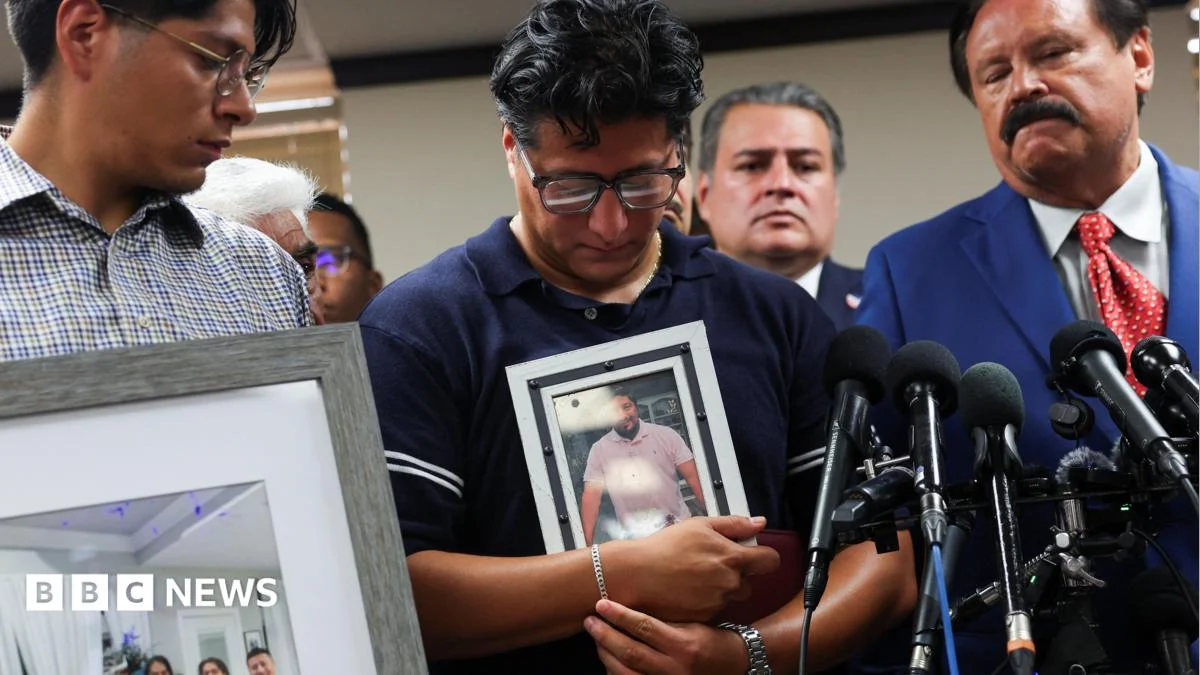
The fatal shooting of a man by U.S. Immigration and Customs Enforcement (ICE) agents in Houston has ignited a fierce debate over federal immigration enforcement practices, the use of force, and the critical absence of body camera footage in such incidents. Eliseo Salgado, a 52-year-old construction worker with no criminal record, was killed during an operation that federal authorities later confirmed did not target him, prompting widespread condemnation, protests, and calls for an independent investigation. This tragic event underscores persistent tensions between federal law enforcement and immigrant communities, while also spotlighting long-standing issues surrounding transparency and oversight in federal agencies.
The Fatal Encounter
The incident unfolded on a Tuesday morning when ICE agents initiated a traffic stop, believing they had identified an individual matching a surveillance target. According to a Department of Homeland Security (DHS) statement, which oversees ICE, agents had been monitoring an address for weeks and on the day of the shooting observed a white van with an occupant resembling their target. When agents attempted to stop the vehicle, DHS alleged that Salgado "attempted to evade arrest" and "rammed an ICE vehicle," leading an officer to "fire his weapon in self-defense." Salgado was transported to a local hospital, where he succumbed to his injuries.
However, this official narrative has been sharply contested by those who were with Salgado. Salgado, who had lived and worked in the Houston area as an undocumented migrant for three decades and was reportedly close to obtaining a work permit, was driving himself and three co-workers to a job site when the encounter occurred. The attorney representing the three co-workers present in the van with Salgado stated that their accounts directly contradict the DHS version of events. "All three of my clients reiterated that at no point was there ever an agent standing in front of the vehicle, nor was an agent ever placed in the line of danger," the attorney asserted, challenging the self-defense claim. Salgado’s sons have also publicly disputed the federal agency’s description of the incident, further deepening the controversy and raising questions about the sequence of events.
The Absence of Body Camera Footage
A significant aspect fueling public mistrust and complicating investigations is the acknowledgment that the ICE agents involved in the shooting were not equipped with body cameras, and no images or videos from the incident have been released. This lack of visual evidence leaves a critical void in understanding the precise moments leading to Salgado’s death, forcing investigators and the public to rely solely on conflicting verbal accounts. A DHS spokesperson confirmed that only half of its field officers were currently outfitted with body cameras, with the remaining half expected to receive them within the next 60 days.
The absence of body cameras on federal agents during critical incidents has been a recurring point of contention for years. While many local police departments across the United States have adopted body-worn camera programs to enhance transparency and accountability, federal agencies have been slower to implement such mandates. Proponents argue that body camera footage provides an objective record of events, protecting both officers from false accusations and the public from potential misconduct. In cases of disputed narratives, like Salgado’s shooting, the lack of footage significantly hinders efforts to establish a clear and undisputed timeline of events, often contributing to a perception of opacity and impunity.
Broader Context of Immigration Enforcement
The incident in Houston unfolds against a complex backdrop of U.S. immigration policy and enforcement, particularly concerning ICE’s role. Created in 2003 as part of the Department of Homeland Security in the wake of the September 11th attacks, ICE’s primary mission is to enforce federal immigration laws. This includes identifying, apprehending, and deporting non-citizens who violate immigration laws. Over the years, ICE has been at the center of numerous controversies, especially concerning its enforcement tactics, detention conditions, and use of force.
Texas, sharing a long border with Mexico, is a focal point for immigration enforcement activities. The political climate surrounding immigration has become increasingly polarized, with robust enforcement often clashing with humanitarian concerns and immigrant rights advocacy. For individuals like Salgado, who had lived in the U.S. for decades, building a life and contributing to the economy, the risk of apprehension and deportation is ever-present, even as they navigate complex pathways toward legal status. His story highlights the precarious existence of many undocumented immigrants, who often live in the shadows while being integral parts of American communities and the workforce.
This shooting also echoes a broader historical pattern of deaths occurring during federal immigration operations. The Associated Press reported that Salgado is at least the eighth person to die during immigration operations overseen by the Trump administration, yet no immigration officers have been charged in these deaths. This track record further fuels concerns among advocates and lawmakers about a perceived lack of accountability within ICE.
Calls for Independent Investigation and Accountability
The death of Eliseo Salgado has provoked strong reactions, leading to protests in Houston, the most populous city in Texas, and calls for a thorough, independent investigation. Four Democratic members of Congress—Sylvia Garcia, Al Green, Lizzie Fletcher, and Christian Menefee—penned a letter to the head of DHS, condemning the incident and demanding accountability. They asserted that this was "not the first time ICE agents have used unnecessary, deadly force," drawing parallels to previous cases. Specifically, they referenced the deaths of Renee Good and Alex Pretti, two U.S. citizens killed by federal agents in Minneapolis in January, highlighting a pattern of concern regarding federal agents’ use of force.
The lawmakers’ letter also criticized DHS and ICE for what they described as a recurring narrative in such incidents. They wrote that "instead of answers and accountability, DHS and ICE released a statement echoing the same stories we have heard before, claiming an evasion of arrest, weaponization of a vehicle, and that the fatal shooting was a result of self-defense." This sentiment reflects a broader public and political frustration with what is often perceived as a lack of transparency and a predetermined official stance in federal use-of-force investigations.
Jurisdictional Complexities and International Response
The investigation into Salgado’s death is multifaceted, involving several federal and local entities, yet it is complicated by jurisdictional limitations. The Office of Inspector General for DHS, an internal watchdog agency, has initiated an investigation into the shooting death. Concurrently, FBI Houston is leading a separate investigation into the potential assault on a federal law enforcement officer, a standard procedure when federal agents claim self-defense.
However, local law enforcement’s role is restricted. Houston Police Chief Noe Diaz, while offering HPD resources to support the investigation at the request of the Houston mayor, clarified that federal law limits the independent jurisdiction of local law enforcement over federal agencies or personnel acting in their official duties. This legal framework often means that local police departments, which are typically the first responders to such incidents, cannot conduct their own parallel criminal investigations into federal agents, potentially creating a perception of an incomplete or biased inquiry from the local community’s perspective. The challenge lies in ensuring transparency and thoroughness when the investigating bodies are either internal to the federal system or focused on specific aspects of the incident that may not encompass the broader questions of excessive force.
The incident has also escalated to the international stage. In the wake of Salgado’s death, the Mexican government announced its intention to file criminal complaints in the U.S. regarding the deaths of more than a dozen of its citizens in U.S. custody or during ICE operations. Mexican Foreign Minister Roberto Velasco stated that 14 Mexicans had died while in ICE custody and another three during ICE "arrest operations," including Salgado. He indicated that President Claudia Sheinbaum had instructed him to file these complaints with the aim of ensuring these deaths are investigated "as criminal matters." This diplomatic action underscores the serious social and cultural impact of such incidents, straining relations between the two countries and reflecting a deep concern for the welfare of Mexican nationals within the U.S. immigration system.
The Path Forward for Transparency
The death of Eliseo Salgado serves as a stark reminder of the high stakes involved in immigration enforcement and the urgent need for greater transparency and accountability within federal agencies. The conflicting accounts, coupled with the critical absence of body camera footage, highlight systemic challenges that demand immediate attention. As federal investigations proceed, the clamor for an independent review and concrete policy changes, particularly regarding body camera mandates for all federal agents and clear guidelines on use of force, will likely intensify. The outcome of these investigations and the subsequent policy responses will not only shape the future of immigration enforcement but also profoundly impact public trust in federal law enforcement and international relations with countries like Mexico. The tragic loss of Salgado’s life has undeniably propelled the long-simmering debate over federal accountability into the national spotlight, demanding a renewed commitment to justice and clarity.




 Amir Mahmud