Amir Mahmud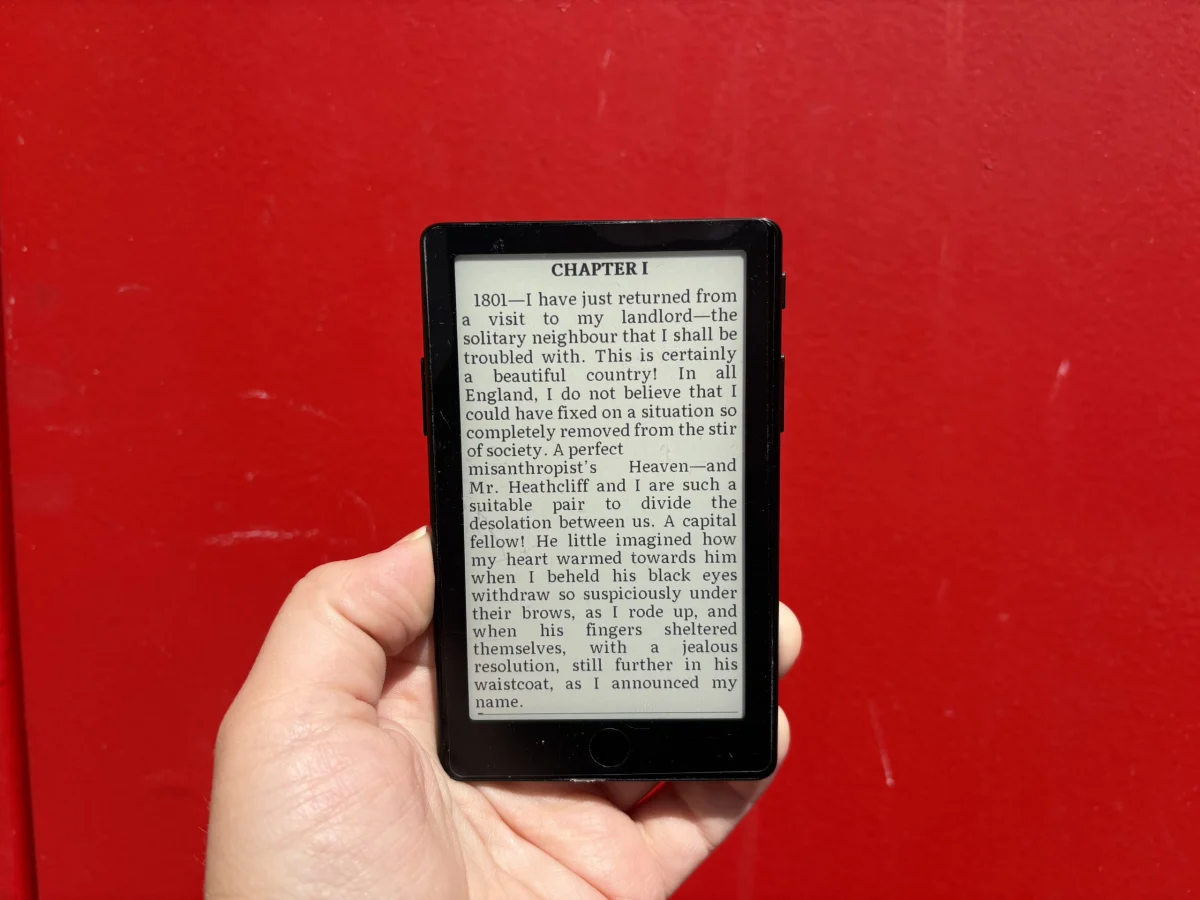
The landscape of digital reading devices is experiencing a nuanced evolution, with niche manufacturers carving out spaces alongside industry titans. One such innovator, Xteink, a Chinese hardware developer, has recently unveiled its X4 Pro e-reader, a device poised to significantly enhance the experience of ultra-portable digital literature consumption. This latest iteration is a direct response to widespread consumer feedback, notably integrating a touchscreen interface and a crucial front light, features that elevate its utility from a mere companion gadget to a potentially standalone reading tool.
The Genesis of Ultra-Portable Reading
The concept of the e-reader, a device dedicated solely to reading electronic books, emerged prominently in the late 1990s and early 2000s, driven by advancements in electronic ink (E-Ink) technology. Early models like the Rocket eBook and SoftBook Reader paved the way, but it was Amazon’s Kindle, launched in 2007, that truly popularized the category. These devices offered significant advantages over traditional print books, including portability, access to vast digital libraries, and adjustable font sizes, all while minimizing eye strain through their paper-like E-Ink displays. Over the years, mainstream e-readers from Amazon, Kobo, and Barnes & Noble (with its Nook line) largely converged on a similar form factor: screens typically ranging from six to ten inches, optimized for comfortable, sustained reading sessions.
However, a segment of the market yearned for something even more compact, a device that could truly disappear into a pocket or wallet. This desire was fueled by a growing societal awareness of digital distraction. In an era dominated by smartphones and their incessant notifications, many individuals sought ways to engage with content without the constant pull of social media or email. This cultural shift towards "digital detox" or mindful screen time created an opening for specialized, minimalist devices.
It was into this burgeoning segment that Xteink first introduced its line of tiny e-readers, including the X3 and the slightly larger X4. These predecessors quickly garnered significant attention, particularly on social media platforms where book lovers showcased their remarkably small, often magnetic, devices. The viral success underscored a clear demand: a highly pocketable e-reader designed for quick, opportunistic reading moments, such as waiting in line or during a short commute, as an alternative to mindlessly scrolling through a smartphone. The initial appeal of these devices lay in their sheer novelty and the promise of convenient, distraction-free reading, embodying a philosophical counterpoint to the omnipresent smartphone.
Addressing User Demands: The X4 Pro’s Key Upgrades
While Xteink’s initial offerings captivated a cult following, they were not without their limitations. The primary criticisms revolved around their user interface, which relied heavily on button-based navigation. This mechanical interaction, while functional, often felt clunky and less intuitive compared to the touch-based interfaces prevalent in virtually all modern personal electronics. Users frequently voiced their desire for a more streamlined, contemporary control scheme, alongside the practical necessity of a front light for reading in low-light conditions.
The Xteink X4 Pro directly addresses these critical points, representing a significant leap in usability and functionality. The most impactful additions are the integrated touchscreen and the adjustable front light. The touchscreen transforms interaction, allowing for fluid page turns with a simple tap or swipe, mirroring the intuitive experience users have come to expect from digital devices. This enhancement is not merely a convenience; it fundamentally alters the device’s accessibility, making it far more inviting for new users and more comfortable for existing enthusiasts.
Physically, the X4 Pro maintains the highly coveted compact dimensions of its predecessor, the X4, weighing a mere 72 grams and boasting a slender profile of 5.95 millimeters. This commitment to an ultra-thin and light design ensures that the device retains its core value proposition: unparalleled portability. It can still be effortlessly slipped into a pocket, a small bag, or even magnetically attached to the back of a smartphone, ensuring that a reading companion is always within reach. The inclusion of a front light, with adjustable intensity and color temperature, further broadens the device’s utility, making it suitable for reading at any time of day or night, from bright outdoor environments to a dimly lit bedroom. This feature, common in most mainstream e-readers, was a glaring omission in previous Xteink models, and its integration positions the X4 Pro as a more versatile, all-encompassing reading solution rather than just a supplementary gadget.
A Closer Look at the User Experience
The practical implications of these upgrades are profound for daily use. The transition from button-only navigation to a hybrid system, incorporating both touchscreen taps and physical side buttons for page turning, offers users greater flexibility in how they hold and interact with the device. This adaptability is particularly valuable for extended reading sessions, allowing individuals to choose the most comfortable grip without compromising functionality.
However, the X4 Pro’s compact size, while a primary selling point, introduces certain ergonomic considerations. The 4.26-inch screen, while crisp and clear, necessitates holding the device closer to the face than one might a larger e-reader or a physical book. This proximity, while not inherently detrimental, can evoke a similar sensation to engaging with a smartphone in bed, potentially blurring the lines between dedicated reading and general screen time. While an E-Ink display, even dimly lit, is significantly less disruptive to sleep patterns than a vibrant smartphone screen, the habit-forming aspect of holding a small, illuminated device close to one’s face warrants consideration for users focused on strict digital hygiene.
Battery life, a hallmark of E-Ink devices, remains a strong suit for the X4 Pro. Despite the added power draw of the front light, the device reportedly maintains impressive longevity, with a single charge potentially lasting weeks under regular usage. This extended battery performance minimizes the need for frequent recharging, reinforcing its appeal as a reliable, on-the-go companion. A notable change, however, is the shift from a universal USB-C charging port on the X4 to a proprietary magnetic pogo charger on the X4 Pro. While this may not be a significant inconvenience for infrequent charging, it could be a point of contention for users who prioritize the convenience and universality of USB-C, a standard increasingly adopted across various electronic devices. This design choice, while potentially enabling a thinner profile or water resistance (though not explicitly stated), does introduce a minor degree of proprietary ecosystem lock-in.
Navigating the Digital Ecosystem: Content and Connectivity
Beyond hardware, the software experience and content accessibility are paramount for any e-reader. The X4 Pro features updated software that, while refined, continues to support the loading of open-source code, a feature that appeals to a segment of tech-savvy users who value customization and control over their devices. The process of uploading content, whether via Wi-Fi, Bluetooth, or the more straightforward method of directly transferring files via a micro SD card and adapter, remains a critical aspect of the user journey. While wireless transfer options exist, some users may still find the physical transfer method more reliable or convenient for large batches of content.
A significant consideration for potential users accustomed to mainstream e-readers is the X4 Pro’s limitations regarding digital rights management (DRM). Unlike devices from Amazon or Kobo, the Xteink X4 Pro cannot directly integrate with popular library e-book lending platforms like Libby. This is due to the DRM protocols employed by libraries to protect copyrighted content, which typically restrict borrowed e-books to specific, authorized reading applications or devices. This means that users primarily relying on public library digital collections will find the X4 Pro unsuitable for that purpose. Similarly, Amazon’s Kindle ecosystem is a "walled garden," meaning e-books purchased from Amazon can only be read on Kindle devices or via Kindle apps, regardless of their underlying file format. This market reality underscores the ongoing tension between proprietary content platforms and universal device compatibility.
However, for users who acquire DRM-free .epub files directly from publishers or independent authors, the X4 Pro functions seamlessly. This positions the device as an excellent choice for reading personal digital libraries, open-source literature, or content acquired outside the major vendor ecosystems. The appeal here extends to those who curate their own digital collections and prefer not to be tied to a single platform.
Market Positioning and Broader Implications
Priced at $99 and exclusively available on Xteink’s website at launch, the X4 Pro enters a competitive market. It occupies a unique niche, distinct from both the budget-friendly entry-level Kindles and the more premium, larger-screen e-readers. Its primary competition isn’t necessarily other e-readers in terms of size, but rather the ubiquitous smartphone itself. By offering a dedicated, distraction-free reading experience in a similarly pocketable form factor, the X4 Pro aims to capture the attention of individuals actively seeking to reduce their smartphone screen time.
The X4 Pro’s strategy taps into several broader market and cultural trends. The growing emphasis on well-being and digital wellness fuels demand for tools that help manage screen consumption. The device caters to minimalist aesthetics, appealing to consumers who appreciate functional design and compact efficiency. Furthermore, its open-source compatibility and ability to handle DRM-free content resonate with a segment of tech consumers who value digital freedom and interoperability over proprietary ecosystems.
The success of devices like the X4 Pro also reflects a fascinating dichotomy in consumer electronics: the pursuit of ultimate convergence versus the resurgence of single-purpose devices. While smartphones strive to be everything to everyone, products like the Xteink X4 Pro demonstrate that there is still a strong desire for specialized tools that excel at one specific function, especially when that function is as fundamental as reading. This indicates a maturing digital consumer base that is increasingly discerning about how and where they spend their digital attention.
In conclusion, the Xteink X4 Pro represents a thoughtful evolution in the ultra-portable e-reader segment. By integrating crucial features like a touchscreen and front light, directly addressing user feedback, it significantly enhances its utility and appeal. While its compact size and DRM limitations mean it won’t be a universal solution, it carves out a compelling proposition for minimalist readers, digital detox advocates, and those seeking a truly pocketable, distraction-free gateway to their personal digital libraries. The X4 Pro exemplifies how focused innovation, even in a seemingly saturated market, can still deliver meaningful advancements that cater to specific, evolving consumer needs.