Amir Mahmud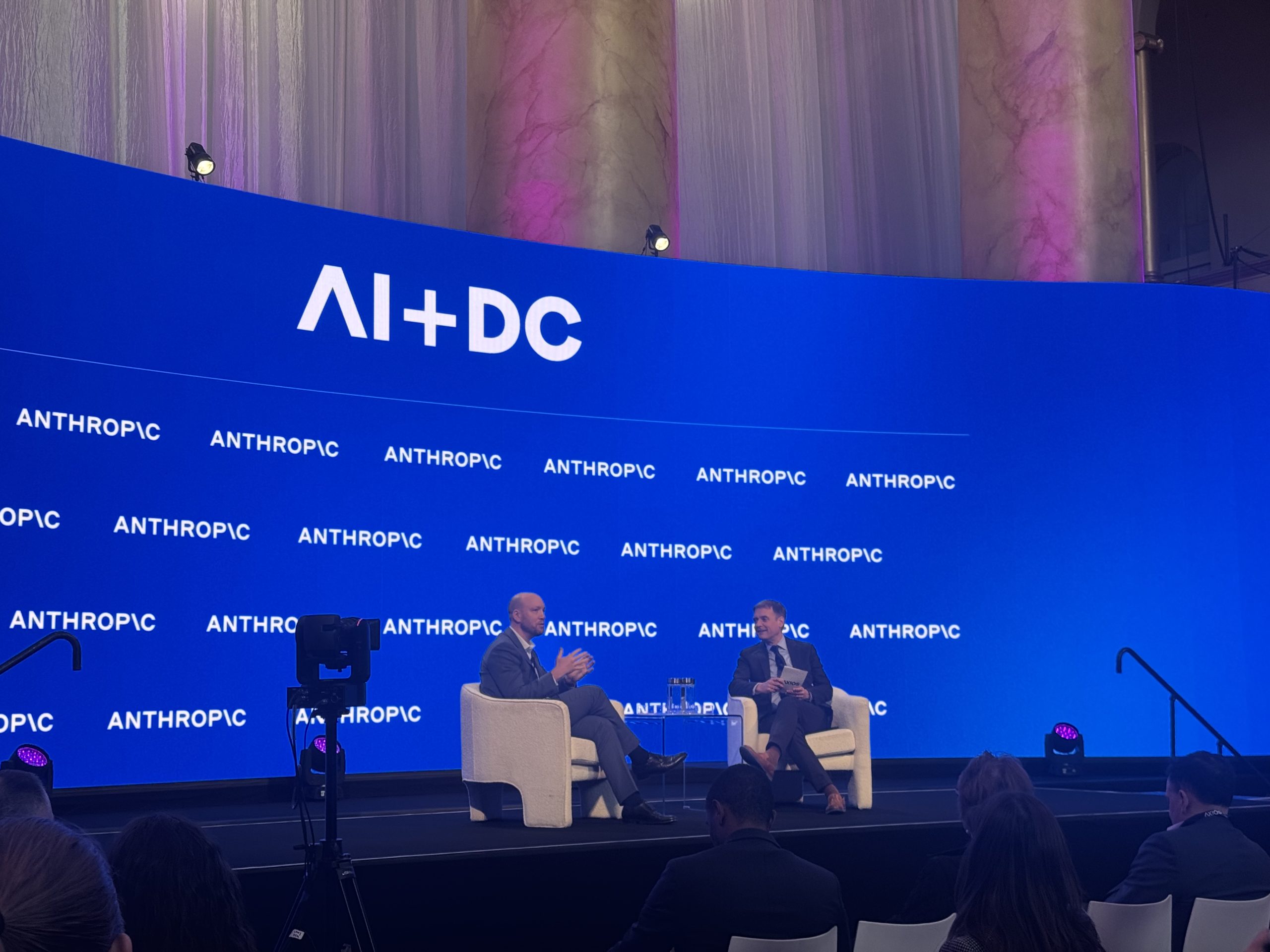
A new economic analysis from AI developer Anthropic reveals a paradox in the evolving landscape of work: while artificial intelligence is undeniably transforming professional tasks, it has not yet led to a widespread reduction in employment opportunities. This finding, articulated in the company’s fifth economic impact report and discussed by Peter McCrory, Anthropic’s head of economics, on the sidelines of the Axios AI Summit in Washington, D.C., paints a picture of a labor market that remains robust, at least for now. However, beneath this surface stability, early indicators suggest a growing divergence in how AI influences different segments of the workforce, particularly impacting younger professionals entering their careers.
Current Labor Market Stability vs. Future Projections
The report offers a reassuring perspective on current unemployment figures, noting no significant statistical difference between workers whose primary job functions are heavily automated by AI tools, such as technical writers, data entry specialists, and software engineers, and those in roles less exposed to AI, which typically demand physical dexterity and direct interaction with the real world. This observation counters some of the more alarmist predictions that have accompanied the rapid ascent of generative AI technologies.
Yet, this apparent calm belies a palpable apprehension about the future. The very companies at the forefront of AI development, including Anthropic, acknowledge the potential for swift and profound disruption. Dario Amodei, Anthropic’s CEO, has previously voiced concerns that AI could eliminate up to half of all entry-level white-collar positions and potentially push unemployment rates as high as 20% within the next five years. This stark projection underscores a critical tension: the current absence of widespread job displacement does not guarantee its continued absence. The rapid pace of AI advancement and adoption across diverse sectors could quickly alter the employment landscape.
McCrory emphasized the critical need for proactive monitoring frameworks to track AI’s economic fallout. Such systems would enable policymakers and industry leaders to identify displacement trends as they emerge, facilitating timely and appropriate responses. This foresight is deemed essential to mitigate potential societal upheaval and ensure a smooth transition in the face of technological shifts. The importance of continually tracking AI’s growth, adoption patterns, and diffusion across industries cannot be overstated, as these metrics will serve as vital early warning signals.
The Nuance of AI’s Impact on Employment
To understand the current state, it’s crucial to contextualize AI’s journey and its integration into the workforce. The concept of artificial intelligence has been a subject of scientific and philosophical inquiry for decades, with foundational work dating back to the mid-20th century. However, the recent explosion in generative AI, exemplified by large language models (LLMs) like Anthropic’s Claude and OpenAI’s ChatGPT, marks a new era. These tools, capable of generating human-like text, code, and even creative content, have moved AI from the realm of specialized applications into mainstream professional use, sparking both excitement and anxiety.
Historically, technological revolutions—from the agricultural age to the industrial revolution and the digital age—have always reshaped labor markets. Each transition saw certain jobs become obsolete while simultaneously creating new ones, often requiring different skill sets. The Luddite movement of the early 19th century, for instance, saw textile workers protest against new machinery that threatened their livelihoods, illustrating a recurring theme of human adaptation to technological progress. The current AI wave is distinct in its potential to impact cognitive, white-collar work, a sector previously thought to be less vulnerable to automation than manual labor.
Despite the sophisticated capabilities of AI models, which theoretically can perform nearly any task a computer can execute, most users are currently only exploring the superficial layers of these tools. Anthropic’s research specifically focused on roles that involve tasks particularly well-suited for AI automation and where AI is already being integrated into workplace practices. This targeted approach aims to pinpoint the precise areas where job displacement might first manifest. The analysis carefully distinguishes between general exposure to AI and actual, meaningful integration into core job functions, a distinction vital for accurate economic forecasting.
Unveiling the AI Skills Divide
A significant revelation from Anthropic’s report is the emergence of a widening skills gap, even in the absence of mass job displacement. This gap is observed between early adopters of AI tools, such as Claude, and those who are new to these technologies. Early adopters are demonstrating a remarkable ability to extract substantially more value from AI models. Their engagement goes beyond casual or one-off queries; they are integrating AI deeply into their professional workflows, leveraging it for complex, work-related tasks.
These "power users" are employing AI not merely as a task automation tool but as a sophisticated "thought partner." They utilize AI for iterative processes, seeking feedback, refining ideas, and collaborating in a manner that significantly enhances their productivity and creative output. This level of engagement transforms AI from a simple utility into a strategic asset, enabling these individuals to operate with unprecedented efficiency and innovation. For instance, a software engineer might use AI to debug complex code, not just by asking for solutions, but by iteratively refining prompts, exploring different architectural approaches suggested by the AI, and leveraging its ability to learn from past interactions to improve future outputs. Similarly, a technical writer might use AI to draft initial content, then engage in multiple rounds of AI-assisted revisions, focusing on clarity, tone, and audience engagement, transforming a time-consuming process into a highly efficient one.
This finding suggests a crucial paradigm shift: AI is becoming a technology that disproportionately rewards those who possess the acumen to wield it effectively. The ability to formulate precise prompts, interpret AI outputs critically, and integrate AI into complex problem-solving frameworks is rapidly becoming a high-value skill. Workers who can master this symbiotic relationship with AI are gaining a significant competitive advantage, positioning themselves at the forefront of their respective fields. This phenomenon is giving rise to a new form of digital literacy, often termed "AI literacy" or "prompt engineering," which is distinct from traditional computer literacy and demands a deeper understanding of AI’s capabilities and limitations.
The "Power User" Phenomenon and Economic Implications
The implications of this "power user" phenomenon extend beyond individual productivity gains; they have broader economic ramifications. If a subset of the workforce can achieve dramatically higher output and quality through advanced AI utilization, it could lead to increased demand for these highly skilled individuals, potentially commanding higher salaries and greater job security. Conversely, those who lag in AI adoption and proficiency might find themselves at a disadvantage, facing stagnant wages or even reduced job prospects as employers increasingly seek candidates who can leverage AI effectively.
This dynamic could exacerbate existing inequalities, creating a deeper divide between the "AI-haves" and "AI-have-nots." The report’s findings suggest that the benefits of AI adoption are not being distributed uniformly. This uneven distribution is not just about individual skill but also about access and opportunity. Individuals in roles that offer more autonomy and resources for experimentation with new tools are more likely to become power users. Furthermore, companies that invest in training and provide access to advanced AI tools for their employees will likely foster a more AI-proficient workforce, further widening the gap with organizations that do not prioritize such initiatives.
Geographical Disparities and Digital Equity
The uneven distribution of AI’s benefits is also observed geographically. Anthropic’s research indicates that advanced AI tools like Claude are being utilized more intensely in high-income countries. Within the United States, this intensity of use is concentrated in regions with a higher density of knowledge workers, and often for a relatively small set of specialized tasks and occupations. This pattern suggests that AI adoption is currently reinforcing existing economic and geographical concentrations of wealth and innovation.
This geographical disparity raises concerns about digital equity. The promise of AI has often included the potential to democratize access to advanced capabilities, empowering individuals and businesses in developing regions or underserved areas. However, if the current trend continues, AI could inadvertently amplify the advantages held by already wealthy nations and regions. Factors contributing to this disparity could include access to high-speed internet, advanced computing infrastructure, educational opportunities focused on AI skills, and the presence of industries that are early adopters of AI. Without targeted interventions, this could further entrench economic imbalances, leaving some areas struggling to keep pace with the rapidly advancing global economy.
Navigating the Future: Policy and Preparation
The insights from Anthropic’s report call for a proactive and multi-faceted approach to navigate the impending shifts. For individuals, investing in continuous learning and skill development, particularly in AI literacy and critical thinking, becomes paramount. Educational institutions need to adapt curricula to prepare students for an AI-augmented future, focusing not just on technical skills but also on problem-solving, creativity, and ethical reasoning.
For businesses, the challenge lies in fostering a culture of continuous learning and providing employees with the tools and training necessary to become AI power users. This involves not just deploying AI technologies but also investing in comprehensive upskilling and reskilling programs. Companies that empower their workforce to effectively leverage AI are likely to gain a significant competitive edge in productivity and innovation.
Governments and policymakers have a crucial role in establishing monitoring frameworks to track AI’s economic impact, as suggested by McCrory. Beyond tracking, they must consider policy responses that promote equitable access to AI education and tools, support workers displaced by automation, and potentially explore new social safety nets. Discussions around universal basic income, robust retraining programs, and revised labor laws are becoming increasingly relevant in this context. The goal should be to harness AI’s transformative potential while mitigating its risks and ensuring that its benefits are shared broadly across society.
Conclusion
Anthropic’s latest economic report presents a nuanced picture of AI’s current impact: a surprisingly stable labor market in the short term, juxtaposed with clear signals of an emerging skills chasm. While widespread job displacement has not yet materialized, the advantage gained by "power users" who deeply integrate AI into their work is undeniable. This growing divide, both in skill and geography, suggests that without deliberate intervention and strategic planning, AI could deepen existing economic inequalities rather than serving as an equalizer. As AI technology continues its relentless march forward, the collective challenge lies in cultivating an adaptive, skilled workforce and implementing policies that ensure the benefits of this powerful technology are harnessed for the prosperity of all, not just a select few. The window for proactive engagement is open now, before the predicted waves of displacement potentially reshape the economy in profound and irreversible ways.