Amir Mahmud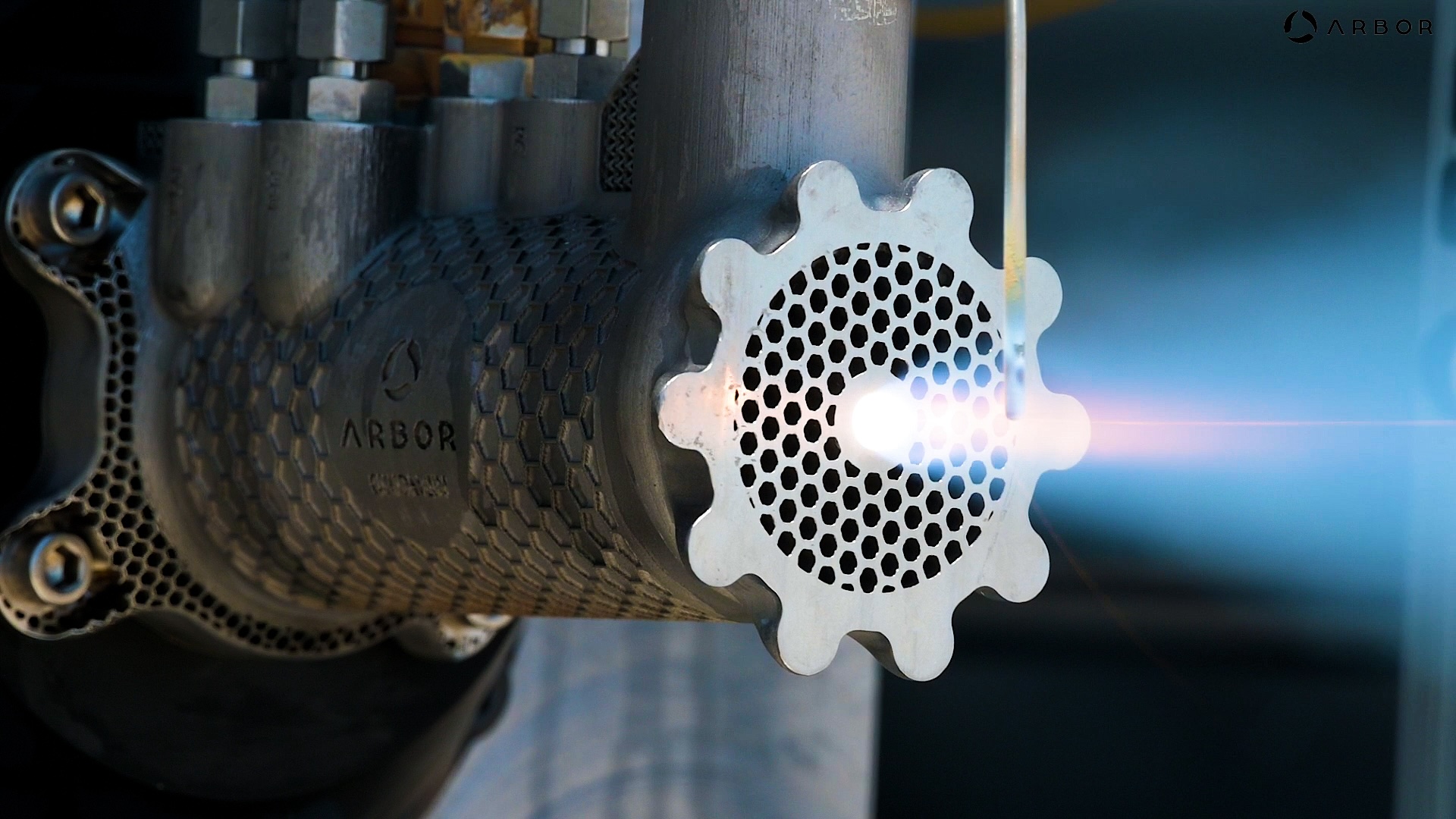
Arbor Energy, an innovative startup in the energy sector, has recently announced a landmark agreement to supply up to five gigawatts of its advanced modular turbines to GridMarket, a firm specializing in facilitating power projects for burgeoning data centers and large industrial clients. This significant transaction, valued in the single-digit billions of dollars if fully realized, underscores a critical pivot in how the world addresses its escalating energy demands and seeks innovative solutions for grid modernization.
The deal signifies a growing appetite for novel approaches to power generation, driven by unprecedented growth in sectors like artificial intelligence and digital infrastructure. Brad Hartwig, co-founder and CEO of Arbor Energy, articulated the urgency of the current market landscape, noting, "The global appetite for electricity is insatiable, and the timelines for deployment are becoming increasingly condensed, while the required scale continues to expand exponentially." This sentiment reflects a broader industry challenge: meeting immediate and massive energy needs while simultaneously navigating a complex transition towards a sustainable future.
The Genesis of Halcyon: Rocket Science Meets Power Generation
At the core of Arbor Energy’s offering is the Halcyon turbine, a technological marvel rooted in the high-performance engine technology originally developed for spaceflight. This sophisticated turbomachinery, honed over decades for the extreme demands of rocket propulsion, has been ingeniously adapted for terrestrial power generation. The initial commercial iterations of the Halcyon turbine are designed to be 3D printed, capable of generating 25 megawatts of electricity individually. Should GridMarket’s order be fully executed, it would translate into the deployment of 200 such units, representing a substantial injection of new capacity into various grids.
The transfer of technology from aerospace to other industries is not a new phenomenon. From satellite communication informing GPS systems to advanced materials developed for spacecraft finding applications in medical devices, the rigors of space exploration often yield breakthroughs with profound terrestrial benefits. In the energy sector, the adaptation of rocket turbomachinery promises unprecedented efficiency and durability, features crucial for reliable and continuous power supply. Traditional gas turbines, while robust, are designed for different operational envelopes. Rocket engines, by contrast, operate at extreme temperatures and pressures, demanding materials and engineering precision that can translate into more compact, powerful, and potentially longer-lasting power generation units.
Addressing the Energy Imperative: Data Centers and Grid Strain
The backdrop to this monumental deal is a global energy crisis silently unfolding, exacerbated by the meteoric rise of data centers and the processing demands of artificial intelligence. These facilities require immense, uninterrupted power supplies, often operating 24/7, and their proliferation is straining existing electrical grids to their limits. The International Energy Agency (IEA) has projected a substantial increase in electricity demand from data centers, potentially doubling within the next few years, which places immense pressure on utilities and policymakers to find rapid, scalable solutions.
Historically, utilities and industrial users relied on large, centralized power plants, often coal-fired or natural gas combined cycle, to meet baseload demand. However, the lead times for constructing such facilities can stretch to a decade or more, a timeframe incompatible with the current pace of data center expansion. Furthermore, the volatility of energy markets in past decades has made traditional turbine manufacturers hesitant to invest heavily in expanding their production capacities, leaving a significant gap in the supply chain for readily available, high-capacity generation units. This reluctance stems from the cyclical nature of demand and the substantial capital expenditure required to scale manufacturing for components like turbine blades and vanes, which are often produced through highly specialized, artisanal processes. This bottleneck has led to reported waiting times of several years for new conventional turbines, pushing developers to seek alternative, faster-to-market solutions.
A Flexible Fuel Strategy: From Biomass to Natural Gas with Carbon Capture
Arbor Energy’s strategic approach to fuel sources has evolved since its inception. Initially, the Halcyon design was conceived to operate on a "vegetarian diet," exclusively utilizing organic materials such as agricultural waste and wood scraps. This biomass would be gasified into syngas, a combustible gas mixture, and then combusted with pure oxygen. A key aspect of this original design was the ability to capture the resulting pure CO2 for underground sequestration, thereby achieving a carbon-negative power generation profile. The rationale was that the biomass, if left to decay naturally, would release methane and carbon dioxide into the atmosphere anyway, making its controlled combustion and CO2 capture a net environmental benefit.
However, recognizing the pragmatic realities of diverse energy markets and the need for greater flexibility, Arbor Energy has since modified the Halcyon system to accept natural gas in addition to biomass. This "omnivore" configuration allows for broader applicability and market penetration. While the core process of combustion with pure oxygen and subsequent CO2 sequestration remains, the use of natural gas introduces a nuanced environmental footprint. When operating on natural gas, the system would no longer be considered carbon-negative. Moreover, the upstream emissions associated with natural gas extraction and transport, particularly methane leaks from pipelines and valves, contribute to greenhouse gas emissions.
Acknowledging these complexities, Arbor Energy has stated its commitment to collaborating with low-leak natural gas suppliers and emphasizes the economic incentives for sequestering CO2. Hartwig projects a long-term pathway for the Halcyon turbines to achieve emissions below 10 grams of CO2 per kilowatt-hour, a substantial improvement compared to typical natural gas power plants without carbon capture, which emit approximately 400 grams of CO2 per kilowatt-hour. This hybrid approach reflects a pragmatic strategy to deploy powerful, efficient technology quickly while working towards increasingly lower carbon footprints.
The Promise and Perils of Carbon Sequestration
Carbon capture and sequestration (CCS) technology, integral to Arbor’s vision, has been a subject of intense debate and development for decades. The concept involves capturing carbon dioxide emissions from industrial processes or power generation and storing them safely underground, typically in geological formations. While CCS offers a potential pathway to significantly reduce greenhouse gas emissions from fossil fuel use, its widespread adoption has faced economic, technological, and regulatory hurdles.
The economic viability of CCS often depends on policy incentives, such as carbon pricing or tax credits, which can offset the additional costs associated with capturing, transporting, and storing CO2. Public perception also plays a crucial role, with concerns ranging from the safety of underground storage to the argument that CCS prolongs reliance on fossil fuels rather than accelerating a transition to renewables. However, for hard-to-abate sectors or for applications requiring continuous, dispatchable power, CCS can be a vital tool in the decarbonization toolkit. Arbor’s strategy leverages the purity of CO2 produced from its oxy-combustion process, which simplifies the capture and storage aspects, potentially making the economics more favorable compared to conventional post-combustion capture.
Disrupting Traditional Manufacturing and Supply Chains
One of Arbor Energy’s key differentiators, and a primary reason for its potential to accelerate deployment, lies in its manufacturing approach. Traditional gas turbine production is characterized by highly specialized, often artisanal, processes for critical components like blades and vanes. These components, requiring directional solidification and single-crystal structures, necessitate specialized labor and inelastic supply chains, making rapid scaling incredibly challenging. Hartwig highlighted this bottleneck, stating, "Those supply chains largely all get bottlenecked by blades and vanes for traditional turbines. Those are fairly inelastic supply chains, both in how artisanal the production method is as well as very specialized labor."
In contrast, Arbor is banking on modern manufacturing techniques, specifically advanced machining and 3D printing, to overcome these limitations. Additive manufacturing, or 3D printing, allows for rapid prototyping, design iteration, and potentially faster, more flexible production of complex parts. This agility could enable Arbor to ramp up production more quickly than traditional manufacturers, addressing the urgent demand for power generation within the next few years rather than waiting until the next decade. The ability to quickly iterate designs and produce components on demand could significantly shorten lead times and reduce the overall cost of deployment, offering a distinct competitive advantage in a market starved for speed.
Market Dynamics and the Future Energy Landscape
The multi-billion dollar commitment from GridMarket is a strong indicator of market confidence in Arbor Energy’s technology and business model. GridMarket’s role in arranging power projects for data centers and industrial users positions it at the forefront of the surging demand for energy infrastructure. Their willingness to invest significantly in a relatively nascent technology underscores the desperation for solutions that can be deployed rapidly and reliably.
The energy landscape is undergoing a profound transformation. The increasing penetration of intermittent renewable sources like solar and wind necessitates flexible, dispatchable power generation to ensure grid stability. While battery storage is rapidly advancing, large-scale, long-duration storage remains a challenge. Modular turbines like Halcyon could fill a crucial gap, offering a bridge solution that provides reliable power while integrated with carbon capture, aiding the transition to a net-zero future. This kind of decentralized, modular power generation also enhances grid resilience, making the system less vulnerable to large-scale outages.
Challenges and the Path Ahead
Despite the promise and the substantial order, Arbor Energy faces considerable challenges on its path to commercialization and widespread adoption. Scaling the production of sophisticated, 3D-printed turbomachinery to deliver 100 or more units annually, and eventually 10 gigawatts of capacity per year, is an ambitious undertaking for any startup. This will require significant capital investment beyond the current deal, robust supply chain development, and the recruitment of highly skilled engineering and manufacturing talent.
Moreover, navigating the complex regulatory landscape for power generation and carbon capture, securing appropriate sites for both generation and CO2 sequestration, and gaining public acceptance for its "omnivore" fuel strategy will be critical. The successful deployment of the first turbine by 2028 and subsequent ramp-up through 2030 will be closely watched by industry observers, investors, and environmental advocates alike.
Arbor Energy’s innovative approach, leveraging space-age technology to address earth-bound energy challenges, represents a compelling case study in the ongoing global energy transition. Its ability to deliver modular, high-performance power generation solutions, coupled with a flexible fuel strategy and carbon capture capabilities, positions it as a potentially significant player in reshaping how industries and grids secure their power needs in an increasingly digitized and climate-conscious world. The journey ahead will be complex, but the recent deal provides a powerful launchpad for this ambitious venture.