Amir Mahmud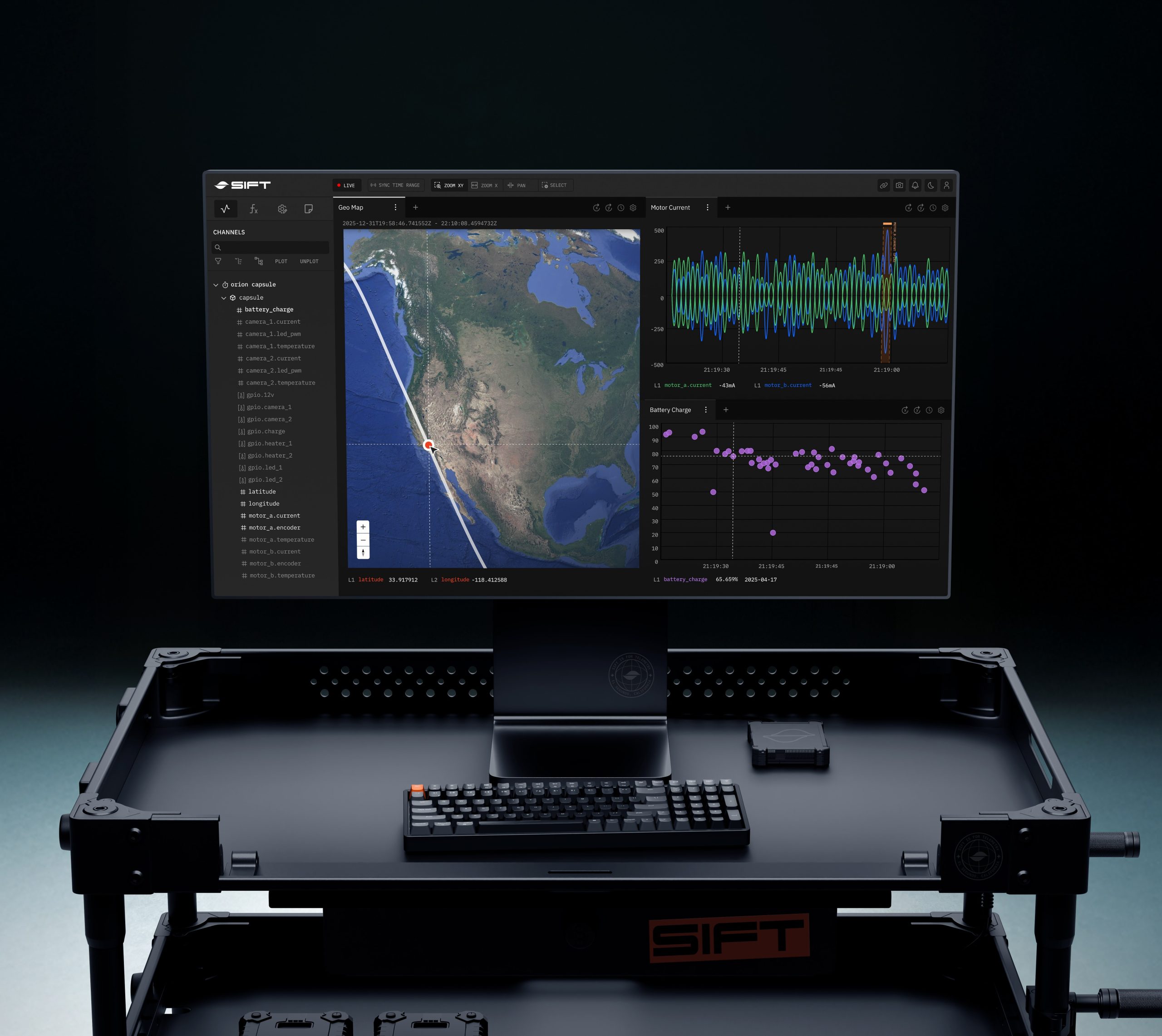
The clarion call of "atoms, not bits!" reverberates increasingly loudly through the corridors of Silicon Valley, signaling a profound shift in focus from purely digital products to the tangible realm of physical manufacturing. This pivot recently gained significant momentum with reports of tech titan Jeff Bezos reportedly assembling a colossal $100 billion fund dedicated to acquiring and transforming legacy manufacturing facilities through the pervasive integration of artificial intelligence. Yet, the modernization of factories is not merely a question of advanced robotics or smarter machinery; it fundamentally hinges on the sophisticated software and artificial intelligence tools that orchestrate their operations. This critical evolution is rapidly redefining the landscape for companies building the essential infrastructure of the physical production world.
At the forefront of this industrial metamorphosis is Sift Stack, an El Segundo, California-based enterprise whose specialized tools are designed to streamline the design and manufacturing processes of highly complex machines, from cutting-edge spacecraft to next-generation automobiles. Karthik Gollapudi, the company’s CEO, acknowledges the profound changes underway, noting that these shifts have significantly refined Sift Stack’s strategic direction over the past six months. Founded in 2022 by Gollapudi and his co-founder, CTO Austin Spiegel, the company emerged from their shared tenure at SpaceX, where they were instrumental in developing the intricate software systems that managed the immense streams of telemetry data — real-time performance diagnostics transmitted from physical components — throughout the rigorous testing, manufacturing, and launch phases of rockets.
The Dawn of Industry 4.0 and the "Atoms, Not Bits" Phenomenon
The current industrial transformation, often dubbed the Fourth Industrial Revolution or Industry 4.0, represents a paradigm shift characterized by the fusion of advanced technologies. Building upon the mechanization of the First Industrial Revolution, the mass production of the Second, and the automation and electronics of the Third, Industry 4.0 integrates cyber-physical systems, the Internet of Things (IoT), cloud computing, and, crucially, artificial intelligence. This era promises smart factories where machines communicate, analyze data, and even make decisions autonomously, leading to unprecedented levels of efficiency, customization, and responsiveness.
The "atoms, not bits" mantra reflects a growing realization within the tech sector that while digital innovation has reshaped much of modern life, the foundational physical world still presents immense opportunities for disruption and value creation. For decades, Silicon Valley’s giants amassed fortunes by creating software, platforms, and digital services that scaled exponentially without the complexities of physical production. However, as digital markets mature and new frontiers of innovation are sought, the challenges and rewards of hardware and manufacturing are becoming increasingly attractive. Companies like Apple, for instance, have long navigated the intricate world of hardware manufacturing, but the broader tech ecosystem is now witnessing a renewed interest, driven by advancements in robotics, additive manufacturing (3D printing), and the very AI and data infrastructure that Sift Stack specializes in. Jeff Bezos’s reported foray into factory automation is a potent symbol of this macroeconomic shift, indicating a future where physical production lines are as technologically advanced and data-driven as the most sophisticated software environments.
Navigating the Deluge: The Data Challenge in Modern Manufacturing
Manufacturing today, particularly in advanced sectors like aerospace, defense, and automotive, is characterized by an unprecedented generation of data. Modern machines are not merely mechanical constructs; they are sophisticated cyber-physical systems embedded with an array of sensors—sometimes numbering in the millions—that continuously stream performance data. This telemetry data provides a real-time pulse on everything from temperature and pressure to vibration, stress, and operational status. For example, a single spacecraft or a high-performance vehicle might be equipped with well over 1.5 million sensors, each contributing to a torrent of information across diverse formats and timescales. Managing this immense, heterogeneous data flow is a monumental task.
Historically, companies building complex machinery often grappled with disparate data systems. Many relied on generic, off-the-shelf database tools, which, while functional for certain applications, struggled to handle the scale, velocity, and variety of industrial telemetry. Others resorted to developing highly customized, often ad-hoc, Python scripts and in-house solutions, leading to fragmented data silos and a lack of interoperability. This approach created significant bottlenecks, making it challenging to aggregate data for holistic analysis, ensure data integrity, and provide a unified view of operational performance. The absence of a robust, purpose-built data infrastructure meant that valuable insights were often buried in incompatible formats or lost in the sheer volume of information, hindering critical decision-making in design, testing, and production.
From Orbital Mechanics to Production Lines: Sift Stack’s Genesis
Karthik Gollapudi and Austin Spiegel’s journey to founding Sift Stack began in the demanding environment of SpaceX, a company renowned for pushing the boundaries of engineering and manufacturing. At SpaceX, the imperative to manage and analyze vast quantities of real-time data was not merely an operational convenience but a mission-critical necessity. During rocket tests, manufacturing, and actual launches, every millisecond of telemetry data could signify the difference between success and failure. Their work involved developing software tools capable of ingesting, processing, and making sense of this high-velocity, high-volume data to monitor performance, identify anomalies, and inform rapid adjustments.
This crucible of innovation provided Gollapudi and Spiegel with invaluable insights into the unique data infrastructure challenges faced by organizations operating at the cutting edge of physical engineering. They recognized that the problems of managing complex, sensor-rich systems were not confined to the space industry but were pervasive across other advanced manufacturing sectors. The ability to collect, organize, and analyze telemetry data effectively was a universal requirement for any enterprise striving for precision, reliability, and efficiency in producing sophisticated hardware. Their experience at SpaceX demonstrated that traditional data management approaches were insufficient for these next-generation challenges, revealing a significant market opportunity for a best-in-class, specialized solution. It was this realization that prompted them to establish Sift Stack in 2022, aiming to bring the rigor and capability of space-grade data management to the broader industrial landscape.
The AI Inflection Point and Sift Stack’s Strategic Evolution
The rapid proliferation and increasing sophistication of artificial intelligence and deep learning models have dramatically altered the competitive landscape for data management companies. Initially, Sift Stack distinguished itself by offering highly customized workflows tailored to specific manufacturing and testing processes. These bespoke solutions provided significant advantages by automating complex data analysis and reporting. However, as AI capabilities advanced, particularly in areas like automated data pattern recognition and workflow generation, what was once a signature offering began to become "table stakes." AI tools could now, to a considerable extent, replicate or even enhance many of the customized analytical tasks that previously required specialized human programming.
This shift presented both a challenge and an opportunity for Sift Stack. As Gollapudi explained, the accelerated pace of AI development meant that "Our long-term vision of how we saw this playing out over five years is actually being played out this year." The company recognized that its enduring value lay not primarily in custom analytical workflows, but in its unparalleled ability to manage the foundational data infrastructure itself. In an AI-driven world, the true bottleneck wasn’t the analytical algorithms, but the quality, accessibility, and machine-readability of the underlying data. Sift Stack’s strategic pivot focused on strengthening its core competency: organizing and storing the intense data flow from software-intensive machines in a manner that makes it readily consumable by AI agents. The goal is to transform raw, complex sensor data into structured, actionable information, enabling AI to make informed decisions about manufacturing processes, conduct predictive maintenance, or flag potential problems during testing with unprecedented accuracy and speed.
Market Impact and Customer Success Stories
Sift Stack’s technology has found fertile ground across a diverse array of industries, demonstrating the universal need for robust data infrastructure in complex manufacturing. Its clientele now spans major U.S. rocket builders like United Launch Alliance, various defense contractors, and innovative startups in robotics and power grid management. These organizations share a common thread: the imperative to efficiently manage and derive insights from massive datasets to maintain a competitive edge.
A compelling testament to Sift Stack’s impact comes from Jeff Dexter, the VP of Software at Astranis, a satellite communications company. Astranis, like many high-tech manufacturers, conducts an astonishing volume of automated software tests—upwards of 10 million in a single day. Managing the data generated by such extensive testing is not just an operational challenge but a significant financial one. Dexter highlighted the immense costs associated with storing such vast quantities of data, stating, "Inevitably, it gets to a point where it’s costing us millions of dollars per month just to store data." For companies operating at this scale, every dollar spent on data storage needs to be justified by tangible value. Sift Stack’s platform alleviates this concern, allowing companies like Astranis to focus on innovation without being crippled by data management overhead. "With technology like Sift, I don’t worry about how much data is there," Dexter affirmed, underscoring the peace of mind and operational freedom that robust data infrastructure provides. This capability directly translates into faster product development cycles, enhanced quality control, and optimized operational efficiency across the board.
The Future of Smart Manufacturing and Sift Stack’s Role
The ongoing evolution of smart manufacturing, propelled by advancements in AI and data science, promises to reshape global industrial landscapes. This transformation carries significant social and economic implications, potentially leading to the reshoring of manufacturing capabilities, the creation of new high-skilled jobs focused on data analysis and AI integration, and a substantial boost to national competitiveness. However, the path to fully integrated AI-driven factories is not without its challenges. These include ensuring data quality and security, navigating ethical considerations related to autonomous decision-making, and investing in workforce training to equip employees with the skills needed to interact with intelligent systems.
In this rapidly evolving environment, Sift Stack is positioned as a crucial enabler for the next phase of industrial transformation. By providing the essential data backbone that allows AI agents to effectively learn, analyze, and act upon manufacturing data, the company is directly contributing to the realization of truly autonomous and intelligent factories. The market’s confidence in Sift Stack’s vision and technological prowess was recently affirmed through a successful funding round. In 2025, the company secured a substantial $42 million in Series B funding, achieving a post-money valuation of $274 million. This round was led by StepStone, with significant participation from prominent investors including GV (Google’s venture arm), Riot Ventures, Fika Ventures, and CIV. This investment underscores the growing recognition among venture capitalists that specialized data infrastructure, particularly that designed for the unique demands of physical manufacturing and AI integration, represents a vital and lucrative frontier in the global tech economy. As industries continue their march toward greater automation and intelligence, companies like Sift Stack, born from the rigorous demands of rocket science, will play an indispensable role in ensuring that the foundation of data is solid, scalable, and ready for the future.