Amir Mahmud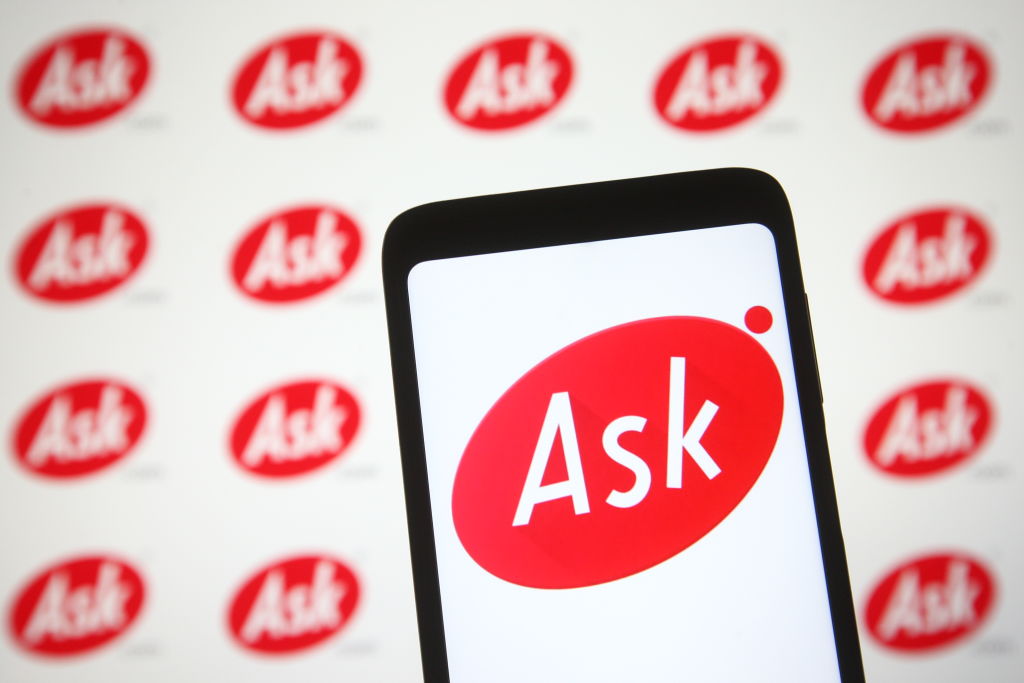
After an existence spanning nearly three decades, Ask.com, the digital service once renowned as Ask Jeeves, has formally ceased its operations. The company’s website now displays a message confirming the closure of its search business, effective May 1, 2026, marking the end of an era for a platform that once promised a more intuitive way to navigate the nascent internet. This shutdown represents a significant moment in the history of online search, as one of the earliest contenders in the field finally exits a landscape it helped shape.
The Genesis of Jeeves: A Visionary Beginning
Ask Jeeves first materialized in 1996, born from the innovative vision of founders Garrett Gruener and David Warthen in Berkeley, California. At a time when the internet was a wild frontier of information, largely navigated by keyword-centric search engines like AltaVista, Lycos, and Excite, Ask Jeeves offered a distinct and revolutionary approach. Its core proposition was the ability to understand and respond to natural language questions, much like a human would. This functionality was personified by "Jeeves," a virtual butler inspired by P.G. Wodehouse’s fictional character, who would "fetch" answers for users.
The technological underpinning of Ask Jeeves was a hybrid model. Initially, it combined proprietary search technology with a network of human editors who would manually review and categorize websites, building a robust database of answers to frequently asked questions. When a user posed a query in conversational English – for example, "Where can I find information about the Roman Empire?" – Jeeves would attempt to match it to pre-existing answers or intelligently route it through its algorithmic search. This blend of human curation and early algorithmic processing was a significant differentiator, aiming to provide more relevant and contextually appropriate results than its competitors, which often struggled with the nuances of language. The friendly, approachable persona of Jeeves resonated with early internet users, many of whom were still grappling with the complexities of online navigation, lending the service a unique cultural cachet in the late 1990s.
The Golden Age and Mounting Competition
In its nascent years, Ask Jeeves experienced considerable success, carving out a respectable niche in the rapidly expanding internet market. Its natural language interface was particularly appealing to users who found the keyword-based searches of rivals clunky or too technical. For a brief period, Ask Jeeves held a notable, albeit modest, share of the search market, peaking around 2-3% in the early 2000s. The company even ventured into advertising, integrating sponsored links into its answer pages, a model that would later become ubiquitous across the industry.
However, this period of relative prominence was short-lived, as a formidable challenger emerged from the academic halls of Stanford University: Google. Launched in 1998, Google’s PageRank algorithm proved to be a game-changer. Unlike the largely human-curated or simple keyword matching systems of its predecessors, PageRank analyzed the link structure of the web, effectively measuring the "importance" of web pages based on how many other important pages linked to them. This innovation led to significantly more relevant and higher-quality search results, quickly eclipsing the capabilities of Ask Jeeves and other early search engines. As Google refined its algorithms and expanded its index at an unprecedented pace, user behavior shifted. People began to favor the speed and precision of keyword searches over the more conversational, but often slower, approach of Ask Jeeves. The elegance of Google’s minimalist interface, coupled with its superior results, rapidly propelled it to dominance, leaving Ask Jeeves and its contemporaries scrambling to keep up.
Acquisition and Rebranding: A New Direction
In 2005, InterActiveCorp (IAC), a major internet and media conglomerate, acquired Ask Jeeves for approximately $1.85 billion. The acquisition was part of IAC’s strategy to build a diverse portfolio of online brands, hoping to leverage Ask Jeeves’s established user base and brand recognition. However, the new ownership brought significant changes. One of the most immediate and impactful decisions was the rebranding: the iconic "Jeeves" persona was dropped, and the service was renamed simply Ask.com.
This move, while perhaps intended to modernize the brand and shed its somewhat antiquated image, proved controversial among long-time users and industry observers. Many felt that losing Jeeves stripped the service of its unique identity and emotional connection, making it just another generic search engine in an already crowded market. The friendly butler had been a distinguishing feature, a cultural touchstone that set it apart. Without him, Ask.com struggled to differentiate itself from the overwhelming presence of Google, which by then commanded the lion’s share of the search market. Attempts were made to re-engineer Ask.com’s search technology, introducing features like "Ask3D" and "Vanderbilt" to improve relevance and user experience. Yet, these efforts largely failed to gain significant traction or reverse the tide of Google’s dominance. The strategic rationale for removing Jeeves, while aimed at a broader appeal, inadvertently diluted the very essence that had initially drawn users to the platform.
The Pivot to Q&A and Slow Decline
By 2010, the writing was clearly on the wall for Ask.com’s general web search ambitions. Barry Diller, then Chairman of IAC, publicly acknowledged the platform’s struggles during an appearance at TechCrunch Disrupt, stating candidly that Ask.com was not competitive with Google and held no significant value within IAC’s stock. This frank admission heralded a major strategic pivot for the company. Ask.com officially scaled back its traditional search engine functionality, choosing instead to refocus entirely on its roots: the question-and-answer format.
This shift was an attempt to return to its original value proposition, but in a significantly altered digital landscape. While Ask.com had pioneered the concept of answering natural language questions, the intervening years had seen the rise of numerous specialized Q&A platforms. Sites like Quora, launched in 2009, and community-driven forums on Reddit, as well as expert-focused platforms like Stack Exchange, offered robust and dynamic environments for users to pose questions and receive answers from a vast community or subject matter experts. These platforms leveraged the power of collective intelligence and social interaction, areas where Ask.com, by then a more static entity, struggled to compete. Furthermore, the proliferation of social media platforms meant that people were increasingly turning to their networks for recommendations and answers, bypassing traditional search engines or Q&A sites altogether. The challenge of effectively monetizing a Q&A platform without the vast advertising revenue streams of a dominant search engine further compounded Ask.com’s difficulties, leading to a protracted period of slow decline.
Precursor to Modern AI: A Legacy Re-evaluated
Despite its ultimate commercial struggles, Ask.com’s early emphasis on natural language processing and understanding conversational queries is now widely seen as a prophetic precursor to the current generation of AI-powered chatbots and large language models (LLMs). In an era dominated by keyword matching, Ask Jeeves dared to imagine a more human-like interaction with information retrieval. Its goal was to bridge the gap between human thought processes and machine understanding, a fundamental aspiration of today’s generative AI systems like ChatGPT, Google Bard, and Bing AI.
While the underlying technology differed vastly—Ask Jeeves relied more on rule-based systems, human curation, and early statistical methods, whereas modern LLMs are built on massive neural networks trained on colossal datasets—the ambition was strikingly similar. Ask Jeeves sought to interpret the intent behind a user’s question, rather than just matching keywords. This foundational principle is precisely what defines the user experience of contemporary AI chatbots, which aim to generate coherent, contextually relevant, and even conversational responses. The journey from Jeeves’s relatively simplistic query understanding to the sophisticated, generative capabilities of today’s AI highlights the immense progress in computational linguistics and machine learning. Ask.com’s legacy, therefore, isn’t just about a search engine that faded; it’s about a vision that, while ahead of its time technologically, ultimately pointed the way toward the future of human-computer interaction. Its early attempts laid conceptual groundwork for a future where machines could genuinely "understand" and "converse."
Market and Social Implications of Closure
The definitive closure of Ask.com serves as a poignant reminder of the relentless forces of innovation and competition within the technology sector. It underscores the profound consolidation of the search market, which has largely coalesced around a few dominant players, primarily Google. The exit of a long-standing contender like Ask.com illustrates the immense difficulty for smaller entities, even those with pioneering ideas, to sustain themselves against the financial and technological might of industry giants. This market dynamic often stifles diversity in search approaches and limits consumer choice, though it also drives efficiency and quality from the dominant players.
Socially and culturally, Ask.com’s departure evokes a sense of nostalgia for many early internet users. For a generation that witnessed the internet’s formative years, "Ask Jeeves" was more than just a search engine; it was a character, a friendly guide in a bewildering new digital world. Its cultural impact extended beyond mere utility; the phrase "Ask Jeeves" became synonymous with looking something up online, a testament to its early brand recognition. The closure also highlights a broader trend in the tech industry: the inevitable life cycle of digital products. Companies must continually adapt, innovate, or risk obsolescence. The company’s final message, stating that "Jeeves’ spirit endures," is a poetic acknowledgment of its pioneering role. It suggests that while the platform itself may be gone, its core idea—the pursuit of intelligent, conversational information retrieval—has indeed persisted and found new, more powerful expressions in the age of artificial intelligence.
Conclusion
The final curtain call for Ask.com, on May 1, 2026, marks the end of an intriguing chapter in internet history. From its ambitious beginnings as Ask Jeeves, challenging the conventional keyword search paradigm, to its later attempts at reinvention, the platform navigated the tumultuous waters of the dot-com boom and the rise of search behemoths. While it ultimately could not maintain a competitive edge against the likes of Google, its pioneering spirit in natural language processing laid conceptual groundwork that resonates deeply with today’s advancements in artificial intelligence.
Ask.com’s journey is a microcosm of the internet’s rapid evolution, a testament to the speed at which innovation can disrupt, dominate, and ultimately retire even once-prominent services. Its closure is not merely the shutdown of a website; it is a moment to reflect on the historical trajectory of online information, the relentless march of technological progress, and the enduring human desire for more intuitive ways to connect with knowledge. The "spirit of Jeeves" may indeed endure, not in a virtual butler, but in the sophisticated conversational AI that now defines the cutting edge of digital interaction, fulfilling, in a much grander scale, the very promise Ask Jeeves first whispered to the world.