Amir Mahmud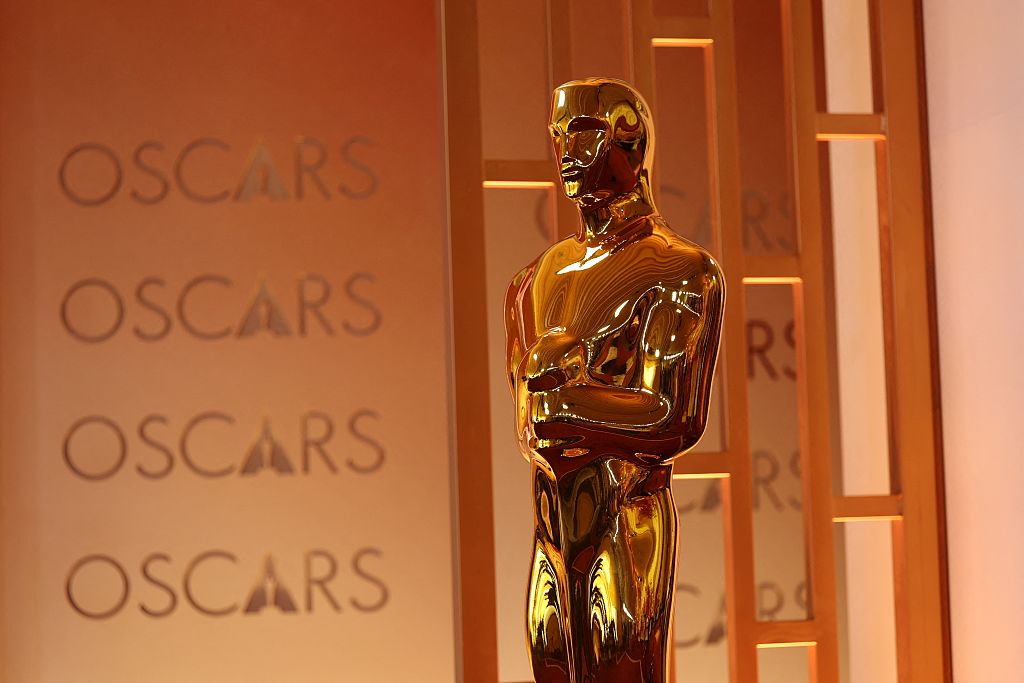
The organization responsible for presenting the annual Academy Awards recently unveiled a revised set of eligibility criteria, prominently featuring new stipulations regarding the deployment of generative artificial intelligence in film production. These updated regulations, released by the Academy of Motion Picture Arts and Sciences (AMPAS), underscore a commitment to preserving the integrity of human creative endeavor within the cinematic landscape, a move that reflects growing industry-wide discourse and anxieties surrounding AI’s rapid advancements.
Defining "Human Authorship" in a New Era
Under the newly ratified rules, a clear demarcation has been drawn: only performances that are officially recognized in a film’s legal documentation and are verifiably delivered by human actors, with their explicit consent, will be considered for an Academy Award. This directive directly addresses the burgeoning trend of digitally created or manipulated likenesses and synthetic performances. Concurrently, the Academy has affirmed that screenplays submitted for consideration must unequivocally originate from human authorship, effectively precluding scripts generated entirely or predominantly by artificial intelligence systems.
Furthermore, AMPAS has reserved the prerogative to request supplementary documentation and clarification concerning the extent of AI integration within any submitted film, particularly concerning claims of "human authorship." This provision suggests an anticipated need for scrutiny and a proactive stance against potential circumvention of the new guidelines. The Academy’s decision arrives at a pivotal moment, as generative AI technologies are rapidly reshaping creative processes across various sectors, prompting profound questions about authenticity, intellectual property, and the future of human artistic expression.
The Rise of AI in Creative Fields: A Historical Context
The integration of technology into filmmaking is hardly new; visual effects have evolved from rudimentary practical effects to sophisticated computer-generated imagery (CGI) over decades. However, the recent explosion of generative AI marks a qualitative shift. For years, AI and machine learning algorithms have assisted in post-production, data analysis, and even script development (e.g., predictive analytics for story beats). Yet, these tools largely remained in an assistive capacity, enhancing human creativity rather than replacing it.
The landscape began to transform dramatically in the early 2020s with the public release of powerful generative models capable of producing highly realistic text, images, audio, and eventually video from simple prompts. Tools like DALL-E, Midjourney, Stable Diffusion, and ChatGPT demonstrated an unprecedented ability to create content that, at first glance, could pass for human-made. This technological leap immediately sparked both excitement and alarm within creative communities.
Specific instances have highlighted the immediate relevance of these new rules. Reports have surfaced about an independent film project intending to feature an AI-recreated version of actor Val Kilmer, leveraging his voice and likeness. Similarly, the emergence of AI-generated "performers" like Tilly Norwood, who has garnered media attention for her synthetic artistic output, underscores the commercialization of purely digital entities. The development of advanced video generation models, such as those that can create complex scenes from text prompts, has also led some filmmakers to express deep concern over the potential for job displacement and the devaluation of human artistic skill. These developments painted a clear picture of an industry on the cusp of profound transformation, necessitating a clear regulatory response from established institutions like the Academy.
The 2023 Hollywood Strikes: AI at the Forefront
The Academy’s updated rules are deeply rooted in the contentious labor disputes that gripped Hollywood in 2023. Both the Writers Guild of America (WGA) and the Screen Actors Guild – American Federation of Television and Radio Artists (SAG-AFTRA) included the regulation of artificial intelligence as a central demand in their negotiations with the Alliance of Motion Picture and Television Producers (AMPTP).
Writers expressed significant apprehension about AI models being trained on their copyrighted works without compensation or consent, fearing that studios could use AI to generate scripts or script components, thereby diminishing their need for human writers. The WGA successfully secured protections that prevent AI from writing or rewriting literary material and ensure that AI-generated material cannot be used to undermine a writer’s credit or compensation.
Actors, similarly, voiced profound concerns about the use of their likenesses and voices being scanned and replicated by AI for indefinite use without fair compensation or ongoing consent. The fear was that studios could create digital doubles of actors, particularly background performers, and use them in perpetuity for various projects without re-employing the original human. SAG-AFTRA’s eventual agreement included groundbreaking provisions requiring consent and compensation for the use of digital replicas, and established limitations on how AI can be used to create synthetic performances. These strikes served as a stark reminder of the ethical and economic challenges posed by AI, directly influencing the Academy’s subsequent policy decisions.
Broader Industry and Cultural Ramifications
The impact of AI’s burgeoning presence extends beyond the glitz of Hollywood. The publishing industry has also grappled with similar dilemmas. Instances have occurred where publishers have retracted novels due to concerns about undisclosed AI involvement in their creation. Furthermore, various literary and genre-specific awards, particularly within the science fiction and fantasy communities, have already moved to declare AI-generated works ineligible, emphasizing the importance of human authorship and artistic integrity.
This widespread pushback from creative groups highlights a fundamental philosophical debate: what constitutes art when a machine can mimic or even surpass human creative output? For many, art is inextricably linked to human experience, intention, and vulnerability. The human element—the struggle, the unique perspective, the emotional resonance—is often seen as the essence of true artistic expression. If a machine can generate a compelling narrative or a photorealistic image, does it carry the same weight, meaning, or value as something conceived and executed by a human? The Academy’s stance is a powerful affirmation of the latter perspective, signaling that the human touch remains paramount for the industry’s most prestigious accolades.
Navigating the Nuances: Challenges and Interpretations
While the Academy’s rules provide a clear direction, their practical implementation presents significant challenges. Defining "human-authored" and "demonstrably performed by humans" in an age of increasingly sophisticated AI tools can be complex. What if a writer uses an AI assistant to brainstorm ideas, structure a plot, or even generate initial drafts that are then heavily edited and refined by a human? Where is the line between an assistive tool and a creative agent?
Similarly, in performance, how will the Academy distinguish between traditional CGI enhancements, which have long been an accepted part of filmmaking, and AI-generated elements that fundamentally replace a human performance? For instance, de-aging technology has been used on actors for years; is that different from creating an entirely new digital persona based on an actor’s likeness without their direct performance? The rules specify "demonstrably performed by humans with their consent," which implies a direct physical or vocal contribution. However, the spectrum of AI involvement, from minor pre-visualization to full character generation, will require careful interpretation.
Industry experts anticipate a "centaur" approach to AI, where humans and AI collaborate, with the human remaining firmly in the driver’s seat. The Academy’s rules seem designed to endorse this collaborative model, provided the human input and creative control are dominant and verifiable. The burden of proof for "human authorship" and performance will likely fall on the submitting filmmakers, potentially requiring new levels of transparency in production processes.
Market and Cultural Impact: The Future of Storytelling
The Academy’s decision is likely to have a significant market and cultural impact. For filmmakers and studios, these rules establish a clear incentive to prioritize human creative input, especially in projects aspiring for critical acclaim and awards recognition. This might lead to a bifurcation in the industry: one segment that embraces AI for cost-efficiency and rapid content generation, and another that champions human-centric artistry, particularly for prestigious productions.
For audiences, these guidelines could foster a renewed appreciation for human craftsmanship in cinema. In an era where deepfakes and AI-generated content can blur the lines of reality, an award like the Oscar, explicitly honoring human endeavor, reinforces the value of genuine artistic expression. It could also influence consumer perception, with some viewers potentially valuing content known to be purely human-created over AI-assisted or AI-generated works.
Ultimately, the Academy’s rules solidify its role not just as an awards body, but as a guardian of artistic standards and ethical practices within the film industry. By drawing a firm line, AMPAS is sending a powerful message about what it believes truly constitutes an Oscar-worthy achievement: the unique, irreplaceable spark of human creativity.
A Defining Moment for Artistic Recognition
These new regulations represent a landmark moment in the ongoing dialogue between technological advancement and artistic integrity. As generative AI continues its rapid evolution, the creative industries will face continuous pressure to adapt, innovate, and define their boundaries. The Academy of Motion Picture Arts and Sciences, by explicitly excluding AI-generated performances and screenplays, has taken a definitive stance, championing the enduring value of human artistry at the highest echelons of cinematic recognition. This decision not only sets a precedent for future awards cycles but also contributes significantly to the broader cultural conversation about the essential role of humanity in the creation of art.