Azin Asro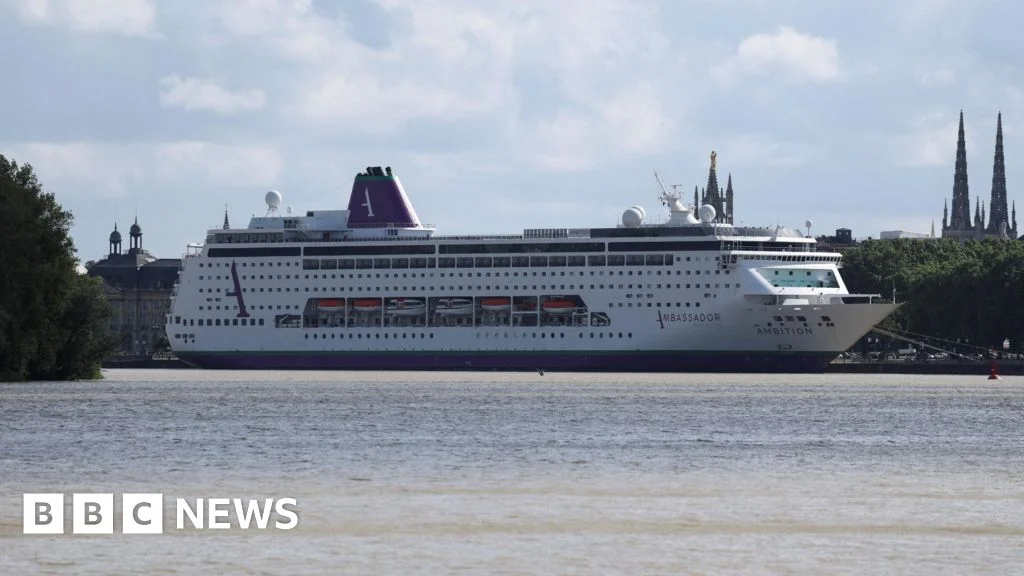
A large cruise vessel, the Ambition, operated by the UK-based Ambassador Cruise Line, has been effectively quarantined in the French port of Bordeaux after a significant number of passengers and at least one crew member reported symptoms consistent with a gastrointestinal illness. The incident has led to the temporary confinement of over 1,100 guests and 500 crew members, disrupting their travel plans and raising concerns about public health on international voyages. Local health officials in Bordeaux confirmed that approximately 49 individuals initially presented with symptoms, prompting immediate and stringent containment measures.
Three passengers identified as exhibiting the illness’s more acute manifestations were isolated in their cabins, while the broader contingent of travelers found their scheduled disembarkation in Bordeaux suspended indefinitely. This precautionary move, enforced by French health authorities, underscores the serious nature of onboard health outbreaks, particularly given the close quarters and shared amenities inherent to cruise ship environments. The situation developed after the Ambition commenced its journey from Belfast on May 8, subsequently stopping in Liverpool before heading towards its French destination.
A Developing Health Emergency at Sea
The Ambassador Cruise Line, headquartered in Essex, provided an update on Wednesday morning, stating that 48 passengers and one crew member were actively displaying symptoms of gastrointestinal illness. The operator further acknowledged a noticeable increase in reported cases following the ship’s stop in Liverpool, indicating a potential transmission point or an acceleration of an existing issue. Gastrointestinal illnesses, often characterized by diarrhea and vomiting, are frequently caused by pathogens such as norovirus or foodborne bacteria. These highly contagious agents can spread rapidly within confined communities, making cruise ships particularly susceptible.
Among those affected by the unexpected turn of events is David Munster from Dundonald in County Down, who is traveling with his wife. He described the uncertainty pervading the ship, expressing hope that passengers might still be permitted to explore Bordeaux, a key highlight of their itinerary. Munster recounted being informed of the illness’s spread after departing Liverpool, observing diligent clean-up efforts by staff, though he had not personally witnessed people falling ill. His account highlights the dual reality onboard: a segment of passengers experiencing illness and isolation, while others navigate a journey under the shadow of a health emergency, witnessing the intensified operational response. The dedication of the crew in maintaining hygiene and attending to sick passengers was noted as commendable by those on board, despite the challenging circumstances.
Adding a somber note to the unfolding situation, the cruise operator confirmed the death of a 92-year-old male passenger on Sunday. However, the company emphasized that this individual did not report any symptoms related to the gastrointestinal illness, and the official cause of death remains subject to a coroner’s investigation. Ambassador Cruise Line extended its deepest sympathies and assured comprehensive support to the deceased’s friends and family during this difficult time. While unrelated to the current outbreak, the fatality underscores the complex health considerations that cruise lines must manage, particularly with an often elderly passenger demographic.
Cruise Ship Hygiene Protocols and Public Health Challenges
Managing infectious diseases on cruise ships represents a unique public health challenge. The enclosed nature of these vessels, coupled with a transient population drawn from diverse geographical regions, creates an ideal environment for rapid pathogen transmission. Consequently, the cruise industry has developed extensive health and safety protocols, often exceeding those found in many land-based hospitality sectors. These measures encompass rigorous sanitation, comprehensive medical facilities, and robust response plans for outbreaks.
Following the initial reports of illness on the Ambition, the Ambassador Cruise Line swiftly activated its enhanced sanitation and prevention protocols. These measures, consistent with established public health guidelines, included intensified cleaning and disinfection across all public areas of the ship. Furthermore, guests received ongoing guidance regarding meticulous hand hygiene and the critical importance of promptly reporting any symptoms to the onboard medical team. Such proactive steps are crucial in containing outbreaks and minimizing further spread.
Historically, gastrointestinal illnesses, particularly norovirus, have been a persistent concern for the cruise industry. Dubbed the "winter vomiting bug," norovirus is highly contagious and can survive on surfaces for extended periods, making eradication difficult. Major outbreaks in the late 1990s and early 2000s spurred significant advancements in cruise ship sanitation and public health surveillance. Organizations like the U.S. Centers for Disease Control and Prevention (CDC) established comprehensive Vessel Sanitation Programs (VSP), setting stringent standards for food safety, water quality, medical facilities, and hygiene practices on ships calling at U.S. ports. While the Ambition is a UK-operated vessel primarily operating in European waters, similar regulatory frameworks and best practices are adopted globally, often influenced by international health organizations and national agencies like the UK Health Security Agency (UKHSA) and French health authorities. The COVID-19 pandemic further amplified awareness and investment in advanced air filtration, enhanced cleaning technologies, and sophisticated contact tracing capabilities, setting a new benchmark for onboard health security.
The UK Health Security Agency has acknowledged awareness of the outbreak on the Ambition and is actively liaising with French authorities regarding British nationals on board. This international cooperation is vital in managing cross-border health incidents, ensuring consistent health advisories and coordinated responses. The regional health agency for Nouvelle-Aquitaine dispatched a medical team to the ship in Bordeaux to conduct on-site assessments and collect samples, which were subsequently transported to Bordeaux University Hospital for urgent analysis. The suspension of passenger disembarkation was explicitly stated as a precautionary measure, allowing time for test results to determine the exact nature of the illness and guide subsequent public health decisions.
Navigating the Broader Impact: Passenger Experience and Industry Repercussions
The unexpected detention of a cruise ship due to an illness outbreak has multifaceted implications, impacting both the immediate experience of those on board and the broader cruise industry. For passengers, the disruption can range from disappointment over missed port calls and shore excursions to significant anxiety about their health and safety. The feeling of being "trapped" can erode the sense of leisure and freedom that is central to the cruise experience. Many travelers invest considerable time and money into their voyages, and an unforeseen quarantine can lead to frustration, financial claims, and a lasting negative impression. The social impact extends to family members awaiting their return, who may also experience worry and uncertainty.
From an industry perspective, such incidents carry significant reputational and economic risks. News of an outbreak can deter future bookings, leading to financial losses for the cruise line. The cost of managing an outbreak—including enhanced sanitation, medical care, potential compensation, and itinerary changes—can be substantial. Cruise lines strive to project an image of pristine luxury and carefree travel; thus, health crises, even if swiftly managed, can undermine consumer confidence. The delicate balance lies in transparently addressing the issue while reassuring the public about the comprehensive safety measures in place. Effective communication, coupled with visible and robust action, becomes paramount in mitigating long-term damage to brand perception.
Neutral analytical commentary highlights the complex interplay between commercial interests, passenger welfare, and public health imperatives. Cruise operators must navigate a maze of international maritime laws, national health regulations, and passenger expectations. The swift, decisive action taken by French authorities in Bordeaux exemplifies the paramount importance placed on public health, prioritizing containment over the convenience of individual travel plans. This incident serves as a stark reminder of the inherent vulnerabilities in any large-scale communal living environment, especially one that traverses international waters and hosts a global demographic.
The Path Forward: Investigation and Resolution
The immediate future for the Ambition and its passengers hinges on the results of the laboratory tests being processed at Bordeaux University Hospital. These results, expected to take at least six hours, will be crucial in identifying the specific pathogen responsible for the outbreak. Confirmation of the illness, whether norovirus or another agent, will guide the subsequent course of action, potentially including further isolation protocols, specific treatments, and a clearer timeline for allowing passengers to disembark or for the ship to resume its voyage.
The collaborative efforts between Ambassador Cruise Line, French regional health agencies, and the UK Health Security Agency are essential for a comprehensive and coordinated response. This network of oversight ensures that international best practices are followed and that the welfare of all passengers and crew, regardless of nationality, remains the highest priority. The cruise operator reiterated its profound gratitude for the patience, understanding, and cooperation demonstrated by its guests and crew during this challenging period, underscoring the collective effort required to manage such an unforeseen event.
Ultimately, this incident in Bordeaux underscores the continuous vigilance required within the cruise industry to uphold stringent health standards. While outbreaks are relatively infrequent given the millions who cruise annually, their occurrence necessitates swift, transparent, and medically sound responses. The resolution of the Ambition‘s situation will not only bring relief to those on board but also offer valuable lessons for refining health protocols across the global maritime travel sector, reinforcing the industry’s commitment to passenger safety and well-being.






 Amir Mahmud