Azin Asro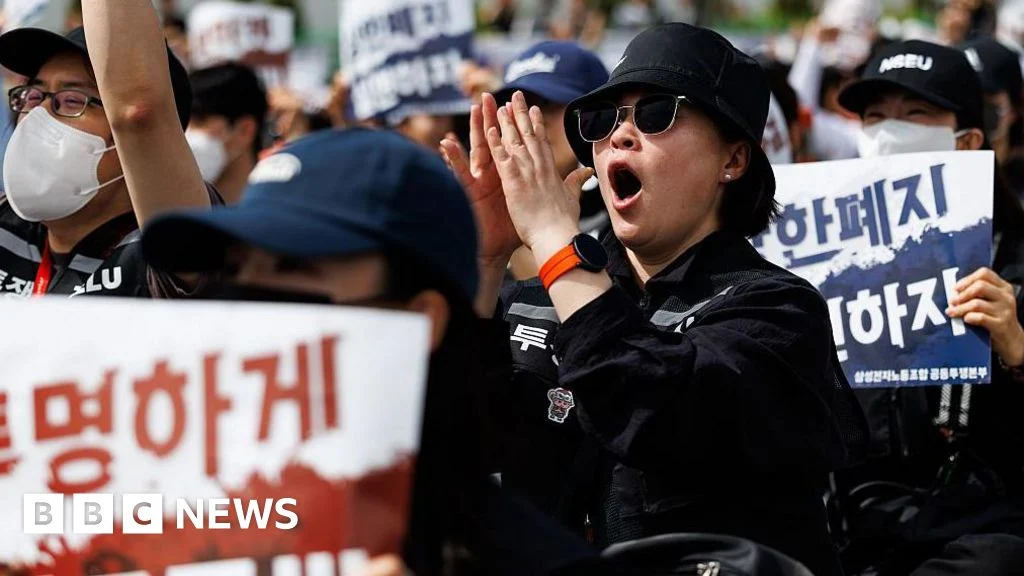
A significant industrial dispute at Samsung Electronics, the world’s preeminent memory chipmaker, has been temporarily defused following a last-minute tentative pay agreement with its largest labor union. This breakthrough has averted a planned strike that threatened to send ripple effects through the global technology supply chain, particularly during a period of unprecedented demand for artificial intelligence (AI) data center components. The National Samsung Electronics Union (NSEU), representing nearly 48,000 employees, announced the suspension of industrial action, originally slated to commence on Thursday, as its members prepare to vote on the proposed deal between May 22 and 27. The eleventh-hour accord underscores the escalating pressures within the tech sector to equitably distribute the burgeoning profits generated by the AI revolution, while also highlighting the growing assertiveness of labor in South Korea’s traditionally corporate-dominated economy.
The AI-Driven Profit Boom and Labor Discord
At the heart of the dispute lies the contentious issue of profit distribution, specifically how the substantial gains from the surging demand for AI memory chips should be allocated among Samsung’s diverse workforce. The core contention arose from Samsung’s initial proposal to award significantly more generous bonuses to its 27,000 staff members involved in the production of high-margin memory chips, with some reports indicating these bonuses could be at least six times higher than those offered to employees in other divisions, such as those manufacturing less advanced chips or consumer electronics. The union vehemently argued that the remaining 23,000 workers, who contribute to the creation of various semiconductor products for major clients like Tesla and Nvidia, should not be marginalized in the company’s financial success. Their demand for a more equitable sharing of profits reflects a broader sentiment that all employees, regardless of their direct involvement in the most lucrative segments, contribute to the company’s overall prosperity.
The escalating tensions within Samsung are not isolated but rather indicative of a wider trend sweeping across the semiconductor industry. The advent of generative AI has triggered an insatiable appetite for specialized high-bandwidth memory (HBM) chips, driving unprecedented revenue growth for manufacturers capable of producing these complex components. Samsung, as a leader in both DRAM and NAND flash memory, and with its burgeoning foundry business, stands at the epicenter of this AI-driven boom. Its operating profit for the January to March quarter reportedly soared by approximately 750% compared to the previous year, pushing its market capitalization past the $1 trillion mark in May. Such staggering financial performance inevitably fuels expectations among the workforce for a commensurate share of the prosperity, especially when rival companies are setting new precedents for employee compensation.
Samsung’s Global Semiconductor Dominance
To fully grasp the magnitude of this labor dispute, one must appreciate Samsung’s unparalleled position in the global technology landscape. Headquartered in Suwon, South Korea, Samsung Electronics is a cornerstone of the broader Samsung Group, a sprawling conglomerate that alone accounts for roughly one-fifth of South Korea’s entire economic output. Its influence extends far beyond its home country, touching virtually every facet of the modern digital world. The company is not only the world’s largest memory chipmaker by sales but also a critical supplier of components essential for a vast array of devices and infrastructure, including the advanced processors powering AI data centers, the memory modules in millions of smartphones and laptops, and crucial components for automotive electronics.
Samsung’s journey to global dominance began decades ago, evolving from a small trading company founded in 1938 into a multinational titan. Its strategic investments in semiconductor manufacturing, particularly in the 1970s and 80s, laid the groundwork for its current leadership. The company’s relentless pursuit of technological innovation and massive capital expenditure in cutting-edge fabrication facilities allowed it to outpace competitors and establish a formidable presence in the memory market. Today, its diversified portfolio includes not just memory chips (DRAM, NAND flash, and the increasingly vital HBM), but also foundry services (manufacturing chips designed by other companies), logic chips, consumer electronics, and displays. A disruption at any point in Samsung’s vast production network, therefore, carries the potential for significant global repercussions, from delaying new product launches by tech giants to exacerbating existing supply chain vulnerabilities.
Evolving Labor Relations in South Korea
The very existence of a powerful union at Samsung Electronics represents a significant shift in South Korea’s corporate culture, particularly within its powerful family-controlled conglomerates, known as "chaebols." For decades, Samsung was famously known for its "no-union" policy, a stance that was fiercely maintained through various strategies. However, evolving labor laws and increasing worker activism led to the formation of the NSEU in 2019, which has steadily grown in membership and influence. This recent dispute marks the first time the union has threatened a full-scale strike, signaling a new era of employee empowerment within the company.
The context of this dispute is further shaped by the actions of Samsung’s competitors. Last year, rival South Korean chipmaker SK Hynix, which is also a major player in the HBM market, abolished its bonus pay cap for a decade. This move resulted in bonuses that were reportedly more than three times higher than those offered to Samsung employees, leading to a noticeable attrition of talent from Samsung to SK Hynix. This competitive pressure on talent retention likely pushed Samsung to propose substantial bonuses for its memory chip division workers, with reports suggesting a figure of 607% of their annual salary, surpassing SK Hynix’s offerings. However, the stark contrast with the 50% to 100% bonuses proposed for employees in other business units ignited the union’s strong objections. The union’s demands included not only the abolition of the 50% annual salary bonus cap but also the allocation of 15% of the company’s annual operating profit into a bonus pool to be distributed among all workers, reflecting a desire for a more formalized and transparent profit-sharing mechanism.
This development reflects a broader cultural shift in South Korea, where younger generations of workers are increasingly demanding fairer compensation, better working conditions, and a greater voice in corporate decision-making, challenging the traditional hierarchical structures prevalent in chaebols. The rise of strong unions and their successful negotiation efforts at companies like Samsung could set a precedent for labor relations across the country’s industrial landscape.
The Tentative Agreement and Its Implications
While specific details of the tentative agreement remain under wraps pending the union’s ratification vote, the immediate suspension of the strike has brought a collective sigh of relief to the global technology sector. Samsung’s official statement following the deal reflected a conciliatory tone, affirming the company’s commitment to "build a more mature and constructive labor-management relationship to ensure that such an incident never happens again." This suggests that management recognizes the need for ongoing dialogue and potentially revised strategies for employee engagement and compensation in the future.
The financial markets reacted positively to the news, with Samsung’s shares rising by more than 5% on Thursday morning after the announcement. This immediate surge underscores the market’s sensitivity to potential disruptions at a company of Samsung’s scale and importance. Investors and analysts understand that stability in labor relations is crucial for maintaining production schedules, ensuring timely product delivery, and ultimately safeguarding the company’s profitability and market share in an intensely competitive environment. The tentative deal, therefore, represents a crucial step towards stabilizing internal operations and reassuring external stakeholders.
However, the agreement is only tentative, and its full implications will only become clear after the union members cast their votes. Should the deal be rejected, the specter of a strike could re-emerge, potentially leading to renewed negotiations or even a different form of industrial action. The outcome of this vote will be closely watched, not just by Samsung employees and management, but by other major tech companies and labor organizations globally, as it could signal broader trends in how the spoils of the AI boom are distributed.
Potential Economic and Supply Chain Ramifications
Had the strike proceeded, its economic ramifications would have been substantial and far-reaching. Financial institutions had already begun to quantify the potential damage. According to an analysis by JP Morgan, a prolonged strike could have impacted Samsung’s operating profit by an estimated 21 trillion won to 31 trillion won ($14.08 billion to $20.79 billion). Such a significant financial hit would not only affect Samsung’s bottom line but also ripple through the South Korean economy, potentially leading to lower national sales, a decrease in investment outflows, and reduced tax revenues.
Beyond the immediate financial impact on Samsung, a strike would have posed a severe threat to the already strained global technology supply chains. Samsung’s position as the world’s largest producer of memory chips means that any disruption to its production lines would inevitably lead to shortages, price increases, and delays for countless industries. Manufacturers of smartphones, laptops, servers, and even automobiles, all of whom rely heavily on Samsung’s components, would have faced significant challenges. The American Chamber of Commerce in Korea articulated these concerns, stating that "in today’s interconnected global economy, disruptions in strategically important industries can create ripple effects extending well beyond a single company or market." The chamber also warned that "competing regional manufacturing markets could benefit if concerns over predictability and continuity persist," implying that prolonged instability could encourage customers to diversify their supply chains away from South Korea.
Furthermore, the South Korean legal system had already intervened to mitigate the potential impact of a walkout. A court injunction granted to Samsung Electronics stipulated that staffing levels essential for safety protection, preventing facility damage, and maintaining product quality must remain at normal levels, thereby limiting the scope of any potential industrial action. The injunction also barred the union from occupying or locking company facilities and obstructing workers from entering, with fines of $74,000 per day for breaches. While such legal measures aim to protect critical infrastructure and economic stability, they also underscore the delicate balance between workers’ rights to strike and the broader societal and economic imperatives.
Looking Ahead: The Future of Tech Labor
The tentative resolution of Samsung’s strike threat is a pivotal moment, signaling a growing assertiveness of labor within the high-stakes technology sector. As artificial intelligence continues to redefine industries and generate unprecedented wealth, the question of how these profits are shared among those who contribute to their creation will only grow more pertinent. This episode at Samsung serves as a potent case study for other global tech giants, illustrating the increasing pressure to not only innovate technologically but also to evolve their approaches to employee compensation, talent retention, and labor relations. The outcome of the union’s vote will not just determine the immediate future of Samsung’s workforce, but also potentially set a new benchmark for how companies navigate the complex intersection of technological advancement, corporate profitability, and social equity in the AI era.







 Amir Mahmud