Amir Mahmud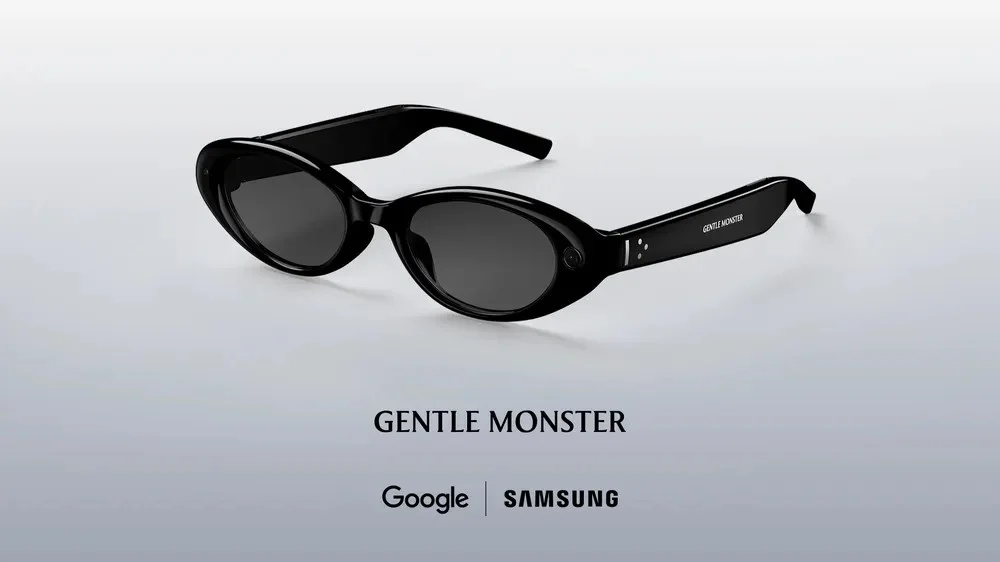
At Google’s annual I/O developer conference, a select group of attendees received a glimpse into the future of wearable technology, experiencing firsthand the company’s advanced artificial intelligence-powered glasses. This iteration represents a significant leap beyond the more immediate release of audio-only smart glasses, offering a full audio and visual experience through an innovative in-lens display. The demonstration underscored Google’s ambition to integrate AI seamlessly into daily life, transforming how individuals interact with digital information and the physical world.
A New Chapter in Wearable Technology
The announcement and subsequent prototype demonstration at Google I/O mark a pivotal moment in the evolution of augmented reality (AR) and extended reality (XR) hardware. Unlike the audio-centric smart glasses slated for release later this year, these cutting-edge spectacles incorporate a sophisticated in-lens display, projecting contextual information directly into the wearer’s field of view. This capability allows for the overlay of dynamic widgets, presenting data ranging from real-time weather updates and turn-by-turn navigation to Uber pickup details, live language translation, and even custom-designed AI-powered applications. The underlying platform, built on Android XR, signifies Google’s commitment to fostering a robust ecosystem for developers, encouraging innovation in this burgeoning space.
This initiative is not Google’s first foray into smart eyewear. The company famously launched Google Glass a decade ago, an ambitious project that promised to revolutionize personal computing. Google Glass, however, faced significant hurdles, including privacy concerns due to its integrated camera and a high price point, which led to a mixed public reception and the pejorative "Glasshole" moniker. After its initial consumer launch in 2013, Glass eventually pivoted to an enterprise-focused product. This historical context is crucial for understanding the current development. Google appears to have learned valuable lessons, emphasizing design aesthetics through partnerships with lifestyle brands and focusing on practical, privacy-conscious applications powered by more advanced AI. The re-engagement with wearable visual computing signals a renewed confidence, bolstered by significant advancements in miniaturization, battery technology, and artificial intelligence, particularly large language models like Gemini.
Design and Development Philosophy
The prototype glasses showcased at I/O are the result of strategic collaborations with prominent eyewear and technology companies, including Warby Parker, known for its fashionable and accessible frames; Gentle Monster, a leader in avant-garde eyewear design; and Samsung, a global electronics giant. These partnerships highlight a deliberate shift towards integrating advanced technology into aesthetically pleasing and socially acceptable form factors. The initial Google Glass was often criticized for its overtly technological appearance, making wearers stand out. By collaborating with established fashion brands, Google aims to overcome this barrier, creating smart glasses that users will genuinely want to wear.
The device demonstrated was explicitly a prototype, designed primarily to test the core display technology and its impact on battery life, rather than to showcase final consumer-ready aesthetics. This approach is common in product development, allowing engineers to iterate rapidly on fundamental technical challenges without being constrained by industrial design specifics like fit, shape, and overall dimensions. Consequently, the test unit lacked some features expected in a shipping product, such as automatic detection of when the glasses are worn or removed. This distinction is critical for understanding the current stage of development: Google is refining the "insides" of the device, laying the groundwork for future iterations that will combine cutting-edge functionality with refined design. Both the audio-only and future display versions are engineered to seamlessly pair with existing iOS and Android smartphones, ensuring broad compatibility and ease of integration into users’ current digital lives.
Interactive AI: Gemini at Your Command
Central to the functionality of these new glasses is Google’s sophisticated AI model, Gemini. Activating Gemini is designed to be intuitive: a two-second press on the right temple of the frame triggers a distinct startup chime, signaling that the AI assistant is active and listening. While the prototype simultaneously activated the camera with Gemini, the forthcoming consumer version will offer users configurable privacy settings, allowing them to choose whether the camera is enabled automatically. This flexibility directly addresses past privacy concerns associated with always-on recording capabilities in smart wearables.
During the hands-on demonstration, early interactions with Gemini showcased its potential. Playing music via voice command was straightforward, though evaluating sound quality in the noisy conference environment proved challenging. The music, even at maximum volume, was difficult to hear with crisp detail, suggesting that while the glasses may suffice for ambient listening during activities like walking or household chores, they are unlikely to replace high-fidelity earbuds for critical listening. However, a notable advantage of the open-ear audio design, which projects sound from speakers embedded in the frame, is the ability to remain fully aware of one’s surroundings and engage in conversations without removing the device—a stark contrast to the often isolating experience of traditional earbuds, even those with transparency modes. Simple gestures, like a single tap on the side of the frame, allowed for quick control over media playback.
The integrated camera also unlocks powerful AI-driven capabilities. Beyond conventional photo capture via a button press, users can issue voice commands to Gemini, instructing it to "take a photo and turn the person into an anime character." This real-time, generative AI manipulation highlights the creative potential of the platform. The process involves sending the captured image to the paired smartphone, then to Google’s backend servers (Gemini and Nano Banana) for AI processing, before returning the edited version. In the high-traffic Wi-Fi environment of Google I/O, this round-trip took approximately 45 seconds, indicating that robust, low-latency connectivity will be crucial for a seamless user experience in a commercial product. Future updates are expected to enable video capture with a long press, accompanied by a video thumbnail preview in the display.
Practical Applications and User Experience
The in-lens display, even in its prototype form, offered a glimpse into a truly augmented reality. A basic home screen provided essential information like weather updates and a countdown to the I/O event. Users could also configure quick launchers for frequently used applications such as Google Maps or Translate, streamlining access to core functionalities. The prototype featured a single display over the right eye, though the underlying Android XR platform is designed to support both single and dual displays, as well as audio-only configurations. The reporter noted some fuzziness in the display image, which was attributed potentially to the use of prescription contact lenses optimized for different focal lengths. This experience also led to eye strain, raising questions about optical comfort and prescription integration in future designs.
One of the most compelling demonstrations was the real-time language translation. Backed by Google Translate on the connected smartphone, the glasses seamlessly detected spoken Spanish, translated it into English text displayed in the lens, and simultaneously provided an audio translation via Gemini. This feature alone holds immense potential for world travelers, international business professionals, and anyone engaging in cross-cultural communication, offering a truly immersive and hands-free translation experience. Even the audio-only glasses will offer this translation capability, with text transcription viewable on the paired phone if desired, alongside the real-time audio.
Navigation also received a significant upgrade. Users can simply ask Gemini for directions to a specific location, or even a vague request like "the nearest coffee shop." Gemini activates Google Maps on the phone, and after a brief loading period, turn-by-turn directions are overlaid onto the real world. A glance forward displays the next maneuver, while looking down projects a blue dot on a map, allowing users to orient themselves by rotating in space, much like interacting with a map on a smartphone. Lifting one’s gaze returns the focus to walking, with the map receding from view. This intuitive interaction promises to reduce the need to constantly look down at a phone, enhancing safety and situational awareness. Seamless integration with Google Maps means saved destinations like "home" and "work" are readily available.
Object identification, a core feature of visual AI, was also put to the test. While the glasses smoothly identified a plant and answered questions about recipes in a book, they initially struggled with a replica of a Monet painting. This hiccup was attributed to the prototype not automatically enabling the camera, requiring manual activation through the app. Even after closer inspection and camera activation, it took a few prompts for Gemini to confirm the painting’s likely identity, suggesting that while the technology is powerful, context and precision in visual recognition still require refinement. Nevertheless, the ability to query the world around you without pulling out a phone represents a significant step towards ambient intelligence, where information is available on demand, integrated into your natural line of sight.
Challenges, Market Impact, and Future Outlook
Google’s continued investment in smart glasses, particularly those with integrated displays, signals a long-term vision for ambient computing, where technology recedes into the background, providing assistance only when needed. However, significant challenges remain before these devices can achieve widespread consumer adoption. Battery life, miniaturization of components, display clarity, and thermal management are critical technical hurdles. The user experience also needs refinement, ensuring comfort, seamless integration of prescription lenses, and intuitive, consistent interactions.
The social and cultural impact of camera-equipped wearables remains a contentious issue. Google’s explicit mention of configurable camera activation and clear interaction cues suggests an awareness of privacy concerns. The success of these new glasses will largely depend on Google’s ability to foster trust and demonstrate a clear value proposition that outweighs potential anxieties.
The competitive landscape in wearable AR is intensifying. Companies like Meta, with its Ray-Ban Stories and Quest headsets, and Snap, with its Spectacles, are actively exploring this space. Apple is also widely rumored to be developing its own AR glasses, setting the stage for a fierce battle to define the next computing platform. Google’s strategy of launching audio-only glasses first, followed by display-enabled versions, can be seen as a cautious, phased approach to gather user feedback, refine technology, and build market acceptance incrementally. This also allows the company to capitalize on the immediate utility of AI-powered audio features while perfecting the more complex visual components.
Google intends to share more details about its Android XR display glasses later this year, coinciding with an expansion of its trusted tester program. While the prototype demonstrates impressive capabilities and a clear direction, the journey from "almost there" to a fully polished, mass-market consumer product is still ongoing. The promise of an intelligent, contextually aware digital assistant seamlessly integrated into everyday life, however, remains a powerful motivator for Google’s continued pursuit of smart eyewear.





 Azin Asro