Amir Mahmud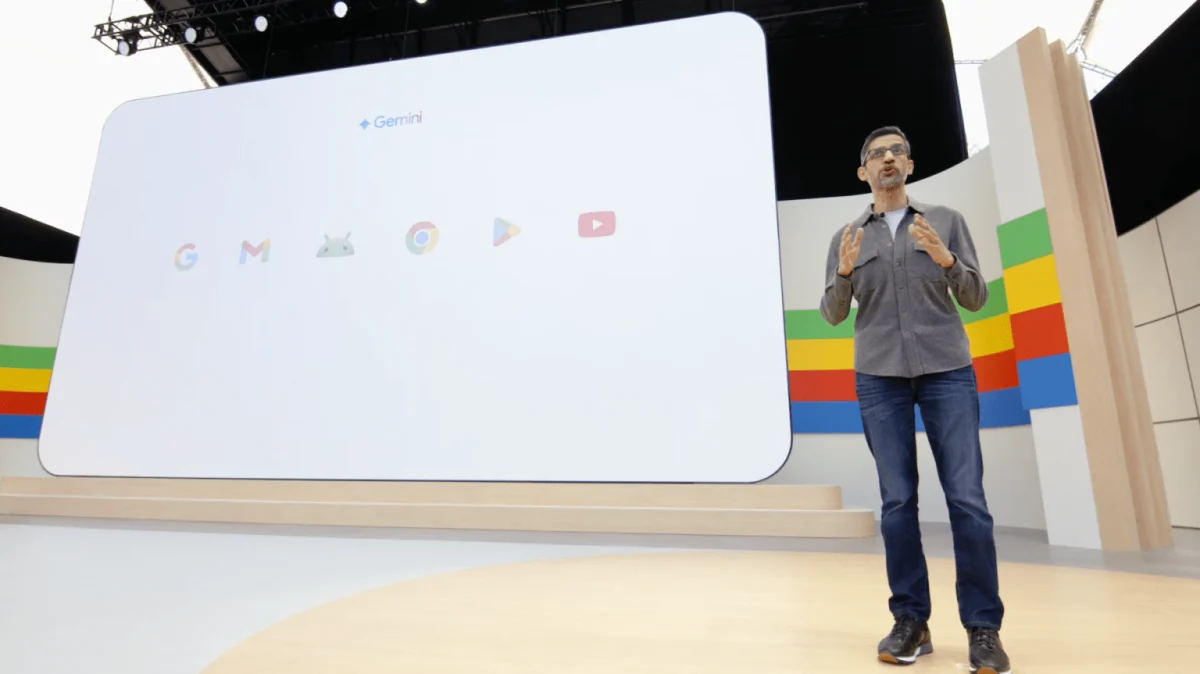
A significant transformation has swept across the digital landscape, as Google, the uncontested titan of internet search for decades, recently unveiled a radically re-imagined search experience. This ambitious overhaul prominently features artificial intelligence (AI)-generated summaries, a departure designed to provide instant answers and reduce the prominence of the traditional "10 blue links" model that has defined web navigation for a generation. However, the sheer scale and complexity of Google’s operations mean that such a monumental shift is prone to unforeseen challenges, particularly in handling the myriad "edge cases" that arise from billions of daily queries.
A Radical Shift: From Links to AI Summaries
The genesis of Google’s AI-centric search strategy can be traced back several years, culminating in its accelerated development following the public emergence of highly capable generative AI models like OpenAI’s ChatGPT in late 2022. This event ignited an intense industry-wide competition to integrate advanced AI into consumer products, placing immense pressure on Google to showcase its own formidable AI capabilities. For years, Google had been subtly weaving AI into its search results through features like Knowledge Panels, which provided quick facts about entities, and featured snippets, which extracted direct answers from web pages. These were precursors to the more aggressive, generative AI summaries now at the forefront.
At its annual Google I/O developer conference, the company previewed its vision for "Search Generative Experience" (SGE), emphasizing a future where AI would not just find information but synthesize and present it in a conversational, digestible format. This vision, now rolling out to a broader user base, aims to streamline information retrieval, theoretically saving users time by providing direct answers without needing to click through multiple links. The underlying premise is that for many queries, users are looking for definitive answers rather than a list of potential sources. This represents a fundamental rethinking of how users interact with the vastness of the internet, moving from a directory model to an intelligent assistant.
The "Disregard" Dilemma: An Unexpected Edge Case
While the new AI-powered search aims for efficiency, its implementation has not been without immediate friction. A recent incident involving a simple search for the word "disregard" has highlighted some of the unexpected consequences of this paradigm shift. When users input this common English verb into the updated Google Search, the results presented a peculiar and largely unhelpful experience.
Instead of an immediate dictionary definition or a concise summary of its usage, the AI-generated response occupied a substantial portion of the screen with what appeared to be an incomplete or contextually inappropriate answer. Below this prominent, yet uninformative, AI block, users were forced to scroll considerably before encountering the traditional web links, including the highly relevant Merriam-Webster dictionary entry. For many, the initial screen displayed little more than a vast expanse of empty space followed by an AI response that failed to deliver any conceivable value for a user specifically seeking the meaning or proper application of "disregard."
This specific example underscores a critical challenge in deploying large-scale AI systems: the difficulty in anticipating and effectively addressing every possible query. While generative AI excels at synthesizing information for complex, multi-faceted questions, it appears to struggle with the most basic, atomic informational requests, such as looking up a definition. The AI’s response in this instance, far from being a helpful summary, acted as a barrier, obscuring the very information a user would typically expect to find instantly from a search engine. The immediate utility for a user performing such a fundamental search was compromised, leading to frustration and confusion among a segment of the user base.
Competitor Contrasts: Bing’s More Measured Approach
The stark contrast in user experience becomes even more apparent when comparing Google’s new interface with that of its primary competitor, Microsoft’s Bing. Following its integration of OpenAI’s GPT models into its search engine, Bing has also embraced generative AI summaries. However, Bing’s approach has generally been perceived as less aggressive in its presentation.
For the same "disregard" query, Bing’s results, while incorporating AI elements, typically maintain a more traditional layout. Users are often presented with a clear, concise definition from a reputable dictionary at the top of the page, followed by relevant web links and potentially a less intrusive AI-generated summary or related information. This hybrid model suggests a more cautious integration, where AI augments rather than entirely replaces the established search paradigm. The information provided by Bing for this particular query was immediately useful, directly answering the implied user intent of seeking a definition or understanding of the word.
This comparison offers valuable analytical commentary on the divergent strategies in the ongoing AI search race. Microsoft, having been an early mover in integrating advanced generative AI with its search product, might have opted for a more iterative rollout, learning from user interactions and refining its approach. Google, on the other hand, perhaps spurred by the need to demonstrate its own AI leadership, has taken a more assertive stance, fundamentally altering the visual hierarchy and information delivery mechanism of its search results. The "disregard" example suggests that while Google’s ambition is grand, the execution still faces hurdles in optimizing for simplicity and immediate utility in all scenarios.
Broader Implications: User Experience, Trust, and the Web Ecosystem
The challenges highlighted by the "disregard" incident extend beyond a single word search. They touch upon profound implications for user experience, trust in information, and the broader web ecosystem. For decades, users have developed a deeply ingrained "muscle memory" for interacting with Google Search. The expectation of seeing a list of ranked links, often with the most authoritative sources near the top, is a learned behavior. A radical shift away from this familiar interface, especially when it leads to less efficient information retrieval for basic tasks, can be disorienting and erode user confidence.
A significant concern revolves around information accessibility and the potential for AI summaries to inadvertently obscure authoritative sources. If AI models prioritize synthesizing answers, there’s a risk that the original publishers and creators of that information—dictionaries, news organizations, academic institutions—might see reduced visibility and traffic. This could have substantial economic repercussions for these entities, many of whom rely on organic search traffic for revenue and audience engagement. The traditional "10 blue links" model, for all its simplicity, served as a democratizing force, guiding users to a diverse array of content creators. The AI-first approach could centralize information delivery, potentially diminishing the discoverability of specialized or niche websites.
Furthermore, the integrity and accuracy of AI-generated summaries are paramount. While the "disregard" case demonstrated a lack of utility rather than outright factual error, the broader challenge of "hallucinations" — where AI models generate plausible but incorrect information — remains a persistent concern. For a search engine that millions rely on for factual information, the risk of propagating inaccuracies is high. Maintaining a neutral, objective journalistic tone requires an unwavering commitment to factual accuracy, and the "black box" nature of many AI models makes it difficult to ascertain the provenance or verify the correctness of every generated response.
The economic model of search is also under scrutiny. Google’s vast advertising empire is inextricably linked to the "10 blue links" and the traffic they generate. How advertisers will integrate into an AI-summary-first world, and what impact this will have on Google’s revenue streams, remains an open question. If users receive direct answers without needing to click on links, the traditional impression and click-through metrics that drive ad placements could be fundamentally altered, affecting both Google’s bottom line and the economic viability of web publishers.
The Road Ahead: Refining the AI Search Paradigm
The initial rollout of Google’s AI-powered search is clearly a work in progress. The "disregard" example, along with other reported instances of peculiar or unhelpful AI responses, serves as valuable feedback for the company. AI development is inherently iterative, and it is highly probable that Google will continuously refine its algorithms, user interface, and overall approach based on real-world usage data and public commentary.
The tension between providing direct, synthesized answers and guiding users to a diverse and authoritative web of information is at the heart of this transformation. The challenge for Google, and indeed for all developers of AI-powered search, is to strike a delicate balance: leveraging AI’s power to enhance information retrieval while preserving the discoverability of original content, maintaining factual integrity, and ensuring a consistently positive user experience across the full spectrum of search queries. As the digital landscape continues its rapid evolution, the future of how we find and consume information will undoubtedly be shaped by how these formidable technological and user-centric challenges are addressed.







 Azin Asro