Amir Mahmud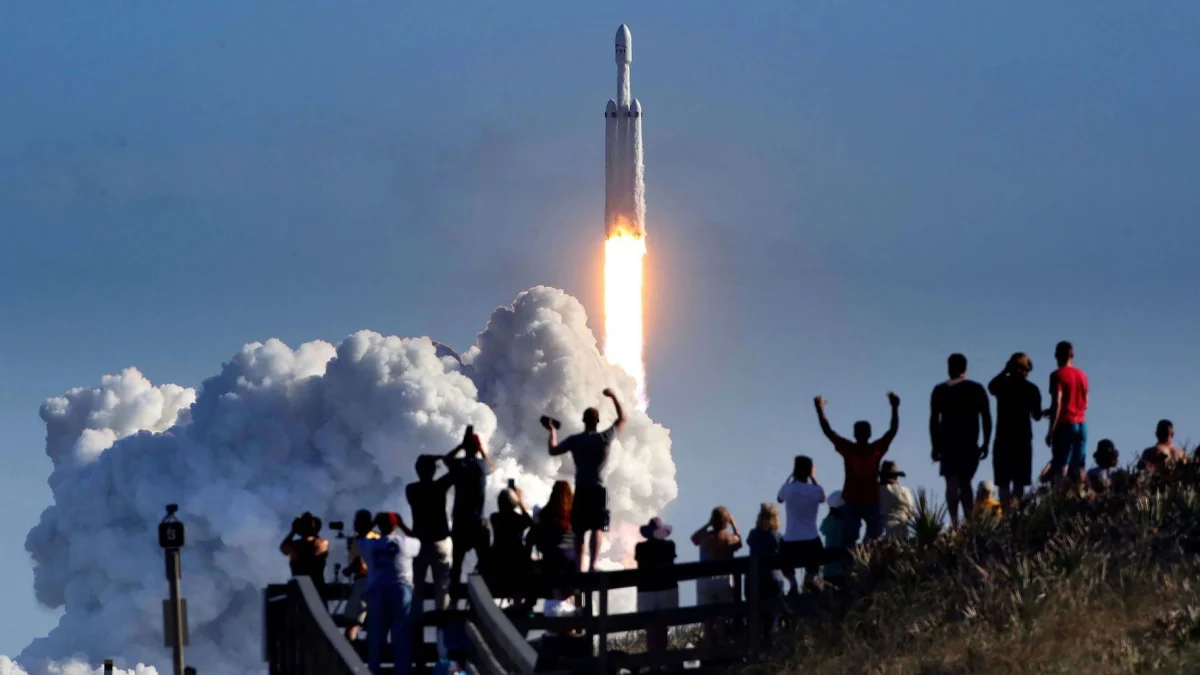
The public trading debut of SpaceX has ignited a whirlwind of market activity, briefly propelling the aerospace and satellite communications giant to a staggering valuation of $2.9 trillion. This meteoric ascent saw the company momentarily eclipse Amazon as the fifth-most valuable entity globally and approach the market capitalization of Microsoft, before share prices moderated by Tuesday’s market close. The dramatic fluctuations underscore intense investor interest and a speculative fervor surrounding the company’s ambitious pivot into artificial intelligence, a strategy that appears to be captivating the market despite conventional financial metrics.
Initial Public Offering and Market Debut
SpaceX, founded by Elon Musk in 2002 with the audacious goal of making life multi-planetary, officially entered the public markets on Friday, marking one of the most anticipated initial public offerings (IPOs) in recent memory. The debut saw the company valued at approximately $1.7 trillion, a figure that immediately placed it among the world’s largest enterprises. This momentous transaction successfully raised nearly $86 billion in fresh capital, providing a substantial infusion for the company’s capital-intensive ventures in space exploration and satellite internet.
The initial public offering represented a significant milestone for SpaceX, transitioning from a privately held entity to a publicly traded one, a move often undertaken by mature companies seeking liquidity for early investors and substantial capital for future expansion. However, in an unconventional strategy, SpaceX made only about 4% of its total shares available for public trading. This limited "float" — the number of shares freely tradable in the public market — was widely predicted by market analysts to create an environment ripe for significant price volatility, as demand could easily outstrip supply, leading to exaggerated price movements. Indeed, the subsequent trading days proved these predictions accurate, as the stock became a focal point of intense buying and selling pressure.
The AI Pivot: A New Frontier for Growth
The dramatic surge in SpaceX’s valuation following its IPO was not solely attributable to its established aerospace prowess but was significantly amplified by strategic announcements concerning its deepening foray into artificial intelligence. A pivotal development was the news of SpaceX’s intention to acquire Cursor, an AI coding company, in a deal valued at $60 billion in company shares. This acquisition signals a clear and aggressive strategic shift, positioning SpaceX not just as a leader in space technology but also as a formidable contender in the rapidly expanding artificial intelligence sector.
The move into AI is not entirely new for Elon Musk, who has been vocal about the transformative potential and existential risks of artificial intelligence for years. In 2023, Musk launched xAI, a dedicated AI company, with the stated goal of understanding the true nature of the universe. Initially a separate venture, xAI was subsequently integrated into SpaceX, consolidating Musk’s AI ambitions under the umbrella of his space enterprise. This integration, combined with the Cursor acquisition, reveals a deliberate strategy to embed advanced AI capabilities across SpaceX’s diverse operations, from optimizing rocket launches and satellite constellations to developing sophisticated data analysis for its Starlink network.
Musk himself has previously acknowledged the nascent state of his initial AI efforts, reportedly stating that xAI "was not built right [the] first time around" and that he was rebuilding it "from the foundations up." This candor, rather than deterring investors, seems to have fueled optimism that a revitalized and well-funded AI division within SpaceX could unlock unprecedented value. The market’s enthusiasm for AI technologies, particularly large language models and advanced computing, has been at an all-time high, with companies demonstrating even tangential connections to AI often experiencing significant valuation bumps. SpaceX’s explicit commitment and substantial investment in this domain have clearly tapped into this broader market trend, allowing investors to envision a future where its space infrastructure and AI capabilities synergize to create a uniquely powerful technological ecosystem.
Valuation Volatility and Market Dynamics
Tuesday’s trading day encapsulated the dramatic swings inherent in a limited float scenario, coupled with high investor anticipation. Following a 20% climb on Monday, its first full day of trading, SpaceX’s stock price soared even higher on Tuesday. The twin catalysts of the Cursor acquisition announcement and the commencement of options trading on SpaceX shares propelled its valuation to a peak of $2.9 trillion. However, this peak proved fleeting, as the company’s shares pared back some of those gains before the market closed, settling at a valuation of $2.6 trillion. The volatility continued into after-hours trading, witnessing SpaceX briefly surpass Amazon’s market capitalization for a second time before retreating once more.
The trading volume on Tuesday underscored the extraordinary market interest, with more than 300 million SpaceX shares changing hands. This figure represents over half of the 555 million shares available on the public market post-IPO, according to data from the Nasdaq stock exchange. Such high turnover in a short period for a limited float stock is a textbook recipe for price instability, as even moderate buying or selling pressure can disproportionately impact the share price.
This frenetic market activity stands in stark contrast to SpaceX’s current financial performance. The company reported a $4.9 billion loss on $18.7 billion in revenue last year. This is a significant divergence when compared to established tech giants like Amazon, which posted a $78 billion profit on $717 billion in sales in 2025. While growth companies are often valued on future potential rather than immediate profitability, the magnitude of SpaceX’s valuation, despite its current losses, highlights the intensely speculative nature of current market sentiment, particularly concerning companies perceived to be at the forefront of disruptive technologies like AI and space. Analysts point to the substantial capital raised in the IPO and the promise of a "trillions of dollars" AI business as key drivers, acknowledging that such claims, while bold, resonate strongly with investors seeking the next big growth story.
SpaceX’s Foundational Business: Rockets and Satellites
Beneath the speculative froth of its AI ambitions, SpaceX maintains a robust and groundbreaking core business centered on advanced rocketry and satellite internet services. Since its inception, the company has revolutionized the aerospace industry with its focus on reusability, dramatically reducing the cost of space access. The Falcon 9 rocket, a workhorse of the industry, has executed hundreds of successful launches, delivering payloads for government, commercial, and private clients. Its successor, the Starship program, represents an even more ambitious undertaking, designed for fully reusable, rapid-fire launches capable of transporting humans and cargo to the Moon and Mars.
Parallel to its rocketry achievements, SpaceX has rapidly deployed Starlink, a constellation of thousands of low Earth orbit (LEO) satellites providing high-speed, low-latency internet access globally. Starlink has become a significant revenue generator and a critical infrastructure provider, especially in underserved rural areas and conflict zones. The ongoing expansion of this network continues to be a major capital expenditure but also promises substantial future recurring revenue.
The company has also recently diversified its revenue streams with compute leasing deals, including non-binding agreements with prominent AI firms like Anthropic and Google. While these deals are still in their early stages and their full financial impact remains to be seen, they signify SpaceX’s intent to leverage its formidable computing infrastructure and network capabilities beyond its primary space operations. The integration of the acquired Cursor’s AI capabilities is expected to further enhance these diverse business segments, potentially creating efficiencies and new service offerings across its space and internet divisions, and contributing additional revenue once the acquisition closes in the third quarter.
The Visionary Behind the Volatility: Elon Musk’s Influence
No discussion of SpaceX’s market dynamics is complete without acknowledging the profound influence of its founder, Elon Musk. Known for his visionary leadership and often unconventional public pronouncements, Musk has a track record of disrupting industries, most notably with Tesla in the electric vehicle market. His personal brand, characterized by audacious goals and a willingness to challenge conventional wisdom, plays a significant role in shaping investor confidence and market perception of his ventures.
Musk’s ability to articulate a compelling, albeit sometimes futuristic, vision for his companies often translates into extraordinary market enthusiasm. For SpaceX, his long-term goals of colonizing Mars, establishing a lunar base, and creating a global internet utility through Starlink provide a powerful narrative that attracts a specific type of investor—one willing to bet on transformative, high-risk, high-reward endeavors. The "cult of personality" surrounding Musk means that his strategic decisions and even his social media activity can trigger significant market reactions, amplifying the inherent volatility of a newly public, high-growth stock. The market’s willingness to assign a trillion-dollar valuation to a company currently operating at a loss, largely based on promises of future AI dominance, is a testament to the enduring power of Musk’s influence and the belief in his capacity to deliver on ambitious technological breakthroughs.
Looking Ahead: Challenges and Opportunities
SpaceX’s journey as a public company is just beginning, and its path forward is fraught with both immense opportunities and significant challenges. On the opportunity front, continued innovation in reusable rocket technology, the expansion of the Starlink network to reach more subscribers, and the successful development of Starship for deep space missions all represent avenues for substantial growth. The integration of cutting-edge AI capabilities through the Cursor acquisition and the xAI division could unlock unforeseen synergies, potentially optimizing operations, enhancing data analysis, and developing new AI-powered products and services. The potential for a space-AI conglomerate to disrupt multiple industries is a powerful draw for investors.
However, the challenges are equally formidable. Technologically, the Starship program, while promising, faces complex engineering hurdles and regulatory approvals before it can achieve its full potential. The competitive landscape in both space launch services and satellite internet is intensifying, with established players and new entrants vying for market share. Furthermore, the financial viability of a "trillions of dollars" AI business, particularly for a company whose core expertise has been in aerospace, remains an unproven hypothesis. The market’s current valuation of SpaceX heavily discounts future profitability, placing immense pressure on the company to execute flawlessly on its ambitious AI strategy while continuing to innovate in its core space business. Regulatory scrutiny, potential supply chain disruptions, and the inherent risks of space exploration also pose ongoing concerns.
As SpaceX navigates the complexities of public ownership and pursues its dual ambitions in space and AI, the coming years will be a crucial test of its ability to convert visionary claims into sustained profitability and tangible technological leadership, all while managing the expectations of a highly engaged and often volatile market.




 Azin Asro