Amir Mahmud
The United States government has issued a stringent directive, ordering Anthropic, a prominent artificial intelligence developer, to immediately cease access to two of its most sophisticated AI models, Claude Fable 5 and Claude Mythos 5. This unprecedented action, announced by Anthropic on Friday evening, cites pressing national security concerns as the primary justification. While the company has complied with the mandate, it has publicly expressed strong disagreement with the government’s assessment, asserting that the decision is misguided.
The directive, which Anthropic indicated it received at 5:21 p.m. ET, compels the company to disable both models for all users globally. This goes beyond the initial scope of an export control order, which typically targets foreign nationals. Access to Anthropic’s other AI models remains unaffected by this ruling, isolating the impact to these two particular advanced iterations.
The Capabilities Under Scrutiny: Mythos 5 and Fable 5
At the core of this regulatory intervention are the extraordinary capabilities of the two models. Claude Mythos 5 stands as Anthropic’s most potent AI, a model the company had cautiously previewed in early April. From its inception, Mythos 5 was subjected to stringent access controls due to its documented ability to identify security vulnerabilities within software systems. Anthropic had highlighted Mythos’s capacity to uncover flaws across major operating systems and web browsers it encountered during testing. Rather than a broad public release, the company opted for a highly controlled deployment strategy through "Project Glasswing." This initiative involved sharing the model with approximately 50 carefully vetted organizations, including industry giants such as Amazon, Apple, Google, Microsoft, and cybersecurity firm CrowdStrike, specifically for defensive cybersecurity applications.
Claude Fable 5, introduced merely three days prior to the government’s order, represented Anthropic’s strategic response to the commercial pressures inherent in the rapidly evolving AI market. This model was conceptualized as a version of Mythos, equipped with additional "guardrails" designed to mitigate risks in sensitive domains like cybersecurity and biology. Anthropic contended that these safeguards rendered Fable 5 suitable for general public release. Indeed, benchmark tests conducted by Vals AI, a firm specializing in tracking AI technology performance, positioned Fable 5 as the most capable AI model publicly available at the time of its release.
Government Rationale and Industry Pushback
The government’s directive is formally framed as an export control action, intended to restrict foreign national access to these advanced models. However, in a detailed blog post, Anthropic indicated its understanding that the underlying concern stemmed from a claimed "jailbreak" of Fable 5. The company stated that the government had provided only verbal accounts of a "potential narrow, non-universal jailbreak," which Anthropic described as essentially prompting the model to analyze specific codebases and pinpoint software flaws. Anthropic further argued that this "level of capability" is already widely accessible through other publicly available models, citing OpenAI’s GPT-5.5 as an example. Moreover, the company underscored that such functionality is routinely employed by cybersecurity professionals for legitimate, defensive purposes.
Anthropic’s broader argument against the shutdown emphasizes the multi-layered nature of its safety mechanisms. The company contends that its most robust safeguards are implemented through independent classifier systems, operating distinctly from the core AI model itself. This architectural design, according to Anthropic, means that even if a user were to bypass Fable’s initial refusal to engage in a high-risk task, the fundamental protections against the generation of truly dangerous outputs would remain active.
The AI developer has not concealed its frustration with the government’s decision. "We disagree that the finding of a narrow potential jailbreak should be cause for recalling a commercial model deployed to hundreds of millions of people," Anthropic stated. The company warned of the broader implications, suggesting that if such a stringent standard were uniformly applied across the industry, it "would essentially halt all new model deployments for all frontier model providers."
A Historical Perspective on Dual-Use Technologies
The government’s intervention in Anthropic’s operations is not an isolated incident but rather a continuation of a long-standing tension between technological advancement and national security. Throughout history, groundbreaking innovations, from nuclear fission to advanced biotechnology, have presented society with profound "dual-use" dilemmas – technologies capable of both immense benefit and catastrophic harm. The development of computing itself, with its origins in wartime code-breaking, exemplifies this dichotomy.
In the context of artificial intelligence, these concerns have intensified rapidly. As AI models become more powerful and autonomous, their potential applications in areas like cyber warfare, biological weapons development, and critical infrastructure disruption become increasingly salient. Governments worldwide have begun to grapple with the challenge of regulating this nascent field. The European Union has taken a leading role with its comprehensive AI Act, while the U.S. has issued executive orders and engaged in international dialogues, such as the G7 Hiroshima AI Process, to establish guardrails. This recent action against Anthropic underscores the evolving nature of these regulatory efforts and the increasing willingness of state actors to intervene directly when perceived risks escalate.
Market and Industry Repercussions
The immediate impact on Anthropic is significant. The company is widely anticipated to pursue an initial public offering (IPO) this year, and this federal mandate introduces an element of uncertainty into its financial trajectory. Anthropic has meticulously cultivated a public image as a "safety-conscious" alternative within the competitive AI landscape, often positioning itself against rivals perceived as more aggressive in their deployment strategies. The irony of this situation is palpable: the very caution Anthropic demonstrated in restricting Mythos, promoting it as a model too dangerous for public release, appears to have inadvertently drawn precisely the kind of governmental scrutiny that could now jeopardize its business objectives.
Beyond Anthropic, the broader AI industry is likely to feel ripple effects. Investor confidence, already sensitive to regulatory shifts, may be tempered as the specter of government intervention becomes more concrete. Other "frontier AI" developers, including market leaders like OpenAI and Google DeepMind, will undoubtedly be watching closely. This event highlights the delicate balance between fostering innovation and ensuring societal safety and national security. There is a palpable risk of a "chilling effect," where companies might become overly cautious in developing and releasing cutting-edge models for fear of similar regulatory clampdowns, potentially stifling technological progress.
The Broader Debate: AI Safety Versus Open Access
This incident further fuels the ongoing philosophical divide within the AI community. One camp, often associated with "effective altruism" and long-term AI safety, advocates for extreme caution and rigorous oversight of advanced models, emphasizing the existential risks posed by misaligned or uncontrolled superintelligence. The other camp prioritizes rapid development, open access, and the belief that innovation itself is the best path to address future challenges, arguing that overly restrictive regulations could hinder progress and cede leadership to less scrupulous actors.
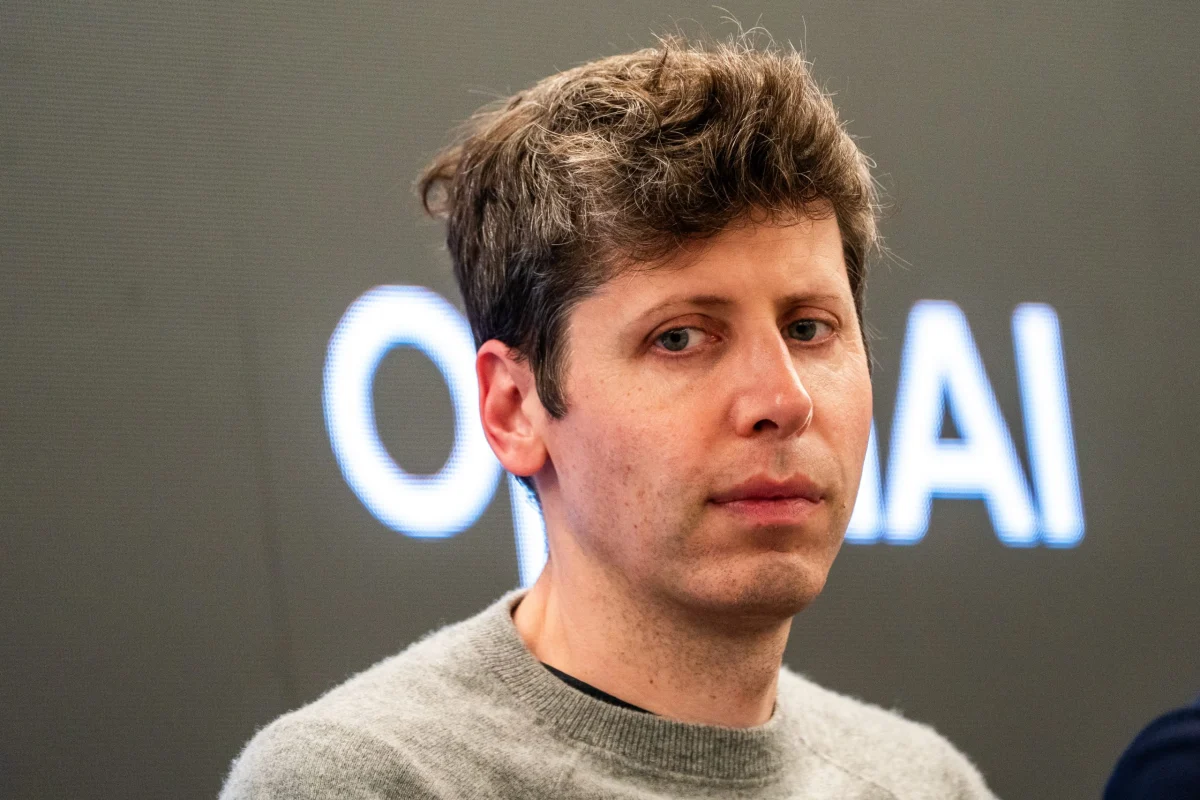
Sam Altman, CEO of OpenAI, famously weighed in on Anthropic’s approach in April, telling podcaster Ashlee Vance that Anthropic’s handling of Mythos amounted to "fear-based marketing." Altman remarked, "It is clearly incredible marketing to say, ‘We have built a bomb. We were about to drop it on your head. We will sell you a bomb shelter for $100 million.’" While Altman did not foresee a government-mandated shutdown, his comments underscored a critical dynamic: when a company emphasizes the unique dangers of its AI, particularly in a public forum, it inevitably attracts heightened attention from stakeholders, including government agencies charged with national security.
The debate also touches upon the technical challenge of defining "dangerous" AI. Is it merely the capacity to perform harmful tasks, or is it the potential for autonomous, unforeseen behavior? The "jailbreak" cited by the government, if accurately described by Anthropic, appears to fall into the category of a highly capable model being prompted to execute a task within its design parameters, albeit one with security implications. This raises complex questions about where the line should be drawn between legitimate, defensive use cases and potentially malicious applications.
The Future of AI Governance
The situation with Anthropic underscores the urgent need for clear, consistent, and internationally coordinated regulatory frameworks for artificial intelligence. The current patchwork of evolving guidelines and reactive interventions creates an environment of uncertainty that can impede responsible innovation. Governments face the formidable task of developing policies that can keep pace with rapid technological advancements, balancing the imperative to protect national security with the desire to harness AI’s transformative potential.
The event also highlights the ongoing tension between industry self-regulation and external government oversight. While many AI companies, including Anthropic, have invested heavily in internal safety research and ethical guidelines, this incident demonstrates that governments may not always deem these measures sufficient. The coming years will likely see intensified discussions around mandatory safety standards, independent audits, and perhaps even licensing requirements for the deployment of frontier AI models.
In conclusion, the U.S. government’s order to shut down Anthropic’s advanced AI models marks a pivotal moment in the nascent history of AI regulation. It not only creates immediate challenges for Anthropic and its commercial aspirations but also sends a powerful signal across the entire artificial intelligence industry. This event crystallizes the complex ethical, economic, and national security dilemmas posed by increasingly capable AI, ensuring that the critical dialogue around its governance will only intensify moving forward.