Amir Mahmud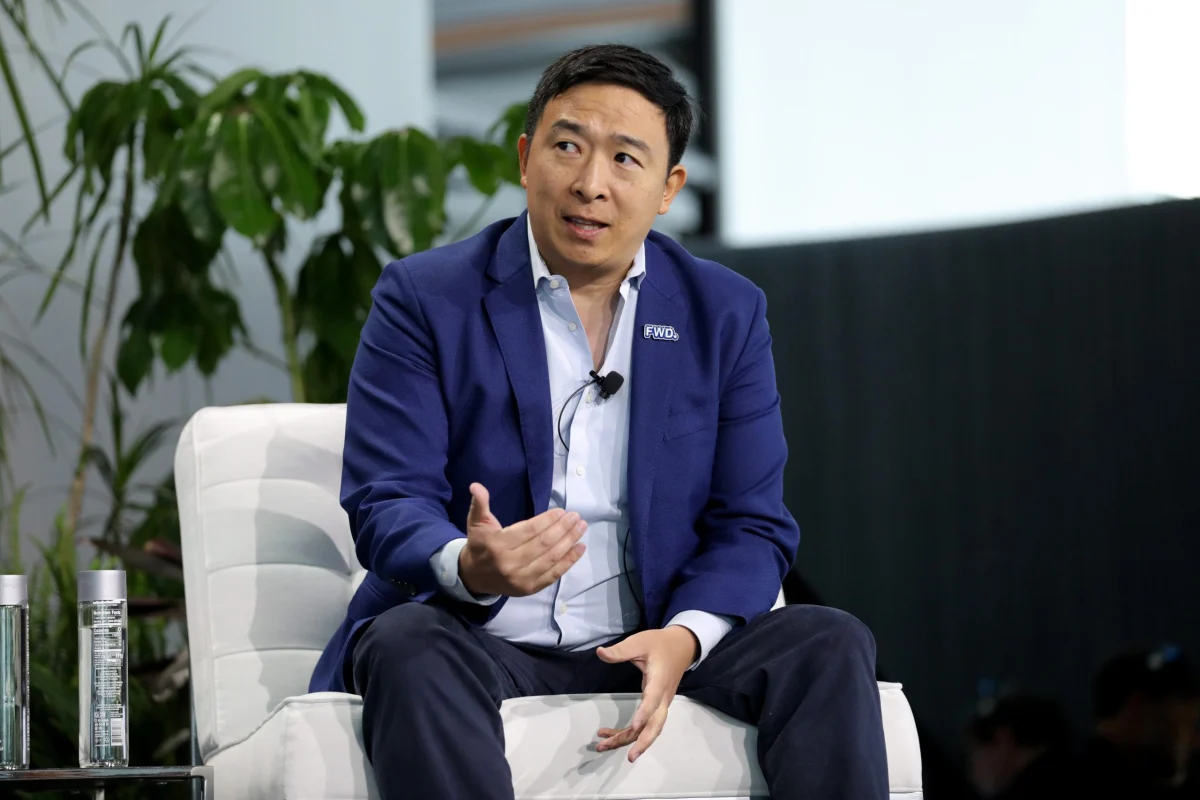
Entrepreneur and former presidential candidate Andrew Yang is positing a transformative theory regarding the next significant wave of startup opportunities, one that fundamentally challenges conventional business models. His vision centers on an unconventional query many founders overlook: what if a company’s core value proposition was to return capital to its customers rather than solely extracting it? This approach, Yang suggests, could unlock immense market potential by directly addressing the escalating financial pressures faced by everyday Americans.
The Genesis of a New Business Philosophy
Yang’s current perspective did not emerge in a vacuum; it is deeply rooted in his prior public advocacy and recent entrepreneurial inspirations. A pivotal moment for Yang was observing the disruptive model pioneered by Mark Cuban with Cost Plus Drugs. This pharmaceutical startup operates on a remarkably simple premise: selling medications at cost, plus a transparent markup for operational expenses, thereby bypassing the complex and often opaque pricing structures of traditional drug supply chains. Cuban’s venture demonstrated a viable path for businesses to thrive by prioritizing affordability and transparency, rather than maximizing profit margins at every turn.
Inspired by this paradigm, Yang embarked on a critical assessment of the sectors where consumers allocate the largest portions of their income. He systematically identified areas ripe for disruption through a "value-back" model, enumerating them to TechCrunch during a recent episode of "Equity": "Housing, education, food, fuel, transportation, media, and wireless." These categories represent fundamental necessities, the costs of which have become increasingly burdensome for households across the United States. His subsequent entrepreneurial endeavor, Noble Mobile, launched last September, serves as a direct application of this philosophy. As a mobile virtual network operator (MVNO), Noble Mobile offers cellular services at a significantly reduced rate compared to incumbent carriers, further differentiating itself by providing refunds to customers who utilize less data than their plan allocates.
Addressing the Rising Cost of Living
Yang’s focus on alleviating the cost of living resonates deeply with a national economic reality characterized by persistent inflationary pressures and stagnant real wages for a substantial portion of the population. Over the past few decades, the average American household has grappled with steadily increasing expenses across vital sectors. Housing costs, particularly in urban and suburban areas, have soared, outpacing wage growth and pushing homeownership further out of reach for many. Healthcare expenditures continue to be a leading cause of personal bankruptcy, with complex billing and high deductibles making quality medical care a luxury for some. The burden of student loan debt, now exceeding $1.7 trillion nationally, highlights the prohibitive cost of higher education, limiting economic mobility for millions. Even daily essentials like groceries and fuel have seen significant price volatility, impacting household budgets directly.
This economic backdrop provides fertile ground for business models centered on cost reduction. Yang argues that companies like Cost Plus Drugs and Noble Mobile, alongside innovative ventures such as minimalist "dumb phone" makers like Light Phone and online grocery services like Misfits Market (which sells imperfect produce at a discount), are early harbingers of this emerging business category. Their shared value proposition lies in the margin they return to the customer, either through lower prices, rebates, or waste reduction. This shift from an extractive model to a distributive one could reshape consumer expectations and create a significant competitive advantage.
The Looming Shadow of Automation and AI
A critical driver behind Yang’s urgency to champion these value-back models is his long-standing concern about the societal implications of artificial intelligence and automation. During his 2020 presidential campaign, Yang gained national prominence by advocating for Universal Basic Income (UBI), a policy designed to provide a regular, unconditional cash payment to all citizens. His primary rationale was to mitigate the anticipated widespread job displacement and wage compression that advanced automation and AI technologies are projected to cause.
"AI is going to suck up a lot of the value and the jobs, and then Americans are going to look up and say, ‘How do I meet basic needs?’" Yang articulated, underscoring the potential for a severe societal crisis if proactive measures are not taken. He believes that the ability to meet people’s fundamental needs "less expensively" represents "a very rich vein of opportunity" for entrepreneurs. This perspective connects his past political thesis directly to a present-day market strategy, suggesting that while government intervention through UBI might be ideal, market forces can also play a crucial role in redistributing economic benefits and ensuring basic living standards.
Historically, concerns about technology’s impact on labor date back to the Luddite movement of the early 19th century, where textile workers protested against new machinery. Each industrial revolution has brought waves of job disruption, but proponents of UBI and similar concepts argue that AI represents a qualitatively different threat due to its potential to automate cognitive tasks across a vast array of industries. Thinkers from Thomas More in his 1516 "Utopia" to Martin Luther King Jr. and Milton Friedman have, in various forms, explored ideas akin to UBI, highlighting a persistent societal interest in ensuring basic economic security. Yang’s current market-driven approach can be seen as a pragmatic response when the political will for large-scale UBI implementation remains uncertain.
Connecting Policy Ideals with Market Realities
While Yang remains a staunch advocate for UBI, believing that the immense wealth generated by AI companies should be broadly redistributed, he expresses skepticism about the government’s efficacy as the sole vehicle for such redistribution. He voices concern that any collected wealth might simply be used to "plug a hole and do something not terribly productive," rather than directly benefiting the average American. "There is room for a direct connection between the money and the people," he asserts, highlighting his belief in market mechanisms as a more direct and potentially agile solution.
This is precisely where the "value-back" market model enters the picture. Where governmental policy might falter or be slow to adapt, Yang contends that entrepreneurial innovation, driven by market incentives, can step in to address critical societal needs. Noble Mobile serves as his live experiment to validate this thesis. Since its launch, the company has reportedly attracted "thousands and thousands" of customers and generates "millions in revenue," demonstrating early traction for a business built on this principle.
Yang elaborates on Noble Mobile’s operational philosophy: "We’re unit profitable per customer, but we just share the profits with our subscribers with the idea that it’ll make you happy, you’ll stay around, and maybe you’ll tell your friends and family." This approach leverages customer loyalty and organic growth, treating shared savings not just as a perk, but as a core element of the business strategy. He paints a compelling picture of the long-term impact of these seemingly small savings: an average monthly saving of $50, if invested and compounded over 40 years, could accumulate to approximately $24,000—a sum substantial enough to contribute to a retirement down payment in today’s economy. In an era where personal finance is a constant concern for many, such tangible savings hold significant appeal.
Navigating the Investment Landscape
Despite the compelling social mission and the clear consumer need, Yang acknowledges that convincing traditional venture capitalists to invest in these "value-back" models presents a considerable challenge. The current investment climate is heavily skewed towards artificial intelligence, with vast sums of capital flowing into companies promising exponential growth and disruptive technological breakthroughs. Consumer-facing businesses, particularly those operating on thin margins with a primary social mission, often struggle to attract the same level of enthusiasm from investors seeking rapid, outsized returns.
Yang recounts a telling anecdote: "I had at least one investor say to me around Noble Mobile, ‘Love you, Andrew, want to work with you — if you could just make this an AI company, we’ll invest.’" This illustrates the prevailing mentality in Silicon Valley, where "AI-first" has become a dominant mantra. The traditional venture capital model prioritizes aggressive scaling, market domination, and eventual lucrative exits, often through acquisition or IPO, which might not align perfectly with a business designed to share profits and minimize costs for the end-user.
However, Yang suggests that this tide might be shifting, driven by a fundamental economic realization. Even the most successful, "extractive" companies require a robust consumer base with sufficient purchasing power to buy their products and services. If wealth continues to concentrate in the hands of a few, leading to widespread economic insecurity, the entire economic ecosystem risks instability. "The value being concentrated in the hands of a handful of folks and firms is just bad for everybody," Yang states. He observes that some individuals within Silicon Valley are beginning to grasp this reality, not always out of altruism, but sometimes out of self-interest, such as not wanting to "have to hire private security" in a society marked by extreme inequality. This indicates a potential opening for impact investors, socially conscious funds, or even forward-thinking traditional VCs to recognize the long-term sustainability and societal benefits of these models.
A Call for Entrepreneurial Innovation and Broader Societal Implications
Yang’s message extends beyond just a business strategy; it is a broader call for entrepreneurs and investors to reconsider their approach to innovation. He encourages founders to pursue problems they are genuinely passionate about and to find creative ways to build valuable enterprises around them, even if those paths diverge from conventional wisdom.
"Think bigger and more broadly about trying to tackle problems and don’t subscribe so much to groupthink, because there are some valuable opportunities out there," he advises. This ethos challenges the prevailing "move fast and break things" mentality, urging a more thoughtful and human-centered approach to problem-solving. If successful, this "value-back" paradigm could lead to a significant cultural and market impact, fostering greater trust between businesses and consumers, and potentially mitigating some of the economic anxieties that plague modern society. It represents an evolution in capitalist thought, suggesting that sustained profitability can coexist, and even thrive, alongside a direct commitment to improving the financial well-being of the broader population. The success of ventures like Noble Mobile could inspire a new generation of founders to build businesses that not only innovate but also genuinely enrich the lives of their customers, one shared saving at a time.