Amir Mahmud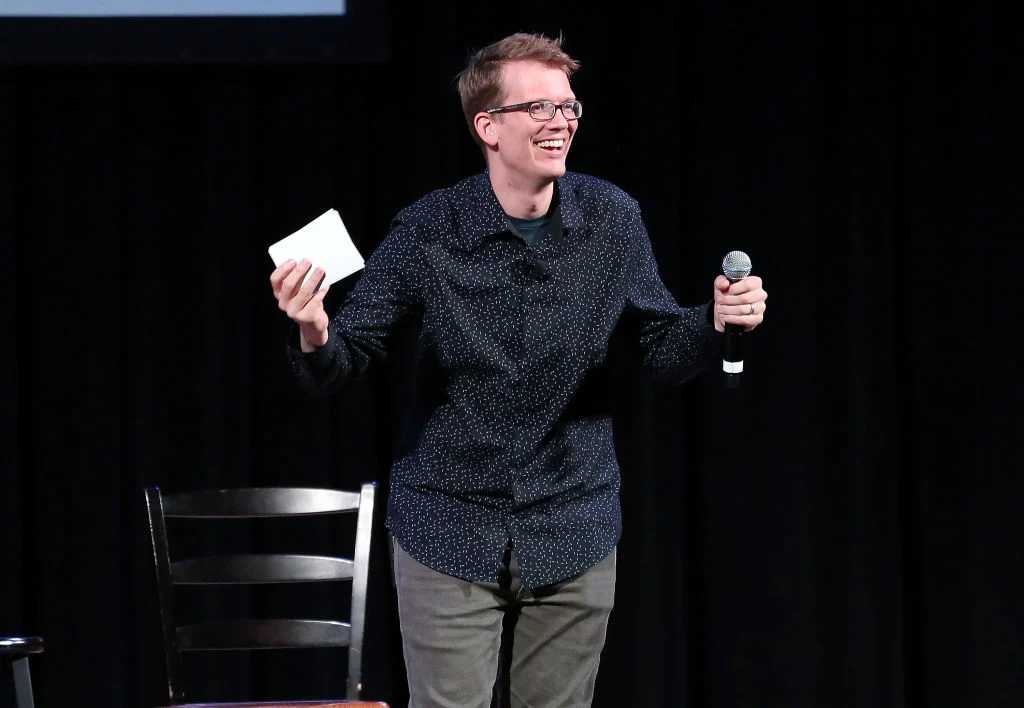
The digital landscape, a realm often celebrated for its raw authenticity and direct connection between creators and their audiences, recently witnessed a moment of introspection from one of its most prominent figures. Hank Green, a prolific novelist, comedian, and science communicator known for his educational YouTube channels and pioneering role in the creator economy, issued a comprehensive apology to his millions of followers for what he described as an "unhealthy" reliance on AI chatbots in his content creation process. This admission has not only sparked a conversation within his dedicated community but has also amplified a broader, industry-wide discussion about the evolving relationship between human creativity, technological assistance, and the fundamental value of authenticity in the digital age.
The Spark of Suspicion and Green’s Admission
The initial controversy originated from a video posted on Complexly, one of Green’s highly respected educational channels. Viewers, attuned to Green’s distinctive voice and writing style, noticed an incongruous phrase – "I appreciate the pushback" – embedded within the script. The phrasing struck many as unusual for Green, leading to immediate speculation across social media platforms that he might have inadvertently included a direct response from an AI chatbot used in the scriptwriting process. This seemingly minor linguistic anomaly quickly escalated into a significant point of contention, prompting Green to address the concerns directly.
Initially, Green offered a partial explanation on X (formerly Twitter), a post that has since been deleted. He acknowledged producing the video "under a ton of pressure" and admitted to utilizing ChatGPT "for research on this script." He also clarified that the contentious "pushback" line was, in fact, a response to the episode’s guest, not an AI artifact. However, the explanation did not fully quell the audience’s disquiet. Recognizing the depth of concern, Green followed up with a more extensive and candid apology on Reddit, a platform where his community, known as "Nerdfighters," maintains a strong presence. In this detailed statement, Green expressed being "mortified" at having "let so many people down" and revealed his intention to reduce his video production output as a direct consequence of this self-reflection.
The Architect of Digital Education: Hank Green’s Legacy
To understand the weight of Green’s confession, it’s crucial to contextualize his standing within the digital creator sphere. Hank Green, alongside his brother John Green (the best-selling author), co-founded Vlogbrothers in 2007, pioneering the daily video blog format that laid much of the groundwork for modern YouTube culture. Their early content, characterized by intellectual curiosity, humor, and a direct engagement with their audience, cultivated a loyal following. From this foundation, Green expanded his empire, co-founding Complexly, a production company responsible for popular educational channels like Crash Course and SciShow, which have collectively garnered hundreds of millions of views and established themselves as authoritative sources of online learning.
Beyond content creation, Green’s entrepreneurial spirit led to the co-founding of VidCon, the world’s largest convention for online video creators and fans, and DFTBA Records, a company supporting independent musicians and creators. His brand is meticulously built on trust, intellectual integrity, and a commitment to accessible education. His personal voice, whether explaining complex scientific concepts or sharing personal reflections, has always been central to his appeal. For an audience accustomed to Green’s authentic, human-driven approach to knowledge dissemination, the prospect of AI influencing his content struck at the very core of his established identity and the implicit contract he held with his viewers.
The Creator Economy’s Relentless Pace and the Allure of AI
Green’s admission also sheds light on the immense pressures facing creators in today’s hyper-competitive digital landscape. The creator economy, a multi-billion-dollar industry, demands an incessant flow of high-quality, engaging content to satisfy algorithmic demands, maintain audience engagement, and secure financial viability through sponsorships, ad revenue, and direct fan support. Creators are often expected to be writers, researchers, editors, marketers, and community managers all at once, leading to significant burnout rates.
In this high-pressure environment, artificial intelligence tools, particularly large language models (LLMs) like ChatGPT, have emerged as tempting solutions. These tools promise to streamline research, generate ideas, draft outlines, and even assist with scriptwriting, offering a perceived efficiency boost that could help creators keep pace with the relentless demands of their platforms. For someone like Green, managing multiple channels and projects, the allure of leveraging AI to manage the sheer volume of work could be substantial. He clarified that his use of ChatGPT was primarily to "locate papers and other resources for learning about topics," asserting that the "words and the ‘takes’ have still been his." However, he also acknowledged the validity of criticism that he was "diluting" himself, a crucial admission that speaks to the deeper issue of creative ownership and audience perception.
Authenticity, Trust, and the Human Element
The core of the backlash against Green’s AI usage lies in the perceived threat to authenticity. In a world increasingly saturated with content, the human touch, the unique voice, and the genuine intellectual effort of a creator are highly valued. For an educational channel, the trust placed in the presenter’s expertise and integrity is paramount. If audiences suspect that content is being generated or heavily influenced by AI, it can erode that trust, leading to questions about the originality of the thought, the depth of research, and the true authorship of the message.
Green’s personal brand has always emphasized critical thinking, transparency, and a deeply human approach to understanding the world. His audience, the "Nerdfighters," are known for their intellectual engagement and their appreciation for nuanced, well-researched content delivered with a personal flair. The "pushback" incident, however minor, served as a potent symbol of a potential shift away from this cherished human element, sparking a debate on what constitutes "original" content in an AI-assisted era and where the line between tool and co-creator is drawn.
Broader Societal and Ethical Concerns of AI
Beyond the immediate impact on his content, Green also articulated broader concerns about artificial intelligence, echoing sentiments felt by many technologists, ethicists, and creators. He specifically highlighted the technology’s impact on climate change, referencing the immense energy consumption required to train and run large language models and the vast data centers that power them. The environmental footprint of AI, often overlooked in discussions about its capabilities, is a growing area of concern as the technology becomes more pervasive.
Furthermore, Green expressed apprehension about "the speed at which these companies are trying to consolidate economic power." This points to a significant geopolitical and economic issue: the rapid concentration of AI development and deployment in the hands of a few powerful tech giants. This consolidation raises questions about monopolies, data privacy, censorship, and the potential for these companies to exert undue influence over information, culture, and the economy. Green’s commentary here moves beyond a personal failing, positioning his experience within a larger, more complex societal challenge.
A Path Forward: Reclaiming Process and Prioritizing Well-being
In his Reddit apology, Green delved into the personal toll of his AI reliance, describing it as a mechanism for generating a "level of dopamine" that fueled an insatiable drive to do "more and more and more and more." He candidly stated that this dynamic was "not healthy for me or good for the world," and that it had been "careless" and "disconnected me from where people are on this." This self-diagnosis points to a deeper issue common among digital creators: the addictive feedback loops of online engagement and the pressure to constantly produce, which can lead to burnout and a detachment from one’s core values.
Green’s stated path forward involves a significant re-evaluation of his creative process. He plans to pause or post less frequently to his various YouTube channels, committing to a slower, more deliberate approach. His aspiration is to create more content akin to a recent "meditative video" where "the writing was the whole thing and I felt it all the way down," emphasizing a return to deeply personal, emotionally invested creation. He also suggested making more videos featuring his "dumb unscripted straight to camera thoughts," a move that would inherently guarantee the authenticity of his voice.
Crucially, Green articulated a desire to provide a "guarantee moving forward" that "my words are mine." This statement underscores the profound importance of perceived human authorship in an era where the lines between human and machine-generated content are blurring. For a creator whose reputation is built on intellectual integrity and personal connection, ensuring this guarantee is not just a personal promise but a professional imperative.
The Broader Impact: A Call for Transparency and Reflection
Hank Green’s journey from AI integration to public apology serves as a powerful microcosm of the larger challenges and ethical dilemmas confronting the creator economy and society at large. His experience highlights the delicate balance between leveraging technology for efficiency and preserving the authenticity that audiences crave. It prompts creators, platforms, and consumers alike to consider: What are the acceptable boundaries for AI assistance in creative work? How do we maintain transparency about AI usage? And how do we safeguard the unique value of human creativity in an increasingly automated world?
The incident underscores that for many audiences, particularly those dedicated to a specific creator, the source of the content matters as much as the content itself. The trust between a creator and their audience is a fragile commodity, built over years and easily fractured. As AI tools become more sophisticated and ubiquitous, the ongoing negotiation between technological advancement and human values will continue to shape the future of digital content creation, making Green’s public reckoning a pivotal moment in this evolving narrative.