Amir Mahmud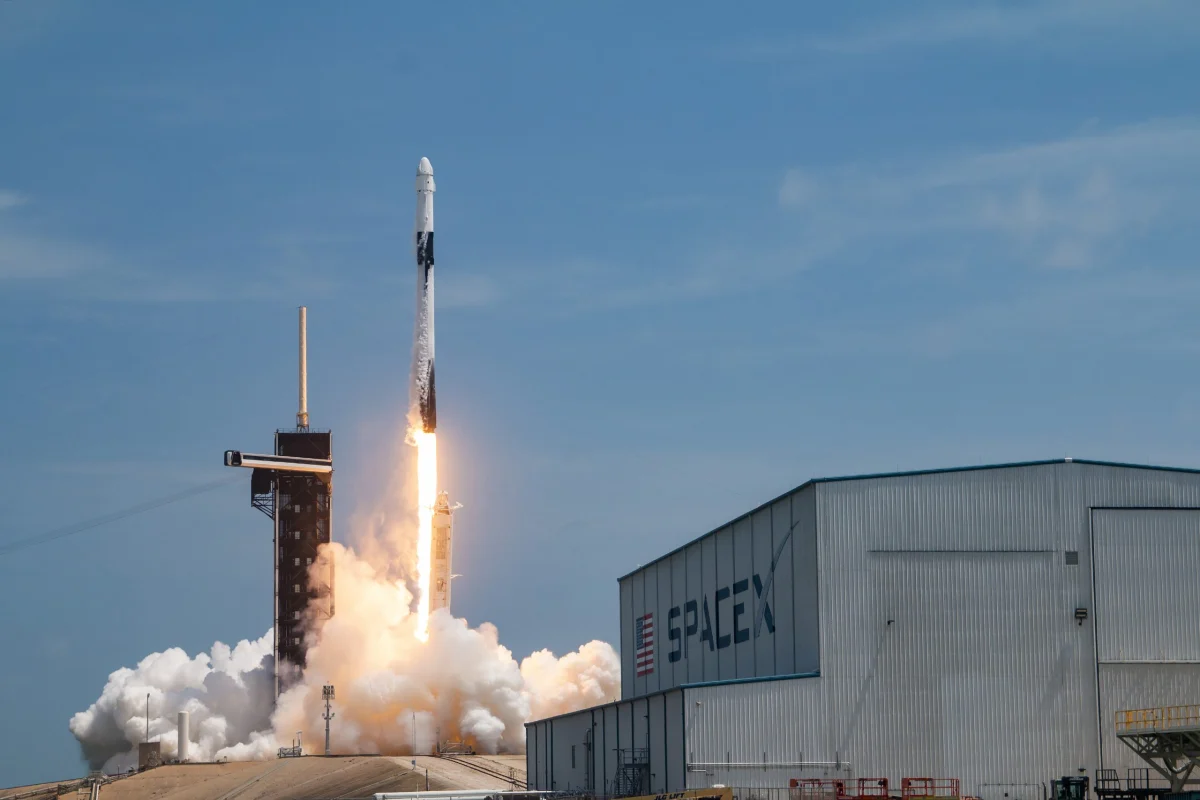
The aerospace industry is buzzing with the news that SpaceX, the innovative company founded by Elon Musk, has been awarded a staggering $6.45 billion in contracts by the U.S. Space Force. This significant financial injection comes at a pivotal moment for the company, as it prepares for what analysts anticipate could be one of the largest initial public offerings (IPOs) in history. The awards underscore the deepening entanglement between commercial space endeavors and national security priorities, solidifying SpaceX’s role as a critical partner in the nation’s defense infrastructure.
The Scope of the Contracts: Golden Dome and LEO Communications
The lion’s share of the newly announced funding, an estimated $4.16 billion, is earmarked for SpaceX to develop a sophisticated network of satellites. These satellites are intended to form a crucial component of a comprehensive missile and air defense system, which the previous administration dubbed the "Golden Dome." While specific technical details remain under wraps due to national security sensitivities, the "Golden Dome" concept generally refers to an ambitious space-based architecture designed to detect, track, and potentially intercept advanced threats, ranging from hypersonic missiles to stealth aircraft, long before they reach U.S. airspace. This type of system represents a significant leap forward from traditional ground-based radar and missile defense, leveraging the pervasive vantage point of low-Earth orbit (LEO).
Complementing this, an earlier contract awarded by the Space Force this week contributes an additional $2.29 billion. This separate agreement tasks SpaceX with constructing a resilient communications network also situated in low-Earth orbit. Such a network is vital for ensuring secure, high-speed data transmission for military operations globally, providing battlefield connectivity, intelligence gathering, and command and control capabilities. The strategic advantage of LEO constellations for communication lies in their low latency and global coverage, making them less susceptible to single points of failure and offering superior performance compared to geostationary alternatives for certain applications. The aggregate value of these contracts, totaling $6.45 billion, highlights the U.S. government’s substantial investment in space-based assets and its reliance on commercial innovation to achieve strategic objectives.
Space Force’s Strategic Imperative
The U.S. Space Force, established in December 2019 as the sixth branch of the U.S. Armed Forces, was created to address the growing importance of space as a domain of warfare and to ensure American dominance in this critical arena. Its mission encompasses protecting U.S. interests in space, deterring aggression, and providing space capabilities to the joint force. This includes managing military satellites for communication, navigation, intelligence, and missile warning. The decision to award such substantial contracts to SpaceX aligns with the Space Force’s strategic vision of leveraging commercial ingenuity and speed to develop advanced capabilities more rapidly and cost-effectively than traditional defense contractors.
Historically, military space programs were dominated by a handful of large aerospace and defense companies, operating under long development cycles and often with cost overruns. The emergence of agile commercial space companies like SpaceX, with their focus on reusability, mass production, and innovation, has begun to reshape this landscape. The Space Force’s engagement with SpaceX reflects a broader shift in defense procurement, recognizing that commercial entities can offer cutting-edge technology and operational efficiency that are crucial in an era of accelerating geopolitical competition in space. This paradigm shift is particularly evident in the context of global adversaries like China and Russia making significant advancements in their own space capabilities, including anti-satellite weapons and sophisticated surveillance systems. The "Golden Dome" and LEO communication networks are direct responses to these evolving threats, aiming to establish a robust and redundant space infrastructure for defense.
SpaceX’s Ascendance and Market Dominance
SpaceX’s journey from a nascent startup in 2002 to a dominant force in the global space industry is a testament to its disruptive approach and ambitious vision. Initially focused on drastically reducing the cost of space launch through reusable rocket technology, the company achieved groundbreaking successes with its Falcon 9 and Falcon Heavy rockets. These innovations fundamentally altered the economics of space access, challenging established players and attracting significant government and commercial contracts. The company’s Starlink satellite internet constellation, currently the largest operational satellite network in the world, further showcases its capabilities in satellite manufacturing, deployment, and operation at scale.
This proven track record of innovation, reliability, and cost-effectiveness has made SpaceX an almost indispensable partner for various government agencies. Beyond the Space Force, SpaceX has been a primary contractor for NASA, delivering cargo and astronauts to the International Space Station under the Commercial Resupply Services and Commercial Crew Programs, respectively. This long-standing relationship with NASA, which predates the Space Force’s establishment, helped validate SpaceX’s technological prowess and operational maturity in the eyes of federal policymakers and defense strategists. The company’s ability to rapidly iterate, manufacture thousands of satellites, and launch them with unparalleled frequency gives it a distinct competitive advantage over many traditional aerospace giants, particularly when rapid deployment and scalability are paramount.
The Symbiotic Relationship: Government and Commercial Space
The awarding of these multi-billion-dollar contracts reinforces a key disclosure made in SpaceX’s recent IPO filing: the company’s significant reliance on government contracts for a substantial portion of its revenue. According to the filing, approximately one-fifth of SpaceX’s revenue in 2025 was derived from governmental entities. This highlights a symbiotic relationship where the government provides crucial funding and stability, enabling SpaceX to invest in research, development, and infrastructure, while SpaceX, in turn, offers advanced capabilities, technological innovation, and operational efficiency that meet critical national security needs.
This dynamic, however, also presents inherent risks, a fact that SpaceX explicitly cautioned investors about in its IPO prospectus. The company stated that its "business with governmental entities is subject to changes in policies, priorities, regulations, mandates, and funding levels." This neutral analytical commentary underscores the potential volatility associated with defense contracts, which can be influenced by shifting political landscapes, budgetary constraints, and evolving strategic priorities. For example, a change in presidential administration or congressional appropriations could lead to a reprioritization of space defense programs, potentially impacting future contract awards or even existing agreements. While the current contracts represent a major boost, investors will need to weigh the benefits of stable government revenue against the inherent uncertainties of public sector funding cycles and policy shifts. The relationship also brings into focus the political dimensions, with previous reports noting significant political donations made by Elon Musk to the Trump administration, during which many of these strategic initiatives were conceptualized or accelerated. However, the sheer technical merit and market dominance of SpaceX in the launch sector also make it a logical choice for critical national security contracts, transcending partisan considerations in many instances.
Navigating the Public Market: IPO and Investor Considerations
The impending IPO of SpaceX is poised to be a landmark event in the financial markets, potentially unlocking immense value for early investors and providing the company with a massive influx of capital for its ambitious long-term projects, such as the Starship program and further expansion of Starlink. These Space Force contracts, coming just ahead of the anticipated public offering, undoubtedly bolster SpaceX’s valuation and attractiveness to potential investors. They signal strong government confidence in the company’s capabilities and provide a tangible demonstration of its revenue streams beyond its widely publicized commercial ventures.
For investors, understanding SpaceX’s financial health, growth trajectory, and risk factors is paramount. The dual nature of its business – pioneering commercial space exploration and serving as a critical defense contractor – presents a unique investment profile. The stability offered by government contracts can mitigate some of the risks associated with the capital-intensive and inherently speculative nature of space technology development. However, the warnings about government funding volatility, coupled with the immense development costs of projects like Starship, will be key considerations. Analysts will closely scrutinize the balance between guaranteed revenue from defense and commercial satellite launches versus the speculative, long-term returns from ventures like interplanetary travel and global broadband connectivity. The sheer scale of the expected IPO, potentially eclipsing previous tech giants, reflects the market’s belief in the transformative power of space technology and SpaceX’s leadership within that sector.
Broader Implications for the Space Sector
These significant Space Force awards to SpaceX carry profound implications for the broader commercial space sector. They underscore a continued trend of the U.S. government increasingly relying on private industry to develop and operate critical national security infrastructure in space. This could further incentivize other private companies to invest in advanced satellite technology, launch capabilities, and space-based services, fostering greater competition and innovation within the industry. Companies vying for similar contracts will need to demonstrate not only technological prowess but also scalability, cost-effectiveness, and reliability on par with SpaceX.
The militarization of space, as evidenced by initiatives like the "Golden Dome," also raises important geopolitical and ethical considerations. While the U.S. government frames these systems as defensive, their capabilities can be perceived differently by other nations, potentially fueling an arms race in space. This dynamic impacts international relations, treaties concerning space, and the long-term sustainability of the space environment, particularly concerning debris generation. The commercial sector’s deep involvement in military space programs blurs the lines between purely scientific or economic space activities and those with direct defense applications, adding layers of complexity to global space governance discussions.
Challenges and Future Trajectories
Looking ahead, SpaceX faces the ongoing challenge of managing its rapid growth, maintaining its technological edge, and successfully executing on its diverse portfolio of projects, from Starship development to Starlink expansion and these new defense contracts. The integration of complex satellite networks for missile defense and secure communications demands not only advanced engineering but also robust cybersecurity and operational resilience. The successful deployment and maintenance of the "Golden Dome" and LEO communication systems will require continuous innovation and close collaboration with the Space Force.
The company’s trajectory post-IPO will be closely watched by investors, competitors, and international observers alike. Its ability to navigate the complexities of government contracting while simultaneously pursuing its ambitious long-term vision for space exploration and colonization will define its legacy. These multi-billion-dollar Space Force contracts serve as a powerful affirmation of SpaceX’s capabilities and its indispensable role in shaping the future of both commercial and national security space endeavors.






 Azin Asro