Amir Mahmud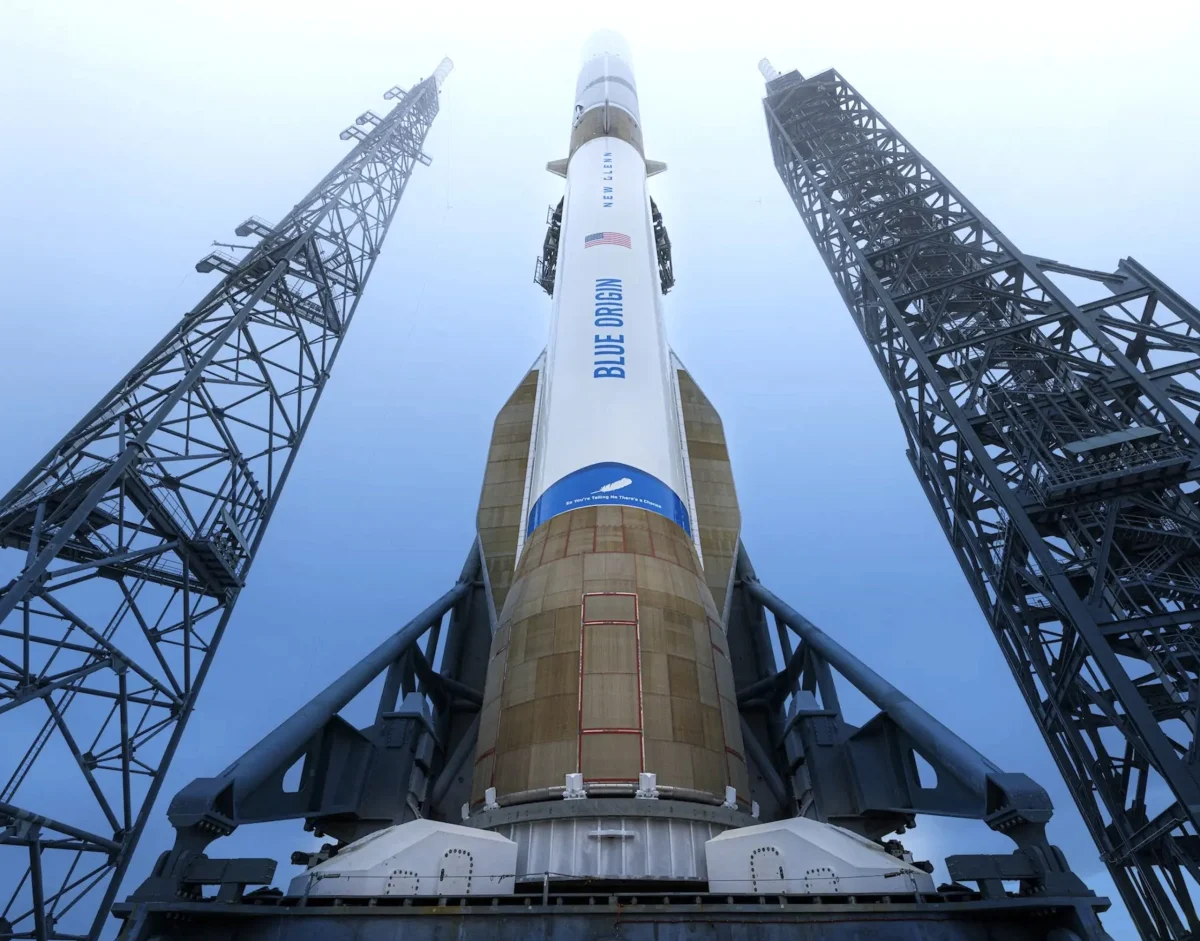
A monumental setback struck the burgeoning commercial space industry on Thursday when Blue Origin’s New Glenn heavy-lift orbital rocket experienced a catastrophic anomaly during a static fire test at its Cape Canaveral launch facility in Florida. The incident, which resulted in a massive explosion, marks the most significant failure in the company’s history and will likely trigger an extensive pause in the development and deployment of the highly anticipated vehicle. Live streams from independent spaceflight observers, including NASASpaceFlight.com and SpaceFlight Now, captured the dramatic event, with Blue Origin later confirming the explosion and the safety of all personnel.
Details of the Incident and Immediate Aftermath
The explosion occurred as Blue Origin was conducting a critical static fire test, a standard pre-flight procedure designed to simulate launch conditions by igniting the rocket’s engines while it remains firmly tethered to the launchpad. This test, crucial for validating the vehicle’s readiness, typically involves loading the rocket with its propellants. Given the scale of the ensuing explosion, it is highly probable that the New Glenn rocket was fully fueled with its liquid oxygen and liquid natural gas propellants, contributing to what is now being described as one of the largest rocket explosions in recent U.S. history.
Following the incident, Blue Origin, the private space company founded by Amazon’s Jeff Bezos, issued a statement via its official channels, confirming the "anomaly" and assuring the public that "all personnel have been accounted for." Bezos himself reiterated this point, stating that everyone was "safe." The company did not immediately disclose the specific nature or root cause of the failure, emphasizing that an investigation was already underway. This swift confirmation of personnel safety is a standard and critical first step in aerospace incident response, underscoring the rigorous safety protocols in place at launch sites.
The Federal Aviation Administration (FAA), which oversees commercial space launches in the U.S., acknowledged the explosion, noting that there was "no impact to air traffic." This indicates the incident was contained within the designated launch complex, a testament to the safety perimeters established around such high-risk operations. NASA Administrator Jared Isaacman expressed the agency’s commitment to supporting a thorough investigation, assessing potential near-term mission impacts, and facilitating a return to launch operations, highlighting the interconnectedness of the space community.
Blue Origin’s Vision and the New Glenn’s Ambitious Role
Blue Origin was founded in 2000 by Jeff Bezos with a long-term vision of enabling millions of people to live and work in space. For its initial two decades, the company operated largely in stealth mode, developing foundational technologies and gradually unveiling its projects. Its most visible endeavor prior to New Glenn was the New Shepard suborbital vehicle, which has successfully carried tourists and scientific payloads to the edge of space since 2015, including Bezos himself. New Shepard’s success in demonstrating reusable rocketry at a smaller scale laid the groundwork for the more ambitious New Glenn.
New Glenn, named after pioneering American astronaut John Glenn, represents Blue Origin’s entry into the heavy-lift orbital launch market, a segment critical for deploying large satellites, interplanetary missions, and human spaceflight endeavors. Designed as a two-stage rocket, it boasts a reusable first stage capable of vertical landing, a technology championed by competitors like SpaceX. The rocket stands an impressive 322 feet (98 meters) tall and is powered by seven BE-4 engines, which also power United Launch Alliance’s Vulcan Centaur rocket. Its development has been a multi-billion-dollar, decade-long undertaking, marked by significant engineering challenges and delays, reflecting the inherent complexity of scaling rocket technology.
The company’s strategic goal for New Glenn was not merely to launch payloads but to offer a cost-effective, reliable, and frequent access to orbit, directly challenging the established players and the dominant force of SpaceX’s Falcon 9 and Falcon Heavy rockets. The ability to reuse the first stage is central to this economic model, promising lower per-launch costs and faster turnaround times. This vision aligns with the broader industry trend toward reusability, which is seen as the key to unlocking the economic potential of space.
A Challenged Development Timeline and Prior Flights
The journey to bring New Glenn to operational status has been protracted. Initially projected for its maiden flight in the mid-2010s, the program experienced several postponements, often attributed to the complexities of developing the BE-4 engines and the overall integrated vehicle. These delays provided competitors with a significant head start, intensifying the pressure on Blue Origin to deliver a reliable system.
Despite the extended development phase, New Glenn finally achieved its maiden flight in January 2025. This initial test flight successfully reached orbit, a crucial milestone, though the first stage booster was lost during its attempted landing on a drone ship in the ocean. This partial success was nevertheless celebrated as a significant step forward, proving the rocket’s fundamental orbital capabilities.
The second mission in November 2025 marked a more complete triumph. During this flight, New Glenn successfully launched twin spacecraft destined for Mars as part of a NASA mission. Crucially, Blue Origin also achieved its first successful vertical landing of the New Glenn first stage on its autonomous drone ship, "Of Course I Still Love You" (a nod to the culture of reusability, similar to SpaceX’s naming conventions). This achievement validated the core reusability concept and was a major confidence booster for the program.
The third mission in April 2026 further demonstrated the reusability concept by flying the same booster that had successfully landed on the second flight. This re-flight and a second successful landing underscored Blue Origin’s progress in not only recovering but also refurbishing and re-using its hardware—a critical component of its long-term business strategy. However, this mission was not without its own challenges. A cryogenic failure occurred in the upper stage, preventing it from delivering an AST SpaceMobile satellite into its intended orbit, resulting in a total mission loss for the payload. The Federal Aviation Administration had only recently cleared New Glenn to fly again after Blue Origin completed an investigation into the cause of this upper stage anomaly. This recent incident therefore compounds a series of technical hurdles the program has faced.
Market Impact and Strategic Implications
The explosion of a fully-fueled New Glenn during a static fire test carries significant market and strategic implications for Blue Origin and its partners. In a highly competitive launch services market dominated by SpaceX, and with other players like United Launch Alliance (ULA) and ArianeGroup vying for contracts, delays and failures can be particularly costly. Blue Origin had ambitious plans for New Glenn in 2026, aiming for as many as 12 launches, a testament to its readiness to ramp up operations. This recent failure will undoubtedly force a substantial reassessment and likely an extended grounding of the vehicle.
One of the most immediate impacts will be on Amazon’s Project Kuiper, its ambitious satellite internet constellation designed to compete with SpaceX’s Starlink. Amazon has contracted Blue Origin for 24 New Glenn launches as part of its deployment strategy for the Kuiper network. While no Kuiper (referred to as Leo in some contexts) satellites were on board for this specific test, the indefinite delay of New Glenn could complicate Amazon’s timeline for constellation deployment and its ability to meet regulatory deadlines for spectrum utilization. Amazon had just days prior publicly touted New Glenn as a "reusable, heavy-lift rocket" central to its network build-out. While Amazon has secured launch contracts with other providers like ULA and Arianespace for Kuiper, New Glenn was expected to be a primary workhorse.
Furthermore, Blue Origin plays a critical role in NASA’s Artemis program, the agency’s initiative to return humans to the Moon. Blue Origin is one of the companies developing lunar landers and other infrastructure for Artemis. While New Glenn itself is not the lunar lander, a robust and reliable heavy-lift launch capability is essential for launching components and supporting missions. Any significant delay or perceived reliability issue with New Glenn could ripple through the broader Artemis architecture and potentially impact mission schedules. Similarly, Blue Origin has been vying for national security launch contracts with the Pentagon, a highly lucrative and strategic market where reliability is paramount. A major failure like this could influence future contract awards.
The Road Ahead: Investigation, Resilience, and Industry Perspective
Jeff Bezos acknowledged the gravity of the situation in his post-incident remarks, stating, "It’s too early to know the root cause but we’re already working to find it. Very rough day, but we’ll rebuild whatever needs rebuilding and get back to flying. It’s worth it." This sentiment reflects a common ethos in the aerospace industry: that failures are an inherent part of the innovation process and critical learning opportunities. However, the scale of this particular failure—a fully fueled, massive rocket exploding on the pad—will necessitate an exhaustive investigation.
Such investigations are complex and meticulous, involving multiple agencies, including the FAA, and internal engineering teams. They often analyze telemetry data, high-speed camera footage, sensor readings, and debris analysis to pinpoint the exact sequence of events leading to the anomaly. The process can take months, or even over a year, before a root cause is definitively identified and corrective actions are implemented. During this period, the New Glenn program will likely be grounded, pushing back its operational timeline significantly.
The incident also drew a response from SpaceX CEO Elon Musk, a direct competitor, who simply commented, "Most unfortunate. Rockets are hard. I hope you recover quickly." This brief statement encapsulates the shared understanding within the space industry of the immense technical challenges involved in rocketry. Experts often note that despite decades of advancement, launching rockets remains an incredibly difficult endeavor, pushing the boundaries of material science, propulsion engineering, and complex systems integration. Every launch, and certainly every static fire test, carries inherent risks.
For Blue Origin, this event represents a crucible. The company, backed by Bezos’s vast resources, has the financial capacity to absorb such a setback. However, the true test will be its ability to swiftly and effectively identify the failure’s cause, implement robust solutions, and rebuild confidence among its customers and the public. The space industry thrives on innovation, but it also demands an unwavering commitment to safety and reliability. While "rockets are hard," as Musk noted, the expectation for commercial space ventures is to learn from adversity and ultimately deliver on their ambitious promises. The path back to flight for New Glenn will be a critical chapter in Blue Origin’s journey toward its vision of opening space for all.






 Azin Asro