Amir Mahmud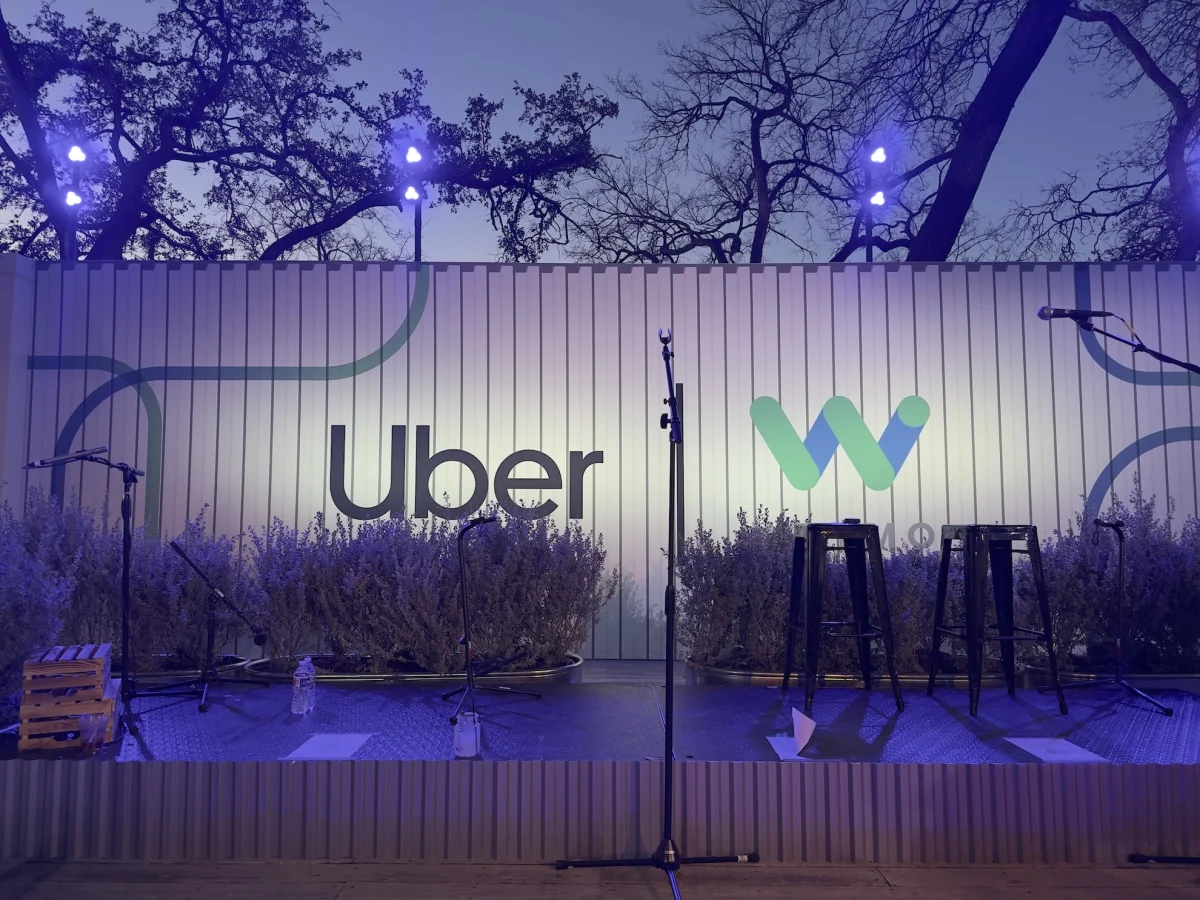
A pivotal debate over the future of autonomous vehicles is unfolding in Washington, D.C., where a proposed bill aimed at regulating robotaxi operations has exposed deep divisions among leading tech and mobility companies. This legislative battle highlights the complex challenges inherent in integrating cutting-edge technology into urban environments, pitting established ride-hailing giants against specialized autonomous driving developers, all under the watchful eye of policymakers and a concerned public. The D.C. Council’s deliberations have become a microcosm of the broader national struggle to balance innovation with safety, economic impact, and equitable access in the rapidly evolving landscape of smart mobility.
The D.C. Deliberation: A Critical Juncture for Robotaxi Policy
At the heart of the current controversy is a proposed D.C. bill designed to establish a framework for the deployment of autonomous vehicles (AVs) within the city. This legislation includes stringent requirements: a mandatory 180-day and 250,000-mile testing period for AVs with human safety operators, a substantial $1 million application fee, a $5 million permit fee, and an ongoing $0.15-per-mile tax. These provisions, intended to ensure public safety and generate revenue, have sparked a vigorous debate, drawing diverse stakeholders to a recent D.C. Council hearing, including representatives from major tech firms, disability rights advocates, labor unions, and highway safety organizations.
The stakes are particularly high for companies vying to establish dominance in the burgeoning robotaxi market. Washington, D.C., as the nation’s capital, carries symbolic weight and could set a precedent for other municipalities contemplating similar regulations. The city’s dense urban environment, complex traffic patterns, and diverse population present a challenging yet valuable proving ground for AV technology, making regulatory success here a significant strategic advantage.
Industry Fault Lines Emerge: Uber vs. Waymo
The most prominent clash in this regulatory skirmish pits Uber, the global ride-hailing and delivery behemoth, against Waymo, Alphabet’s pioneering autonomous driving subsidiary. What was once perceived as a potential partnership between the two companies has, in fact, deteriorated into an adversarial stance on AV policy. Uber has voiced strong opposition to the D.C. bill, arguing that its current form would effectively grant Waymo a de facto monopoly in the city while simultaneously displacing thousands of human for-hire drivers.
Uber’s primary contention is that Waymo, having already accumulated extensive testing miles in D.C. with safety operators, would enter the market with an insurmountable six-month head start if the bill passes as currently written. This pre-existing advantage stems from Waymo’s long-term strategy of rigorous testing and gradual deployment, which began years ago with its origins as a Google project in 2009. From its early days in California and Arizona, Waymo systematically expanded its testing grounds, accumulating millions of miles in diverse urban environments. Its presence in D.C. as a testing ground for its driverless technology aligns with its approach to gradually introduce its service in new markets after extensive validation.
In response to the proposed legislation, Uber has advocated for an alternative: a "hybrid" operational model that would mandate robotaxis to function within existing ride-hailing networks, alongside human drivers. This proposal, if adopted, would compel AV developers like Waymo to either integrate their autonomous fleets onto platforms such as Uber’s or maintain human safety drivers, thereby diluting the cost efficiencies and operational independence that driverless technology promises. While industry insiders suggest this hybrid approach faces an uphill battle to become law, its strategic intent is clear: to leverage Uber’s vast network and market position to maintain control over the future of urban mobility, regardless of who owns the autonomous vehicles.
Other industry players, including Tesla and Lyft, also expressed significant concerns at the D.C. Council hearing. Their objections mirrored those heard from multiple AV developers across the country, focusing on the bill’s stringent requirements. The mandatory 250,000-mile testing threshold and 180-day minimum, coupled with the hefty application and permit fees, were cited as excessive barriers to entry. Many companies argued that miles accumulated in other jurisdictions, where AVs have been rigorously tested and validated, should count toward D.C.’s mileage requirements, promoting a more harmonized national regulatory approach rather than a fragmented, city-by-city gauntlet. This reflects a broader industry desire for federal guidelines that would streamline deployment across states, rather than navigating a patchwork of local ordinances.
Safety, Public Trust, and Regulatory Scrutiny
The D.C. debate unfolds against a backdrop of increasing public scrutiny and recent incidents involving autonomous vehicles. The overarching concern for regulators and the public remains safety, and recent events have only intensified calls for robust oversight. In San Francisco, for instance, Waymo robotaxis became immobilized during heavy July 4th traffic, ran out of power, and obstructed key streets, exacerbating gridlock. This incident prompted San Francisco Mayor Daniel Lurie to urge state regulators to toughen rules on autonomous vehicles, emphasizing the need for AV companies to demonstrate reliability during extraordinary events. Such incidents, even if minor in terms of harm, erode public trust and provide ammunition for those advocating for more cautious deployment.
Similarly, Zoox, another prominent robotaxi developer, issued a software recall after one of its vehicles became "confused" by heavy smoke from an emergency fire scene in June. These real-world challenges underscore the immense complexity of programming AVs to react safely and appropriately to unforeseen and dynamic situations, moving beyond routine traffic scenarios. The National Transportation Safety Board’s (NTSB) findings in a separate incident involving a Tesla further highlighted the critical interface between human drivers and advanced driver-assistance systems. The NTSB confirmed that a Tesla driver involved in a fatal Texas crash had pressed the accelerator pedal to 100%, overriding the vehicle’s Full Self-Driving (Supervised) software. This incident, while not directly involving a fully autonomous robotaxi, illustrates the ongoing human-machine interaction challenges and the need for clear operational design domains and fail-safe mechanisms in all levels of automated driving.
These events contribute to a cautious public sentiment. While the promise of AVs – enhanced safety through the elimination of human error, increased mobility for the elderly and disabled, and reduced traffic congestion – remains compelling, the path to widespread acceptance is paved with a demand for flawless execution and transparent accountability. Disability rights and accessibility advocates, present at the D.C. hearing, underscored the potential for AVs to revolutionize transportation for underserved populations, provided the technology is designed with inclusivity and universal access in mind, not just convenience.
Broader Market Dynamics and Future Outlook
The regulatory skirmish in D.C. is part of a larger narrative within the mobility sector, characterized by rapid technological advancement, intense competition, and evolving business models. Uber’s recent strategic moves, such as its $14.8 billion deal to acquire Germany’s Delivery Hero, illustrate its ambition to solidify its status as a global logistics and delivery powerhouse, expanding its footprint across nearly 100 markets. This aggressive expansion in traditional ride-hailing and delivery underscores Uber’s diversified strategy, ensuring its relevance even as the autonomous vehicle segment slowly matures. Its stance in the D.C. debate can be seen as an effort to ensure that if AVs do become dominant, they do so on terms favorable to its platform model.
The broader automotive landscape also reflects this period of transformation. The push for electric vehicles (EVs) continues, with companies like Lucid Motors navigating significant financial and market pressures, as evidenced by recent rumors of potential bankruptcy (which the company vehemently denied). Innovation in automotive inspection (Self Inspection’s AI-powered service) and manufacturing processes (Senra’s modernization of wire harness production) further highlight the industry’s dynamic nature. Even traditional aspects of driving are changing, with data showing a significant decline in manual transmission vehicles, marking the gradual shift towards more automated and electronically controlled driving experiences.
The regulatory environment for autonomous vehicles remains fragmented across the United States. While some states like Arizona and California have been more proactive in creating regulatory sandboxes for testing and deployment, others, like D.C., are taking a more cautious, prescriptive approach. This patchwork of regulations creates significant hurdles for AV developers, making national scalability challenging and costly. The D.C. Council’s decision will not only shape the future of robotaxis in the capital but will also be closely watched as a potential template or cautionary tale for other cities and states grappling with similar questions.
The outcome of the D.C. Council’s deliberations will have far-reaching implications, not just for the companies involved but for urban planning, labor markets, and the very fabric of metropolitan life. It represents a critical moment in the journey towards fully autonomous transportation, where the ideals of innovation must confront the realities of public safety, economic disruption, and regulatory oversight. The path forward will require a delicate balance between fostering technological progress and ensuring a just, safe, and equitable transition to the era of driverless mobility.






 Azin Asro