Amir Mahmud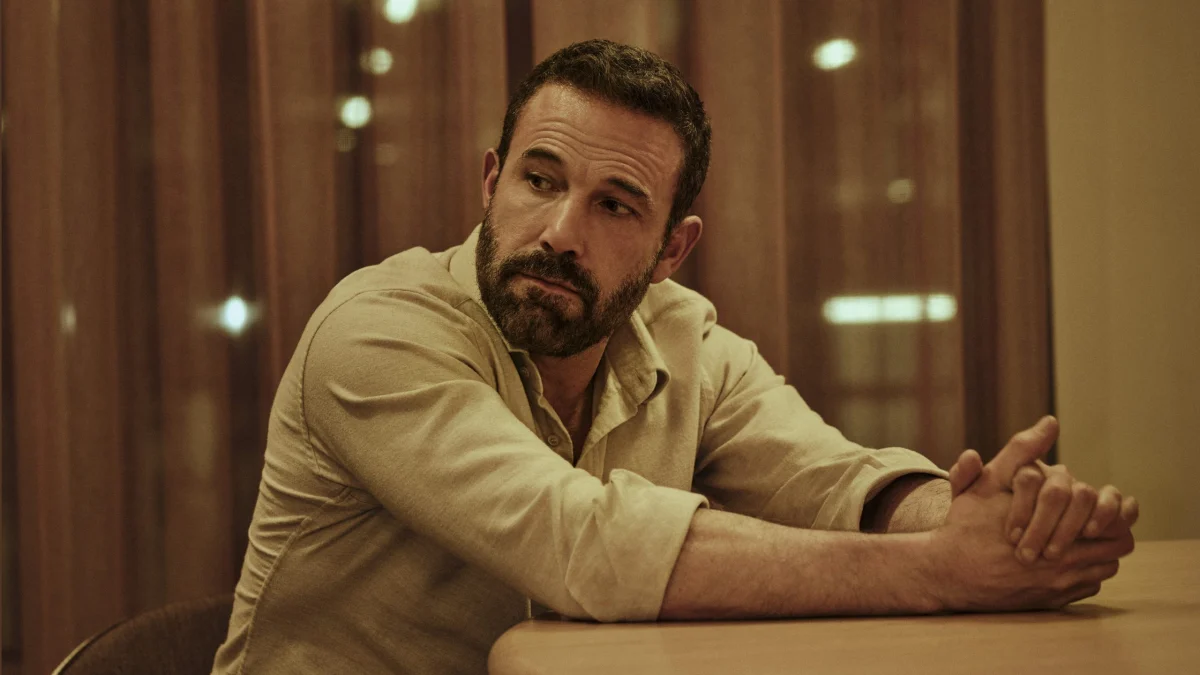
In a significant move that underscores the rapidly evolving landscape of entertainment production, streaming giant Netflix has officially disclosed a substantial investment in artificial intelligence. The company confirmed it paid $587 million in cash to acquire InterPositive, an innovative startup co-founded by acclaimed actor and director Ben Affleck, signaling a clear intent to integrate advanced AI capabilities deeply into its content creation pipeline. This acquisition, initially announced without financial specifics, represents one of the largest public investments by a major studio into AI-powered filmmaking, highlighting a pivotal shift in how visual media might be conceived, produced, and refined in the coming years.
The revelation came through a recent regulatory filing, providing a concrete figure to earlier speculative reports that had pegged the deal closer to $600 million. For Netflix, a company known for its aggressive pursuit of original content and technological innovation, this acquisition is more than just a financial transaction; it’s a strategic embrace of tools designed to streamline complex post-production challenges, potentially reshaping industry standards and creative workflows.
The Financial Details and Strategic Integration
The $587 million cash payment for InterPositive solidifies the scale of Netflix’s commitment to artificial intelligence as a core component of its future operations. The initial announcement of the acquisition in March had generated considerable buzz, not only because of Ben Affleck’s involvement but also due to the implied technological leap it represented. At the time, Netflix confirmed that the entire InterPositive team would transition to the streaming company, with Affleck himself joining in a senior advisory capacity. This integration strategy is crucial, ensuring that the specialized knowledge and development expertise behind InterPositive’s proprietary AI tools are retained and directly applied within Netflix’s vast production ecosystem.
The precise terms of such high-profile deals are often kept under wraps for competitive reasons, but the subsequent filing to the Securities and Exchange Commission (SEC) brought transparency to the exact valuation. This level of investment signals a strong belief in InterPositive’s technology and its potential to deliver tangible benefits, from efficiency gains to enhanced creative output, across Netflix’s sprawling global production slate. The integration of the startup’s personnel and leadership into Netflix’s structure suggests a long-term vision, moving beyond mere licensing of technology to a full absorption of talent and intellectual property.
InterPositive’s Innovative Approach to Post-Production
At the heart of the InterPositive acquisition lies its innovative application of artificial intelligence to tackle common and often costly hurdles in filmmaking post-production. Ben Affleck, in a statement released during the initial announcement, emphasized his desire to "protect the power of human creativity." This philosophy suggests that InterPositive’s AI is not designed to replace human artists but rather to serve as a powerful augmentation tool, empowering filmmakers to achieve their visions more effectively and efficiently.
The startup’s AI capabilities are specifically tailored to address "real-world production challenges." These include critical areas such as rectifying missing shots, seamlessly executing background replacements, and correcting incorrect lighting conditions. For instance, in the complex world of filmmaking, a crucial shot might be inadvertently missed during principal photography, or a specific background element might not be available or suitable. InterPositive’s generative AI tools could potentially reconstruct or synthesize missing visual data, fill in gaps, or create entirely new, photorealistic backgrounds that seamlessly integrate with existing footage. This could save productions millions in reshoots or extensive manual visual effects work.
Similarly, lighting inconsistencies, which can plague even the most meticulously planned shoots, often require painstaking and expensive correction in post-production. InterPositive’s AI could analyze footage and dynamically adjust lighting parameters, ensuring visual continuity and enhancing aesthetic quality without the need for traditional, labor-intensive color grading and compositing processes. Such advancements promise to not only accelerate post-production timelines but also reduce the financial burden associated with these complex tasks, freeing up resources for other creative endeavors or allowing for more ambitious projects within existing budgets. The ability to quickly iterate on visual elements and correct imperfections could revolutionize the creative process, allowing directors and editors more flexibility and control.
The Broader Landscape of AI in Entertainment
Netflix’s substantial investment in InterPositive is not an isolated incident but rather a significant acceleration within a rapidly expanding trend of AI adoption across the entertainment industry. For years, AI has been quietly working behind the scenes in areas like content recommendation algorithms, ensuring viewers are served personalized suggestions. However, the advent of generative AI technologies, capable of creating new text, images, audio, and video from simple prompts, has dramatically expanded the scope of AI’s potential applications in content creation.
The history of AI’s presence in creative fields dates back decades, from early computer-generated imagery (CGI) in films to sophisticated facial motion capture technologies. More recently, the emergence of advanced machine learning models like OpenAI’s GPT series for text, Midjourney and DALL-E for images, and Sora for video generation, has democratized access to powerful creative AI tools. Major studios and tech companies are now racing to explore how these technologies can be integrated into every stage of production, from script development and pre-visualization to visual effects and post-production.
Netflix itself has been an active participant in this evolution. According to its most recent earnings report, approximately 300 of its titles have already utilized generative AI in various capacities. While the specifics of these applications are not fully detailed, they likely span a range of functions:
- Script analysis: AI can assist in identifying narrative patterns, predicting audience engagement, or even generating dialogue suggestions.
- Content localization: Automated dubbing, subtitling, and even AI-generated voiceovers can significantly speed up the process of adapting content for global audiences.
- Pre-visualization and storyboarding: AI tools can rapidly generate visual concepts, character designs, and scene layouts, aiding directors and production designers in planning.
- Minor visual effects: AI could be used for tasks like de-aging actors, digital touch-ups, or creating ambient background elements, reducing the workload on human VFX artists.
The acquisition of InterPositive, therefore, represents a strategic deepening of Netflix’s existing AI integration. It moves beyond generalized applications to specialized tools designed to directly impact the core visual fidelity and efficiency of its vast content output. This positions Netflix as a frontrunner in leveraging cutting-edge AI to maintain its competitive edge in an increasingly saturated streaming market.
Market, Social, and Cultural Implications
The rise of AI in filmmaking, exemplified by Netflix’s InterPositive acquisition, carries profound implications for the market, social dynamics within the industry, and broader cultural perceptions of media.
Market Impact:
For Netflix, the immediate market impact is a potential increase in production efficiency and a reduction in post-production costs. By automating or semi-automating complex visual effects and correction tasks, the company can potentially churn out more content, or higher-quality content, within existing budgets. This could translate into a competitive advantage in attracting and retaining subscribers against rivals like Disney+, Max, and Amazon Prime Video. The acquisition also signals a potential consolidation in the AI filmmaking tech space, with major players looking to bring these capabilities in-house rather than relying on third-party vendors. Other studios will undoubtedly be watching Netflix’s progress closely, potentially spurring a wave of similar investments or in-house AI development.
Social Impact (Industry Workforce):
Perhaps the most significant social impact revolves around the film industry’s workforce. The prospect of AI automating tasks traditionally performed by visual effects artists, editors, colorists, and other post-production specialists has generated considerable anxiety. Recent labor disputes in Hollywood, including strikes by writers and actors, have explicitly included demands for protections against AI’s potential to displace human jobs or devalue creative labor. While proponents like Ben Affleck emphasize AI as a tool to "protect human creativity," the fear of job displacement is palpable. The industry faces a critical challenge in retraining its workforce and adapting job roles to leverage AI rather than be replaced by it. This requires a delicate balance between technological advancement and safeguarding human livelihoods.
Cultural Impact:
Culturally, the widespread adoption of AI in filmmaking raises questions about authenticity, originality, and the nature of artistic creation. As AI becomes more sophisticated in generating photorealistic content, discerning what is "real" versus "synthesized" will become increasingly difficult for audiences. This could have implications for trust in visual media, particularly in the age of deepfakes and misinformation. Furthermore, there’s a philosophical debate about the "human touch" in art. Can AI truly replicate the nuanced emotional depth and unique artistic vision that comes from human experience? While AI can mimic styles and generate technically perfect visuals, the subjective, often imperfect, and deeply personal aspects of human creativity remain a complex frontier. The industry will need to navigate these ethical and philosophical considerations carefully to ensure that AI enhances, rather than diminishes, the cultural value of cinematic storytelling.
Netflix’s Strategic Rationale and The Road Ahead
Netflix’s half-billion-dollar bet on InterPositive is a calculated move driven by several key strategic imperatives. First, it reinforces Netflix’s commitment to being a leader in content innovation. In a fiercely competitive streaming market, continuous innovation in both content and production methods is crucial for differentiation. By integrating cutting-edge AI, Netflix aims to set new benchmarks for visual quality and production efficiency.
Second, the acquisition addresses the immense scale of Netflix’s content output. Producing hundreds of original titles annually presents enormous logistical and financial challenges, particularly in post-production. InterPositive’s tools offer a pathway to streamline these processes, reduce costs, and potentially allow for more ambitious visual storytelling within existing budget constraints. This efficiency gain is vital for a company that relies heavily on subscriber growth and retention.
Third, the move is a strategic talent acquisition. Bringing Ben Affleck and his team into the fold not only secures proprietary technology but also integrates industry expertise and creative vision. Affleck’s dual role as an acclaimed actor and director provides a unique perspective on the practical challenges of filmmaking, ensuring that InterPositive’s AI solutions are grounded in real-world production needs.
Looking ahead, the integration of InterPositive’s AI capabilities into Netflix’s global production pipeline will be a closely watched experiment. The success of this acquisition will likely influence how other major studios approach AI in their own content strategies. It will also necessitate an ongoing dialogue within the industry about the ethical deployment of AI, the future of creative jobs, and the evolving relationship between technology and artistry. As AI tools become more sophisticated, the distinction between human-generated and AI-augmented content will blur, pushing the boundaries of what is possible in filmmaking and fundamentally altering the creative process for generations to come. Netflix’s investment in InterPositive is not just about a single startup; it’s a significant marker in the ongoing transformation of entertainment production.





 Azin Asro