Azin Asro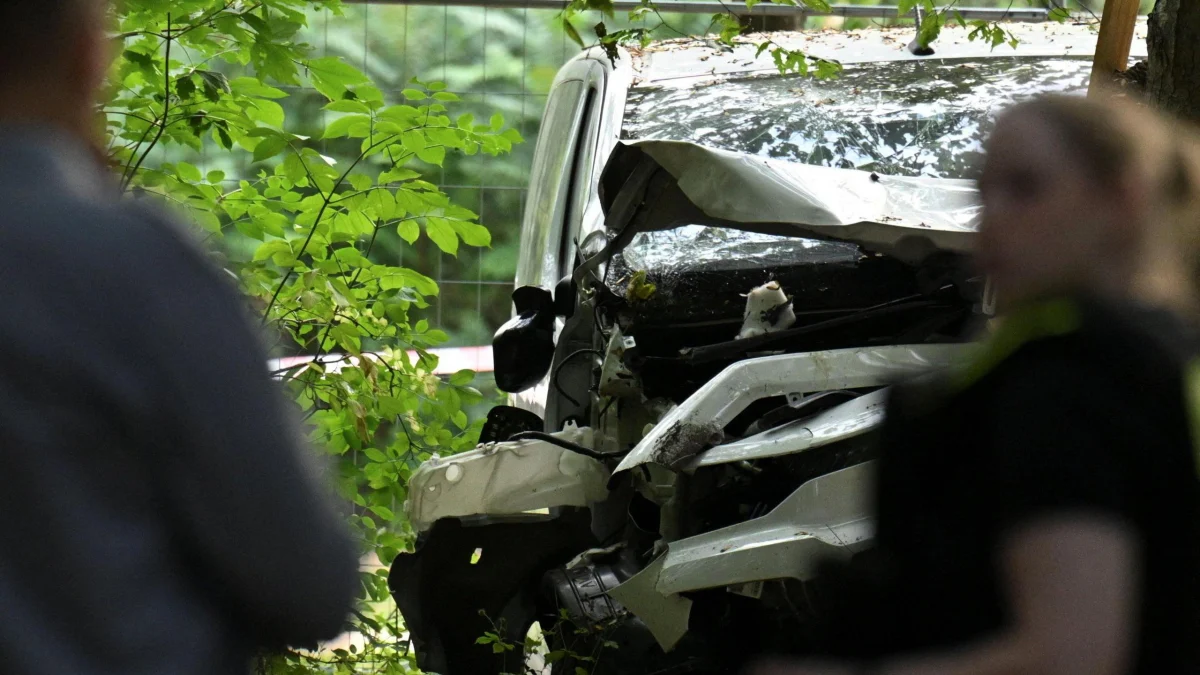
Berlin, Germany – A vibrant celebration of LGBTQ+ identity and rights in the heart of the German capital was abruptly shattered Saturday night when a vehicle was deliberately driven into a crowd attending the annual Christopher Street Day (CSD) event, tragically claiming one life and injuring at least sixteen others. The shocking incident, which unfolded near the iconic Brandenburg Gate, has triggered an extensive city-wide manhunt for a 21-year-old suspect identified by authorities as Abdul B., who is reportedly known to have ties to Islamist circles.
German Chancellor Friedrich Merz swiftly condemned the act as a "heinous" assault on German society, reflecting the profound shock and outrage reverberating across the nation and Europe. The attack casts a somber shadow over one of Berlin’s most significant annual cultural events, forcing its immediate cancellation and leaving thousands of participants and spectators reeling from fear and confusion.
A Night of Celebration Turned Tragedy
The tranquility of a summer evening, filled with the joy and camaraderie of Berlin’s Christopher Street Day parade, was violently disrupted around 10:00 PM local time (8:00 PM GMT). Hundreds of thousands of people had gathered at Tiergarten park, a sprawling urban oasis, concluding the day’s festivities that typically snake through the city center, past landmarks like the Victory Column, before culminating near the Brandenburg Gate. It was along Ahornsteig, a pathway traversing a forested section of the park, that a white vehicle veered into the unsuspecting throng.
Eyewitness accounts and unverified social media footage depicted scenes of chaos and panic as emergency vehicles converged on the site. The sheer scale of the crowd, estimated to be in the hundreds of thousands, amplified the potential for widespread casualties. Organizers, realizing the gravity of the situation, swiftly moved to cancel the remaining performances. An urgent message of "Evacuation" was projected onto a large stage screen, instructing attendees to calmly disperse and head towards designated exits, transforming a festive atmosphere into one of urgent dispersal.
In the immediate aftermath, police confirmed the grim toll: one woman had been killed, and sixteen individuals sustained various injuries. Disturbingly, initial reports also indicated that some victims suffered stabbing wounds, suggesting a more complex and multifaceted attack than a simple vehicle ramming. Shortly after the incident, the vehicle believed to have been used in the assault was located, having crashed into a tree within the park, though its occupant(s) were no longer present.
Christopher Street Day: A Beacon of Freedom and Resilience
Christopher Street Day, or CSD, is Germany’s vibrant equivalent of Pride parades celebrated globally, commemorating the Stonewall Riots of 1969 in New York City, a pivotal moment in the LGBTQ+ rights movement. Berlin’s CSD is not merely a parade; it is a powerful demonstration for equality, dignity, and acceptance, drawing participants from across Germany and beyond. The city itself boasts a rich and complex history with LGBTQ+ communities, having been a pioneering hub for gay rights and culture during the Weimar Republic era, and subsequently a site of brutal persecution under Nazism. In the post-war period, Berlin re-emerged as a significant center for LGBTQ+ activism and community building, making its CSD a particularly poignant and politically charged event.
The attack on such a symbolic gathering is thus not just an act of violence against individuals, but an assault on the very values of freedom, diversity, and inclusion that Berlin and Germany champion. It represents a direct challenge to the open, democratic society that the CSD embodies, aiming to instill fear and divide communities. The historical context of Berlin’s LGBTQ+ struggle adds another layer of gravity to the incident, reminding many of past vulnerabilities and the ongoing need for vigilance.
The Suspect: A Profile Emerges with Alleged Extremist Links
Hours after the attack, around 3:30 AM local time, police publicly identified Abdul B. as the primary suspect, initiating a widespread search. German law typically prohibits the full naming of suspects at this preliminary stage of an investigation, hence only his first name and initial of his surname were released. Abdul B., aged 21, is described as thin, approximately 6 feet 2 inches tall, and was reportedly seen wearing a black hooded top and white trousers at the time of the incident. Authorities have issued a public warning, advising citizens not to approach him, as he is believed to be armed and dangerous.
The revelation of Abdul B.’s alleged connections to Islamist circles has significantly shaped the investigation. German media outlets, citing police sources, have reported that he is a known sympathizer of the Islamic State (IS) group and had previously attempted, albeit unsuccessfully, to join the organization. Further details indicate a troubled past involving interactions with law enforcement and de-radicalization programs. Abdul B. reportedly traveled to Lebanon in 2025, and upon his return to Berlin, he was arrested. He remained in pre-trial detention until May 2026, during which time he was ordered to participate in a de-radicalization program, a measure typically employed for individuals deemed at risk of extremist violence.
This timeline raises critical questions about the effectiveness of such programs and the ongoing challenges faced by security agencies in monitoring and rehabilitating individuals with extremist ideologies. The fact that a suspect, previously known to authorities for extremist sympathies and subjected to a de-radicalization process, could allegedly carry out such an attack highlights the complexities inherent in counter-terrorism and prevention efforts. Furthermore, police statements indicating that "one or more people may have fled the vehicle" and that "several people are reported to have been injured with stabbing weapons" suggest the possibility of additional suspects or accomplices, broadening the scope of the ongoing investigation.
Broader Context: Vehicle Attacks and European Security Concerns
The use of a vehicle as a weapon to target crowds has become a tragically familiar tactic for extremist groups, particularly those inspired by or affiliated with Islamist ideologies, across Europe and beyond. Incidents such as the 2016 truck attack in Nice, France, the ramming at a Berlin Christmas market in the same year, and the London Bridge attack in 2017 underscore the devastating simplicity and effectiveness of this method. These attacks often exploit the inherent vulnerability of large, open-air public gatherings, which are difficult to secure comprehensively without fundamentally altering their nature.
Germany, in particular, has been on heightened alert for potential terrorist attacks, especially from Islamist extremists. While the country has successfully thwarted numerous plots, it has also experienced several high-profile attacks in recent years, including the 2016 Berlin Christmas market attack, which claimed 12 lives. This broader context frames the current incident not as an isolated act, but as part of a persistent and evolving threat landscape. The deliberate targeting of a Pride event also resonates with a documented history of hate crimes and violence against the LGBTQ+ community, adding another layer of concern regarding potential hate-motivated or ideologically driven violence.
Community and Political Response: Unity in the Face of Violence
The attack drew immediate and widespread condemnation from political leaders across Germany and Europe, who expressed solidarity with the victims and the LGBTQ+ community. European Commission President Ursula von der Leyen articulated her sympathy, emphasizing that the Pride event stands for "freedom, dignity, and equality — the fundamental values of the EU." She asserted that "Every person should be able to live, love, and stand up for their rights without fear."
Similar sentiments were echoed by other European leaders. Rob Jetten, the Prime Minister of the Netherlands, declared that the Dutch stand "shoulder to shoulder with our German neighbors," while Italy’s Prime Minister Georgia Meloni expressed "solidarity and sincere sympathy." From the United Kingdom, Defence Secretary Wes Streeting characterized the incident as an "absolutely horrific disaster," extending his thoughts and prayers to the German people. These unified condemnations underscore a collective resolve to counter extremism and protect democratic values.
For the LGBTQ+ community in Germany and globally, the attack has inevitably stirred fear and heightened anxieties about personal safety at public events. Yet, alongside the shock, there has also been a powerful outpouring of solidarity and a defiant commitment to continue advocating for rights and visibility. Organizations and community leaders quickly mobilized to offer support to victims and their families, while also reaffirming the importance of Pride events as spaces for celebration and protest that must not be silenced by violence. This collective response highlights the resilience of communities in the face of adversity, demonstrating a refusal to allow acts of terror to undermine fundamental freedoms.
The Path Forward: Investigations, Healing, and Vigilance
As the manhunt for Abdul B. continues across Berlin, the focus remains on apprehending the suspect(s) and fully understanding the motivations behind this heinous act. The investigation will undoubtedly delve into the specifics of his alleged radicalization, his movements, and any potential networks or accomplices. For the victims and their families, the path to healing will be long and arduous, requiring extensive support and compassion.
Beyond the immediate crisis, the incident compels a renewed examination of security protocols at large public gatherings, the effectiveness of de-radicalization programs, and the broader societal efforts to combat extremism and hate. It serves as a stark reminder of the persistent threats faced by open societies and the ongoing vigilance required to protect fundamental rights and freedoms. Despite the tragedy, the spirit of Christopher Street Day — a celebration of love, diversity, and resilience — is unlikely to be extinguished, even as the community grapples with the profound impact of this violent assault.



 Amir Mahmud