Amir Mahmud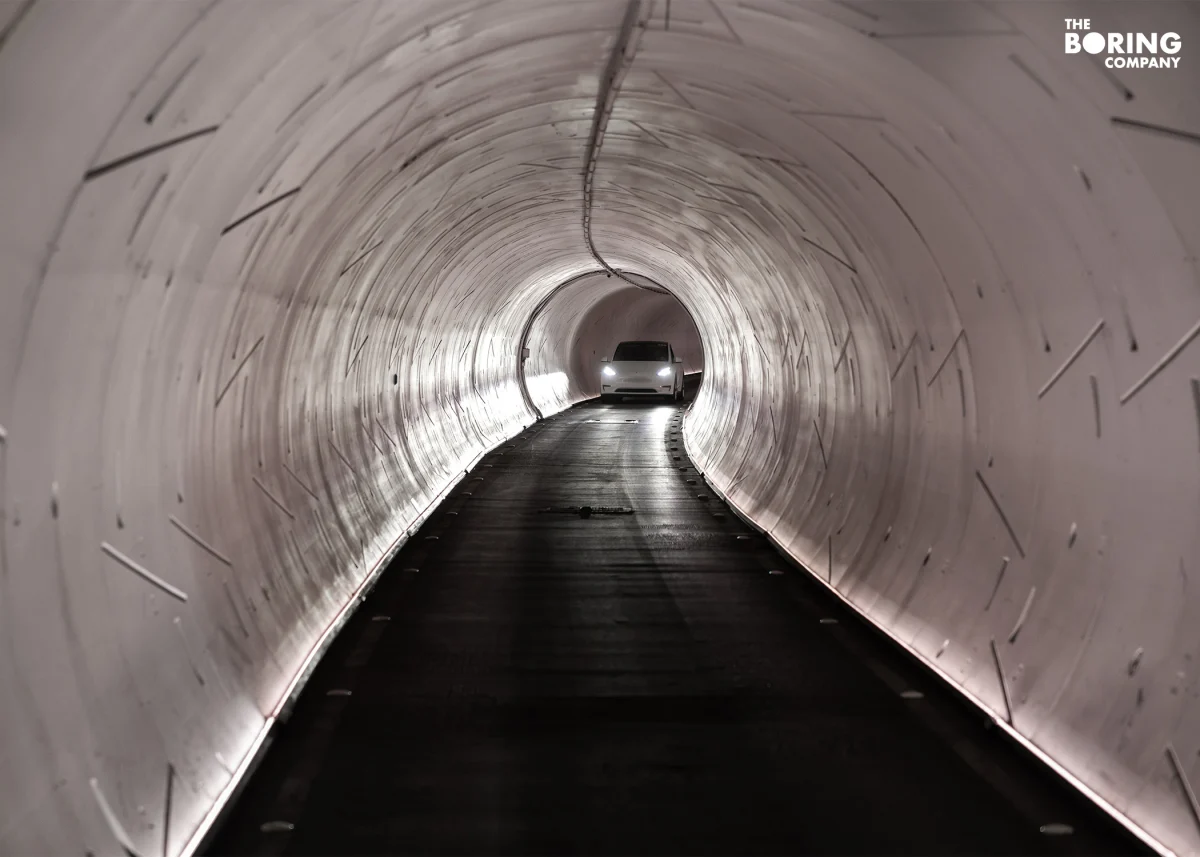
Reports indicate that The Boring Company, Elon Musk’s innovative tunneling venture, is actively engaged in discussions to secure a substantial $4 billion capital injection, a move that would elevate its valuation to an impressive $20 billion. This potential financial milestone, as first reported by The Wall Street Journal, signifies a remarkable surge from its previous valuation of $5.7 billion recorded in April 2022, underscoring investor confidence in its audacious vision for urban mobility. While these negotiations are still in progress and the precise terms could evolve, the prospective valuation positions the company as a significant player in the infrastructure and transportation sectors, far beyond its initial startup phase.
The Genesis of a Subterranean Vision
The conceptualization of The Boring Company traces back to Elon Musk’s personal frustrations with perennial traffic congestion in Los Angeles. In 2016, Musk, known for his ventures in electric vehicles with Tesla and space exploration with SpaceX, famously tweeted about his intention to "start a tunneling company" to alleviate surface-level gridlock. His initial idea was simple yet revolutionary: create a network of underground tunnels where electric vehicles, initially Teslas, could be transported at high speeds, bypassing surface traffic entirely. This vision rapidly evolved from a casual tweet into a full-fledged enterprise, formally established in 2016 as a subsidiary of SpaceX before spinning off as an independent entity in 2018.
Musk’s inspiration for The Boring Company was deeply intertwined with his broader ambitions for advanced transportation systems, including the Hyperloop concept – a high-speed vacuum-tube transport system. While the Hyperloop focuses on inter-city travel, The Boring Company’s initial focus was on intra-city transportation, aiming to make tunneling significantly faster, safer, and more cost-effective than traditional methods. Conventional urban tunneling projects are notoriously expensive, time-consuming, and disruptive, often costing hundreds of millions, if not billions, of dollars per mile. Musk’s audacious goal was to reduce these costs by a factor of ten or more and dramatically increase tunneling speed, primarily through the development of next-generation tunnel boring machines (TBMs) and optimized operational procedures. Early demonstrations involved a test tunnel built under SpaceX’s headquarters in Hawthorne, California, showcasing the concept of shuttling vehicles on electric skates through narrow tunnels.
Navigating the Vegas Loop: A Test Case
The Boring Company’s most tangible and operational project to date is the Las Vegas Convention Center (LVCC) Loop. This subterranean network, completed in 2021, comprises 1.7 miles of tunnels and three passenger stations, designed to transport attendees across the sprawling convention center campus. Utilizing a fleet of Tesla vehicles, the Loop system aims to reduce a 45-minute surface walk to a mere two-minute ride, significantly enhancing efficiency for convention-goers. The success of the LVCC Loop has been instrumental in validating the company’s core concept, demonstrating the practical application of its technology in a controlled urban environment. The system has reportedly transported millions of passengers since its inception, proving its capability to handle high-volume traffic during major events.
However, the journey has not been without its complexities and controversies. The rapid construction and novel approach have drawn intense scrutiny, particularly regarding safety and environmental compliance. Reports have emerged detailing serious injuries sustained by tunnel workers during construction phases, raising questions about workplace safety protocols in a high-pressure, innovative environment. Furthermore, Nevada regulators levied serious allegations last year, claiming The Boring Company committed nearly 800 violations of environmental regulations. These alleged breaches, ranging from improper waste disposal to failure to obtain necessary permits, highlight the inherent challenges of pioneering new infrastructure projects, especially when navigating complex regulatory landscapes designed for traditional construction methods. Addressing these concerns is paramount for the company’s long-term viability and its ability to secure future permits and public trust for expansion projects.
Ambitious Horizons: Expanding the Network
Building on the experience of the LVCC Loop, The Boring Company has unveiled ambitious plans for expansion, signaling its intent to establish similar subterranean transportation networks in other major urban centers. Notable among these are proposed projects in Nashville, Tennessee, and Dubai in the United Arab Emirates. These initiatives represent a strategic move to replicate the LVCC Loop’s model in diverse geographical and regulatory contexts, testing the scalability and adaptability of its tunneling technology.
Beyond these announced projects, The Wall Street Journal report indicated that The Boring Company has also engaged in discussions and pitched its innovative tunneling solutions to cities like Baltimore, Chicago, and Los Angeles. Each of these cities grapples with significant traffic congestion and urban planning challenges, making them prime candidates for alternative transportation solutions. A Baltimore Loop, for instance, could potentially connect key areas, while a Chicago network might alleviate pressure on its bustling downtown. For Los Angeles, the city that inspired Musk’s initial idea, a full-scale Loop system could be transformative, offering a novel approach to its notorious traffic woes. However, securing these large-scale municipal contracts often involves navigating intricate political processes, extensive public consultation, and rigorous environmental impact assessments, presenting a considerable hurdle for any infrastructure project, let alone a nascent technology like The Boring Company’s.
The Broader Vision: Transforming Urban Transit
The Boring Company’s long-term vision extends beyond simply shuttling cars. It aims to fundamentally disrupt urban mobility by offering a high-speed, congestion-free alternative to surface roads and traditional public transport systems. By moving traffic underground, the company argues, cities can reclaim valuable surface land for parks, pedestrian zones, and residential development, thereby enhancing urban livability. This paradigm shift could have profound social and cultural impacts, reshaping how people commute, interact with their cities, and perceive public spaces. The concept of an "all-electric, zero-emission, high-speed underground public transportation system" could significantly reduce commute times, lower carbon footprints, and potentially democratize access to urban centers.
However, industry analysts offer neutral commentary regarding the practicalities and challenges of this grand vision. While the technological promise is compelling, questions persist about the economic viability of widespread deployment, particularly in densely populated areas with complex subterranean infrastructure (e.g., utility lines, existing subway systems, geological variations). The capital expenditure for tunneling, even with The Boring Company’s cost-reduction goals, remains substantial. Furthermore, public acceptance and integration into existing multimodal transport networks are critical for success. The "Loop" system, in its current iteration, primarily moves individual vehicles, which differs from traditional mass transit systems like subways that move hundreds of people per train. The company’s future evolution might involve larger capacity vehicles or automated pods to truly serve as a mass transit solution.
Analyzing the $20 Billion Valuation
The reported $20 billion valuation represents a significant vote of confidence from investors, reflecting not just the company’s current achievements but also its perceived future potential. This valuation places The Boring Company among the ranks of highly capitalized private tech companies, despite its primary business being infrastructure development. Several factors likely contribute to this elevated valuation:
- Elon Musk’s Influence: Musk’s track record with Tesla and SpaceX instills investor confidence, often attracting capital to his ventures even in their early stages. His brand is synonymous with disruptive innovation and ambitious execution.
- Market Disruption Potential: The global market for urban transportation solutions is immense, and any technology capable of significantly alleviating congestion and improving efficiency holds enormous value. If The Boring Company can scale its technology and prove its economic model, the addressable market is vast.
- Technological Advancement: The promise of drastically reduced tunneling costs and increased speed is a game-changer for infrastructure. If The Boring Company can deliver on these promises consistently, it could revolutionize the construction industry.
- Scarcity of Innovation: While traditional tunneling companies exist, few are attempting such radical innovation in both technology and business model. This positions The Boring Company as a unique investment opportunity.
However, a neutral analytical perspective also recognizes potential risks and factors that might temper such an optimistic valuation. The company’s revenue streams are still nascent compared to its potential valuation. While the LVCC Loop generates revenue, it is a single, relatively contained project. The leap to a $20 billion valuation largely relies on the successful execution of numerous future large-scale projects, which are yet to materialize and face significant regulatory, engineering, and financial hurdles. The long development cycles inherent in infrastructure projects also mean that profitability and significant returns on investment could be years, if not decades, away. Furthermore, the controversies surrounding worker safety and environmental compliance could impact public perception and regulatory approvals for future projects, adding a layer of risk.
Challenges and the Path Forward
For The Boring Company to fully realize its ambitious vision and justify its escalating valuation, it must effectively address several critical challenges. Foremost among these is scaling its technology and operations. Moving from a single, relatively short loop in a convention center to extensive city-wide networks requires a robust operational framework, a scalable manufacturing process for its TBMs, and a deep understanding of diverse geological conditions. Regulatory approvals and public-private partnerships will also be crucial, demanding extensive engagement with municipal authorities, environmental agencies, and local communities.
The economic model also needs further refinement and demonstration. While the company aims for lower costs, the sheer capital outlay for widespread deployment remains significant. Creative financing mechanisms, potentially involving user fees, public subsidies, or innovative bond structures, will likely be necessary. Moreover, integrating the Loop systems seamlessly with existing public transportation networks – buses, trains, and ride-sharing services – will be vital for truly transforming urban mobility and maximizing its utility for commuters.
The Future of Urban Mobility
As The Boring Company seeks to solidify its financial standing with this new funding round, its trajectory remains a subject of intense interest and debate. Its journey from a seemingly whimsical tweet to a multi-billion-dollar enterprise highlights the unique blend of technological audacity and entrepreneurial drive characteristic of Elon Musk’s ventures. While the road ahead is undoubtedly fraught with engineering complexities, regulatory hurdles, and market uncertainties, the prospect of a future where urban congestion is relegated to the past through subterranean innovation continues to captivate investors and city planners alike. The outcome of this funding round will not only shape the future of The Boring Company but could also significantly influence the broader landscape of urban transportation development for decades to come.