Amir Mahmud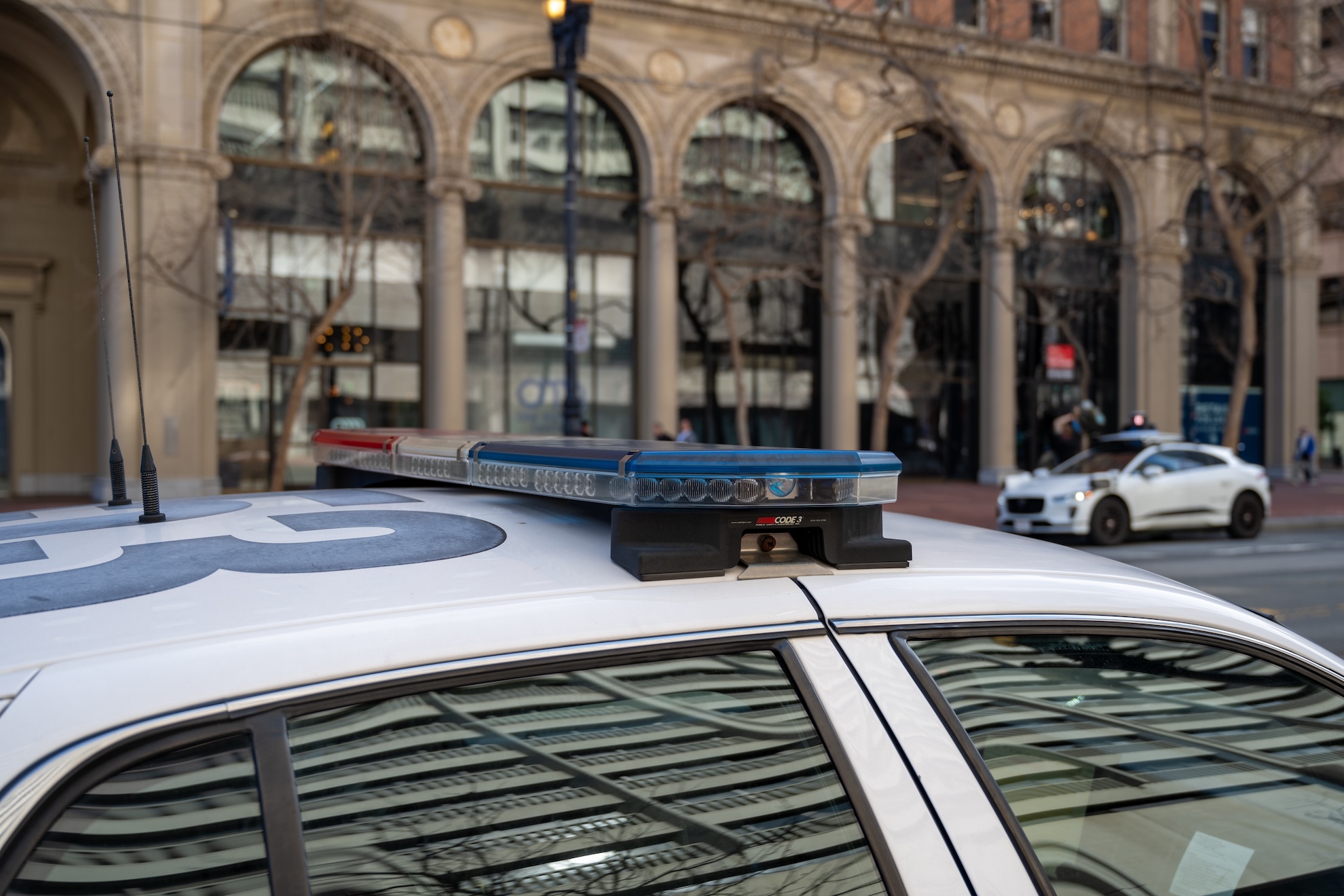
The landscape of urban mobility is undergoing a profound transformation, propelled by the accelerating deployment of autonomous vehicles. Waymo, a pioneer in self-driving technology, recently announced a significant milestone: its robotaxi service now facilitates an impressive 500,000 paid rides each week. This figure, while still modest when compared to the vast operations of human-driven ride-hailing giants like Uber and Lyft, underscores a burgeoning adoption rate and signals a pivotal moment for the autonomous vehicle (AV) industry. However, this rapid expansion, particularly within densely populated urban environments, is revealing a complex set of challenges, most notably the unexpected burden placed on public emergency services when these advanced vehicles encounter operational difficulties.
The Dawn of Driverless Mobility and Its Unforeseen Complications
The journey toward fully autonomous vehicles began decades ago, evolving from conceptual designs to sophisticated prototypes. Early milestones, such as the DARPA Grand Challenge in the mid-2000s, demonstrated the nascent capabilities of self-driving cars. Google’s foray into the space in 2009, eventually spinning out as Waymo, marked a significant acceleration in development, promising a future where accidents are drastically reduced, traffic flows more smoothly, and transportation becomes more accessible. Today, Level 4 autonomous vehicles, capable of operating without human intervention under specific conditions and within defined geographical areas, are becoming an increasingly common sight in cities like Phoenix, San Francisco, and Austin.
Waymo’s achievement of half a million weekly rides is a testament to the technological advancements and growing consumer confidence in these driverless systems. Each ride contributes to an invaluable dataset, refining algorithms and enhancing the vehicles’ ability to navigate complex urban scenarios. This scale also signifies a crucial step toward proving the commercial viability of robotaxis, attracting further investment and paving the way for wider deployment. Yet, as the number of robotaxis on public roads surges, so too does the frequency of unforeseen incidents, from minor glitches to more significant system failures that render the vehicles immobile. These situations, as recent reports highlight, often lead to a critical reliance on municipal services, raising questions about accountability, resource allocation, and the long-term sustainability of this operational model.
When Technology Stalls: The Burden on First Responders
The inherent complexities of autonomous driving, despite sophisticated sensor arrays and AI, mean that robotaxis are not immune to becoming incapacitated. A widespread power outage in California last December, for instance, left numerous Waymo vehicles stranded, unable to proceed. Such incidents, while perhaps infrequent on a per-vehicle basis, become a significant concern as fleet sizes grow. The critical question then emerges: who is responsible for retrieving a paralyzed robotaxi, and what happens when the company’s internal support systems are insufficient or delayed?
An in-depth investigation revealed that when Waymo’s self-driving cars become stuck, the company frequently relies on publicly funded emergency services—police, fire departments, and other municipal personnel—to intervene. These incidents are not isolated; records indicate at least six instances where first responders were compelled to manually move Waymo vehicles. One particularly alarming example occurred in Austin, Texas, where a police officer responding to a mass shooting had to divert precious time and resources to move a stranded Waymo robotaxi out of the roadway. This incident starkly illustrates the potential for autonomous vehicle malfunctions to directly impede critical public safety operations.
This reliance on public services has ignited a debate among city officials and the public. San Francisco District 4 Supervisor Alan Wong articulated a common sentiment, stating that many of his colleagues agree that "our first responders should not be AAA." The argument is straightforward: private corporations deploying commercial services should bear the full responsibility for their operational challenges, including roadside assistance. While some view these incidents as minor growing pains in the rollout of a revolutionary technology, others contend that shifting the cost and effort of vehicle recovery onto taxpayers is unacceptable, especially when these resources are urgently needed for genuine emergencies. The financial implications are also considerable, as every hour spent by police or fire personnel on a stranded robotaxi represents a diversion from their primary duties and a direct cost to the municipal budget.
Navigating Regulatory Frameworks and Public Trust
The challenges posed by stranded robotaxis extend beyond operational logistics, delving into the complex realms of regulation, liability, and public perception. The absence of comprehensive, uniform federal regulations for autonomous vehicles has led to a patchwork of state and local rules, creating inconsistencies and potential ambiguities regarding who is responsible when an AV malfunctions. States like Utah are beginning to address this by establishing specific liability frameworks for autonomous vehicles, but a broader, coordinated approach is still needed.
Public trust is paramount for the widespread acceptance and success of autonomous mobility. Incidents where robotaxis impede emergency services, or simply create unexpected traffic disruptions, can quickly erode public confidence. A perceived lack of accountability from tech companies can fuel skepticism and resistance, potentially slowing down the adoption of a technology that promises significant societal benefits. For the industry to thrive, companies must not only demonstrate technological prowess but also exhibit a strong commitment to operational responsibility and community engagement. This includes proactive measures to minimize incidents, robust and rapid internal response teams, and clear protocols for engaging with public services only when absolutely necessary, perhaps even exploring models for reimbursing municipal agencies for their assistance.
Performance Metrics and the Broader Autonomous Ecosystem
Beyond the issue of roadside assistance, insights into the operational efficiency of robotaxis offer another dimension to the ongoing evolution of autonomous mobility. An insider from Uber, a company that partners with Waymo in certain markets, suggested that Waymo robotaxis can take up to 30% longer to reach a destination compared to human-driven counterparts. This increased travel time is attributed to the robotaxis’ conservative driving style, prioritizing safety above all else, and their tendency to avoid complex maneuvers like unprotected left turns. While Waymo vehicles are technically capable of executing such turns, their programming often leads them to seek safer, albeit longer, routes.
This trade-off between speed and safety has significant market implications. In a competitive ride-hailing market where time is often a critical factor for consumers, a slower service could be a disadvantage. However, proponents argue that the enhanced safety profile of AVs, theoretically leading to fewer accidents and injuries, could outweigh the inconvenience of slightly longer travel times. The cultural impact of this dynamic is also noteworthy: will passengers prioritize efficiency, or will they embrace a more cautious, potentially safer, but slower mode of transport? This balancing act will likely shape consumer preferences and influence the future design and deployment strategies of autonomous systems.
The autonomous mobility sector is, of course, far broader than just robotaxis. Investment continues to pour into various facets of the ecosystem:
- Drone Delivery: Zipline, an autonomous drone delivery startup, recently secured an additional $200 million, bringing its Series H funding round to $800 million and valuing the company at $7.6 billion. This success is fueled by a surge in at-home delivery volumes, surpassing previous forecasts. Drone delivery represents a complementary branch of autonomous logistics, addressing last-mile challenges and expanding access to goods and medical supplies, particularly in remote areas.
- Intelligent Infrastructure: NoTraffic, an Israeli startup specializing in AI-powered traffic management software, raised $90 million in Series C funding. Such technologies are crucial for optimizing traffic flow, reducing congestion, and creating a more harmonious environment for both human-driven and autonomous vehicles. Smart infrastructure can provide AVs with real-time data beyond their immediate sensor perception, enhancing safety and efficiency.
- Electric Vehicle Integration: The transition to autonomous vehicles is deeply intertwined with the broader shift towards electrification. Volkswagen Group committed another $1 billion to Rivian as part of a technology joint venture, signaling ongoing collaboration in EV development. Similarly, Harbinger, an EV trucking startup, is expanding its product line to include hybrid emergency vehicles, demonstrating how electric and autonomous technologies are converging across different vehicle segments.
- Defense Applications: Shield AI, a developer of autonomous military aircraft, raised a substantial $1.5 billion in Series G funding, pushing its valuation to $12.7 billion. This highlights the diverse and strategic applications of autonomous technology beyond consumer mobility.
- Global Expansion: Uber’s reported investment in Verne, a robotaxi company under Rimac Group, and its collaboration with Pony.ai to bring robotaxis to Europe (starting with Zagreb, Croatia) underscores the global race to deploy autonomous ride-hailing services and capture international markets.
- Regulatory Milestones: The Securities and Exchange Commission closing its investigation into EV startup Faraday Future, despite previous recommendations for enforcement action, provides a measure of clarity for the company, while Utah’s new liability framework for AVs exemplifies the ongoing legislative efforts to adapt to this new technology.
- New Market Entries: Zoox, another prominent player in the autonomous space, has begun navigating public roads with its purpose-built robotaxis in Austin and Miami. While it awaits federal exemption to charge for rides, its expansion marks another step toward wider commercial availability.
The Path Forward: Collaboration and Responsibility
The rapid advancements in autonomous vehicle technology, exemplified by Waymo’s impressive growth, undeniably hold immense promise for enhancing safety, efficiency, and accessibility in transportation. However, the emerging challenges associated with stalled robotaxis and their reliance on public emergency services underscore a critical need for proactive engagement and collaboration.
For the autonomous mobility revolution to truly succeed, tech companies, regulators, and municipal service providers must forge stronger partnerships. This involves establishing clear protocols for incident response, potentially creating dedicated private response teams that can rapidly address vehicle malfunctions, and exploring mechanisms for companies to contribute financially to the public services they occasionally rely upon. Furthermore, the regulatory landscape needs to evolve quickly to provide clear guidelines for liability, operation, and the integration of AVs into existing urban infrastructure.
The journey to a fully autonomous future is not merely a technological race; it is a complex societal integration project. By addressing the operational and social implications with foresight and responsibility, the industry can ensure that the benefits of driverless technology are realized without unduly burdening public resources or eroding the trust of the communities they aim to serve. The conversation around "who unsticks the robotaxi" is not just about logistics; it’s about defining the responsible future of mobility.