Amir Mahmud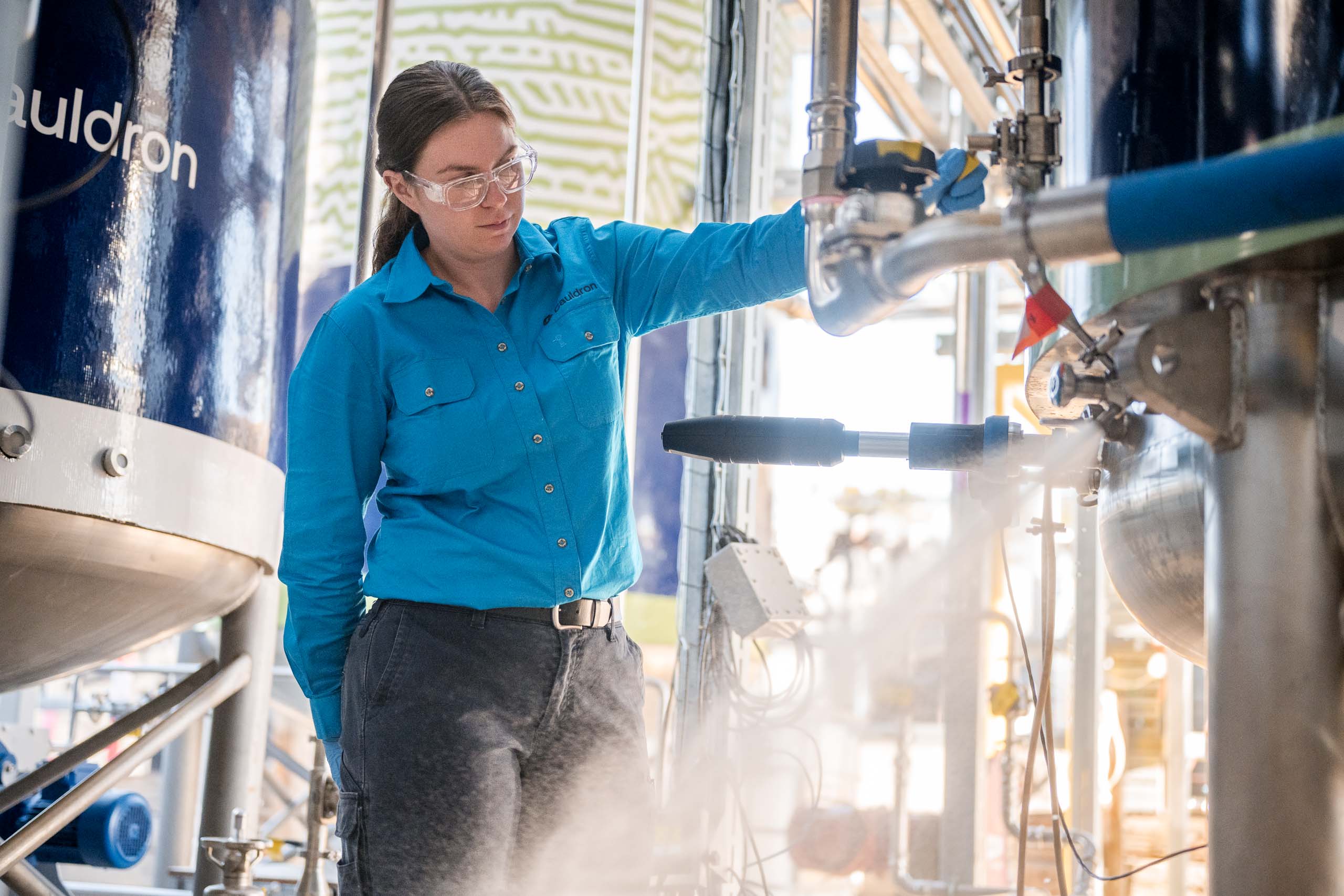
A quiet revolution in biotechnology, rooted in decades of persistent innovation, is now poised to redefine global manufacturing processes. Cauldron Ferm, a company that has painstakingly refined the art of continuous fermentation, recently secured a significant $13.25 million in a Series A2 funding round, signaling a robust market confidence in its capacity to transform microbial production into an uninterrupted, highly efficient industrial assembly line. This latest capital infusion, led by Main Sequence Ventures with key participation from Horizons Ventures, NGS Super, and SOSV, builds upon a prior $6.5 million raised earlier in 2024, propelling the Australian-based startup into a new phase of expansion and technological fortification.
The Genesis of a Vision: Feeding the World Through Microbes
The remarkable journey of Cauldron Ferm traces its origins back to an ambitious dream nurtured in the mid-20th century. While the precise year remains somewhat shrouded in the mists of time, somewhere between the 1960s and 1970s, David and Polly McLennan embarked on a quest driven by a profound vision: to alleviate global hunger by cultivating protein from microbes. This period was marked by growing concerns over food security, particularly in the wake of rapid population growth and the limitations of traditional agriculture. The concept of "single-cell protein" (SCP), derived from microorganisms like yeast, bacteria, fungi, or algae, emerged as a promising solution. SCP production gained traction during the 1970s energy crisis, as researchers sought alternative protein sources that were less reliant on land and water than conventional livestock farming. However, the economic viability and scalability of these early ventures proved challenging, often hampered by high production costs and consumer skepticism.
From Batch to Continuous: A Paradigm Shift in Biomanufacturing
At the heart of the McLennans’ enduring challenge, and indeed Cauldron Ferm’s ultimate breakthrough, lies the fundamental difference between batch and continuous fermentation. Most industrial fermentation processes, familiar from breweries or vineyards, operate on a batch system. In this model, ingredients are introduced into a bioreactor, microorganisms perform their metabolic work over a set period, and then the entire process is halted to extract the finished product. This cyclical nature necessitates cleaning, sterilization, and re-initiation for each new batch, making it inherently time-consuming and expensive. While acceptable for high-value products like specialty alcohols or certain pharmaceuticals, this intermittent model renders many fermented food ingredients prohibitively costly for widespread adoption.
The McLennans, however, envisioned a different future: continuous fermentation. Imagine a system where raw materials are constantly fed into a bioreactor, and the desired product, along with waste, is continuously drawn off, allowing the microbial culture to operate without interruption. This "assembly line" approach promises vastly improved productivity, reduced downtime, and significantly lower operational costs per unit of product. The theoretical advantages are immense, including smaller reactor volumes for the same output, more consistent product quality, and greater overall efficiency. Yet, the practical implementation of continuous fermentation, especially at industrial scale, presents formidable technical hurdles. Maintaining stable microbial populations, preventing contamination, optimizing nutrient flow, and efficiently managing product separation over extended periods requires sophisticated engineering and deep biological understanding.
Four Decades of Persistent Innovation
Undeterred by the complexities that had stymied many before them, the McLennans dedicated over four decades to meticulously refining their approach. Their small business became a crucible of innovation, steadily overcoming the technical challenges of continuous fermentation. This long-term commitment, spanning from the nascent days of biotech to the modern era of synthetic biology, underscores the sheer perseverance required to turn a visionary concept into a tangible, repeatable process. They were pioneers in an area where many had experimented but few had truly mastered the art of keeping microbial factories running non-stop. Their work laid the foundational intellectual property and practical expertise that Cauldron Ferm leverages today, a testament to their unwavering belief in the potential of microbial protein.
A New Era: Scaling the Hyper Fermentation Platform
The trajectory of the McLennans’ long-standing endeavor shifted dramatically with the arrival of Michele Stansfield in 2012. As co-founder and CEO of Cauldron Ferm, Stansfield brought a fresh perspective and entrepreneurial drive to the accumulated wisdom of four decades. "We didn’t know what we had," Stansfield candidly shared, reflecting on the understated potential of the continuous fermentation technology they possessed. Initially, the full scope of applying continuous fermentation to synthetic biology’s rapidly expanding possibilities wasn’t entirely clear.
However, Stansfield soon grasped the immense strategic value and scalability of the McLennans’ innovations. Recognizing the profound implications for industrial biotechnology, she spearheaded the transformation of the company from a fee-for-service operator into a dynamic, fast-moving startup. This pivotal shift involved raising a crucial seed round and strategically acquiring the existing intellectual property, physical assets, and business infrastructure. Under her leadership, the technology was branded "hyper fermentation," a term encapsulating its core advantage: maintaining microbes in their maximally productive state for extended, uninterrupted periods.
Cauldron Ferm’s hyper fermentation platform is designed for adaptability, capable of integrating with existing batch fermenters with minimal modifications to facility infrastructure. This approach significantly reduces the capital expenditure typically associated with adopting new biomanufacturing technologies, making it an attractive proposition for industrial partners. The company operates as a collaborative partner, with customers supplying their specific microbial strains, while Cauldron Ferm optimizes the growing conditions – meticulously adjusting nutrient profiles, temperature, and other environmental factors – to ensure these biological "assembly lines" hum with unparalleled efficiency. This symbiotic relationship allows clients to leverage Cauldron’s expertise without undertaking massive infrastructure overhauls.
Strategic Capital Infusion and Market Ambitions
The recent $13.25 million Series A2 funding round is a critical milestone, affirming investor confidence in Cauldron Ferm’s patented technology and market strategy. Main Sequence Ventures, a venture capital firm known for backing deep tech and science-based startups, led the round, signifying the technology’s potential for significant disruption. The participation of global investors like Horizons Ventures, alongside institutional funds like NGS Super and startup accelerators such as SOSV, highlights the broad appeal and perceived robustness of Cauldron’s platform. This capital is earmarked for "increasing the technology moat," as articulated by Stansfield. This strategic objective implies further investment in research and development to enhance proprietary processes, secure additional intellectual property, and build a competitive advantage that would be difficult for others to replicate. It could involve developing new bioreactor designs, advanced process control systems, or specialized nutrient formulations that further optimize microbial productivity and efficiency.
The Broad Horizon of Biological Production
Currently, Cauldron Ferm is channeling its hyper fermentation capabilities towards producing high-demand fats and proteins. A key focus is whey protein, a versatile ingredient widely used in the food and beverage industry, particularly in sports nutrition and dairy alternatives. Stansfield notes that such products can "just slip into supply chains," indicating a strategic emphasis on creating ingredients that seamlessly integrate into existing manufacturing processes without requiring significant reformulation or new infrastructure from their customers. This strategy minimizes adoption barriers and accelerates market penetration.
However, the company’s vision extends far beyond food ingredients. Stansfield articulates a bold future where "sixty percent of all inputs to global economy can be produced from biology." This ambitious statement reflects the growing potential of synthetic biology to displace petrochemicals and traditional agriculture across a vast spectrum of industries. Beyond food, biological production can encompass materials like bioplastics and bio-fibers, specialty chemicals for pharmaceuticals and cosmetics, sustainable fuels, and even advanced therapeutics. The ability to harness microbes for the precision manufacturing of complex molecules offers an environmentally friendlier, more resource-efficient alternative to conventional industrial methods.
Overcoming Hurdles and Shaping the Future
While the promise of continuous microbial production is immense, the journey ahead for Cauldron Ferm, and the broader synthetic biology sector, is not without its challenges. Scaling sophisticated biotechnologies from laboratory to industrial output requires navigating complex engineering hurdles, ensuring consistent product quality, and adhering to rigorous regulatory standards. Consumer acceptance, particularly for novel food ingredients or materials derived from microbial fermentation, also remains a critical factor. Education and transparency about the benefits and safety of these products will be crucial for widespread adoption.
Nevertheless, Cauldron Ferm’s innovation represents a significant leap forward in sustainable manufacturing. By maximizing the efficiency of microbial production, the company is poised to contribute to a future where resource consumption is minimized, waste is reduced, and supply chains are made more resilient. The ability to produce essential ingredients without extensive land use or water consumption offers a compelling solution to pressing environmental concerns and the global demand for sustainable products. Their work underscores a fundamental shift in how humanity can harness natural biological processes to build a more sustainable and resource-efficient economy.
In essence, Cauldron Ferm is not merely optimizing a process; it is helping to lay the groundwork for a new industrial paradigm. By transforming microbes into tireless, high-yield factories, the company is not only poised to disrupt traditional manufacturing but also to unlock unprecedented possibilities for how the world produces everything from food to advanced materials, marking a pivotal moment in the ongoing biological revolution.