Amir Mahmud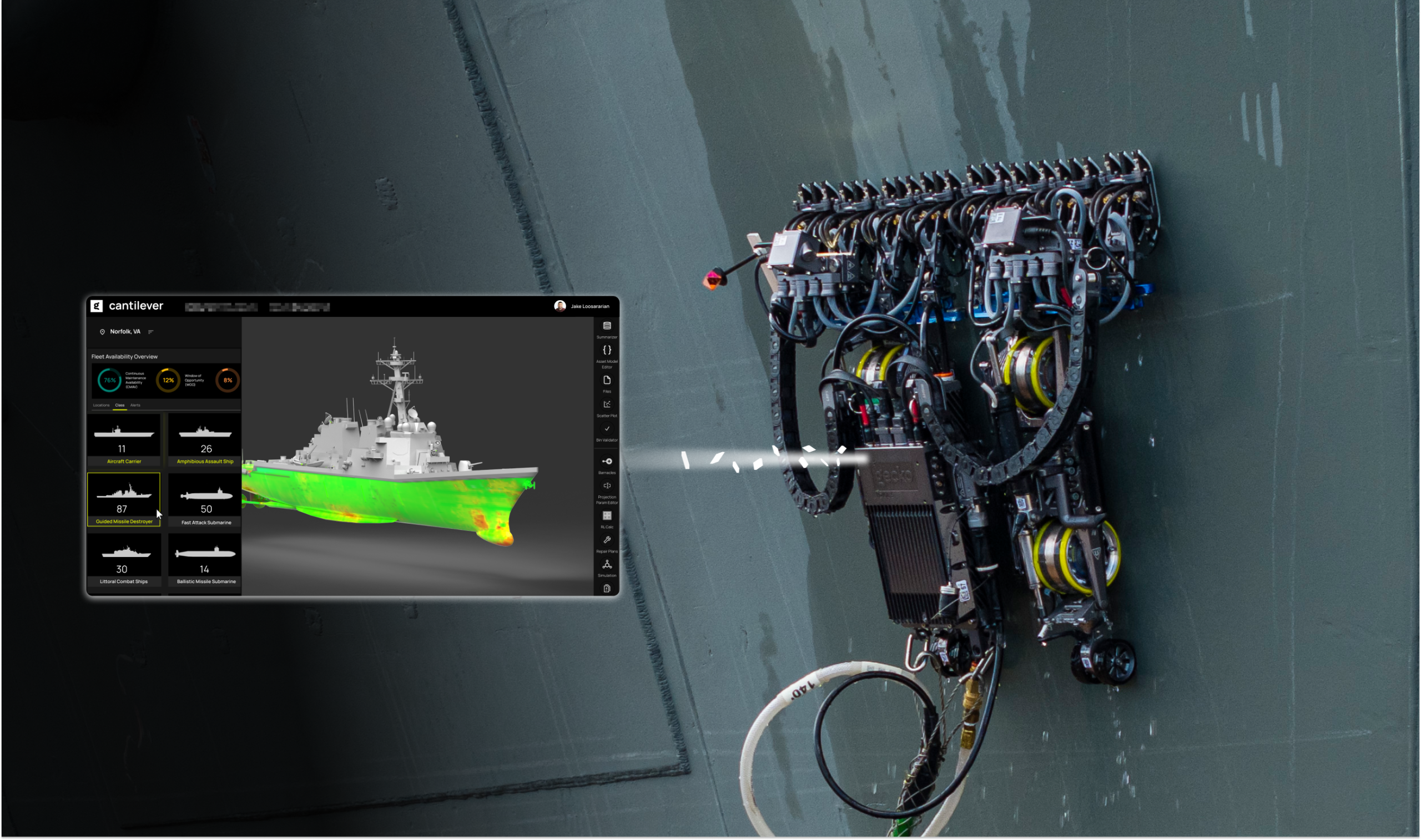
The United States Navy has finalized its most substantial robotics contract to date, signaling a significant strategic pivot towards enhancing fleet readiness and optimizing maintenance protocols through advanced technological integration. This landmark agreement, forged with Pittsburgh-based Gecko Robotics, a specialist in developing robotic systems and sensors for industrial asset inspection, is structured as a five-year Indefinite Delivery, Indefinite Quantity (IDIQ) deal. Initiated with an allocation of $54 million, the contract holds a potential ceiling value of $71 million and was facilitated in conjunction with the U.S. General Services Administration (GSA).
Revolutionizing Ship Diagnostics with Digital Twin Technology
Gecko Robotics’ sophisticated autonomous systems are poised to transform how the Navy monitors the structural integrity and operational health of its vast fleet. The initial phase of this deployment will focus on 18 vessels within the critical U.S. Pacific Fleet. These specialized robots are engineered to navigate intricate and often inaccessible areas of ships, meticulously collecting data to construct a comprehensive digital replica, frequently referred to as a "digital twin," for each vessel. This digital twin serves as a dynamic, real-time model of a physical asset, encompassing its entire lifecycle from design through operation and maintenance.
The concept of a digital twin, a cornerstone of Industry 4.0, involves creating a virtual representation of a physical object or system. For naval vessels, this means capturing intricate details of their internal structures, hull integrity, machinery, and various subsystems. Advanced sensors on Gecko’s robots gather volumetric data, thermal imaging, acoustic signatures, and material thickness measurements, feeding this information into a sophisticated software platform. This platform then processes the raw data, stitching it together to form a high-fidelity 3D model that mirrors the ship’s actual condition. This virtual counterpart allows for continuous monitoring and analysis, moving beyond traditional, often subjective, visual inspections. The accompanying software suite is designed to leverage this digital representation, enabling naval personnel to track asset health proactively, identify potential vulnerabilities before they escalate into major failures, and recommend targeted maintenance interventions. This forward-looking approach aims to drastically reduce the duration and frequency of maintenance cycles, thereby cutting operational costs and maximizing fleet availability.
Addressing Critical Fleet Readiness Challenges
The impetus behind this substantial investment in robotic maintenance technology stems from persistent challenges confronting naval readiness. The U.S. Navy has publicly articulated an ambitious objective: achieving an 80% ship readiness rate by 2027. This goal is particularly challenging given current operational realities, where a significant portion of the fleet, approximately 40% on average, remains unavailable for deployment at any given moment due to prolonged maintenance periods. The financial implications are substantial, with annual maintenance expenditures for the Navy ranging between an estimated $13 billion and $20 billion. This high cost, coupled with the extended downtime of critical assets, underscores the urgent need for more efficient and effective maintenance strategies, especially as many vessels continue to age and operate under increasing global demands.
Historically, naval ship maintenance has been a labor-intensive, time-consuming process. Traditional methods often involve extensive manual inspections, requiring human technicians to navigate hazardous and confined spaces, sometimes necessitating significant disassembly of components. These methods can be prone to human error, limited in scope, and often reactive rather than proactive. The sheer complexity of modern warships, with their vast networks of mechanical, electrical, and electronic systems, further complicates diagnostics and repairs. The Navy’s commitment to robotics reflects a recognition that conventional approaches are no longer sufficient to meet contemporary operational demands and strategic imperatives. By adopting advanced inspection technologies, the Navy seeks to transition from scheduled, calendar-based maintenance to a condition-based and predictive model, where repairs are initiated precisely when and where they are needed, minimizing unnecessary downtime.
The Evolution of a Strategic Partnership
The current multi-million dollar agreement is the culmination of a collaborative relationship between Gecko Robotics and the U.S. Navy that spans four years. This partnership began when a U.S. Navy port engineer stationed in Japan, seeking innovative solutions for fleet maintenance, independently reached out to Gecko Robotics to explore their capabilities. This initial contact led to an in-depth evaluation of Gecko’s technology and the subsequent development of a preventative maintenance strategy tailored to naval assets. The demonstrable effectiveness and precision of Gecko’s robotic inspection systems during this evaluation phase deeply impressed naval leadership, fostering trust and expanding the scope of their engagement. This incremental build-up of experience and proven results ultimately paved the way for the substantial IDIQ contract announced this week, illustrating the importance of successful pilot programs in securing large-scale governmental procurements. The phased approach allowed both entities to validate the technology’s utility in a real-world naval environment before committing to a broader, long-term deployment.
Broader Implications: Digitalization in Defense and Industry
This landmark deal carries significant implications not only for the U.S. Navy but also for the broader defense sector and industrial asset management globally. It signifies a decisive move towards the digitalization of defense infrastructure, where data-driven insights and autonomous systems play a central role in maintaining operational readiness. The successful implementation of such technologies within the Navy could set a precedent for other branches of the military, potentially influencing the adoption of similar robotics and AI-powered maintenance solutions across land and air forces.
Beyond the military, the application of Gecko’s technology mirrors a growing trend across heavy industries, including energy, manufacturing, and transportation, where the maintenance of large, critical assets is paramount. The increasing complexity and age of global infrastructure necessitate advanced, non-destructive inspection techniques that can provide accurate, timely data without disrupting operations. From power plants and chemical facilities to pipelines and bridges, the principles of digital twinning and predictive maintenance offer substantial benefits in terms of safety, efficiency, and cost reduction. The cultural impact within the Navy itself could be profound, shifting the roles of maintenance personnel from purely manual inspection to overseeing robotic operations, interpreting data analytics, and making strategic decisions based on advanced diagnostics. This transition will likely necessitate new training programs and skill sets for the naval workforce, fostering a more technologically adept force. Furthermore, enhanced operational readiness contributes directly to national security by ensuring a more capable and responsive naval presence in an increasingly complex geopolitical landscape.
The Technological Landscape and Future Outlook
The field of industrial robotics and autonomous inspection is highly dynamic, with numerous companies developing specialized solutions for diverse applications. Gecko Robotics differentiates itself through its focus on comprehensive data acquisition and the creation of detailed digital twins, allowing for a holistic view of asset health rather than isolated point inspections. Their systems are designed to operate in challenging environments, often characterized by confined spaces, high temperatures, or hazardous materials, making them particularly suitable for naval applications.
The long-term vision articulated by industry experts, including Gecko’s leadership, extends beyond merely fixing what is broken. It envisions a future where continuous, real-time monitoring through robotic systems enables maintenance to be conducted proactively, even while assets are deployed or operational. This paradigm shift would minimize the need for traditional, lengthy "maintenance cycles" where vessels are taken out of service for extended periods. Instead, interventions could be planned with precision, leveraging insights from the digital twin to address issues with minimal disruption. This concept of "maintenance-free deployment," while ambitious, represents the ultimate goal of predictive maintenance. Such a future would not only benefit military assets but also extend to critical civilian infrastructure like power plants and industrial facilities, ensuring their sustained operation and safety. However, challenges remain, including ensuring robust cybersecurity for sensitive data, seamlessly integrating new robotic systems with legacy infrastructure, and developing comprehensive training programs for personnel to effectively manage and leverage these advanced technologies across a vast, globally dispersed fleet.
In conclusion, the U.S. Navy’s substantial investment in Gecko Robotics’ advanced inspection technology marks a pivotal moment in the modernization of naval maintenance. By embracing digital twin technology and predictive analytics, the Navy aims to significantly improve fleet readiness, reduce operational costs, and enhance the strategic capabilities of its vessels. This collaboration underscores a growing trend towards leveraging cutting-edge robotics and artificial intelligence to address complex logistical and operational challenges, setting a new standard for asset management in both defense and critical industrial sectors worldwide.