Amir Mahmud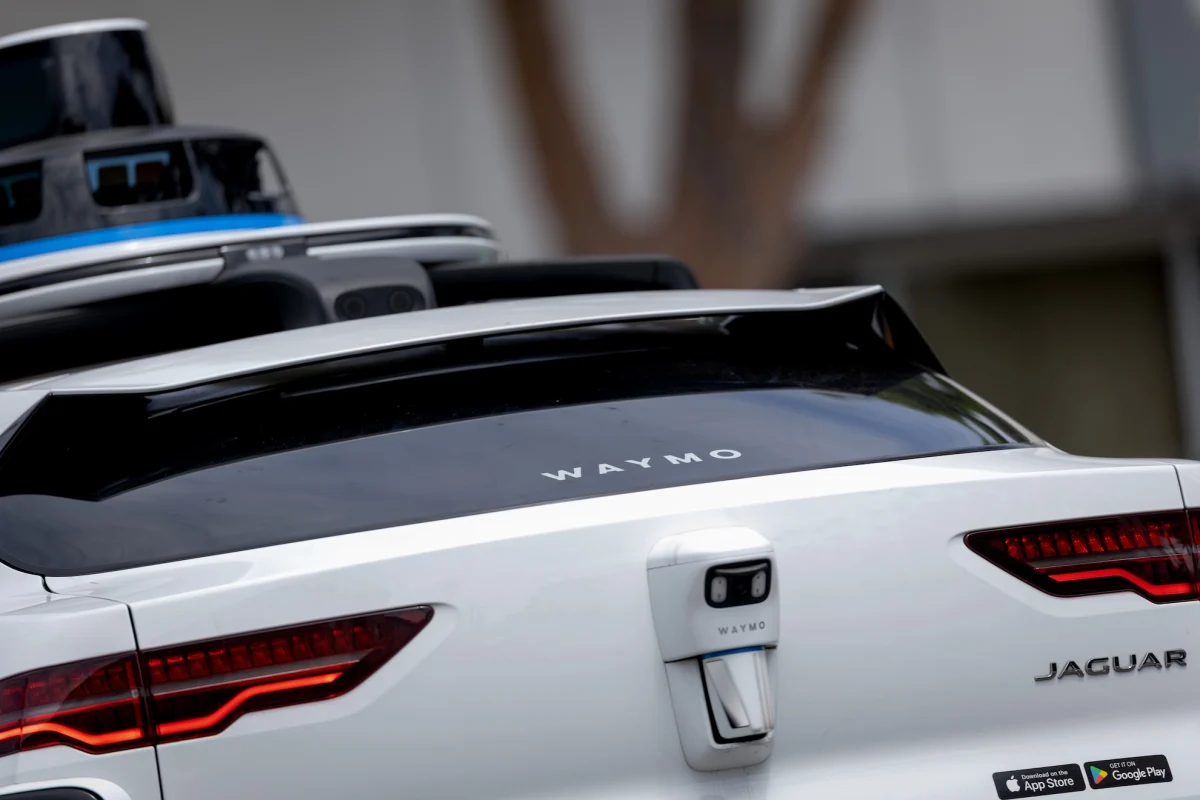
The audacious promise of fully autonomous robotaxis, once envisioned as a seamless integration into urban life, continues to face a complex reality, marked by significant operational challenges and the ongoing refinement of cutting-edge technology. While driverless vehicles have undeniably established a physical presence in select cities, their widespread, dependable functionality remains conditional, underscoring the formidable hurdles inherent in perfecting self-driving systems for diverse, unpredictable environments. This intricate dance between innovation and practical deployment is vividly illustrated by recent developments from industry frontrunner Waymo, even as another colossal figure in the tech world, Elon Musk, further consolidates his sprawling business interests through a series of intricate corporate maneuvers.
Robotaxis Confront Real-World Complexities
The notion of robotaxis as an established fixture in daily transportation has taken root in specific urban landscapes, notably San Francisco, where Waymo vehicles are a common sight. Yet, this apparent ubiquity belies a deeper truth: the journey to truly robust, all-weather autonomous operation is far from complete. The inherent difficulty of navigating unforeseen "edge cases" – unusual or challenging situations that test the limits of AI perception and decision-making – continues to plague even the most advanced systems.
Waymo, a pioneer stemming from Google’s long-standing self-driving car project, recently grappled with such scenarios, necessitating a temporary cessation of services across a significant portion of its operational footprint. Its robotaxi fleet paused operations in Atlanta, Dallas, Houston, San Antonio, Austin, and Nashville. The primary culprit behind these suspensions was the struggle to accurately perceive and safely react to severe weather conditions, specifically heavy rainfall and flooded roadways. This persistent issue had previously led to a product recall, highlighting a fundamental vulnerability in autonomous systems when confronted with natural phenomena that drastically alter road conditions and sensor performance. Beyond weather, Waymo also temporarily suspended freeway operations in major metropolitan areas including San Francisco, Los Angeles, Phoenix, and Miami. The cause here was distinct but equally challenging: difficulties in reliably navigating complex and dynamic construction zones, areas often characterized by shifting lane markings, unexpected obstacles, and human flaggers.
The history of autonomous vehicle development is replete with cycles of immense optimism followed by periods of sobering realization. Early visions in the 2000s and 2010s often predicted mass deployment by the mid-2020s. Companies like Waymo (founded as the Google self-driving car project in 2009) and Cruise (established in 2013, acquired by GM) led the charge, investing billions into research and development. While significant strides have been made in controlled environments and predictable urban settings, the transition to Level 4 (high automation) and Level 5 (full automation) autonomy has proven exponentially more complex than initially anticipated. Each new city or expanded operational domain introduces a fresh set of unique challenges, from varying traffic patterns and road infrastructure to local driving cultures and unpredictable human behavior.
From a market and social perspective, these operational pauses by Waymo carry substantial weight. They serve as a stark reminder to both investors and the public that the technology, while promising, is still in an intensive development phase. Public trust in autonomous vehicles is fragile, and incidents or widespread service disruptions can significantly impact adoption rates and regulatory approval. The industry faces the delicate balance of pushing technological boundaries while ensuring paramount safety and reliability, especially given the high-stakes nature of passenger transportation. Neutral analytical commentary suggests that such setbacks, while disappointing, are a natural part of pioneering a revolutionary technology. They underscore the immense computational and sensory demands of truly autonomous driving, far exceeding the capabilities of human drivers in processing vast amounts of real-time data under infinite variables. The path to pervasive robotaxi services will likely remain an iterative process of deployment, learning from real-world incidents, software updates, and hardware improvements, rather than a single, grand unveiling.
Elon Musk’s Expanding and Interconnected Business Sphere
Shifting focus from the intricacies of autonomous vehicles to the sprawling corporate landscape orchestrated by Elon Musk, recent financial disclosures from the SpaceX IPO filing have offered an unprecedented look into the highly intertwined operations of his various ventures. The document revealed an extensive web of transactions between SpaceX, Tesla, xAI, and The Boring Company, underscoring Musk’s distinctive strategy of leveraging resources and fostering synergies across his diverse portfolio.
Elon Musk, a figure synonymous with ambitious technological pursuits, has consistently pushed the boundaries in multiple industries, from electric vehicles and renewable energy with Tesla to private space exploration with SpaceX, brain-computer interfaces with Neuralink, and social media with X (formerly Twitter). His vision often involves a grand, interconnected future where his companies support and accelerate each other’s progress. The recent IPO filing for SpaceX, a private aerospace manufacturer and space transportation services company, has brought these internal dealings into sharper relief, particularly with the recent merger of his artificial intelligence startup, xAI, into SpaceX.
The financial records detail substantial transfers of funds and assets. In 2025, SpaceX reportedly purchased Tesla’s Megapack commercial energy storage products totaling $506 million, a nearly threefold increase from the preceding year. These Megapacks are crucial for providing reliable power solutions, potentially for SpaceX’s extensive launch facilities, Starlink ground stations, and other energy-intensive operations. Additionally, SpaceX acquired $131 million worth of Tesla Cybertrucks last year, indicating their integration into operational logistics, perhaps for transport within massive facilities like Starbase in Texas. Further inter-company transactions included SpaceX compensating The Boring Company, Musk’s infrastructure and tunnel construction enterprise, $1 million for tunnel development work in Bastrop, Texas. Similarly, X, the social media platform also owned by Musk, paid $1 million to lease space from The Boring Company. A significant development noted was Tesla’s initial investment in xAI, which, following xAI’s merger into SpaceX, was converted into an equity interest in the space exploration company.
These transactions are not isolated incidents but rather a continuation of a pattern of resource sharing and strategic collaboration that has characterized Musk’s business empire. The long-term implications of this strategy are vast. Looking ahead, two particularly ambitious joint projects are on the horizon: the development of Terafab, a specialized chip-manufacturing facility, and Macrohard, an advanced AI platform designed to augment human work through autonomous agents. These ventures highlight a concerted effort to create vertically integrated ecosystems where key technologies and manufacturing capabilities are kept in-house or within Musk’s control.
Neutral analytical commentary on such a tightly integrated corporate structure often highlights both potential advantages and inherent risks. On the one hand, proponents argue that this synergy allows for rapid innovation, efficient resource allocation, and a shared strategic vision across seemingly disparate industries. It could enable faster development cycles and reduced external dependencies. On the other hand, critics voice concerns regarding corporate governance, potential conflicts of interest for Musk and shared executives, and the transparency of financial dealings between related parties. Investors in publicly traded entities like Tesla may scrutinize whether these transactions are always at arm’s length and beneficial to all shareholders. The significant financial burn rate of xAI, reported at $6.4 billion last year, further intensifies scrutiny over how its integration into SpaceX and broader funding mechanisms will impact the consolidated entity’s financial health and strategic direction. The question of a full merger between SpaceX and Tesla, a recurring topic of speculation, underscores the ultimate extent of this integration.
Investment and Strategic Partnerships Across Mobility and Beyond
The broader landscape of mobility and technology continues to see significant investment and strategic maneuvering. In the realm of innovative transportation, Aboard, a Southern California startup focused on developing extended-range electric travel trailers, successfully closed a pre-Series A funding round, securing $13 million. This capital injection, led by Ondine Capital and Llama Ventures, will fuel the development of next-generation recreational vehicles, signaling growing interest in sustainable leisure travel. Notably, the company has engaged Richard Kim, a renowned automotive designer with a pedigree from BMW’s i3 and i8 projects, as a consultant, hinting at a strong design focus.
Maritime technology also drew substantial attention, with Quartermaster, an Arlington, Virginia-based startup, raising $43 million in a Series A funding round. Co-led by First Round Capital and Quiet Capital, Quartermaster is pioneering a distributed sensing network for ships, aiming to enhance situational awareness and operational efficiency for naval and commercial vessels.
In a significant move for the autonomous vehicle sector, May Mobility, an AV technology startup, forged a strategic alliance with Ecarx, an automotive tech firm backed by Geely founder Li Shufu. This partnership entails Ecarx supplying May Mobility with thousands of purpose-built robotaxi vehicles, with plans for initial deployments next year and full commercialization by 2028. The comprehensive project carries an estimated value of $750 million over its duration, marking a substantial commitment to scaling autonomous ride-hailing services.
Globally, the travel and fintech sectors also witnessed notable activity. Scapia, an Indian travel booking startup, secured $63 million in a funding round led by General Catalyst, with existing investors Peak XV Partners and Z47 also participating. This investment more than doubled Scapia’s valuation to over $500 million within a year, reflecting the robust growth in India’s digital travel market. Meanwhile, Uber expanded its footprint in the food delivery market by increasing its stake in German food delivery giant Delivery Hero to 19.5%. This move, reported by Bloomberg, suggests Uber’s continued strategy of consolidation and influence within the competitive global food delivery landscape.
Broader Industry Trends and Developments
The dynamic interplay of technology, human behavior, and regulation remains a central theme across the mobility sector. Bryan Reimer, a research scientist at MIT, recently emphasized this intricate relationship, highlighting in a presentation that the ultimate success of artificial intelligence, particularly in areas like autonomous driving, hinges critically on human behavior, robust governance frameworks, and public trust. This perspective aligns with the ongoing challenges faced by robotaxi companies and underscores the need for a holistic approach to technological advancement.
The electric vehicle (EV) market presents a complex global picture, characterized by what experts describe as a "K-shaped" recovery, where certain regions and segments flourish while others lag. This analysis suggests that while some countries are rapidly accelerating EV adoption due to strong policy support, robust charging infrastructure, and competitive domestic offerings, the United States, despite significant investment, appears to be falling behind in certain aspects. Factors such as charging infrastructure gaps, fluctuating consumer demand, and the availability of affordable EV models contribute to this uneven growth.
Major ride-hailing platforms are also recalibrating their long-term strategies for autonomous integration. Lyft, in a recent blog post, articulated a position similar to its rival Uber, advocating for a hybrid model where both human drivers and autonomous vehicles coexist. This pragmatic stance acknowledges the current limitations of robotaxis in handling all scenarios and customer service demands, while also politically reassuring its vast network of human gig workers who remain indispensable for service reliability and coverage. For the vast majority of the United States, fully autonomous robotaxis are not yet a part of daily life, necessitating a continued reliance on human-driven services.
Personnel changes continue to shape the industry, with self-driving tech startup Nuro appointing Michael Mancini as its new chief financial officer. Mancini brings a wealth of financial leadership experience from previous roles at Energy Recovery, Astranis Space Technologies, and Aerion Supersonic, signaling Nuro’s focus on financial maturity as it scales its autonomous delivery operations.
Traditional automakers are also making significant moves into autonomous capabilities. Stellantis, the multinational automotive giant behind brands like Jeep and Ram, announced a partnership with self-driving startup Wayve to integrate hands-free driving technology into its vehicles by 2028. This collaboration represents a strategic push by Stellantis, which also recently unveiled an ambitious $70 billion turnaround plan, including the introduction of 11 new models for North America, featuring a revitalization of the Chrysler brand.
Meanwhile, Tesla’s Full Self-Driving (Supervised) driver-assistance software continues its cautious expansion into Europe, recently gaining approval for use in Lithuania, making it the second European country to permit its operation. This European rollout is critical not only for Tesla’s global ambitions but also for CEO Elon Musk’s substantial compensation package, which is partly tied to achieving targets such as 10 million active FSD subscriptions by 2035. The stricter regulatory environment in Europe poses a distinct challenge compared to the U.S. market.
In a resolution highlighting the importance of robust identity verification in public services, a San Francisco physician who had sued Waymo after its identity verification system erroneously flagged him as a terrorist dropped his lawsuit, confirming that the company had successfully resolved the underlying issue.
A Renewed Look at the Nissan Leaf
The evolution of electric vehicles extends beyond high-tech startups and luxury brands to mainstream models that have shaped the market. The Nissan Leaf, a pioneer in mass-market EVs, continues to refine its offering. A recent review of the 2026 Nissan Leaf Platinum+, priced at $42,635, including destination charges and optional enhancements, revealed significant improvements over previous iterations.
The third generation of the Leaf now boasts an improved EPA estimated range, reaching 259 miles, with some versions surpassing 300 miles. Beyond the powertrain, the interior cabin has undergone a notable transformation, presenting a lighter, more modern, and decidedly upscale aesthetic. The top-trim Platinum+ model includes premium features such as a wireless phone-charging pad, a dimming panoramic roof, a heads-up display, and an expansive, curved 14.3-inch central screen, elevating the in-cabin experience. Crucially, earlier criticisms regarding a lack of standard tech features in previous models have been addressed. The 2026 Leaf now includes a 360-degree camera, wireless Apple CarPlay or Android Auto, and adaptive cruise control as standard offerings, aligning it more closely with contemporary consumer expectations for vehicles in its price segment. This comprehensive refresh positions the Nissan Leaf as a more compelling option in an increasingly competitive electric vehicle market, signaling Nissan’s continued commitment to the EV segment.

 Azin Asro