Amir Mahmud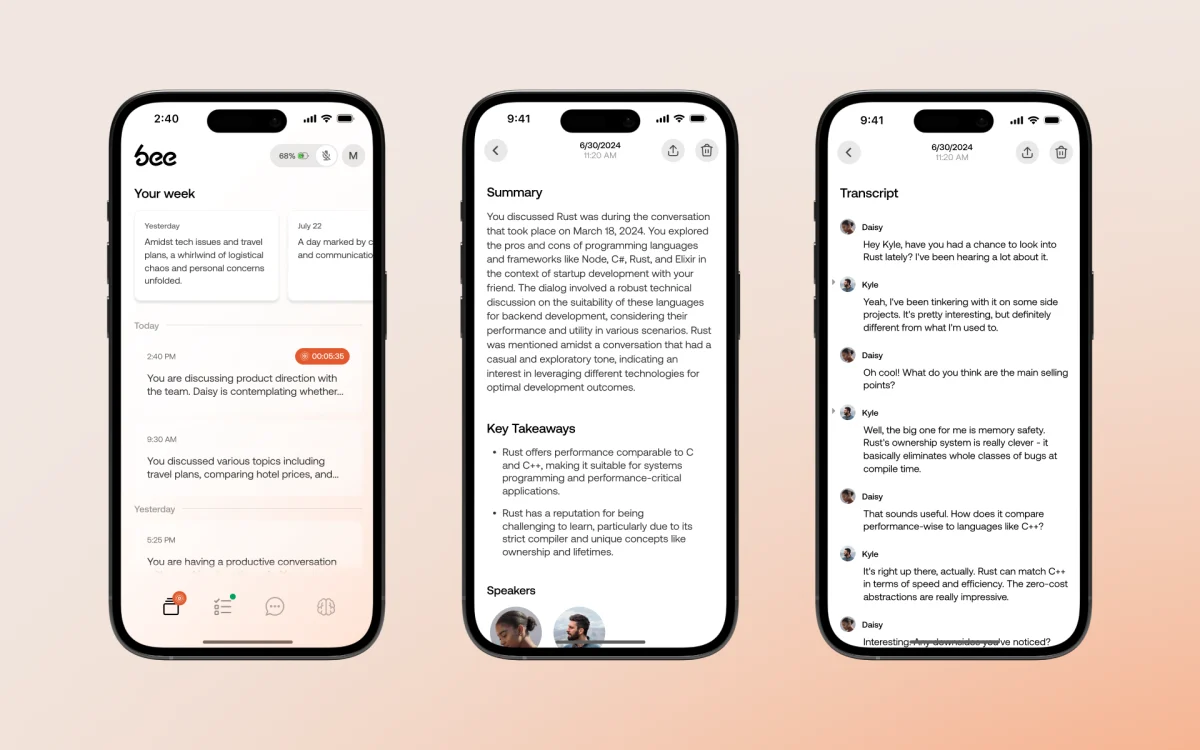
A new frontier in personal technology is emerging with the introduction of AI-powered wearables, devices designed to seamlessly integrate into daily life and act as proactive digital assistants. Among these innovations is Bee, a wrist-mounted AI gadget that has garnered significant attention following its acquisition by Amazon in 2025 and subsequent updates. This device promises to revolutionize personal organization and professional efficiency by recording, transcribing, and summarizing conversations, offering an always-on memory aid in an increasingly complex world. However, its expansive capabilities also ignite a crucial debate surrounding personal privacy and the implications of constant digital surveillance.
The Dawn of Ambient AI Wearables
The concept of an "ambient AI" assistant, capable of understanding and anticipating user needs without explicit commands, has been a long-held vision in the tech industry. For years, voice assistants like Amazon’s Alexa and Apple’s Siri have offered glimpses into this future, primarily through smart speakers and smartphones. The natural progression led to wearable form factors, aiming for even greater integration and less intrusive interaction. Companies like Humane with its AI Pin and Rabbit with the R1 have recently launched devices pushing the boundaries of what these personal AI companions can do, often focusing on natural language processing and proactive information delivery. Bee, initially an independent venture, positioned itself within this burgeoning category, striving for an intuitive, hands-free experience. Amazon’s acquisition of Bee in 2025 signaled a significant strategic move, indicating the e-commerce and cloud computing giant’s intent to deepen its footprint in the wearable AI space and potentially integrate Bee’s technology into its broader ecosystem of devices and services. This move aligns with a larger industry trend towards miniaturized, intelligent hardware that can collect and process contextual data to provide highly personalized assistance.
Unpacking Bee’s Core Functionality
At its core, Bee operates as an advanced personal assistant, meticulously designed to alleviate the burden of memory and organization. Users initiate its functions by powering the device, securing it to their wrist, and synchronizing it with a dedicated mobile application. After entering basic personal parameters, the device is ready for use. A prominent physical button on the wearable serves as the primary control for its recording function; a flashing green indicator light confirms when audio capture is active, providing a clear visual cue to the user. When recording ceases, the light extinguishes.
The true intelligence of Bee becomes apparent post-recording. Utilizing sophisticated artificial intelligence algorithms, the companion app processes the captured audio, transforming spoken words into written text. Beyond mere transcription, the system generates concise, easy-to-digest summaries of entire conversations. This feature is particularly valuable for recalling key discussion points without needing to review lengthy audio files or text transcripts. Furthermore, Bee’s utility extends to proactive organizational support. When integrated with a user’s digital calendar, the device can issue timely alerts and reminders, ensuring adherence to schedules and commitments throughout the day. This comprehensive suite of features positions Bee as more than just a recording device; it aims to be an extension of the user’s cognitive processes, streamlining daily tasks and enhancing personal productivity.
A Professional’s Productivity Partner
The utility of devices like Bee shines brightest within professional environments, particularly for individuals navigating a demanding schedule filled with numerous meetings, calls, and collaborations. In such contexts, the sheer volume of information exchanged can be overwhelming, making it challenging to retain every detail or action item. This is precisely where Bee demonstrates considerable potential as a competent organizational aid.
Consider a professional whose week is punctuated by back-to-back virtual and in-person meetings. The traditional approach often involves frantic note-taking, which can detract from active participation and lead to missed nuances. With Bee, this dynamic shifts. During a recent business-related phone conference, for example, the device was activated after securing explicit consent from all participants. Post-call, the accompanying application produced a remarkably faithful summary of the discussion, intelligently segmenting different topics and action points. This capability significantly streamlines the review process, allowing users to quickly revisit specific parts of a conversation without needing to replay the entire audio. While other specialized transcription services, such as Otter.ai or Granola, offer similar features like automated transcriptions and summaries, Bee’s always-on, wrist-worn form factor presents a distinct advantage for continuous, effortless capture across varied professional engagements. The vision for many users is to keep Bee operational throughout the workday, subsequently reviewing summaries to clarify any ambiguities or confirm decisions, thereby creating an exhaustive, searchable record of their professional interactions.
However, the precision of Bee’s output is not without its limitations. While its conversational summaries are generally effective, the raw transcriptions can sometimes appear less polished. Previous user feedback and hands-on assessments have noted instances where manual intervention is required to correctly identify individual speakers within a multi-person conversation, as the AI doesn’t always accurately differentiate voices. Furthermore, some minor omissions or inaccuracies in the complete textual account of a dialogue have been observed, suggesting room for refinement in its transcription engine to achieve a truly comprehensive record. These technical nuances underscore the ongoing development in AI’s ability to perfectly parse complex human communication.
Navigating the Personal Privacy Paradox
While Bee clearly offers compelling advantages in professional settings, its application in personal life introduces a complex privacy paradox that warrants careful consideration. The device is notably marketed for personal use, suggesting an intention for pervasive integration into users’ daily routines. This proposition, however, requires individuals to be comfortable with Bee having extensive access to both their offline interactions and their digital footprint. For many, especially those who prioritize digital privacy, the concept of an "eavesdropping gizmo" constantly strapped to the wrist evokes a degree of discomfort, even apprehension.
The device’s optimal functionality hinges on broad mobile permissions, demanding access to sensitive data categories. This includes location tracking, photo galleries, phone contacts, calendar entries, and mobile notifications. Furthermore, users are presented with the option to share their health data, encompassing details like sleep patterns or resting heart rate, further expanding the scope of collected personal information. This comprehensive data accumulation raises significant questions about the boundaries of personal space and the extent to which individuals are willing to trade privacy for convenience. The fundamental concern for many privacy advocates is the inherent vulnerability associated with having a device continuously recording and processing the most intimate details of one’s life. The psychological impact of living under constant potential surveillance, even self-imposed, could subtly alter behavior and communication patterns, fostering an environment where spontaneous expression might be curbed by the awareness of being recorded.
Technological Hurdles and Ethical Quandaries
Beyond the immediate privacy concerns, Bee, like other emergent AI wearables, faces several technological and ethical hurdles. The efficacy of its AI in discerning context and intent is paramount. During a casual movie night, for instance, the device demonstrated a surprising level of contextual understanding. While monitoring conversations during a viewing of Reservoir Dogs, Bee accurately identified the scenario, subsequently labeling the recorded segment as "Tarantino Film Scene Analysis." This highlights the sophistication of its natural language processing and contextual awareness, an impressive feat for an AI. However, this capability simultaneously underscores the vast amounts of data the AI must process and interpret to make such distinctions.
A significant point of contention for privacy-conscious users is the storage of this extensive data. Currently, the vast accumulation of information collected by Bee is primarily stored in the cloud. For individuals deeply concerned about digital security and data sovereignty, cloud storage introduces an additional layer of risk, as data resides on third-party servers. The ideal scenario for many would be a device capable of processing and storing all sensitive information entirely locally, minimizing exposure to external breaches or unauthorized access. While Bee has reportedly demonstrated a prototype of the device running fully locally to tech influencers, Amazon has yet to provide public updates on these specific development plans. A transition to local-first processing would undoubtedly address many of the privacy apprehensions surrounding the device, potentially making it more appealing to a broader user base.
Amazon’s Stance on Data Security
Amazon, as a global technology behemoth and a leading provider of cloud infrastructure through Amazon Web Services (AWS), operates under immense scrutiny regarding data privacy and security. In response to these concerns, Bee’s digital privacy protections are detailed in its official policy. The company asserts that it employs encryption mechanisms to safeguard user data, both when it is stored ("at rest") and when it is being transmitted across networks ("in-transit"). Furthermore, Bee claims to have "implemented technical and organizational security measures designed to protect the security of any personal information" it processes. The company also states that it undergoes "rigorous third-party security audits" and maintains continuous security monitoring to identify and mitigate potential vulnerabilities.
These declarations align with industry best practices for data protection. However, it is also a recognized fact that even the largest and most sophisticated technology companies, including Amazon, have occasionally experienced data security incidents. While not uncommon for organizations managing vast quantities of global data and cloud environments, these incidents serve as a reminder of the inherent risks in digital data storage and the continuous battle against cyber threats. The sheer scale of Amazon’s operations means that any security lapse, no matter how minor, can have widespread implications, adding a layer of complexity to user trust in any Amazon-affiliated data-handling service.
The Road Ahead for Bee and Wearable AI
In conclusion, Amazon’s Bee wearable represents a fascinating and potentially transformative piece of technology, embodying the ongoing evolution of artificial intelligence and personal computing. Its capacity to streamline professional workflows through intelligent recording, transcription, and summarization is undeniably promising, offering a tangible solution to the demands of modern productivity. With further refinement, particularly in transcription accuracy and speaker identification, its utility in corporate and organizational contexts could become indispensable.
However, its proposed role as a ubiquitous digital assistant for personal life introduces a profound ethical and social dilemma. The trade-off between unparalleled convenience and the pervasive erosion of personal privacy remains a critical point of contention. For many individuals, the intrusive nature of a device that requires such extensive access to their most private interactions and digital data will likely prove to be a significant barrier to widespread adoption. The future success of Bee, and indeed the entire category of ambient AI wearables, hinges not only on technological advancement but also on effectively addressing these fundamental concerns about data sovereignty, user consent, and the very definition of personal space in an increasingly connected world. The trajectory of Bee will serve as a crucial barometer for how society collectively navigates the benefits and potential pitfalls of living alongside always-on, intelligent companions.






 Azin Asro