Amir Mahmud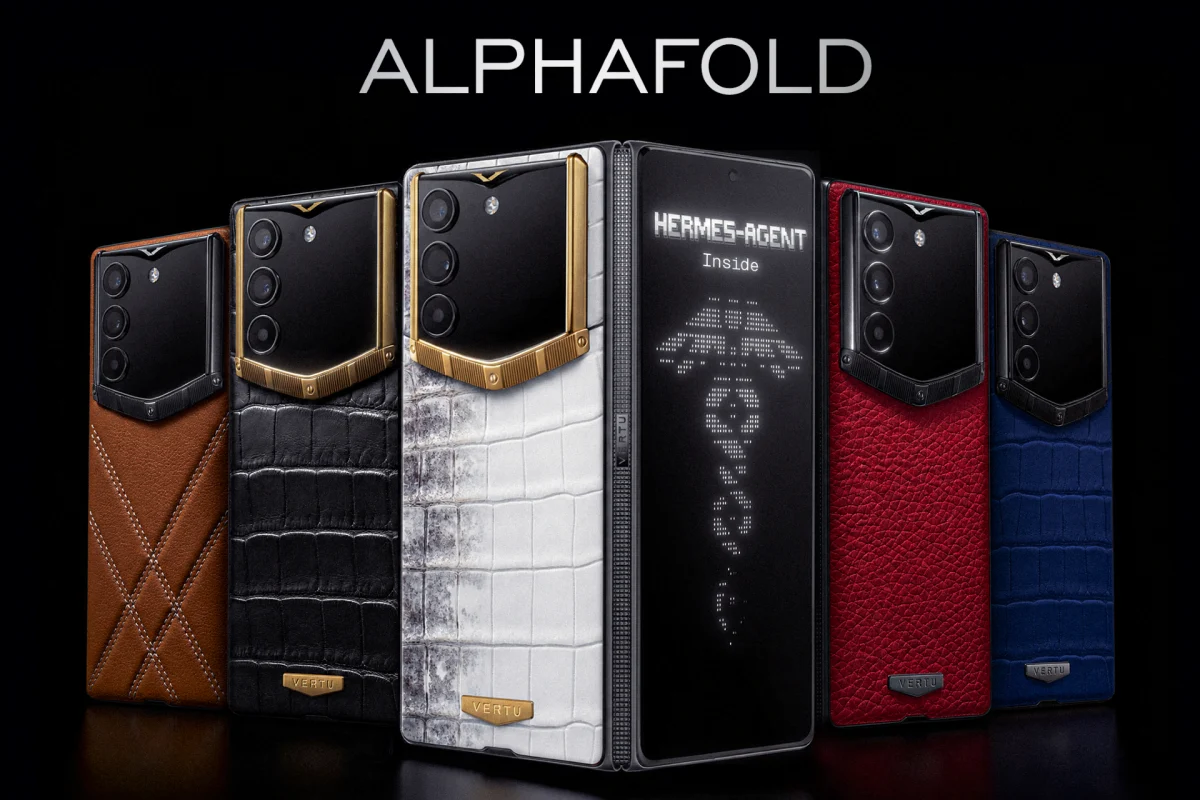
In a bold move signaling its latest attempt at reinvention, luxury smartphone manufacturer Vertu has introduced the Alphafold, an innovative foldable device designed to empower top-tier executives with an integrated artificial intelligence agent. This new offering aims to seamlessly connect with sophisticated enterprise software, orchestrating complex workflows directly from a mobile platform, and is priced to match its exclusive target market, starting at $6,880.
A Legacy Forged in Exclusivity
Vertu’s journey in the mobile phone landscape has been a dramatic narrative of pioneering luxury, confronting disruption, and persistent efforts to regain relevance. Founded in 1998 by Nokia, the Finnish telecommunications giant, Vertu emerged as a distinct brand committed to crafting exquisite, high-end mobile phones that transcended mere communication tools. In an era before smartphones became ubiquitous, Vertu carved out a unique niche, positioning its devices as ultimate status symbols for the ultra-wealthy. Early Vertu models were renowned for their handcrafted components, premium materials like sapphire crystal, titanium, and exotic leathers, and perhaps most famously, their dedicated concierge service. This personalized, 24/7 assistance offered access to exclusive events, travel arrangements, and bespoke services, making a Vertu phone not just a gadget, but a gateway to a lifestyle of unparalleled convenience and prestige.
However, the advent of the Apple iPhone in 2007, followed by the rapid proliferation of Android devices, irrevocably reshaped the mobile industry. Mainstream smartphones, with their intuitive touch interfaces, vast app ecosystems, and comparatively accessible price points, quickly eclipsed Vertu’s static, feature-phone-centric luxury. The company, once a darling of the discerning elite, found itself struggling to adapt to a new paradigm where software innovation and user experience began to outweigh purely material opulence. This period saw Vertu undergo multiple changes in ownership, a clear indicator of the challenges it faced in remaining competitive and financially viable against the backdrop of rapidly evolving consumer technology. From Nokia to private equity firms and various Chinese investors, each transition reflected an ongoing quest for a strategic direction that could reconcile its heritage of luxury with the demands of the modern digital age.
The Reimagined Vision: AI and Foldable Frontiers
The Alphafold represents Vertu’s most ambitious strategy yet to reclaim its position at the apex of mobile technology, fusing its traditional emphasis on luxury with cutting-edge artificial intelligence and the burgeoning form factor of foldable screens. This device, whose entry-level calfskin variant begins at $6,880, scales dramatically in price, with bespoke models featuring alligator leather, 18K gold accents, and natural diamond detailing reaching upwards of $46,800. These price points underscore Vertu’s unwavering commitment to its long-standing strategy of offering devices that serve as potent symbols of wealth and status, tailored for affluent buyers who demand exclusivity in every facet of their lives.
At the heart of the Alphafold’s innovative proposition is the "Hermes Agent," an advanced AI system built upon the open-source Hermes project by Nous Research. This agent is engineered to connect directly with a client’s existing enterprise systems, such as Enterprise Resource Planning (ERP) and Customer Relationship Management (CRM) platforms. Through intuitive natural-language prompts, the Hermes Agent can coordinate a wide array of mission-critical tasks: from streamlining approval processes and managing intricate scheduling, to tracking sales performance, meticulously planning complex travel itineraries, and generating comprehensive operational reports. Vertu emphasizes that the "Phone-to-ERP" and Virtual Private Server (VPS) deployments will be meticulously customized for each individual customer, ensuring seamless integration with their unique enterprise architectures, with pricing adjusted accordingly for this bespoke service.
Furthermore, the Alphafold boasts a remarkable ability to route requests across a diverse ecosystem of leading AI models, including OpenAI’s GPT, Anthropic’s Claude, and Google’s Gemini, alongside a selection of specialized open-source models. This multi-model approach enhances the agent’s versatility and intelligence, allowing it to leverage the strengths of different AI paradigms. Beyond external AI integration, the device is designed to interact with over 80 popular applications and dozens of native phone functions, enabling truly cross-platform workflows that aim to eliminate friction in executive operations.
Engineering Luxury and Performance
Beyond its intelligent software, the Alphafold embodies Vertu’s enduring dedication to superior craftsmanship and robust hardware. The device is powered by Qualcomm’s formidable Snapdragon 8 Gen 4 processor, ensuring high performance for both demanding AI tasks and everyday operations. Its display configuration is equally impressive: an expansive 8.05-inch foldable inner screen provides ample real estate for complex multitasking and data visualization, complemented by a practical 6.53-inch outer screen for quick interactions when folded. A substantial 6,500mAh battery promises extended usage, crucial for executives on the move, while integrated satellite communication capabilities offer enhanced connectivity in remote or emergency situations.
The Alphafold’s photographic capabilities include a versatile triple rear camera system, featuring a 50-megapixel primary lens, a 50-megapixel ultrawide sensor, and a 5-megapixel telephoto lens, designed to capture high-quality images and videos. Durability, a key concern for foldable devices, is addressed through a meticulously engineered hinge mechanism crafted from metal, titanium, and carbon-fiber components. This robust construction is rated for an impressive 650,000 folds, far exceeding typical industry benchmarks and signaling Vertu’s confidence in the device’s longevity. These specifications, combined with the unparalleled material finishes, aim to justify the device’s premium pricing by offering both cutting-edge technology and exceptional build quality.
Addressing the Enterprise AI Gap
Vertu CEO Molly Ma articulated the company’s strategic rationale, highlighting a significant void in the current smartphone market. She notes that existing AI features on devices from major manufacturers primarily cater to consumer-oriented tasks, such as photo editing enhancements or generalized voice assistance. This leaves a largely untapped opportunity for more sophisticated AI-agent workflows deeply integrated with enterprise systems. Ma’s commentary underscores Vertu’s belief that while generative AI is rapidly democratizing across consumer electronics, its true potential within the corporate mobility sector remains largely unrealized by mainstream players.
Ma also acknowledged the nascent experiments with AI-agent smartphones in China, which initially garnered considerable attention for their advanced capabilities. However, these early initiatives often encountered substantial hurdles related to data privacy and the security implications of cloud-based data collection, which proved to be a critical deterrent for broader adoption, particularly within sensitive enterprise environments. The Alphafold, according to Ma, directly addresses these concerns through a meticulously designed, privacy-centric architecture.
Security and Data Privacy in a New Era
In a world increasingly sensitive to data breaches and privacy violations, Vertu is positioning the Alphafold with a strong emphasis on security. The device incorporates a proprietary A5 security chip, a dedicated piece of silicon engineered to create a secure enclave. This chip is designed to isolate critical authentication keys, biometric credentials, and highly sensitive enterprise information, safeguarding them from the main operating system and potential external threats. The company asserts that commercially sensitive data can be processed locally on the device, minimizing exposure. Furthermore, prompts sent to external AI models are designed to be redacted or tokenized before leaving the phone, adding another layer of protection against the unauthorized disclosure of proprietary information.
However, a critical aspect of enterprise adoption for any new technology, especially one handling sensitive data, is independent validation. Vertu has acknowledged that its system has not yet undergone third-party security audits or received independent certification. While the company has stated that these audits and certifications are an "explicit next-stage commitment" on its security roadmap, and that progress and results will be publicly communicated as the product matures, this lack of immediate external verification could pose a challenge for risk-averse corporate IT departments. In an era where cybersecurity threats are ever-present, objective validation is often a prerequisite for widespread enterprise deployment.
Navigating a Niche Market
The Alphafold enters a foldable smartphone market that, despite years of significant investment and innovation from industry giants like Samsung and Huawei, remains a relatively niche segment. According to IDC data, approximately 20 million foldable smartphones were shipped globally in 2025, constituting less than 2% of the total smartphone shipments. This segment also commands a premium, with foldables selling at an average price of around $1,300 last year—roughly three times the cost of a non-foldable smartphone.
Kiranjeet Kaur, an associate research director for mobile phones research at IDC, offers insightful commentary on the potential synergies between foldable technology and AI agents. She suggests that the larger displays offered by foldable devices are inherently better suited for multitasking and productivity-oriented experiences, making them potentially ideal platforms for advanced AI-agent workflows. However, Kaur also provides a crucial caveat: enterprise AI adoption on smartphones still significantly lags behind that on personal computers. Moreover, most enterprise smartphone purchasing decisions continue to be primarily driven by factors such as ecosystem integration, robust device management support, and overall cost-effectiveness, rather than advanced AI capabilities alone. This indicates that Vertu faces the dual challenge of convincing enterprises of the value of its specialized AI and overcoming established preferences for more conventional, IT-managed devices.
The Business of Ultra-Premium Mobility
Vertu’s strategy with the Alphafold is a fascinating case study in luxury branding intersecting with bleeding-edge technology. For its target demographic—CEOs and high-level executives—a smartphone is not merely a communication device but an extension of their professional identity and an essential tool for managing complex global operations. The Alphafold aims to capitalize on the desire for both ultimate functionality and undeniable prestige. The question remains whether the combination of bespoke materials, a novel foldable form factor, and a specialized AI agent will resonate sufficiently to drive adoption beyond a handful of early adopters and luxury enthusiasts.
The company’s past struggles highlight the inherent difficulty of maintaining a luxury tech brand in a rapidly evolving market. While Vertu’s heritage of exclusivity is a powerful asset, the practical utility and perceived indispensability of the Hermes Agent will be key to its long-term success. The first batch of 115 Alphafold units is scheduled to begin shipping this week across major markets, including the U.S., marking the initial rollout of Vertu’s ambitious vision.
Outlook and Challenges
The Alphafold represents a significant gamble for Vertu. It is an attempt to merge two highly aspirational yet still nascent technologies—enterprise-grade AI agents and foldable displays—into a single, ultra-luxury product. If successful, it could redefine the executive mobile experience, offering unparalleled productivity and a distinct status symbol. However, the path ahead is fraught with challenges, from securing critical third-party security certifications to overcoming the inherent conservatism of enterprise IT departments and justifying its extraordinary price point in a market where even premium mainstream devices offer sophisticated capabilities at a fraction of the cost. Vertu’s latest reinvention hinges on whether it can prove that its blend of opulence and artificial intelligence offers a truly indispensable advantage for the world’s most demanding business leaders.






 Azin Asro