Amir Mahmud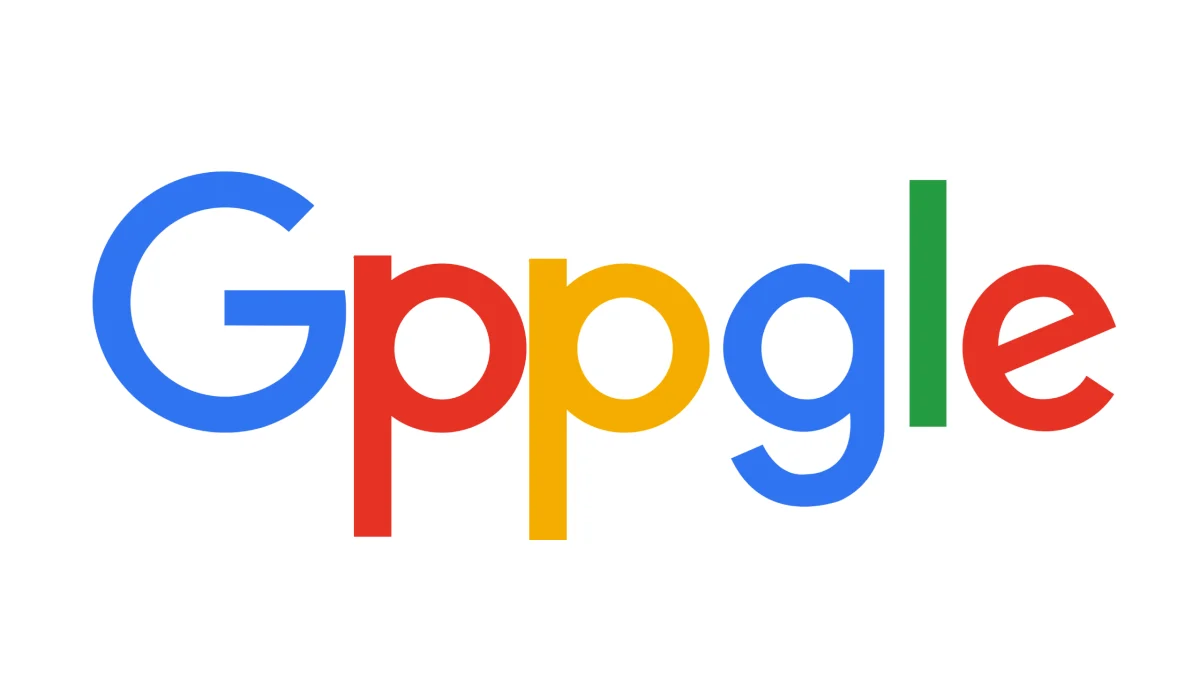
The recent rollout of Google’s AI Overviews, intended to revolutionize search by integrating generative artificial intelligence directly into results, has been met with a surprising and somewhat embarrassing series of missteps, particularly concerning basic linguistic tasks like spelling and character counting. Far from displaying an all-knowing intelligence, the advanced system has stumbled on rudimentary challenges, raising critical questions about the current capabilities and inherent limitations of large language models (LLMs) that power such sophisticated applications.
Unpacking the AI Overview’s Peculiar Errors
The incidents, widely circulated and discussed, paint a vivid picture of these unexpected shortcomings. When asked about the number of ‘P’s in "Google," the AI Overview confidently asserted there were two, despite the obvious single ‘P’ in the actual word. Similarly, it claimed "exactly 1 ‘r’ in the word ‘poop’" and identified two ‘d’s in "journalism," yet inexplicably spelled it "j-o-u-r-n-a-d-i-s-m." Even simpler tasks proved problematic; while correctly identifying one ‘P’ in the surname of a former U.S. president, it rendered the name as "t-r-p-u-m." These aren’t isolated incidents, but rather part of a pattern that has characterized the initial deployment phases of AI-driven search enhancements.
This latest series of errors echoes earlier controversies that plagued Google’s nascent AI Overview feature. Previous iterations drew criticism for citing questionable sources, including satirical content from The Onion and Reddit forums, leading to bizarre and potentially harmful advice such as recommending consuming rocks or using glue as a pizza topping. Another peculiar glitch saw the AI, when queried about the word "disregard," respond with a generic chatbot prompt: "Understood. Let me know whenever you have a new prompt or question!" While Google swiftly patched some of these more egregious issues, the persistent spelling and character-counting blunders highlight a deeper, more fundamental challenge that remains stubbornly difficult to resolve within the current paradigm of generative AI.
The Foundation of LLMs: A Different Kind of "Understanding"
To comprehend why a system capable of coding complex applications or solving long-standing mathematical problems can falter on kindergarten-level spelling, it’s essential to understand the underlying architecture of large language models. LLMs are a class of artificial intelligence algorithms trained on colossal datasets of text and code, enabling them to recognize patterns, predict the next word in a sequence, and generate human-like text. The most prevalent architecture for these models, including those powering Google’s AI Overview, is the "transformer" model.
Unlike humans who learn to read and write by associating individual letters with sounds and combining them into words with meaning, LLMs operate on a fundamentally different principle. They don’t "see" or "understand" text as a sequence of discrete letters forming words. Instead, they process information through a process called "tokenization." During tokenization, input text is broken down into smaller units called "tokens." These tokens can represent entire words, common subword units (like "un-" or "-ing"), or even individual characters, depending on the model’s design and training. For instance, the word "unbelievable" might be tokenized as "un," "believe," "able."
When an LLM receives a prompt, it converts these tokens into numerical representations, or "embeddings." These numerical vectors capture the semantic meaning and contextual relationships of the tokens based on the vast data the model has been trained on. The AI then manipulates these numerical representations to generate a statistically probable and contextually relevant output. This process is incredibly effective for tasks like summarization, translation, or generating creative content, where understanding the overall meaning and producing coherent text is paramount. However, this token-based, numerical approach bypasses the granular, character-level processing that humans rely on for precise spelling and character counting.
A Historical Perspective on AI’s Linguistic Puzzles
The challenges faced by today’s advanced LLMs in tasks like spelling are not entirely new. The history of artificial intelligence and natural language processing (NLP) is replete with attempts to bridge the gap between human language and machine understanding. Early NLP systems, often rule-based or statistical models, struggled with the nuances of syntax, semantics, and context. The advent of neural networks marked a significant shift, allowing machines to learn patterns from data rather than being explicitly programmed with rules.
However, even as neural networks grew more sophisticated, the problem of character-level understanding remained distinct from word-level or sentence-level comprehension. For years, it has been a common anecdote and a revealing test within AI research circles to ask a newly unveiled AI model simple questions like "how many ‘r’s are in the word strawberry?" The consistent failure of these models to provide accurate answers served as an early indicator of their architectural limitations regarding letter-level processing. While these models could generate grammatically correct sentences and even grasp complex conceptual relationships, the individual components of words often remained opaque to their internal mechanisms. The current generation of transformer-based LLMs, while exponentially more powerful in many respects, has inherited and amplified this particular blind spot due to its focus on high-level contextual understanding via tokens.
The Technical Divide: Why Tokens Fall Short
As AI researchers Matthew Guzdial, an assistant professor at the University of Alberta, and Sheridan Feucht, a PhD student at Northeastern University, have previously explained, the issue stems from the fact that LLMs don’t "read" in the human sense. Guzdial notes that when an LLM encounters a word like "the," it has a single encoding for that entire word, but "it does not know about ‘T,’ ‘H,’ ‘E.’" This means the model processes "the" as a singular, indivisible unit of meaning, rather than a concatenation of three distinct letters.
Consequently, when tasked with counting specific characters, the AI lacks the fundamental mechanism to "disassemble" a token into its constituent letters and then count them. Its statistical engine is geared towards predicting sequences of tokens, not analyzing the internal structure of individual tokens at a character level. Feucht further emphasizes the inherent "fuzziness" in defining what constitutes a "word" or a "token" for a language model, suggesting that there’s "no such thing as a perfect tokenizer." Even if researchers could agree on an ideal token vocabulary, models might still find it beneficial to "chunk" information further, indicating a deep-seated architectural preference for higher-level abstraction over granular detail. This token-centric approach, while enabling incredible breakthroughs in language generation and comprehension, inherently limits the model’s ability to perform tasks requiring explicit character-level manipulation.
Market, Social, and Cultural Ripples of AI’s Imperfections
The public display of these elementary errors carries significant implications across various domains. From a market perspective, Google’s push to embed generative AI into its flagship search product is a high-stakes gamble in an increasingly competitive AI landscape. Rivals like Microsoft, with its integration of OpenAI’s GPT models into Bing, are vying for market share. While Google’s AI Overviews offer impressive capabilities, consistent and visible errors, even seemingly trivial ones, can erode user trust and confidence. This can make users hesitant to fully rely on AI-generated summaries, potentially slowing adoption and giving competitors an edge if they can demonstrate higher reliability. For a company whose reputation is built on delivering accurate and reliable information, these stumbles pose a considerable brand risk.
Socially and culturally, these AI blunders contribute to a growing public discourse about the trustworthiness and limitations of artificial intelligence. On one hand, AI is celebrated for its ability to create art, write code, and assist in scientific discovery. On the other, seeing a highly advanced system fail at basic spelling creates a kind of "digital uncanny valley" – a juxtaposition of remarkable sophistication with startling ineptitude. This phenomenon can lead to skepticism and a reluctance to fully embrace AI as an authoritative source of information. It underscores the critical importance of media literacy and digital discernment in an age where AI-generated content is becoming ubiquitous. Users are increasingly tasked with critically evaluating information, regardless of its source, and these incidents serve as stark reminders that AI outputs are not inherently infallible.
Furthermore, these issues shape the future trajectory of AI development. While researchers acknowledge the utility of current LLMs doesn’t primarily lie in their spelling prowess, the persistent nature of these errors highlights areas where the technology needs to evolve. It encourages exploration into hybrid AI architectures that might combine the strengths of transformer models with more character-aware components, or specialized modules designed to handle precise linguistic tasks. The challenge lies in balancing the drive for innovation and rapid deployment with the imperative for accuracy and reliability, especially when AI is integrated into critical information systems like search engines.
Google’s Path Forward and the Imperative for Scrutiny
In response to the current issues, Google has acknowledged the problem, stating to TechCrunch that "Counting within words has been a known challenge for LLMs, and we’re working to fix this particular issue." This statement reflects an awareness within the industry that these are not mere bugs but rather systemic limitations stemming from the foundational design of current LLMs. While software patches can address specific instances of incorrect information, fundamentally re-architecting how an LLM processes text at a character level is a far more complex undertaking. It may require novel approaches that go beyond simple fine-tuning or additional training data, potentially involving new network designs or specialized sub-models dedicated to character-level tasks.
The journey of AI development is one of continuous iteration, learning, and overcoming challenges. The current spelling woes of Google’s AI Overviews serve as a powerful, albeit amusing, reminder that even the most sophisticated artificial intelligence systems are not omniscient or infallible. They are tools, built on specific architectures, with inherent strengths and weaknesses. As generative AI becomes more deeply embedded into our daily lives, from search engines to creative tools, the imperative for human oversight, critical evaluation, and a healthy skepticism towards AI-generated content becomes paramount. We can marvel at AI’s incredible capabilities while simultaneously recognizing its imperfections, ensuring that human intelligence remains the ultimate arbiter of truth and accuracy.







 Azin Asro