Amir Mahmud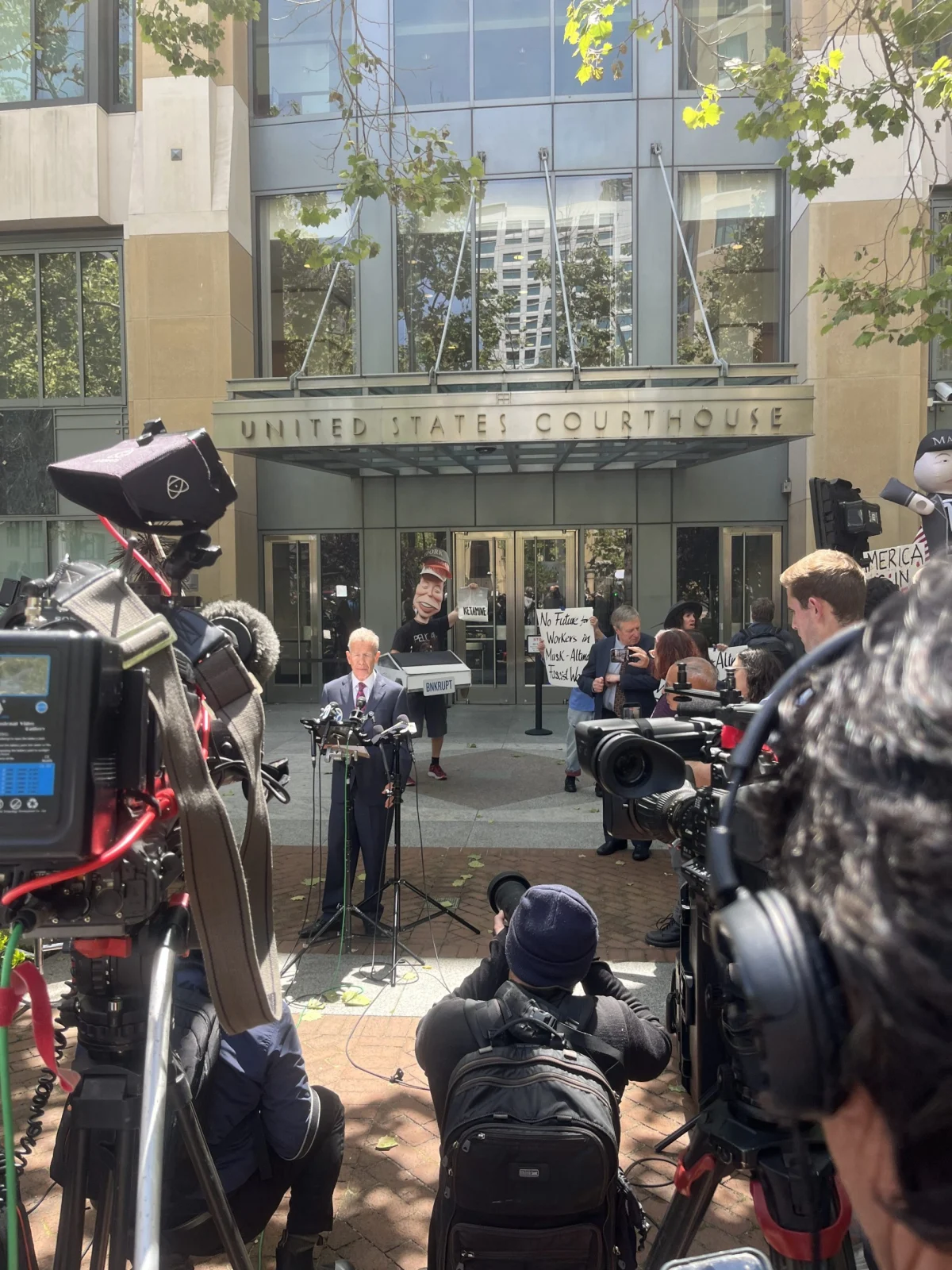
Nine California jurors have embarked on a pivotal deliberation that could fundamentally reshape the trajectory of OpenAI, the globally recognized artificial intelligence powerhouse. This high-stakes legal battle, pitting tech magnate Elon Musk against OpenAI’s leadership, including CEO Sam Altman and key partner Microsoft, transcends mere corporate litigation; it probes the very foundational principles and ethical stewardship of artificial intelligence development. While the courtroom proceedings have explored a vast landscape, from the initial ideological schisms among founders in 2018 to the dramatic boardroom upheaval surrounding Altman’s brief removal and subsequent return in 2023, the jury’s task is to meticulously address a specific set of complex legal questions. Their verdict carries profound implications, potentially dictating the future organizational structure and operational philosophy of a company at the vanguard of a transformative technology.
The Origins of a Vision: OpenAI’s Founding Principles
The genesis of OpenAI in December 2015 was steeped in a visionary, altruistic ambition. Co-founded by a constellation of prominent figures in technology, including Elon Musk, Sam Altman, Ilya Sutskever, Greg Brockman, and others, the organization was conceived as a non-profit entity dedicated to advancing artificial general intelligence (AGI) in a manner that would benefit all of humanity. The core tenet was to prevent AGI from being monopolized by any single corporation or government, ensuring its development was open, safe, and universally accessible. This idealistic framework was a direct response to growing concerns about the potential existential risks and societal impacts of increasingly powerful AI systems. Musk, a vocal advocate for AI safety and a significant initial financial contributor, played a crucial role in articulating this mission, reportedly donating tens of millions of dollars to kickstart the endeavor. The early mission statement emphasized collaborative research and the sharing of discoveries to foster a broad, beneficial deployment of AGI, distinctly steering away from commercial imperatives.
Evolution of a Mission: From Non-Profit Idealism to Commercial Reality
However, the path to developing AGI proved to be extraordinarily capital-intensive, quickly challenging the initial non-profit model. The computational resources, specialized talent, and extensive research infrastructure required to push the boundaries of AI demanded financial outlays far beyond what a traditional non-profit structure could sustain through donations alone. By 2019, OpenAI announced a significant strategic shift, establishing a "capped-profit" subsidiary, OpenAI LP. This innovative structure was designed to attract substantial investment capital by offering investors a capped return, typically around 100 times their investment, while still maintaining the non-profit parent entity’s control over the mission and governance. This pivotal moment marked a delicate balancing act, aiming to reconcile the urgent need for massive funding with the enduring commitment to its original altruistic mission.
Microsoft quickly emerged as a key partner, making a substantial initial investment in 2019 and deepening its commitment with a reported $10 billion infusion in 2023. This partnership provided OpenAI with crucial access to Microsoft’s vast cloud computing resources and capital, accelerating its research and development. The public unveiling of ChatGPT in late 2022 further propelled OpenAI into the global spotlight, demonstrating the immense potential of generative AI and triggering a widespread AI arms race across industries. This period also saw significant internal dynamics, including Elon Musk’s departure from OpenAI’s board in 2018, citing potential conflicts of interest with his work at Tesla, which was also developing AI technologies. The dramatic events of November 2023, where Sam Altman was briefly ousted by the non-profit board and subsequently reinstated with Microsoft’s intervention, further highlighted the complex interplay of mission, governance, and commercial interests at the heart of OpenAI.
Central Allegation: Breach of Charitable Trust
At the core of Musk’s lawsuit is the accusation that OpenAI and its current leadership have fundamentally breached the charitable trust established at its founding. Musk’s legal team contends that the defendants had a clear understanding that his financial support was intended for a non-profit organization dedicated to ensuring the benefits of AI for all humanity, preventing its control by any single entity. The most salient event cited by the plaintiffs is Microsoft’s substantial $10 billion investment in 2023 into OpenAI’s for-profit affiliate. They argue this deal, which occurred after the statute of limitations for earlier transactions, solidified Musk’s conviction that the company had strayed from its charitable path. According to the plaintiffs, this investment directly led to the enrichment of OpenAI’s investors through commercial products, effectively prioritizing profit over the AI safety and beneficial deployment mission that Musk initially championed.
OpenAI’s defense vigorously counters these claims. Their attorneys have emphasized that no specific restrictions were ever placed on Musk’s donations, a point corroborated by testimonies from his own financial advisor, chief of staff, and special advisor. They maintain that from the outset, all parties involved recognized that significant private fundraising would be essential to achieve the ambitious goals of AGI development. Furthermore, OpenAI’s legal team points to Musk’s own past actions, including his reported attempts to launch a personally controlled, OpenAI-affiliated for-profit entity and his later efforts to merge OpenAI into Tesla, as evidence of his evolving commercial interests. They also note that other significant donors to OpenAI have not voiced similar concerns regarding a breach of charitable trust. A forensic accountant hired by OpenAI provided crucial testimony, indicating that all of Musk’s donations had been fully utilized by the organization well before August 5, 2021, the key date cited by the plaintiffs regarding the statute of limitations. This suggests that the donations had served their intended purpose long before the lawsuit was filed, potentially invalidating any charitable trust claim. OpenAI executives, including Sam Altman, further assert that the for-profit affiliate continues to actively fulfill the organization’s mission, generating substantial equity value to support the non-profit foundation and providing widely accessible tools like ChatGPT, which they argue directly contributes to sharing the benefits of AI with the world.
Claims of Unjust Enrichment
Musk’s legal team also asserts that the multi-billion dollar valuations of stakes held by OpenAI founders, such as Greg Brockman and Ilya Sutskever, alongside Microsoft’s substantial equity, constitute unjust enrichment. They contend that Musk’s initial charitable donations were ultimately redirected to facilitate personal and corporate financial gain, rather than exclusively supporting the non-profit’s humanitarian mission. The plaintiffs highlight a perceived commercial focus within OpenAI’s for-profit arm, while alleging that the non-profit foundation itself was left largely dormant, lacking full-time employees and, critically, losing effective control over the for-profit operations.
In response, OpenAI firmly states that all of Musk’s contributions were fully expended by the non-profit foundation by 2020, well before any significant equity distributions occurred. They emphasize that the provision of stock and equity compensation was a mutually agreed-upon necessity from early stages, crucial for attracting and retaining the world-class researchers required to develop AGI. OpenAI executives maintain that the work conducted by the for-profit entity directly advances the foundation’s core mission, including critical AI safety initiatives. They also assert that the non-profit board retains ultimate control over the for-profit arm, having implemented enhanced governance measures following the 2023 "blip" when Altman was briefly removed from his position due to alleged lack of candor. This argument underscores the complex, dual-purpose structure OpenAI adopted to balance mission with the practical demands of pioneering AGI.
Microsoft’s Role: Allegations of Aiding and Abetting
A significant portion of Musk’s case scrutinizes the events surrounding the November 2023 "blip," when OpenAI CEO Sam Altman was temporarily ousted. The plaintiffs allege that Microsoft CEO Satya Nadella, whose company heavily relies on OpenAI’s technology, became personally involved in Altman’s return and the formation of a new OpenAI board. They suggest that Microsoft’s commercial imperatives drove OpenAI away from its original mission, pointing to internal discussions among Microsoft executives about potential conflicts between their commercial agreement and the non-profit’s goals. Particular attention has been drawn to a clause in Microsoft’s agreement with OpenAI that purportedly granted Microsoft veto rights over significant corporate decisions at OpenAI.
Microsoft’s witnesses have consistently refuted these claims, asserting that company executives were unaware of any specific conditions or restrictions on Musk’s donations, despite conducting extensive due diligence. They emphasize that Microsoft has never exercised a veto over any OpenAI decision. Instead, they argue that Microsoft’s substantial investments, particularly in high-performance computing infrastructure, were instrumental in enabling OpenAI to achieve its groundbreaking technological triumphs, such as the development of ChatGPT, which ultimately served the broader mission of advancing AI.
Procedural Defenses: Statute of Limitations and Unreasonable Delay
OpenAI’s defense also hinges on procedural arguments, specifically the statute of limitations and unreasonable delay. Musk has indicated that his skepticism about his co-founders’ commitment to the original mission intensified over time, culminating in his decision to file the lawsuit in mid-2024 after learning about Microsoft’s new $10 billion investment plan in late 2022.
OpenAI’s attorneys contend that the terms governing the for-profit structure and Microsoft’s involvement were clearly outlined in a 2018 term sheet for a previous fundraising round, which Musk received and his advisors reviewed, even if Musk claims he did not read it in detail. They also cite numerous public blog posts and communications over the years, including Musk’s own critical tweets about the company, as evidence that he was aware of OpenAI’s evolving direction well before initiating legal action. Furthermore, Shivon Zilis, a close advisor to Musk, reportedly voted to approve these transactions as a member of the OpenAI board, suggesting an internal understanding and approval. Ultimately, OpenAI’s legal team emphasizes that Musk’s formal role in the organization ceased in 2018, and his last financial contributions were made in 2020, significantly predating the lawsuit. They argue that Musk’s lawsuit was filed only after OpenAI’s launch of ChatGPT revolutionized the AI industry, suggesting a reactive motive rather than a long-standing grievance. Forcing a restructuring of an organization that has operated under its current model for several years, they contend, would be an unreasonable and disruptive precedent.
The "Unclean Hands" Counter-Claim
Adding another layer of complexity, OpenAI’s attorneys have introduced the legal doctrine of "unclean hands," asserting that Musk’s own conduct disqualifies him from seeking equitable relief. They presented evidence suggesting that Musk was actively planning his own competing AI initiatives while still serving as OpenAI’s chairman, reportedly hiring OpenAI employees to develop AI technologies for Tesla. These actions, OpenAI argues, undermined the very organization that was utilizing his donations to pursue its mission. The defense also highlighted that Shivon Zilis, the mother of three of Musk’s children, did not disclose her personal relationship with him to other OpenAI board members for several years. Furthermore, they contend that Musk deliberately withheld donations in 2017 in an attempt to gain control over a planned for-profit affiliate of OpenAI. Bill Savitt, OpenAI’s lead attorney, succinctly summarized this position to the jury, stating that "Mr. Musk abandoned OpenAI for dead in 2018," implying a lack of genuine commitment to the organization’s long-term success under its original framework.
The Broader Implications: A Precedent for AI’s Future
The jury’s decision in this landmark case will extend far beyond the immediate financial and structural implications for OpenAI. It stands to establish a significant precedent for how future foundational AI research and development are structured, funded, and governed. A verdict in favor of Musk could force OpenAI to revert to a strict non-profit model, potentially jeopardizing its substantial commercial partnerships and its ability to attract top talent through equity incentives. Such an outcome could send a chilling message to other AI startups navigating the complex balance between altruistic missions and the immense capital requirements of advanced AI. Conversely, a verdict favoring OpenAI would validate its capped-profit model as a legitimate means to pursue ambitious, mission-driven AGI development, potentially influencing how future ethical AI initiatives are structured globally. The outcome will undoubtedly shape the ongoing global discourse around AI ethics, governance, and the fundamental question of whether the pursuit of AGI should prioritize open access and safety above all else, or if commercial incentives are a necessary, perhaps even beneficial, accelerant in its development.





 Azin Asro