Amir Mahmud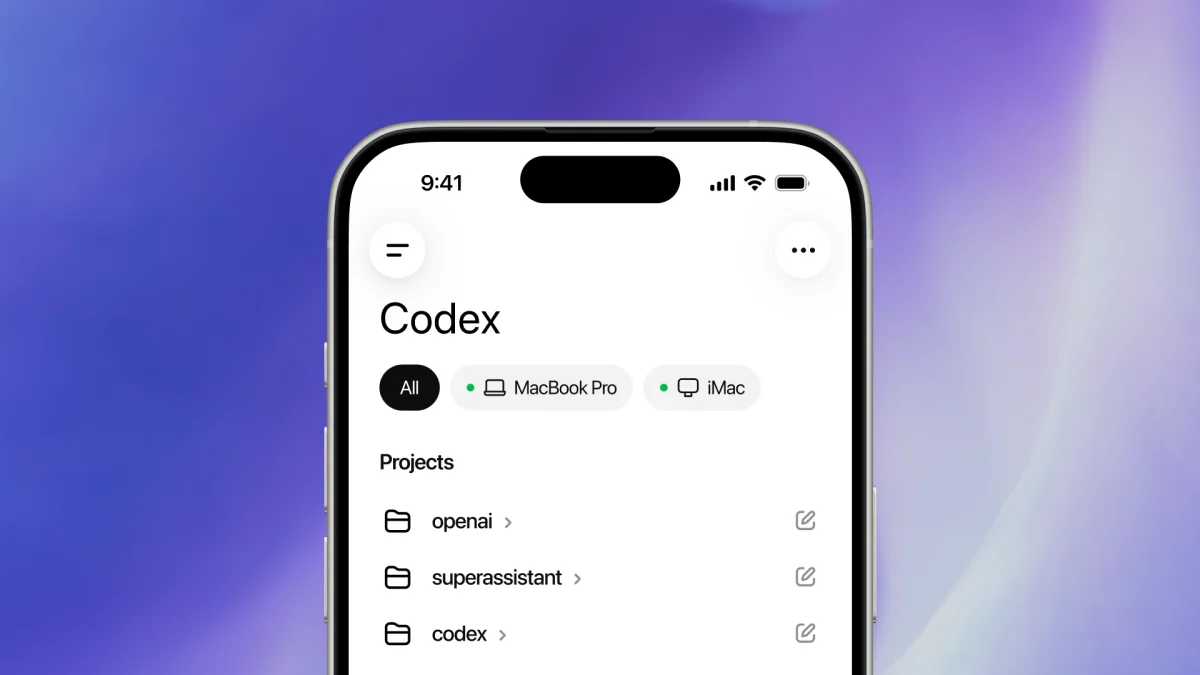
OpenAI, a leading artificial intelligence research and deployment company, has significantly expanded the accessibility and utility of its advanced coding agent, Codex, by integrating it directly into the ChatGPT mobile application. This strategic move, announced on May 14, 2026, empowers developers to monitor and manage their coding environments and development workflows remotely, directly from their iOS and Android devices. The update, currently in a preview phase, is rolling out to all plan subscribers, marking a pivotal moment in the ongoing evolution of AI-assisted software development.
The Evolution of AI-Powered Coding
The introduction of Codex onto mobile platforms represents the culmination of years of research and development in the field of artificial intelligence, specifically within the domain of code generation and assistance. OpenAI, founded in 2015 with a mission to ensure that artificial general intelligence (AGI) benefits all of humanity, has been at the forefront of this revolution. Their work on large language models (LLMs) like the GPT series laid the groundwork for specialized applications such as Codex.
Codex itself emerged from the same family of models as GPT-3, trained on a vast dataset of publicly available code and natural language. Its primary function is to translate natural language prompts into executable code, automate repetitive coding tasks, and assist in debugging. When OpenAI initially launched Codex in May 2025, it was hailed as a groundbreaking tool for developers, promising to accelerate development cycles and lower the barrier to entry for aspiring programmers. Before Codex, AI tools for coding were primarily limited to advanced auto-completion features within Integrated Development Environments (IDEs) or more specialized code analysis tools. Codex pushed the boundaries by understanding intent expressed in human language and generating functional code snippets, functions, or even entire programs. This shift from mere assistance to active generation fundamentally altered how many developers interacted with their tools, enabling them to focus more on high-level problem-solving rather than syntax and boilerplate.
Codex’s Journey to Mobile: A Timeline of Enhancements
The integration of Codex into the ChatGPT mobile app is not an isolated development but rather the latest in a series of strategic enhancements designed to make the AI agent more pervasive and powerful. The journey of Codex has been characterized by a continuous expansion of its operational scope and capabilities:
- May 2025: OpenAI officially launches Codex, making its advanced AI coding capabilities available to a broader developer community. Initially, it primarily functioned as an API or within specific desktop environments, requiring direct interaction with a command line or a desktop application.
- April 2026: A significant upgrade is rolled out, granting Codex the ability to operate in the background within desktop environments. This enhancement allowed the AI agent to autonomously manage and execute various tasks without constant direct supervision, transitioning it from a reactive tool to a more proactive, agentic system. This meant Codex could, for example, monitor project directories, automatically run tests, or update dependencies as specified by a developer’s high-level instructions, even when the user was focused on other applications.
- Early May 2026: OpenAI introduces a Chrome extension for Codex. This development enabled the AI agent to interact directly with live browser sessions, understanding web page contexts and performing actions or generating code relevant to web development tasks directly within the browser interface. This further blurred the lines between human and AI interaction in the development workflow, allowing for seamless integration into web-based tasks like front-end debugging or content generation for dynamic web pages.
- May 14, 2026: The current announcement marks the leap to mobile, embedding Codex’s functionalities within the widely used ChatGPT application. This move fundamentally untethers developers from their workstations, offering unprecedented flexibility.
Each of these steps has progressively enhanced Codex’s autonomy and reach, culminating in a mobile presence that promises to redefine the boundaries of where and how coding can be managed.
Unpacking the Mobile Experience: Remote Control and Workflow Management
The mobile integration of Codex transcends mere remote task dispatch. OpenAI emphasizes that this update offers comprehensive control over development threads and environments. From a smartphone or tablet, users can gain full visibility into their live Codex environments, regardless of where they are running. This means a developer can, for instance, be away from their desk and still:
- Review Outputs: Instantly check the results of code generated or executed by Codex. This could involve reviewing test results, logs, or even visual outputs from a running application.
- Approve Commands: Authorize or deny proposed actions by Codex, maintaining human oversight over critical operations. This is crucial for security and ensuring the AI aligns with the developer’s exact intent.
- Change Models: Dynamically switch between different AI models or configurations for Codex, optimizing its performance for specific tasks or adjusting to evolving project requirements.
- Start Something New: Initiate entirely new coding tasks or development threads, leveraging the full power of Codex from a mobile interface.
- Work Across All Threads: Manage multiple parallel development streams, allowing for efficient multitasking and project oversight.
This level of control transforms the mobile device from a consumption-focused gadget into a powerful hub for active development management. Developers are no longer bound to their desktop or laptop for critical decision-making or monitoring, fostering a more agile and responsive development process. The user interface within the ChatGPT app is designed to be intuitive, presenting complex information in an easily digestible format suitable for smaller screens, while still offering the depth required for professional development tasks.
The Broader Impact: Reshaping Developer Productivity and Accessibility
The arrival of Codex on mobile devices is poised to have profound implications across several dimensions:
- Enhanced Developer Productivity: The most immediate impact will be on efficiency. Developers can now leverage travel time, commutes, or even brief breaks to check on ongoing tasks, approve critical steps, or even initiate new coding requests. This reduces downtime and helps maintain workflow continuity, potentially leading to faster project completion times. The ability to quickly respond to issues or make decisions without needing to be physically at a workstation offers a significant boost to responsiveness and agility.
- Increased Flexibility and Remote Work: The move further solidifies the trend towards flexible and remote work arrangements in the tech industry. Developers gain unprecedented freedom to manage their projects from anywhere, empowering a more distributed workforce and potentially fostering collaboration across different time zones and locations. It means a developer can truly work "on the go," turning previously unproductive moments into opportunities for progress.
- Democratization of Coding: By making advanced AI coding tools accessible via ubiquitous mobile devices, OpenAI is subtly lowering the barrier to entry for coding. Aspiring developers, students, or even hobbyists who may not have access to high-end computing setups can now experiment with powerful AI code generation tools using just a smartphone. This could foster a new generation of creators and innovators, expanding the talent pool and diversifying the types of projects undertaken.
- Educational Transformation: Educational institutions and online learning platforms could integrate mobile Codex access into their curricula, allowing students to learn and practice coding with AI assistance in more flexible and engaging ways. This could accelerate learning curves and make complex programming concepts more approachable.
- Economic Impact: Faster development cycles and increased productivity translate into economic benefits, including quicker time-to-market for new software products, reduced development costs, and enhanced innovation across industries reliant on software.
Intensifying Competition in the AI Agent Space
OpenAI’s mobile push for Codex also highlights the intense competitive landscape in the burgeoning field of AI agentic tools. Just months prior, in February 2026, Anthropic, another major player in AI research, released a similar feature called "Remote Control" for its own coding agent, Claude Code. Anthropic, known for its focus on AI safety and interpretability, has seen Claude Code gain considerable traction among businesses and tech professionals, establishing itself as a formidable rival to Codex.
This head-to-head competition underscores a critical race for market share and developer mindshare. Both companies are vying to establish their agentic coding tools as the industry standard. The "agentic" nature of these tools—where AI models are designed not just to respond to prompts but to take initiative, plan, and execute multi-step tasks—represents a significant leap forward. The mobile capabilities further amplify this, as agents can now operate with even less direct human oversight from any location.
The rivalry is beneficial for the industry as it drives rapid innovation. Each company’s feature releases push the other to enhance their offerings, leading to more robust, versatile, and user-friendly tools for developers worldwide. While Claude Code has reportedly gained popularity in certain business segments, OpenAI’s deep integration with the widely adopted ChatGPT platform gives Codex a significant distribution advantage and brand recognition that could prove crucial in this contest.
Challenges, Ethical Considerations, and the Road Ahead
While the mobile integration of Codex heralds a new era of development flexibility, it also surfaces important challenges and ethical considerations that require careful navigation.
- Security Implications: Granting remote access to live coding environments, even with approval mechanisms, introduces potential security vulnerabilities. Ensuring robust authentication, encryption, and access controls will be paramount to prevent unauthorized access or malicious code injection. Developers must be diligent in managing their mobile device security.
- Debugging and Complexity: Debugging complex code issues on a small mobile screen, even with AI assistance, can be challenging. While the AI can highlight problems, the granular inspection and manual fixes often require the larger display and dedicated tools of a desktop environment. The mobile experience might be better suited for oversight and approval rather than deep, iterative coding.
- Over-reliance and Skill Erosion: There’s an ongoing debate about the potential for AI coding tools to lead to over-reliance among developers, possibly eroding fundamental coding skills or reducing a deep understanding of underlying logic. Maintaining a balance between leveraging AI for efficiency and preserving core human expertise will be crucial.
- Ethical AI and Bias: AI-generated code, like any AI output, can inherit biases present in its training data. Ensuring the fairness, transparency, and ethical implications of code generated by Codex, especially when autonomous, remains a significant challenge. Accountability for errors or security flaws in AI-generated code will also need to be clearly defined.
- Performance and Connectivity: Reliable performance on mobile devices will depend heavily on network connectivity and the processing power of the device itself, especially for more intensive tasks. Optimizing the mobile experience to be responsive and efficient across various devices and network conditions will be an ongoing engineering effort.
Looking ahead, the trajectory for AI coding agents appears to involve even greater autonomy, deeper integration into the entire software development lifecycle, and potentially multimodal capabilities where AI can understand and generate code based on visual inputs, verbal commands, or even architectural diagrams. The continuous refinement of these tools, coupled with robust security measures and ethical guidelines, will determine their ultimate impact on the future of software engineering.
Conclusion: A Glimpse into the Future of Development
OpenAI’s decision to bring Codex to mobile platforms via the ChatGPT app is more than just a feature update; it is a declaration of intent for the future of software development. By untethering developers from their desks and empowering them with sophisticated AI assistance on the go, the company is not only enhancing productivity and flexibility but also reshaping the very definition of a "developer workspace." As the race for AI agent dominance intensifies, such innovations promise to accelerate technological progress, foster new forms of creativity, and ultimately, make the complex world of coding more accessible and manageable for everyone. The era of truly pervasive AI-assisted development has unequivocally arrived.







 Azin Asro