Amir Mahmud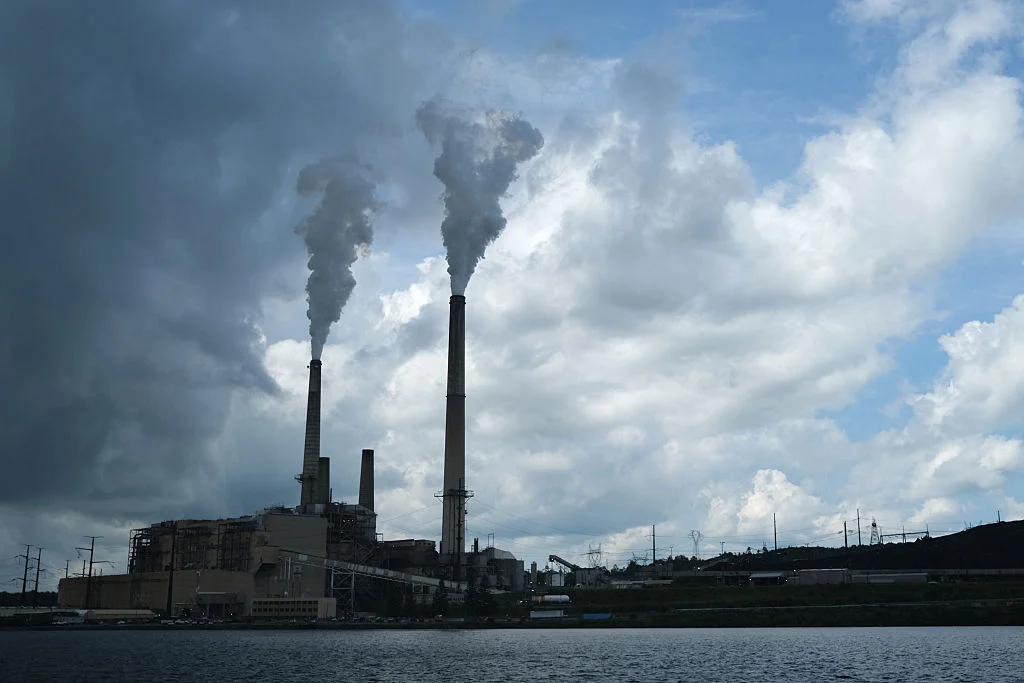
In a landmark declaration poised to significantly reshape Europe’s digital landscape, SoftBank Group has unveiled plans for a colossal investment of up to €75 billion, approximately $87 billion, dedicated to enhancing data center capacity across France. This monumental commitment marks a pivotal moment for both the Japanese technology conglomerate and the French nation, signaling a bold step towards establishing France as a preeminent hub for artificial intelligence infrastructure within the European Union.
The strategic objective of this multi-phase undertaking is to conceptualize, construct, and operate an impressive 5 gigawatts of supplementary data center capacity. The initial phase of this expansive project is already mapped out, targeting the Hauts-de-France region. Sites in Dunkirk (Loon-Plage), Bosquel, and Bouchain are slated for the development of new data centers, projected to contribute 3.1 gigawatts of capacity by the year 2031. This initial deployment underscores a focused effort to bolster regional digital infrastructure, laying a robust foundation for future technological advancements.
France’s Digital Ambitions: A Strategic Play
This substantial investment aligns perfectly with France’s overarching national strategy to position itself as a global leader in the digital economy, particularly within the burgeoning field of artificial intelligence. For years, President Emmanuel Macron’s administration has actively pursued policies aimed at attracting foreign direct investment, fostering innovation, and cultivating a vibrant tech ecosystem. Initiatives like the "Choose France" summit, where this announcement was likely made or solidified, serve as critical platforms to showcase the nation’s appeal to international investors. These efforts include significant tax incentives for research and development, substantial investments in tech education, and a streamlined regulatory environment designed to accelerate business growth.
French Minister of Economy, Finance and Industrial and Digital Sovereignty, Bruno Le Maire, and Minister Delegate for Industry, Roland Lescure, have consistently championed the nation’s digital transformation. Lescure’s previous remarks, characterizing such announcements as a testament to France’s ambition across the entire AI value chain, reflect a broader governmental commitment. This includes cultivating talent, supporting AI startups, and developing the critical infrastructure necessary to host advanced AI computations. By attracting a global powerhouse like SoftBank, France not only secures a massive capital injection but also gains a strategic partner with deep ties to the international AI community, further cementing its role as a key player in the European and global tech arenas.
SoftBank’s Strategic AI Playbook
For SoftBank, a conglomerate renowned for its audacious, large-scale technology investments, this venture represents its most significant AI infrastructure commitment in Europe to date. The Japanese giant has, over the past decade, transformed into a formidable force in the global tech investment landscape, largely through its Vision Fund. This fund has poured billions into disruptive technologies and companies worldwide, ranging from ride-sharing services to advanced robotics and, crucially, artificial intelligence. SoftBank’s portfolio includes substantial stakes in numerous AI-centric enterprises, alongside its ownership of Arm Holdings, a pivotal player in chip design that underpins much of the world’s digital infrastructure.
SoftBank’s relationship with OpenAI, where it functions as both an investor and a significant customer, provides crucial context for this investment. The exponential growth of AI models, particularly large language models (LLMs) like those developed by OpenAI, demands unprecedented levels of computational power and data storage. These models require massive data centers capable of handling intensive processing tasks, high-speed data transfer, and sophisticated cooling systems. By investing directly in hyperscale data center capacity, SoftBank is not merely supporting its portfolio companies but is strategically building the foundational infrastructure that will power the next generation of AI innovations. This proactive approach ensures that SoftBank and its ecosystem partners have access to the necessary resources to remain at the forefront of the AI revolution, mitigating potential bottlenecks in computational access that could hinder development and deployment.
The Unprecedented Demand for Data Centers
The global digital economy is experiencing an insatiable demand for data centers, driven by a confluence of factors. The proliferation of cloud computing services, the explosive growth of artificial intelligence and machine learning, the expansion of the Internet of Things (IoT), and the sheer volume of data generated daily are all contributing to this surge. Every online interaction, every streaming video, every AI query, and every transaction relies on data centers to store, process, and transmit information.
The advent of sophisticated AI models has dramatically escalated this demand. Training a single large language model can consume energy equivalent to thousands of homes for several days and requires colossal storage capacity. Consequently, the industry is witnessing a race to build more, larger, and more powerful data centers. Europe, in particular, has become a hotbed for this expansion, driven by its robust regulatory environment (e.g., GDPR), a strong talent pool, and a strategic desire for digital sovereignty—the ability to control its own digital infrastructure and data, rather than relying solely on foreign-owned facilities. SoftBank’s investment taps directly into this critical market need, positioning France as a key enabler for Europe’s digital future.
Economic and Regional Transformation
The SoftBank investment is poised to deliver a significant economic boon to France, particularly to the Hauts-de-France region. The construction phase alone will generate thousands of direct and indirect jobs, from engineering and construction workers to logistics and support staff. Once operational, the data centers will require a substantial workforce for maintenance, security, and technical operations, creating long-term, high-skilled employment opportunities. This influx of capital and job creation can revitalize local economies, stimulating growth in ancillary services and industries.
Beyond direct employment, the establishment of such advanced infrastructure acts as a magnet for further investment. Businesses relying on high-performance computing, such as AI startups, research institutions, and digital service providers, are more likely to establish operations near these hubs to leverage proximity to cutting-edge infrastructure. This creates a powerful ripple effect, fostering a dynamic innovation ecosystem and cementing France’s reputation as an attractive destination for tech companies. Furthermore, increased economic activity translates into higher tax revenues for local and national governments, which can then be reinvested into public services, infrastructure, and education, creating a virtuous cycle of growth and development.
Energy, Environment, and Sustainability Challenges
While the economic prospects are undeniably bright, the immense scale of this data center expansion also brings significant challenges, particularly concerning energy consumption and environmental impact. Data centers are notoriously energy-intensive, requiring vast amounts of electricity for their servers and, crucially, for cooling systems to prevent overheating. The 5 gigawatts of planned capacity is equivalent to several large nuclear power plants, raising questions about the strain on France’s electrical grid and the sustainability of such operations.
In the United States, public opposition to data center construction has intensified due to concerns about their environmental footprint, impact on local utility prices, and demands on the electrical grid. Similar debates are likely to emerge in France, a nation with a strong commitment to environmental protection and a significant reliance on nuclear power, alongside a growing portfolio of renewable energy sources. To mitigate these concerns, SoftBank and its partners will likely need to emphasize sustainable practices, such as sourcing renewable energy, implementing advanced cooling technologies that reduce water consumption, and exploring innovative heat reuse solutions. France’s existing clean energy mix, heavily dominated by nuclear power, could provide a comparatively low-carbon energy source, but the sheer volume of demand will still necessitate careful planning and potentially new energy infrastructure development. The success of this venture will hinge not only on its technological prowess but also on its ability to integrate responsibly within the local and national energy landscape, addressing environmental stewardship as a core component of its operational strategy.
Navigating the Global AI Race
This investment positions France, and by extension Europe, more competitively in the global race for AI dominance. The infrastructure bottleneck for advanced AI development is becoming increasingly apparent. Nations and corporations that can provide the necessary compute power will have a distinct advantage in fostering innovation and attracting top AI talent. By significantly boosting its data center capacity, France aims to reduce Europe’s reliance on infrastructure located in other geopolitical spheres, thereby enhancing its digital sovereignty and data security.
The move by SoftBank also highlights a broader trend among global tech giants to diversify their infrastructure footprint. While the United States has historically been a primary location for hyperscale data centers, regulatory changes, increasing energy costs, and a desire for geographic redundancy are driving investments into other regions. The contrast with SoftBank’s previously announced plans for a $33 billion data center in Ohio, powered by a new 9.2 gigawatt natural gas plant, underscores the different energy landscapes and regulatory environments at play. In Europe, where climate goals are stringent, the emphasis will likely be on achieving net-zero operations and leveraging existing low-carbon energy sources.
Long-Term Outlook
SoftBank’s €75 billion commitment to French data centers represents a profound declaration of confidence in France’s economic future and its burgeoning role in the global digital economy. This strategic investment promises to accelerate France’s capabilities in artificial intelligence, attract further innovation, and create a significant number of high-value jobs. As the digital transformation continues to redefine industries and societies, the availability of robust, scalable, and sustainable data infrastructure will be paramount.
However, the path forward will not be without its complexities. Navigating the intricate balance between economic growth, energy demand, and environmental responsibility will require continuous innovation and collaboration between the private sector, government, and local communities. If successful, this ambitious initiative could solidify France’s position as a leading digital powerhouse within Europe, providing the essential backbone for the next wave of AI-driven advancements and ensuring that the continent remains a significant player in shaping the future of technology. The coming decade will reveal how effectively this massive investment translates into sustained technological leadership and a resilient, digitally empowered future for France and beyond.






 Azin Asro