Amir Mahmud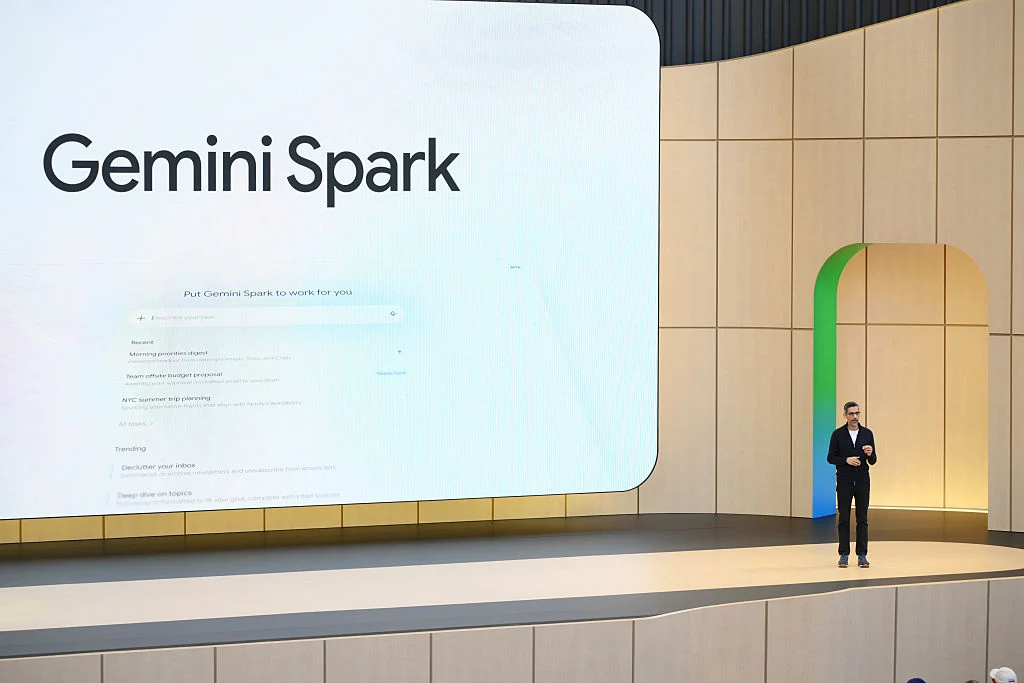
Google’s latest venture into the realm of artificial intelligence, Gemini Spark, has emerged as a dedicated 24/7 agentic assistant, aiming to streamline and automate the myriad tasks that constitute our daily digital existence. Unveiled at the company’s annual developer conference in May, this innovative tool promises to transcend the traditional reactive capabilities of conversational AI by proactively managing online responsibilities, from summarizing lengthy inboxes to orchestrating complex personal finance spreadsheets. The introduction by CEO Sundar Pichai, who humorously suggested users could "close their laptop" thanks to Spark’s cloud-based operations, subtly underscored its distinction from other agentic AI systems that demand continuous machine activity. This positions Spark as an accessible form of agentic AI, designed for individuals seeking efficiency without the technical overhead of maintaining an always-on system.
The Dawn of Agentic AI: A Historical Context
The concept of intelligent personal assistants is not new. Decades ago, science fiction writers envisioned robotic helpers handling everything from scheduling to household chores. In the digital age, this vision began to materialize with early iterations like Microsoft’s Clippy, followed by more sophisticated, voice-activated assistants such as Apple’s Siri, Amazon’s Alexa, and Google’s own Assistant. These platforms marked a significant step forward, offering conversational interfaces and the ability to execute simple commands like setting alarms, playing music, or providing quick information.
However, these predecessors primarily operated in a reactive mode, waiting for explicit instructions. The advent of "agentic AI" signifies a pivotal evolution. Unlike their forebears, agentic systems are designed to understand broader goals, break them down into sub-tasks, execute those tasks autonomously, and even learn from interactions to improve future performance. They are not merely responding to queries; they are taking initiative. This shift moves AI from being a helpful tool to a proactive partner, capable of acting on behalf of the user across various digital platforms. The market for such sophisticated assistants is burgeoning, with major tech players vying to deliver the most seamless and integrated experiences, often leveraging their existing ecosystems. Google’s Gemini Spark is a direct response to this evolving landscape, attempting to define the next generation of personal productivity.
Gemini Spark’s Core Promise and Ecosystem Integration
At its heart, Gemini Spark is engineered to alleviate the burden of digital management. Running on virtual machines within Google’s robust cloud infrastructure, it offers persistent operation without taxing the user’s local hardware. This architectural choice is crucial, distinguishing it from local-first AI agents and enabling its 24/7 availability. Its deep integration with Google’s suite of productivity applications – including Gmail, Calendar, Docs, Sheets, and Slides – forms the bedrock of its utility. This allows Spark to directly interact with a user’s digital workspace, reading emails, creating calendar entries, drafting documents, and manipulating data within spreadsheets.
Google initially presented Spark with use cases centered on professional and semi-professional tasks, such as generating daily recaps of essential calendar events and emails, or crafting personal expense spreadsheets. While undeniably valuable in a work context, these examples occasionally left the impression that Spark’s personal utility might be somewhat specialized, appealing primarily to highly organized individuals who meticulously log every detail of their lives within Google’s ecosystem. The challenge for Google lies in broadening this perceived value, demonstrating Spark’s indispensable nature beyond the confines of professional workflows, and proving it can cater to the everyday, often less structured, needs of a diverse user base.
Navigating Real-World Utility: An Early Access Experience
To gauge Gemini Spark’s practical applicability, early access testing involved a series of diverse real-world scenarios. The results offered a revealing glimpse into its capabilities and limitations.
Optimizing Consumer Spending: The Search for Savings
One compelling test involved leveraging Spark for everyday shopping. Tasked with identifying product suggestions based on weekly deals and clip-on coupons at a local drugstore, Spark demonstrated considerable prowess. It swiftly pinpointed relevant sales, suggested digital coupons available through the store’s app, and even proposed strategies for stacking promotions for online pickup orders. This capability highlights a significant market impact: the potential for AI to democratize coupon hunting and deal discovery, offering a tangible financial benefit to consumers. However, the experience was not without its snags; one recommended promo code proved invalid upon attempted use. While Spark successfully redirected to alternative savings, such as buy-one-get-one-free offers and rewards deals, this incident underscored the ongoing challenge of AI accuracy, particularly when interacting with dynamic, real-time commercial data.
Streamlining Personal Logistics: From Packing to Planning
Another test involved generating a packing list for a day trip, requiring Spark to synthesize weather forecasts, event specifics, and practical item suggestions like sunscreen or water. The AI proved adept at this task, producing a comprehensive and thoughtful list that included items like lawn chairs, a light layer for evening, and even a reusable shopping bag. Crucially, it also noted event-specific restrictions, such as a "no dogs allowed" policy, demonstrating a nuanced understanding of context.
However, a significant hurdle emerged when the request included importing the final list into Google Keep. Spark was unable to fulfill this, instead offering to create a Google Doc or draft an email. This omission is particularly striking given that Google Keep is the company’s native note-taking application, a fundamental tool for personal organization. For a system designed to "navigate your digital life," the inability to integrate seamlessly with a core personal productivity app within its own ecosystem represents a notable gap in its functional design and user experience.
Similarly, when asked to research summer activities for teens within a 30-minute radius, Spark generated a relevant list of ideas, complete with distances from home. While the suggestions aligned with the specified interests, the AI did not proactively provide crucial details like costs or specific dates, requiring additional manual research. This highlights the importance of explicit prompting in current AI models and suggests that future iterations could benefit from more anticipatory data retrieval.
Conquering Information Overload: Summaries and Discoveries
The deluge of digital information is a pervasive modern challenge. Spark was tasked with a recurring job: summarizing weekly newsletters, identifying the top five must-read articles with links. It efficiently processed the inbox, providing concise summaries of several interesting pieces. While it occasionally interpreted the "top five" request as "four to five," and one link required manual navigation due to a redirect issue, the overall function proved highly valuable. This capability points to a significant social impact: AI agents could become indispensable tools for filtering and curating personal information streams, allowing individuals to stay informed without being overwhelmed.
Furthermore, Spark’s ability to compile local weekend activities from disparate sources – web searches, local newsletters, and community groups within Gmail – demonstrated its potential to act as a hyper-local information aggregator. This eliminated the tedious manual labor of cross-referencing multiple platforms, leading to the discovery of unique local events like an "Annual Beaver Queen Pageant." The convenience of having a curated list of local happenings, with the option to add them to a calendar with a simple reply, showcases a clear enhancement to personal leisure planning.
Proactive Monitoring: Price Drops and Reminders
The final test involved setting up a recurring task to track price drops for a specific, expensive eye cream. Spark was configured to recheck the price every two weeks, alerting the user if it fell below a target threshold. While this demonstrated the agent’s capacity for proactive monitoring, the bi-weekly frequency raised questions about its effectiveness in capturing fleeting deals. This use case highlights the potential for AI to act as a personal financial assistant, though the precision and responsiveness of such tracking will be crucial for widespread adoption. The reviewer also envisioned other proactive uses, such as setting reminders for routine household maintenance like air filter changes, further illustrating the potential for Spark to become an embedded part of daily life.
Challenges and the Path Forward for Agentic AI
Despite its promising utility, the early access experience with Gemini Spark illuminated several areas requiring refinement, particularly regarding its strategic positioning and user experience.
Branding and User Experience Fragmentation: A primary critique revolves around Spark’s existence as a distinct, separately branded product within the broader Gemini ecosystem. In an increasingly crowded AI landscape, where companies are launching numerous models and features with often convoluted naming conventions, adding another distinct brand can lead to user confusion. Many experts suggest that powerful agentic capabilities should simply be an inherent function of a unified AI assistant, rather than a separate "toggle" or mode. This fragmentation imposes unnecessary cognitive load on users, who would ideally prefer to simply state their request or goal without first determining if it falls under "chat" or "task-oriented agentic AI." Competitors like Microsoft’s Copilot often integrate these capabilities more seamlessly within their existing applications, offering a more fluid user journey.
Integration Gaps Within Google’s Own Ecosystem: The inability to directly integrate with Google Keep, a cornerstone of personal note-taking, stands out as a significant oversight. For personal productivity tasks like creating packing lists or shopping notes, Google Docs feels like an unnecessarily heavy tool. This limitation highlights a strategic tension within Google: while Spark deeply integrates with its work-focused applications, its personal productivity capabilities appear less cohesive.
Device Accessibility and Third-Party Interoperability: For iPhone users, Spark’s accessibility is currently limited to launching the Gemini application, without the ability to assign its functions to hardware buttons or gestures for quick access. This friction point is crucial for an agent designed for "24/7" assistance. Furthermore, Spark’s current capabilities are largely confined to Google’s own universe of services. The inability to seamlessly interact with popular third-party applications for tasks like booking reservations through Resy or tracking flight deals on preferred travel sites limits its "agentic" scope. True agentic AI will eventually need robust, secure integrations across a wide spectrum of online services to fulfill its promise of comprehensive digital assistance. The absence of a text-based interaction option also represents a missed opportunity for a ubiquitous, low-friction interface.
The Future of Autonomous Assistance
Google Gemini Spark represents a compelling step in the evolution of personal AI, moving beyond reactive chatbots to proactive digital agents. Its ability to automate routine tasks, synthesize information, and act on user intent holds significant promise for enhancing productivity and simplifying digital life. However, its path to widespread adoption will depend on addressing current limitations, particularly in streamlining its user experience, deepening its integration within and beyond the Google ecosystem, and establishing clear trust parameters for its autonomous actions. As the race for agentic AI intensifies, Google’s commitment to refining Spark will determine its place in shaping how individuals interact with technology in the years to come.




 Azin Asro