Amir Mahmud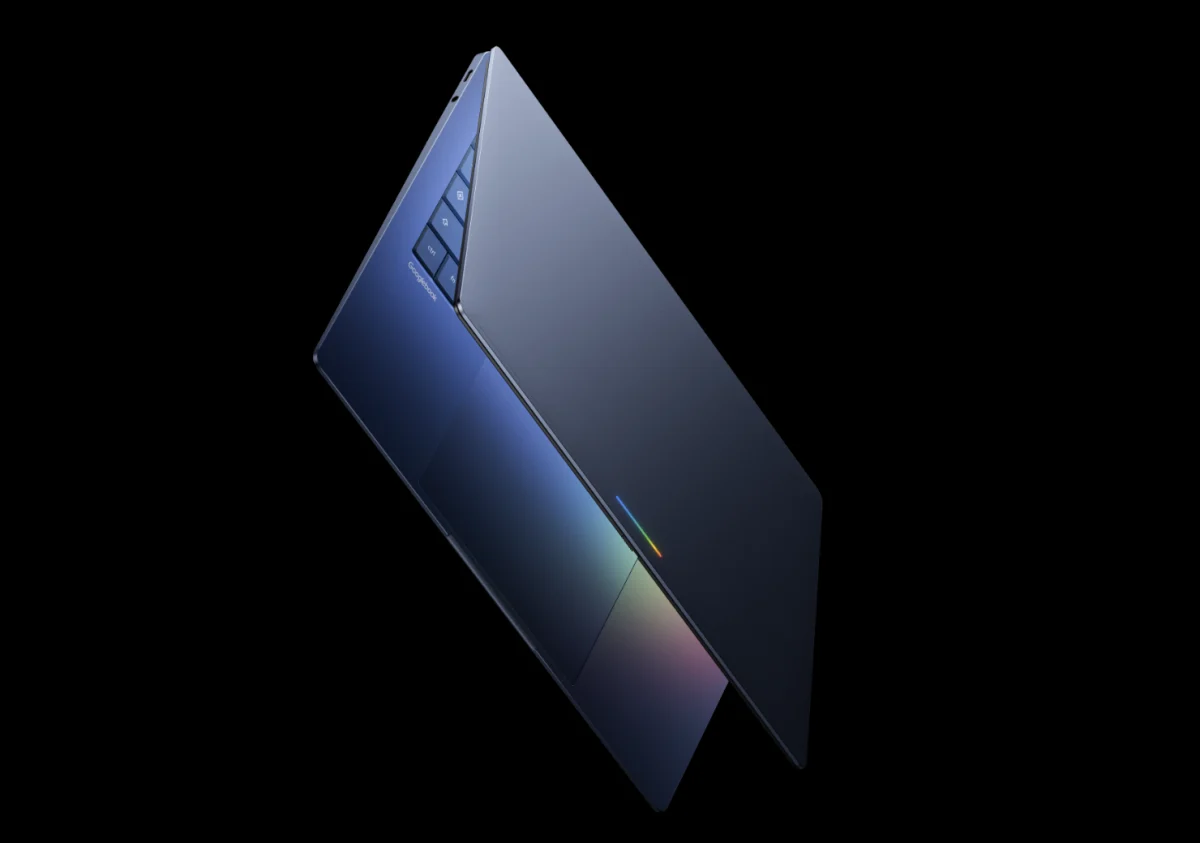
Google has officially introduced its innovative "Googlebook" laptop series, a groundbreaking line of devices engineered with Gemini, the company’s leading artificial intelligence models, at their core. These machines represent a significant evolution in personal computing, promising a deeply integrated AI experience from the ground up, moving beyond traditional operating system paradigms. A diverse consortium of established hardware manufacturers, including Acer, Asus, Dell, HP, and Lenovo, are collaborating with Google to bring a variety of Googlebook models to market, offering consumers a range of form factors and specifications tailored to different needs and preferences. Slated for release in the upcoming fall season, the Googlebook is being positioned as the inaugural laptop specifically engineered around Gemini’s capabilities, aiming to deliver proactive and personalized assistance that anticipates user needs rather than merely responding to commands.
The Genesis of an AI-Native Device
The unveiling of Googlebook marks a pivotal moment in Google’s hardware strategy, reflecting a broader industry shift towards embedding artificial intelligence directly into the foundational layers of computing devices. For years, AI capabilities in consumer electronics largely resided in the cloud, requiring constant internet connectivity for complex processing. However, advancements in neural processing units (NPUs) and optimized large language models (LLMs) have made on-device AI a practical reality. Google, a pioneer in AI research with breakthroughs like the Transformer architecture and DeepMind, is now leveraging its extensive expertise to redefine the laptop experience.
The development of Gemini, Google’s most advanced and versatile AI model family, has been central to this initiative. Gemini is designed to be multimodal, capable of understanding and operating across text, images, audio, and video, making it ideally suited for a comprehensive, context-aware user interface. Integrating Gemini directly into the Googlebook’s operating system allows for enhanced speed, improved privacy by processing data locally, and robust functionality even when offline. This shift signifies Google’s commitment to creating a computing environment where the device actively helps users, learning from their habits and anticipating their next actions, thereby moving from reactive tools to proactive digital companions.
Revolutionizing User Interaction: Magic Pointer and Beyond
A flagship feature designed to showcase Gemini’s on-device capabilities is "Magic Pointer," an AI-powered cursor that fundamentally rethinks how users interact with their screen. Unlike a conventional pointer that merely facilitates pointing and clicking, Magic Pointer integrates Gemini to offer quick, contextual suggestions as the cursor hovers or moves. This innovative approach transforms the passive cursor into an intelligent assistant, making interactions more intuitive and efficient.
For instance, if a user points at a date within an email, Magic Pointer can immediately surface an option to create a calendar event, pre-filling relevant details. Similarly, by selecting two images – perhaps a picture of a living room and a new couch – the system can generate a visualization of how the furniture might appear in the space, streamlining creative and planning tasks. "We envisioned harnessing Gemini’s intelligence to transform the traditional cursor into a truly smart and interactive tool," explained Alexander Kuscher, Google’s senior director of Android tablets and laptops, during a recent press briefing. "As the pointer navigates the screen, it intuitively highlights interactive elements and contextually proposes actions. This design philosophy encapsulates our approach to AI integration across the Googlebook platform: deeply embedded yet unobtrusive."
Beyond the Magic Pointer, Googlebook introduces "Create your Widget," a feature that allows users to generate custom widgets through natural language prompts to Gemini. This functionality taps into Gemini’s ability to pull information from the web and seamlessly integrate with Google’s suite of applications, including Gmail and Calendar. Users can prompt Gemini to construct a personalized dashboard, for example, by requesting a widget for a family reunion. The AI can then aggregate flight and hotel details, highlight restaurant reservations, and even display a countdown, consolidating disparate information into a single, easily accessible interface. This level of personalization and proactive organization aims to significantly enhance productivity and simplify daily digital life.
Bridging the Mobile-Desktop Divide
A significant aspect of the Googlebook’s design philosophy is its commitment to seamless integration with the Android ecosystem, effectively bridging the historical gap between mobile and desktop computing. Users will now be able to run Android applications directly on their Googlebook laptops. This means that if a user needs to complete a daily Duolingo lesson but prefers to stay on their laptop rather than reaching for their phone, they can simply access the app on the larger screen. This capability removes friction points in cross-device workflows, allowing for greater continuity and flexibility.
Furthermore, Googlebook will offer direct access to files stored on a user’s Android phone through its native file browser. This facilitates effortless viewing, searching, and insertion of mobile-originated content into laptop documents or projects. This level of synchronization and interoperability leverages Android’s vast user base and application ecosystem, aiming to create a cohesive digital environment where the device adapts to the user’s needs, irrespective of the form factor. Historically, various tech companies have attempted to unify the mobile and desktop experience, with initiatives like Microsoft’s Continuum or Samsung DeX. Googlebook’s approach, built on a new Android-based operating system, holds the potential for a deeper, more native integration, leveraging Google’s control over both the mobile OS and the new laptop platform.
A Strategic Pivot: Beyond ChromeOS
Perhaps the most profound implication of the Googlebook’s introduction is its strategic role in Google’s long-term operating system vision. The new laptop line is poised to essentially succeed the Chromebook, a product line that Google launched 15 years prior and which became a global fixture, particularly in educational institutions and among users seeking affordable, cloud-centric computing. Chromebooks carved out a niche with their simplicity, robust security, and cost-effectiveness, largely thanks to the lightweight, browser-based ChromeOS. However, their reliance on cloud services and limited native processing power often presented constraints for users requiring more demanding applications or extensive offline capabilities.
While Google has not explicitly declared the end of ChromeOS, the launch of Googlebook, powered by an "Android-based operating system with AI built in at the foundation," signals a clear directional shift. A Google spokesperson confirmed that the company intends to continue supporting existing Chromebook users, with devices receiving updates according to their established support commitments. They also indicated that many current Chromebooks would be eligible to transition to the new experience, though specific details on this migration path remain forthcoming. This carefully orchestrated transition suggests a gradual phasing out or transformation of ChromeOS, paving the way for a richer, more powerful, and AI-centric computing platform rooted in the Android ecosystem. This move could unify Google’s various device platforms under a more consistent and capable software architecture, mirroring strategies seen from competitors like Apple.
The Broader AI PC Landscape
Googlebook’s debut is not an isolated event but rather a significant entry into the rapidly emerging "AI PC" category, where major technology players are vying for dominance. Microsoft, a long-standing rival in the computing space, notably launched its "Copilot+ PCs" in 2024, pushing its own vision of AI-native Windows devices integrated with its Copilot AI assistant. These initiatives highlight a clear industry consensus that the next generation of personal computers will be defined by their ability to perform complex AI tasks locally, enhanced by dedicated neural processing units (NPUs) within their hardware.
Apple, while not explicitly branding its devices as "AI PCs," has also been integrating advanced on-device AI capabilities through its custom M-series chips, which feature powerful Neural Engines designed for machine learning workloads. These capabilities power features ranging from enhanced photo processing to more intelligent Siri interactions. The competitive landscape is now clearly drawn, with Google, Microsoft, and Apple each presenting their distinct ecosystems and AI models – Gemini, Copilot, and Apple Intelligence, respectively – as the core differentiator for future personal computing. The race is on to convince consumers and developers that their approach to integrated AI offers the most compelling and transformative user experience.
Market Implications and Future Outlook
The introduction of Googlebook carries substantial market implications, potentially reshaping the competitive dynamics of the PC industry, which has long been dominated by the Windows and macOS ecosystems. By leveraging its vast Android mobile ecosystem and Gemini AI, Google aims to carve out a powerful third alternative, one that emphasizes seamless cross-device functionality and proactive intelligence. The success of Googlebook will largely depend on user adoption and the ability to demonstrate a tangible, superior experience compared to existing platforms. This includes convincing users to embrace a new operating system, even if it’s "Android-based," and proving the real-world value of its AI-centric features like Magic Pointer and custom widgets.
For developers, the shift to an Android-based OS presents both opportunities and challenges. A unified platform could simplify development for Google’s various devices, but it also requires adaptation from those accustomed to ChromeOS or other desktop environments. Furthermore, the pervasive integration of AI raises questions about data privacy and security, even with local processing. Google will need to clearly articulate its policies and safeguards to build user trust.
Ultimately, Googlebook is more than just a new line of laptops; it is a strategic declaration of Google’s long-term vision for personal computing. It signifies a profound belief that the future lies in intelligent, proactive devices that seamlessly anticipate and cater to user needs, creating an ambient computing experience where technology fades into the background, empowering users more effectively than ever before. This ambitious undertaking positions Google as a key architect of the next era of digital interaction, deeply intertwined with the transformative power of artificial intelligence.