Amir Mahmud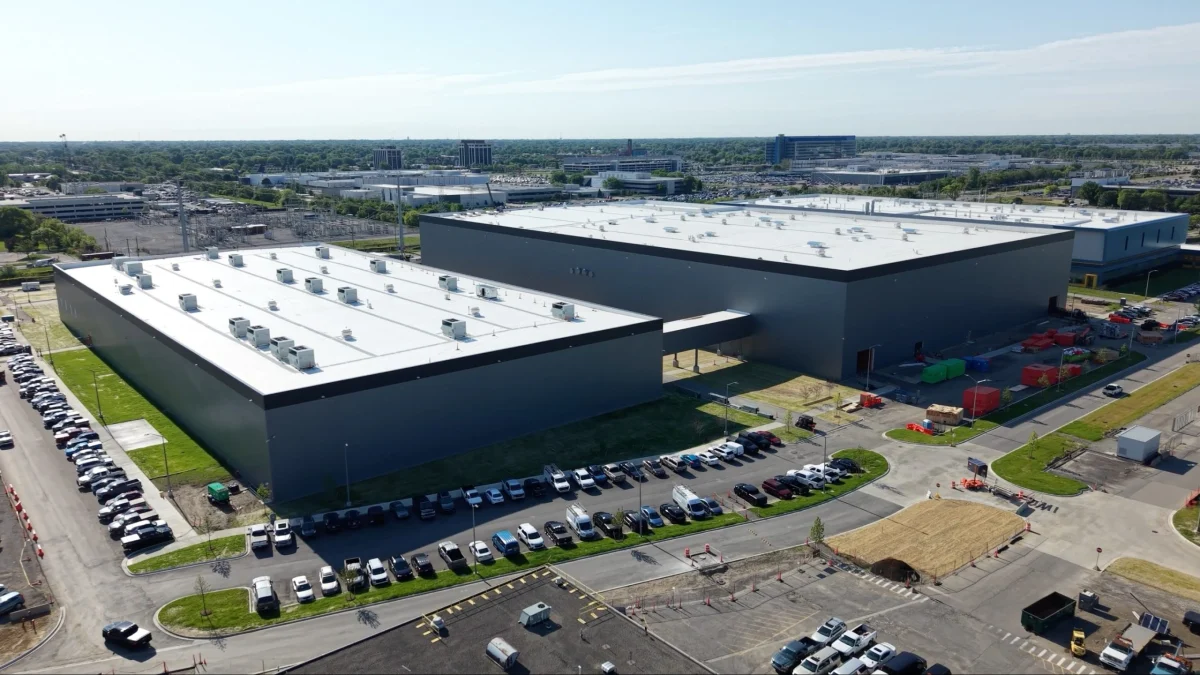
General Motors is making a substantial commitment to the future of electric vehicles, funneling $900 million into advanced battery technology designed to drastically cut costs while preserving crucial driving range. This strategic investment centers on Lithium Manganese Rich (LMR) batteries and the establishment of a cutting-edge Battery Cell Development Center located within GM’s sprawling Warren Technical Center, just outside Detroit. This facility is envisioned as the critical nexus connecting the automaker’s intensive research and development efforts with the demands of full-scale production.
The Drive for Affordable Electrification
The automotive industry is in the midst of a profound transformation, with electric vehicles (EVs) at its forefront. For decades, internal combustion engines (ICE) dominated, but growing environmental concerns, shifting consumer preferences, and evolving regulatory landscapes have accelerated the pivot towards electrification. General Motors, a titan of American manufacturing with a history stretching back over a century, has publicly committed to an all-electric future, aiming to phase out gasoline-powered cars entirely from its light-duty lineup by 2035. This ambitious goal necessitates overcoming several significant hurdles, paramount among them being battery cost and performance.
Historically, battery costs have been a major barrier to widespread EV adoption. The materials, manufacturing processes, and complex supply chains involved in producing high-capacity lithium-ion batteries have kept sticker prices higher than comparable ICE vehicles, even with government incentives. GM’s $900 million initiative directly targets this challenge, signaling a focused effort to make EVs more accessible to the mainstream consumer. The LMR battery chemistry represents a promising avenue for achieving this. Unlike the more common nickel-manganese-cobalt (NMC) or lithium iron phosphate (LFP) chemistries, LMR batteries aim to increase energy density by leveraging a higher proportion of manganese, a more abundant and less expensive material than nickel or cobalt. This shift could yield substantial cost savings without compromising the range that consumers have come to expect from modern EVs.
Kurt Kelty, GM’s Vice President of Battery and Sustainability, offered fresh insights into this initiative, emphasizing how the new chemistry is expected to maintain impressive range while significantly reducing manufacturing expenses. For instance, the projected impact on a vehicle like the Chevrolet Silverado EV is considerable, with estimates suggesting a potential reduction in cost of up to $6,000. Such a price cut could be a game-changer, positioning GM’s electric trucks and SUVs more competitively against traditional gasoline-powered alternatives and rival EV offerings. This move is not merely about technological advancement; it’s a strategic play to capture a larger share of the rapidly expanding EV market by addressing one of consumers’ primary concerns: affordability.
A New Hub for Battery Innovation
The new Battery Cell Development Center at the Warren Technical Center is more than just a research lab; it’s a strategic asset. By bringing critical battery R&D and early-stage production validation in-house, GM gains greater control over the development cycle, accelerates innovation, and can more quickly integrate new battery technologies into its vehicle platforms. This centralized approach fosters collaboration between scientists, engineers, and manufacturing specialists, ensuring that theoretical breakthroughs can be practically implemented at scale. This vertically integrated strategy contrasts with models where automakers rely heavily on external battery suppliers for core technology, potentially giving GM a competitive edge in intellectual property and manufacturing efficiency.
The history of GM’s battery development has seen various iterations, from the groundbreaking but ultimately short-lived EV1 in the late 1990s to the more recent Chevrolet Bolt EV, which faced its own challenges, including a costly recall related to battery defects. These experiences have underscored the critical importance of robust battery technology and a secure supply chain. The Ultium battery platform, announced in 2020, marked a significant turning point, designed as a modular, scalable architecture to power a wide range of future GM EVs, from compact cars to heavy-duty trucks. The LMR battery push and the new development center are logical extensions of the Ultium strategy, aiming to continuously improve the platform’s cost-effectiveness and performance. The success of this investment will be crucial for GM’s overarching electrification strategy, influencing not only its market share but also its long-term financial health and its position as a leader in the evolving automotive landscape.
Artificial Intelligence: Accelerating Vehicle Development
Beyond battery technology, General Motors is also heavily investing in artificial intelligence (AI) to revolutionize its vehicle development process. AI’s role at GM extends far beyond a mere supporting function, becoming an integral part of speeding up the entire product cycle. Sterling Anderson, GM’s Chief Product Officer, and Jason Fischer, Executive Director of Virtual Integration Engineering, highlight the transformative impact of AI within the company.
GM is deploying a hybrid approach, leveraging both external AI models and sophisticated proprietary systems developed in-house. These AI tools are being applied across vast segments of the business, from design and engineering to manufacturing and quality control. By simulating complex scenarios, optimizing component designs, and predicting potential issues before physical prototypes are even built, AI can dramatically reduce the time and resources required to bring new vehicles to market. This acceleration of the development cycle is a critical competitive advantage in an industry where speed to market can dictate success. Furthermore, AI-driven insights can lead to more efficient vehicle architectures, improved safety features, and enhanced user experiences, ultimately benefiting both the company and its customers. The ability to iterate rapidly and make data-driven decisions based on AI analysis positions GM to respond more agilely to market demands and technological shifts.
Market Dynamics and Investment Trends
The broader mobility sector continues to be a hotbed of innovation and significant capital flows, reflecting the rapid pace of technological change and evolving consumer demands.
High-Stakes Deals Shaping the Future
One of the most anticipated financial events on the horizon is the potential initial public offering (IPO) of SpaceX, an enterprise whose valuation and market impact could rival the scale of the decade’s largest public debuts. While such a move promises substantial returns for bankers and CEO Elon Musk, it also carries significant implications for existing Tesla shareholders. Public companies undergoing an IPO often file numerous amendments to their S-1 registration documents, and a recent amendment by SpaceX included a notable sentence under its risk factors: "We may issue a significant amount of equity in connection with future transactions." While this could signal a variety of strategic acquisitions, market analysts, including senior reporters, have speculated that a major M&A target could be Tesla. Such a move would undoubtedly prepare future investors for the possibility of a substantial dilution event, consolidating more of Musk’s ventures under a single public entity.
In another intriguing development, online used car retailer Carvana has forged a potential deeper alliance with Slate Auto, an electric vehicle startup backed by Amazon founder Jeff Bezos. Documents indicate that Carvana has secured an option to invest in Slate Auto, hinting at a strategic pivot or expansion for Carvana into new car sales, specifically within the burgeoning EV market. This partnership could provide Slate Auto with crucial distribution channels and financial backing, while offering Carvana a pathway into the direct sale of new electric vehicles, diversifying its business model beyond pre-owned inventory.
Beyond these high-profile movements, the venture capital landscape continues to fuel innovation across various segments of mobility and defense technology. Layup Parts, a startup aiming to create an "Amazon for composite parts," successfully raised $42 million in a Series A funding round. This investment underscores the growing demand for efficient, scalable supply chain solutions in advanced manufacturing. Meanwhile, Mach Industries, a three-year-old defense tech startup with five autonomous vehicles currently in development, secured a staggering $300 million in Series C funding, pushing its valuation to $1.8 billion—a fourfold increase in just one year. This surge reflects the intensifying global focus on defense innovation and the rapid adoption of advanced autonomous systems in military applications. In Eastern Europe, Polish-Ukrainian startup Molfar Defence Technologies, specializing in anti-drone radar systems, closed the first tranche of a €2 million funding round, with Swedish investor Front Ventures committing €1.5 million. This investment highlights the critical need for advanced defensive technologies in conflict zones. Lastly, Spiro, an African electric mobility startup, raised $215 million, bringing its valuation close to unicorn status. This significant capital injection points to the immense growth potential for sustainable transportation solutions in emerging markets, addressing both environmental concerns and infrastructural challenges.
Mobility Insights and Industry Developments
The broader mobility ecosystem is characterized by a continuous stream of developments, ranging from the operational expansion of autonomous vehicle services to the evolving strategies of e-bike manufacturers and the innovative re-use of EV components.
Avride, an autonomous vehicle startup, has demonstrated impressive growth, completing 60,000 trips for Uber riders in Dallas since its December launch. The company’s fleet, including test vehicles and Uber robotaxis, has collectively covered over 1.3 million miles, with a remarkable million miles accumulated within the first five months of 2026 alone. These statistics underscore the accelerating deployment and increasing reliability of robotaxi services in select urban environments.
In the competitive e-bike market, Lectric eBikes has defied industry trends, launching its third brand in six months after investing approximately $10 million. While many venture capital-backed e-bike startups have faltered or gone bankrupt, Lectric’s bootstrapped model and focus on affordability and direct-to-consumer sales have allowed it to thrive, offering a compelling case study in sustainable business growth within a volatile sector.
Uber’s annual Lost & Found Index continues to offer a fascinating, often humorous, glimpse into rider behavior, now also detailing items left in its burgeoning robotaxi fleet. This initiative coincides with Uber’s broader strategy to deepen its engagement with the autonomous vehicle industry, evidenced by its plan to deploy 500 data-collection vehicles this year as part of its new AV Labs division. This move highlights Uber’s intent to gather crucial data for future autonomous ride-hailing operations, asserting its position in this nascent but rapidly expanding market.
Waymo, Alphabet’s self-driving technology company, also made headlines with several key developments. A Waymo robotaxi was notably involved in a burglary incident in San Francisco, which unexpectedly shed light on the company’s protocols for handling rider footage and privacy. In a more environmentally conscious move, Waymo announced a partnership with B2U to repurpose batteries from its retired all-electric robotaxis, converting them into stationary energy storage units to support electricity grids in California and Texas. This initiative exemplifies the growing trend of giving EV batteries a "second life," enhancing sustainability and contributing to grid stability. Meanwhile, Toyota’s growth fund, Woven Capital, announced promotions within its leadership, signaling continued investment in innovative startups across the mobility spectrum, reinforcing the strategic importance of venture capital in shaping future transportation.
Reviewing Subaru’s Evolving EV Offering: The 2026 Solterra
As Subaru introduces new electric vehicle models, revisiting its original all-electric offering, the Solterra, provides valuable context. The Solterra, a product of a collaborative effort between Toyota and Subaru to develop a dedicated battery electric vehicle platform, has received notable updates for its 2026 model year, enhancing its appeal in an increasingly competitive market.
The 2026 Subaru Solterra, starting at $38,495 for the premium trim, builds upon its initial foundation, addressing earlier criticisms regarding performance and range. While its exterior might have inspired a playful comparison to a "mini golf cart" by a smart home camera, the vehicle’s functional improvements are significant. It’s not designed to challenge the blistering acceleration of a Tesla, Lucid, or Porsche Taycan, but rather to offer a reliable, capable electric crossover aligned with Subaru’s brand ethos of ruggedness and all-wheel-drive capability.
Key enhancements for the 2026 model include updated front and rear motors, paired with a new controller that refines power distribution and overall control. This results in an improved output of 233 horsepower, with an XT trim boosting performance to 388 horsepower. Reflecting industry-wide standardization, the Solterra now incorporates an integrated North American Charging Standard (NACS) port, aligning with Tesla’s widely adopted charging infrastructure. Critically, the EPA-estimated range has increased to 288 miles. This improvement is particularly noteworthy given that Subaru achieved it with only a modest 2 kWh increase in battery capacity, suggesting significant efficiency gains in the powertrain and battery management systems. Additionally, a new preconditioning setting prepares the battery for charging, substantially reducing charging times and improving convenience for owners.
Inside, the technological interface has also received a refresh. The 2026 Solterra features a larger 14-inch touchscreen display, seamlessly integrating popular smartphone platforms like Apple CarPlay and Android Auto. Wireless 15W smartphone chargers are now standard, catering to the expectations of modern drivers. One distinctive characteristic of the Solterra, which might differentiate it from some mainstream EVs, is its approach to regenerative braking. Unlike many electric vehicles that offer "true" one-pedal driving, allowing the vehicle to come to a complete stop simply by lifting off the accelerator, the Solterra utilizes steering wheel-mounted paddles to adjust the level of regenerative braking. While this might not appeal to seasoned EV drivers accustomed to one-pedal functionality, it could be a deliberate design choice aimed at easing the transition for consumers moving from traditional gasoline-powered cars, providing a more familiar driving experience. This nuanced approach highlights Subaru’s strategy to balance EV innovation with user familiarity, broadening its appeal to a wider demographic of car buyers.