Amir Mahmud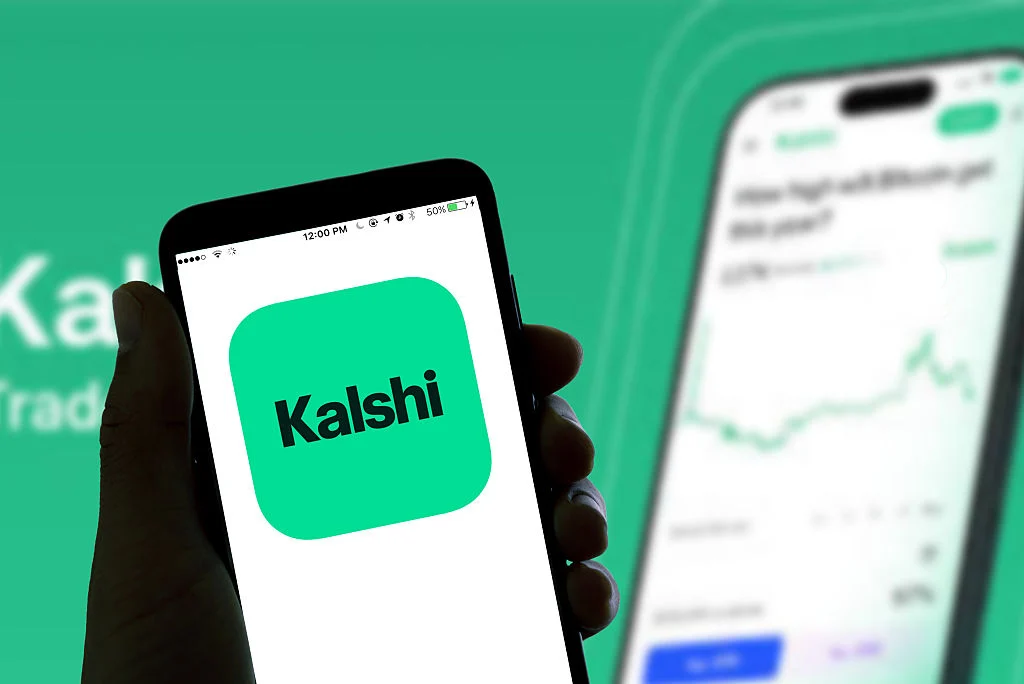
A prominent player in the burgeoning prediction market industry, Kalshi, has initiated a legal challenge against streaming giant Netflix, demanding the immediate removal of the promotional trailer for its upcoming documentary, "Instadocs: The Prediction Games." The New York-based platform asserts that the trailer is not only "defamatory" but also contains "fabricated documents and false and misleading statements," raising serious questions about journalistic integrity in the rapidly produced documentary series. This dispute casts a spotlight on the complexities of accurately portraying novel financial instruments and the rigorous regulatory environment they navigate.
Understanding Prediction Markets: A Primer
To fully grasp the nature of this controversy, it is essential to understand what prediction markets are and how they operate. Unlike traditional gambling, prediction markets allow users to trade contracts based on the outcome of future events. These events can range from political elections and economic indicators to scientific breakthroughs and cultural phenomena. Participants buy and sell "shares" representing the probability of a specific outcome, with prices fluctuating based on collective sentiment and information. For instance, a contract predicting a "Yes" outcome for an event trading at $0.75 suggests a 75% perceived probability of that event occurring. If the event happens, the contract settles at $1.00; if it doesn’t, it settles at $0.00.
Advocates of prediction markets argue they serve as powerful tools for aggregating dispersed information, often providing more accurate forecasts than traditional polling or expert opinions. They function on the principle of the "wisdom of crowds," where the collective knowledge of a diverse group tends to be more reliable than individual assessments. Businesses, policymakers, and researchers have shown interest in prediction markets for their potential to forecast trends, assess risks, and even inform strategic decisions. However, critics often blur the lines between these sophisticated forecasting tools and outright gambling, leading to a complex regulatory environment.
The Regulatory Landscape and Kalshi’s Specifics
The legal and operational framework for prediction markets in the United States is particularly intricate, often falling under the purview of the Commodity Futures Trading Commission (CFTC). The CFTC regulates futures and options markets, and its involvement with prediction markets stems from classifying certain event contracts as derivatives. Kalshi, central to this dispute, distinguishes itself as a CFTC-regulated exchange, authorized to list "event contracts" for trading. This distinction is crucial, as it positions Kalshi as a regulated financial exchange rather than an unregulated betting platform. The company has invested heavily in ensuring compliance with federal financial regulations, a stark contrast to some decentralized or offshore prediction markets that operate with less oversight.
Kalshi’s journey has involved navigating this complex regulatory maze, demonstrating a commitment to legitimacy within the financial sector. This includes a robust "know your customer" (KYC) process, anti-money laundering (AML) protocols, and limitations on contract types to avoid being classified solely as a gambling enterprise. However, even with federal approval, state-level regulations can introduce additional hurdles. A significant factor in the current controversy is Kalshi’s temporary ban from operating in Nevada, a decision stemming from a court order issued on March 20, 2026. This state-specific prohibition highlights the patchwork nature of financial regulation in the U.S., where an entity federally approved might still face restrictions at the state level, particularly in jurisdictions sensitive to gambling activities. This ban is pivotal to Kalshi’s claims against Netflix, as it forms the basis for the alleged "misleading" depiction in the documentary trailer.
Netflix’s "Instadoc" series, under which "The Prediction Games" falls, is characterized by its rapid production cycle, aiming to deliver timely documentaries on trending topics. This format, while allowing for quick public engagement, also presents inherent challenges regarding deep investigative journalism and thorough fact-checking, especially when dealing with nuanced subjects like financial regulation and emerging technologies.
The Core of the Controversy: A Misleading Visual?
At the heart of Kalshi’s complaint is a specific sequence within the trailer for "Instadocs: The Prediction Games." The promotional video prominently features footage from a gathering dubbed the "Winible World Cup Watch Weekend," held in Las Vegas on July 17, 2026. During this event, individuals celebrating the World Cup final are depicted discussing their financial gains from prediction markets, with one attendee explicitly stating, "I like betting on Kalshi." Another individual is shown displaying what appears to be a $5,000 bet on their phone.
Kalshi alleges that this visual evidence, while seemingly authentic, is presented in a context designed to mislead viewers. According to the company’s cease-and-desist letter, the displayed bet screenshot is not a live wager made during the Las Vegas event in July 2026. Instead, Kalshi claims the screenshot dates back to May 16, 2025 – a full year and two months before the filming took place and, crucially, before the Nevada court order that banned Kalshi from operating within the state. Kalshi contends that by juxtaposing the outdated screenshot with footage from the 2026 Las Vegas gathering, Netflix "misled its millions of customers into believing this individual was able to successfully trade sport event contracts in Nevada on July 19, 2026," implying an active operation in a prohibited jurisdiction.
The company further asserts that it engaged in prior communication with a Netflix employee, during which Kalshi provided evidence demonstrating the inaccuracy of the screenshot’s depiction in the trailer. Kalshi states that the Netflix representative "agreed not to feature the receipt in the documentary when it is released" on Sunday, July 26. However, despite this apparent agreement and Kalshi’s efforts to clarify the facts, the company expresses frustration that Netflix "inexplicably refused to remove the receipt from the trailer currently circulating on the homepage of the Netflix app." This refusal to amend the trailer, even after internal acknowledgment of the factual discrepancy, has intensified Kalshi’s legal stance, leading to the formal cease-and-desist demand.
Netflix’s Defense and Journalistic Integrity
In response to Kalshi’s accusations, a Netflix spokesperson acknowledged to The Hollywood Reporter that the screenshot in question does indeed depict a bet placed in 2025. However, the streaming service firmly denies any fabrication of documentary footage. The spokesperson clarified that the footage was genuinely captured at the Winible World Cup Watch Weekend in Las Vegas on July 17, 2026. They emphasized that "The featured trader with the trade on Spain showed us a screenshot of his bet, that was made in May 2025 prior to any Nevada court order." Netflix’s position is that any specific trades or bets referenced during that weekend are "between the individual and the app in which they placed the trades," thereby attempting to distance itself from responsibility for the historical context of a user’s displayed information.
This defense highlights a critical tension in documentary filmmaking, especially with "fast-turnaround" productions. While Netflix maintains that the footage itself is authentic, the controversy revolves around the interpretation and contextualization of that footage. The argument hinges on whether presenting an old screenshot in a new setting, particularly when it implies current operational capability in a banned region, constitutes a "misleading statement" or even "defamation." For an emerging industry like prediction markets, whose legitimacy is constantly scrutinized, such alleged misrepresentations can have significant reputational and regulatory repercussions.
Journalistic ethics typically demand accuracy and context, especially when dealing with financial products. The question for Netflix will be whether the casual display of an old screenshot, even if genuinely shown by a participant, creates a false impression that warrants a retraction or clarification in a promotional piece. The "Instadoc" format, designed for speed, might inadvertently prioritize narrative flow or engaging visuals over meticulous background checks for every displayed item, inadvertently creating factual ambiguities.
Broader Implications for Emerging Markets and Media
This legal confrontation extends beyond the immediate dispute between Kalshi and Netflix, touching upon broader implications for emerging financial markets, digital media platforms, and public perception.
For prediction markets, which are still fighting for widespread acceptance and regulatory clarity, incidents like this can reinforce skepticism. The perception that these platforms operate in a grey area, or are associated with regulatory non-compliance, can deter potential users and investors. Kalshi, as a CFTC-regulated entity, has a vested interest in maintaining a pristine image of legality and responsible operation. Any suggestion otherwise, particularly from a global media platform like Netflix, could undermine years of effort to establish credibility and differentiate itself from less regulated, gambling-oriented enterprises.
For Netflix and other streaming services increasingly venturing into documentary content, the dispute underscores the ethical responsibilities that accompany their vast reach. In an era of rapid information dissemination and the potential for "fake news" or misleading narratives, the accuracy and contextual integrity of documentaries, even promotional trailers, become paramount. The "Instadoc" model, while innovative, might require enhanced editorial oversight to prevent such controversies, especially when covering complex or sensitive topics. The legal concept of "defamation" can be challenging to prove, requiring demonstration of false statements causing harm. However, the reputational damage and the cost of legal defense alone can be significant for both parties.
Culturally, the incident reflects the increasing convergence of finance, technology, and entertainment. Prediction markets themselves are a form of "gamification" of real-world events, and their portrayal in popular media influences how the public perceives their utility, risks, and legitimacy. How Netflix ultimately handles Kalshi’s demand, whether through a retraction, an amended trailer, or a protracted legal battle, will set a precedent for how streaming platforms manage content related to new, often controversial, industries.
Looking Ahead: The Future of Prediction Markets and Documentary Ethics
As the documentary "Instadocs: The Prediction Games" nears its scheduled release on July 26, the industry watches closely to see if Netflix will bow to Kalshi’s demands or stand firm on its portrayal. The outcome could influence future interactions between emerging tech companies and media producers, particularly concerning the delicate balance between engaging storytelling and factual accuracy.
This episode serves as a powerful reminder of the imperative for media platforms to exercise due diligence, especially when venturing into territories that are both cutting-edge and subject to intense regulatory scrutiny. For prediction markets like Kalshi, the battle is not just about a trailer; it’s about safeguarding their reputation and affirming their identity as legitimate financial instruments, rather than mere extensions of the betting industry. The resolution of this dispute will undoubtedly shape the narrative around prediction markets and the standards for their depiction in popular culture for years to come.