Amir Mahmud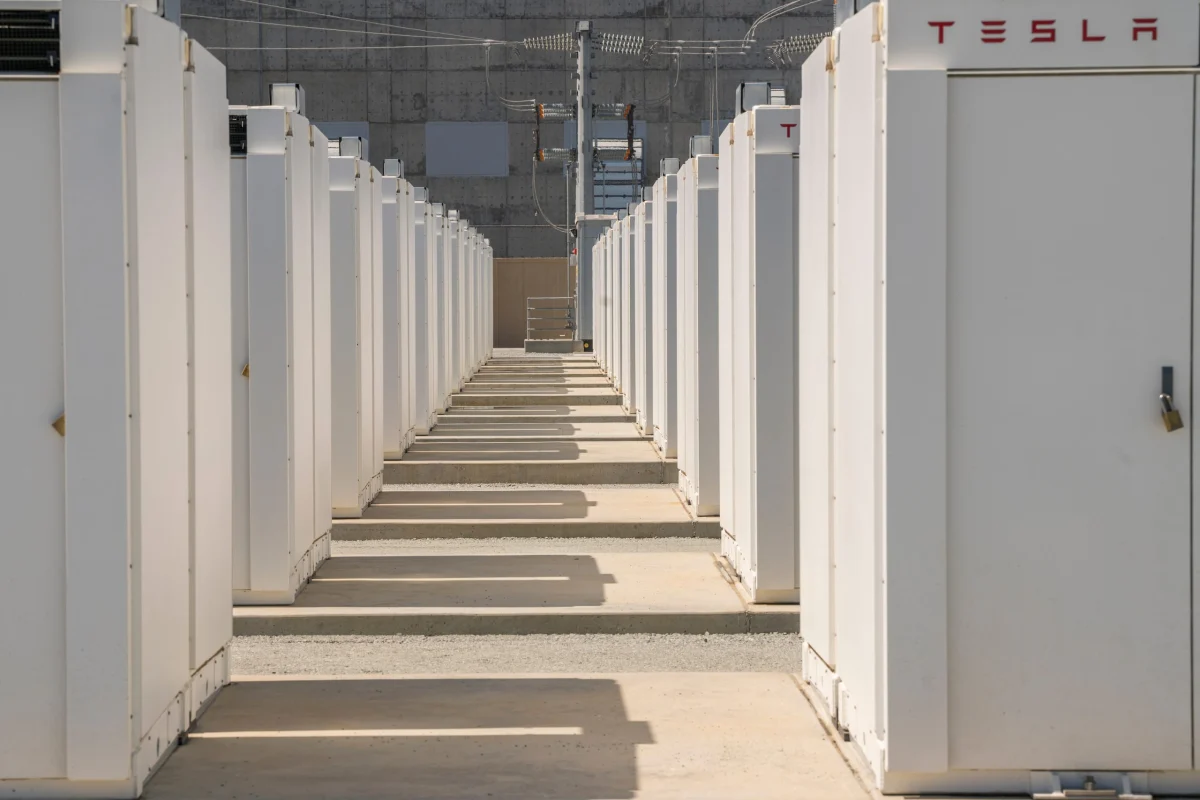
SpaceX has made a substantial financial commitment to bolstering its energy infrastructure, evidenced by its significant acquisition of Tesla Megapack battery storage systems. The aerospace company’s recent regulatory filings reveal an expenditure of $295 million on these industrial-scale batteries during the second quarter alone, contributing to a total of $329 million in purchases for the current year. This considerable investment underscores a strategic move to ensure robust, reliable power for its burgeoning operations, particularly the intensive demands of its artificial intelligence division, xAI.
The Scale of Inter-Company Investment
This latest disclosure provides a clear illustration of the deep financial and operational interconnectedness within the constellation of companies helmed by Elon Musk. As the chief executive and largest shareholder of both SpaceX and Tesla, Musk’s leadership facilitates a unique ecosystem where one entity’s technological prowess directly supports another’s growth. The Megapack purchases are not an isolated incident but rather a continuation of a pattern of strategic asset deployment across Musk’s enterprises.
Prior to its merger with SpaceX earlier this year, xAI had already made significant investments in Tesla’s energy solutions, acquiring $430 million worth of Megapacks specifically for its data centers. This earlier outlay, which included an initial $34 million in the first quarter of this year before the consolidation, demonstrates a consistent and escalating demand for high-capacity energy storage. Beyond batteries, SpaceX’s regulatory filings also indicated the acquisition of $131 million worth of Tesla Cybertrucks at manufacturer’s suggested retail price by December 2025, suggesting a broader integration of Tesla products into SpaceX’s logistical and operational frameworks.
Understanding the Megapack Advantage
At its core, the Tesla Megapack is a utility-scale battery storage system designed to provide critical energy solutions for large commercial and industrial applications, as well as grid support. Each unit is a self-contained battery enclosure capable of storing over 3 megawatt-hours (MWh) of energy and providing up to 1.5 megawatts (MW) of power. These systems are engineered for rapid deployment and scalability, making them ideal for projects requiring substantial, reliable power delivery.
The evolution of Tesla Energy, the division responsible for the Megapack, traces back to the company’s broader mission to accelerate the world’s transition to sustainable energy. Launched officially in 2015 with products like the Powerwall for residential use and the Powerpack for commercial applications, Tesla quickly identified a significant market need for large-scale energy storage. The Megapack, introduced in 2019, represented a leap forward, specifically targeting the utility sector and large-scale industrial consumers like data centers, which require immense power capacity and resilience. These batteries are designed to integrate seamlessly with renewable energy sources, store excess generation, and stabilize grids by managing supply and demand fluctuations.
Powering the AI Revolution: A Critical Need
The substantial investment in Megapacks by SpaceX and its former AI subsidiary, xAI, is directly linked to the insatiable and complex power demands of modern artificial intelligence data centers. Training and operating advanced AI models, particularly large language models and generative AI systems, require an unprecedented amount of computational horsepower, which in turn necessitates vast quantities of electricity. Unlike traditional data centers with relatively stable power profiles, AI data centers exhibit highly variable power consumption patterns.
The graphic processing units (GPUs) that form the backbone of AI computation do not draw power consistently. Instead, their energy demand fluctuates dramatically, ramping up intensely during model training phases and then scaling down during periods of lower inference load. These rapid peaks in demand can pose significant challenges for conventional power infrastructure. Local utilities often levy substantial surcharges for exceeding agreed-upon peak demand thresholds, and on-site generators, typically powered by fossil fuels, can struggle to respond instantaneously and efficiently to such volatile requirements.
This is where large-scale battery systems like the Megapack become indispensable. They serve multiple critical functions within an AI data center environment:
- Peak Shaving: By discharging stored energy during peak demand periods, batteries can effectively "shave off" the highest power spikes, reducing the overall peak load drawn from the grid. This not only lowers operational costs by avoiding peak demand charges but also prevents strain on the local electrical infrastructure.
- Backup Power and Grid Stability: While AI data centers often rely on natural gas generators for primary and backup power, batteries offer an immediate, near-instantaneous source of power. In the event of a grid outage or a sudden surge in demand that on-site generators cannot meet fast enough, Megapacks can provide critical power in milliseconds, ensuring uninterrupted operation of sensitive AI workloads.
- Power Quality and Conditioning: The delicate electronics within data centers require a stable and clean power supply. Batteries can help smooth out fluctuations in voltage and frequency, delivering high-quality power that protects equipment and enhances operational reliability.
- Integration with Renewables: Although xAI has relied heavily on natural gas for its data centers, the long-term vision for many tech companies includes a transition to renewable energy. Megapacks are designed to store energy from intermittent sources like solar and wind, allowing data centers to potentially draw more power from clean energy when available and rely on stored battery power during off-peak generation.
The Interwoven Ecosystem of Elon Musk
The strategic acquisitions and mergers within Musk’s portfolio — including xAI’s acquisition of the social media platform X in 2025, followed by SpaceX’s absorption of xAI earlier this year — highlight a deliberate strategy of vertical and horizontal integration. This approach aims to create a self-reinforcing ecosystem where each company’s advancements and resources can be leveraged to benefit others.
SpaceX, primarily known for its advancements in rocketry and satellite internet (Starlink), has an inherent need for robust power infrastructure at its launch sites, manufacturing facilities, and ground stations. As it expands into hosting critical AI operations through xAI, its energy demands only multiply. Tesla, with its expertise in electric vehicles and large-scale battery technology, becomes a natural internal supplier. This synergistic relationship reduces reliance on external vendors, potentially streamlining procurement, reducing costs through internal transfers, and ensuring a consistent supply of critical components tailored to specific needs.
However, this intricate web of interconnected companies also raises questions regarding corporate governance and potential conflicts of interest. While the benefits of synergy are clear, the arms-length nature of these transactions, particularly in terms of pricing and allocation of resources, often comes under scrutiny from external shareholders and regulatory bodies. The reported acquisition of Cybertrucks at manufacturer’s suggested retail price by SpaceX, for instance, implies a standard commercial transaction, but the sheer volume and strategic nature of these internal deals are distinctive.
Broader Market and Environmental Implications
SpaceX’s significant investment in Megapacks also reflects broader trends in the energy storage market, which is experiencing exponential growth driven by the global push for decarbonization and the increasing demand for grid resilience. The market for utility-scale battery storage is projected to expand dramatically over the next decade, with companies like Tesla, Fluence, LG Energy Solution, and BYD competing for market share. Tesla’s Megapack, with its integrated design and proven performance in various large-scale projects worldwide, holds a prominent position in this competitive landscape.
From an environmental perspective, the use of large battery arrays in data centers presents a nuanced picture. While batteries offer a pathway to integrate more renewable energy and reduce reliance on fossil fuel generators for peak loads, the immediate context for xAI has involved significant reliance on natural gas. Reports of xAI operating dozens of unpermitted gas turbines at a site in Mississippi, near its "Colossus" data center project, underscore the immediate challenges of powering extremely demanding AI operations. These practices raise concerns about local air quality and carbon emissions, even as the battery systems provide a potential bridge to cleaner energy in the future.
The strategic role of Megapacks, in this context, is to mitigate the environmental impact of peak power generation and provide greater flexibility for renewable integration down the line. By smoothing out demand, batteries can allow natural gas generators to operate more efficiently or enable them to be replaced by renewable sources as grid infrastructure evolves. This dual approach—relying on natural gas for baseline power while using batteries for flexibility and peak shaving—reflects the complex transitional phase many energy-intensive industries are navigating.
The Path Forward
The substantial capital expenditure by SpaceX on Tesla Megapacks is more than just a financial transaction; it represents a strategic maneuver to solidify the foundational infrastructure necessary for its ambitious technological pursuits, particularly in the realm of artificial intelligence. As AI models continue to grow in complexity and scale, the energy demands placed on data centers will only intensify. Ensuring a stable, efficient, and increasingly sustainable power supply will be paramount for maintaining competitive advantage and driving innovation.
This ongoing integration within the Musk-led companies signifies a belief in the power of vertical synergy and internal resource leveraging. It illustrates a vision where aerospace, automotive, energy, and artificial intelligence converge, each component strengthening the others. While the path to fully sustainable, high-performance AI infrastructure remains complex, the investment in advanced energy storage solutions like the Megapack positions SpaceX to navigate these challenges, aiming to secure reliable power for the next generation of technological breakthroughs. The implications of these large-scale inter-company dealings will continue to shape discussions around corporate strategy, energy independence, and the environmental footprint of the rapidly expanding digital frontier.




 Azin Asro