Azin Asro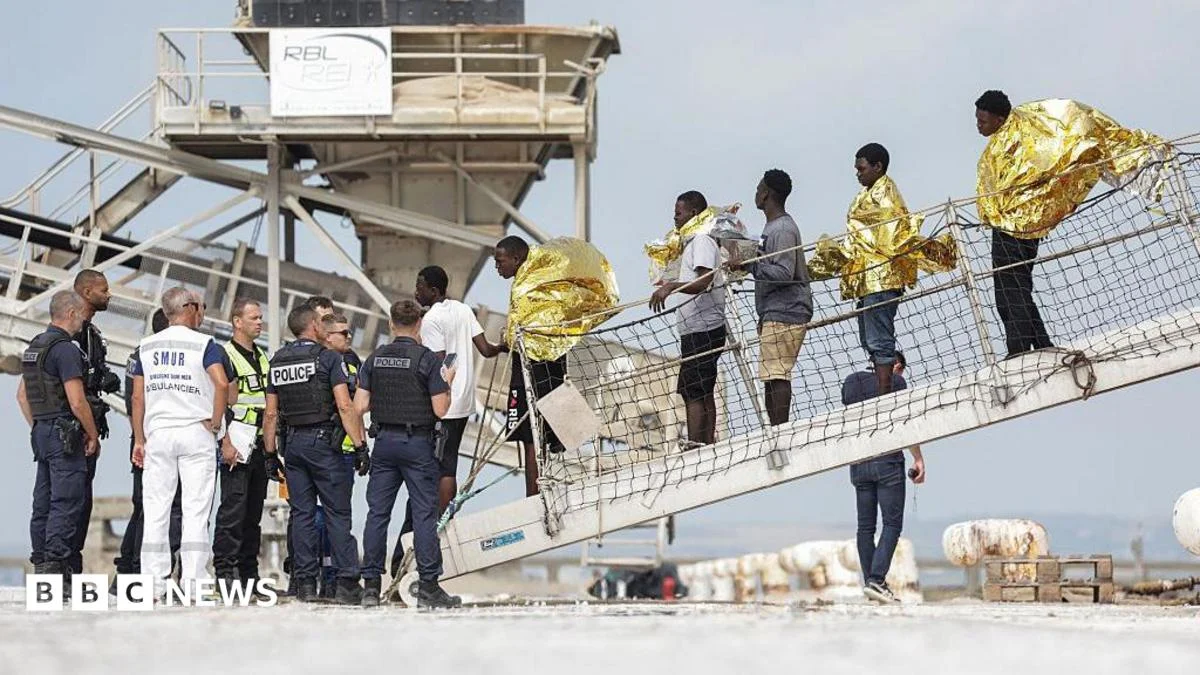
A harrowing incident unfolded in the English Channel on Tuesday morning as a vessel carrying over 170 migrants caught fire, prompting a massive, multi-national rescue effort. The dramatic event underscored the inherent dangers of these clandestine crossings, with British authorities swiftly announcing that all individuals involved would be returned to France following their rescue.
A Harrowing Incident Unfolds
The ill-fated boat, attempting the treacherous journey towards the United Kingdom, experienced a catastrophic engine failure that quickly escalated into a full-blown fire. According to the French maritime prefecture of the Channel and North Sea, the blaze led to a rapid deterioration of the vessel’s structural integrity, placing all aboard in immediate peril. While initial reports indicated 157 individuals were rescued, the figure was later revised upward to 173. Following the complex operation, all survivors were transported to Boulogne-sur-Mer in France, where 11 individuals received medical attention for minor injuries.
French judicial authorities have since launched an investigation into the circumstances surrounding the incident, with an Egyptian national reportedly taken into police custody in connection with the events. This legal action highlights the serious criminal implications often tied to organized people-smuggling operations that facilitate such dangerous voyages.
The unfolding crisis required a coordinated response involving both French and British maritime assets. French rescue boats, along with vessels from the UK, including the Royal National Lifeboat Institution (RNLI) Eastbourne lifeboat and British Border Force vessels BSC Contender and BSC Courageous, converged on the scene. The French maritime prefecture detailed the extensive resources deployed, which included 40 firefighters, 13 police officers, seven interpreters, and numerous medical personnel, all working against time to secure the lives of those in distress. This joint response exemplifies the critical importance of international maritime cooperation in emergencies, regardless of the political sensitivities surrounding migration.
Interestingly, reports from French authorities revealed that the boat had departed from France on Monday night, and earlier in its journey, five individuals had already required rescue. However, the remaining passengers had reportedly refused initial offers of assistance from French patrol boats, demonstrating a resolute determination to reach the United Kingdom, accepting help only when the situation became dire. This phenomenon is not uncommon, as migrants, often under instructions from their smugglers, fear being returned to France and losing their investment in the crossing.
The Perilous Passage
The English Channel, one of the world’s busiest shipping lanes, represents a formidable and often fatal barrier for those attempting to reach the UK illegally by sea. Spanning approximately 21 miles at its narrowest point, the Dover Strait is characterized by strong currents, unpredictable weather, and frigid waters, even in summer. The small, often overcrowded inflatable dinghies or flimsy fishing boats used by smugglers are fundamentally unsuited for such a voyage, making every crossing a gamble with human lives.
The surge in small boat crossings has become a defining feature of irregular migration to the UK in recent years. Historically, migrants attempting to enter the UK illegally would stow away in lorries or ferries, primarily via the port of Calais. However, increased security measures, including enhanced fencing and detection technologies at these major crossing points, effectively pushed smuggling operations towards the maritime route. This shift, which gained significant momentum around 2018-2019, transformed the Channel into a primary conduit for those seeking asylum or economic opportunities in the UK, bypassing official immigration channels.
The motivations behind these perilous journeys are multifaceted. Individuals often flee conflict, persecution, political instability, or dire economic conditions in their home countries. Many embark on long, arduous journeys across continents, viewing the UK as a destination offering safety, a chance for a new life, or the possibility of joining family members already established there. However, the path is fraught with exploitation, as criminal gangs, often referred to as "ruthless gangs" by UK officials, profit immensely from human desperation, charging thousands of pounds for a spot on an unsafe vessel. These organized networks operate with sophisticated logistics, adapting constantly to law enforcement efforts, and showing little regard for the safety of those they transport.
The Complexities of Maritime Rescue
The incident highlighted the intricate legal and ethical dilemmas faced by authorities in the Channel. Under international maritime law, specifically the Safety of Life at Sea (SOLAS) Convention, all vessels, including state vessels, have a legal obligation to render assistance to persons in distress at sea, regardless of their nationality, status, or the circumstances in which they find themselves. This fundamental principle dictates that saving lives takes precedence over border control objectives.
However, the practice of migrants refusing assistance from French authorities, as reported in this case, creates a complex operational challenge. French officials are often in a difficult position: intervening early might save lives but could also be perceived as facilitating illegal crossings, while delaying intervention risks greater tragedy. Their stated policy has been not to intervene in boats that are not in immediate distress, particularly if such intervention might inadvertently put the migrants or rescuers at greater risk, given the "structural fragility" of the vessels. This approach aims to deter crossings by not guaranteeing a "taxi service" to British waters, yet it inevitably leads to situations where assistance is only accepted when lives are hanging by a thread, as tragically demonstrated by the recent fire.
The coordination between UK and French rescue services is a testament to established protocols for maritime emergencies. Despite political tensions over migration, operational cooperation on search and rescue remains robust, driven by the shared humanitarian imperative. Such incidents underscore the need for swift communication, shared intelligence, and seamless logistical integration between the two nations’ coastguard and border protection agencies.
Political Reactions and Policy Debates
The incident immediately reignited the fervent political debate surrounding irregular migration in the UK. Border Security Minister Anna Turley commented that the event "shows the dangers of these illegal crossings and the ruthless gangs behind them," reiterating the government’s commitment to "bearing down on them." This rhetoric is characteristic of the current administration’s stance, which prioritizes disrupting smuggling networks and deterring crossings.
The incident also drew sharp criticism from opposition figures. Shadow Home Secretary Chris Philp stated, "This is why it’s so wrong that French police stand by and do nothing while the illegal migrant boats embark – lives are being risked." His remarks reflect a common frustration among some British politicians regarding the perceived lack of proactive intervention by French authorities to prevent boats from leaving their shores. Meanwhile, Reform UK leader Nigel Farage, a prominent voice on immigration, used the platform to call for an end to the crossings, proposing that his party, if in government, would "deploy the navy to ward off crossings," a controversial policy suggestion that has been debated for its legality and practicality under international law.
These reactions are part of a broader, highly charged political landscape in the UK, where immigration remains a top public concern. The Conservative government, led by Prime Minister Burnham, has repeatedly pledged to halt small boat crossings, a commitment Burnham reiterated during a recent visit to Dover, stating his government would be "relentless" in its efforts. He acknowledged progress but also recognized the need for "a system that offers safe routes for people," a point often raised by human rights organizations and opposition parties. The debate frequently pits the imperative of border security against humanitarian concerns and the legal obligations to asylum seekers.
The Broader Context of Channel Migration
The volume of Channel crossings has fluctuated, with significant peaks and troughs. The year 2022 saw a record number of arrivals, reflecting a critical juncture in the migration patterns. While Home Office figures indicate a roughly 43% decrease in crossings so far this year compared to the same period last year, demonstrating some success in deterrent efforts, the numbers remain substantial. Prime Minister Burnham highlighted that over 2,000 migrants had arrived in the UK on small boats since he took office a fortnight prior, with one day earlier this week seeing 752 arrivals – the busiest day of the year. These figures illustrate the persistent challenge despite a downward trend.
The seasonal nature of these crossings also plays a significant role; most attempts occur during the warmer months when sea conditions are generally calmer, though still unpredictable. This seasonal increase puts immense pressure on border agencies and rescue services during summer and early autumn. Furthermore, small boat crossings have now become the most prevalent method for detecting illegal entry into the UK, surpassing other clandestine routes.
The discourse surrounding migration is not confined to the Channel. Recent events, such as the influx of tens of thousands of migrants into the Spanish exclave of Ceuta, underscore the broader European and global challenges of managing migration flows. These episodes invariably amplify political discussions within the UK, with various parties proposing different solutions: the Conservatives focusing on enforcement, Labour on tackling smuggling and improving processing, and the Liberal Democrats advocating for stronger European relationships and reducing the asylum backlog.
International Cooperation and Persistent Challenges
Recognizing the transnational nature of the issue, the UK and France have repeatedly sought to forge agreements to curb illegal crossings. In April, the two nations signed a significant £662 million (773 million euro) three-year deal. This agreement aimed to bolster French efforts to intercept migrants on their beaches and at sea. Components of the deal included deploying riot-trained police to tackle "hostile crowds" and violence often associated with smuggling operations, alongside substantial investment in surveillance technology, such as drones and two helicopters, to detect and disrupt smuggler activities.
A controversial aspect of the agreement included a provision that up to £100 million in funding could be redirected or withheld after a year if sufficient progress in stopping journeys was not made, although specific targets for the French authorities were not publicly confirmed. This conditional funding mechanism highlights the UK’s desire for tangible results and reflects the ongoing pressure on France to do more to prevent departures from its coastline.
Despite these substantial investments and diplomatic efforts, the fundamental challenges persist. The root causes of migration – global instability, poverty, and conflict – remain largely unaddressed by these bilateral agreements. Moreover, the adaptable nature of criminal smuggling networks means that as one route or method is closed off, another quickly emerges. The incident of the burning boat serves as a stark reminder that even with significant resources and international cooperation, the human element of desperation and the inherent risks of these journeys cannot be entirely eliminated through deterrence alone.
Humanitarian Imperatives Versus Border Control
Ultimately, the incident in the Channel encapsulates the profound tension between a nation’s sovereign right to control its borders and the universal humanitarian obligation to protect human life. While governments are tasked with maintaining national security and managing immigration, the sight of a burning boat filled with vulnerable individuals underscores the moral imperative to prioritize rescue and care.
The repeated emphasis by UK officials on returning migrants to France, even after a traumatic rescue, reflects a policy designed to break the business model of smugglers and deter future attempts. However, critics argue that such policies, without corresponding expansions of safe and legal routes for asylum, only push desperate individuals into even more dangerous avenues, perpetuating the cycle of exploitation and risk.
The tragedy averted in the English Channel on Tuesday is a powerful symbol of the ongoing migration crisis – a complex web of human suffering, geopolitical dynamics, economic disparities, and international law. It calls for comprehensive, long-term solutions that extend beyond immediate enforcement, addressing both the push factors driving migration and fostering more humane and orderly processes for those seeking safety and a better life. Without such holistic approaches, the perilous journeys across the Channel, and the desperate acts they entail, are likely to continue.




 Amir Mahmud