Amir Mahmud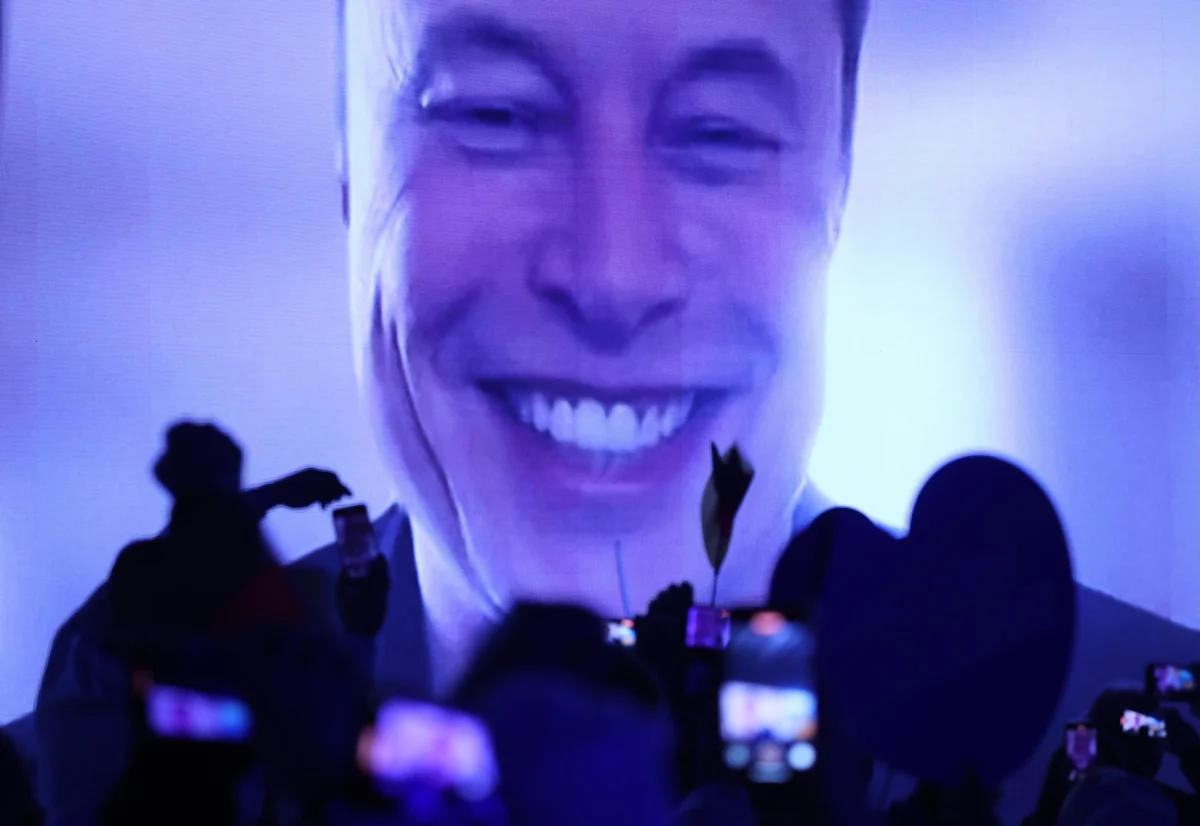
The inaugural public investor call for Space Exploration Technologies Corp. (SpaceX) unfolded with a familiar dynamic, as founder and CEO Elon Musk articulated a series of ambitious, long-range projections that often transcended the more measured assessments presented by his executive team. This conference call, a significant milestone for the aerospace and satellite communications giant, offered a glimpse into the company’s strategic direction and financial outlook as it navigates its transition into the public domain, echoing patterns observed in previous investor engagements for Musk’s other ventures, notably Tesla. The dichotomy between Musk’s grand pronouncements and his colleagues’ more grounded analyses underscored the unique leadership style that has become synonymous with the tech entrepreneur.
Starlink’s Global Internet Ambition
One of the most audacious predictions from the call revolved around Starlink, SpaceX’s burgeoning satellite internet constellation. Musk posited that Starlink could realistically "deliver a majority of the world’s internet" within the next decade, specifically "less than 10 years," across the vast majority of countries where it is permitted to operate. This assertion was made in anticipation of the deployment of Starlink’s "V3" satellites, which promise significantly enhanced bandwidth and capacity compared to their predecessors.
Starlink’s inception was driven by the vision to provide high-speed, low-latency internet access to remote and underserved areas globally, a mission that has resonated deeply in a world increasingly reliant on digital connectivity. Since its first operational satellites were launched in 2019, Starlink has rapidly expanded its constellation, now comprising thousands of spacecraft in low Earth orbit. This extensive network has already demonstrated its utility, notably in conflict zones like Ukraine, where it provided crucial communication links. However, achieving a "majority" of global internet traffic, which implies surpassing 50% of all data flowing across the internet, represents an exponential leap from its current market position. Terrestrial fiber optic and cable networks still form the backbone of global internet infrastructure, especially in urban centers, posing a formidable challenge to any satellite-based system aiming for such dominance.
In contrast to Musk’s expansive outlook, Chief Operating Officer Gwynne Shotwell offered a more conservative, albeit still ambitious, perspective. She stated that the increased capacity from V3 satellites would enable Starlink to provide superior service to an expanding customer base worldwide, eventually representing a "significant portion of global internet traffic." This phrasing, while still highlighting substantial growth, prudently avoids the numerical specificity of "majority," providing a broader scope for interpretation and mitigating potential investor expectations. The market impact of Starlink’s continued expansion is profound, intensifying competition with established telecommunication providers and other emerging satellite internet ventures like OneWeb and Amazon’s Project Kuiper. The societal impact could be transformative, bridging digital divides and fostering economic development in regions historically isolated from reliable internet access. However, challenges persist, including regulatory approvals in diverse national jurisdictions, managing orbital debris, and securing radio spectrum.
The Surging Demand for Compute Services
Another significant revelation from the call pertained to SpaceX’s relatively new venture into renting out compute power, particularly to artificial intelligence (AI) developers. Chief Financial Officer Bret Johnsen highlighted this segment as a substantial generator of fresh, rapid capital for the company. Johnsen presented a carefully constructed financial target, projecting that SpaceX was on a trajectory to achieve an Annualized Revenue Run Rate (ARR) of $100 billion by the end of the year, based on expected revenue in December. He underscored the "less than one-year payback" on new capital deployments for compute and cited recent contracts totaling $6.7 billion in cloud services revenue over a six-month period.
The emergence of SpaceX as a player in the high-performance computing market is an intriguing development, reflecting the broader explosion in demand for AI infrastructure. The AI boom has created an unprecedented scarcity of specialized computing resources, particularly high-end GPUs, leading to a bottleneck in AI development and deployment. Companies like OpenAI, Google, and Meta are voraciously acquiring compute capacity, driving up prices and creating a lucrative market for anyone with available hardware. SpaceX, known for its extensive internal computing needs for rocket design, simulation, and Starlink network management, likely developed significant in-house capabilities that it is now monetizing. This diversification into cloud services positions SpaceX in a highly profitable sector beyond its core aerospace and satellite businesses.
Musk, however, swiftly escalated Johnsen’s carefully hedged projection. He declared the $100 billion ARR by December as "not a question mark," asserting it was a figure the company would achieve "if we basically did nothing" and suggesting it would "probably be higher than that." This characteristic amplification, while potentially energizing to some investors, contrasts sharply with the cautious language typically employed by CFOs to manage financial expectations and adhere to regulatory guidelines for forward-looking statements. While ARR is a common metric in subscription-based businesses, it represents a projection of future revenue based on current contracts, not actual cash received, and its robustness relies on the stability of those contracts. The AI compute market, while hot, is also rapidly evolving, making long-term projections inherently susceptible to market shifts and technological advancements.
Accelerating the Path to Trillion-Dollar Valuation
Beyond the immediate financial targets, Musk also revised SpaceX’s long-term revenue projections, pushing forward the timeline for achieving a trillion dollars in annual revenue. Previously, prior to the IPO, internal projections had aimed for this monumental milestone by 2031. Musk now declared that this target was expected to be met by 2030, with a "non-zero chance of that being in 2029."
To put a trillion dollars in annual revenue into perspective, this figure would place SpaceX among the absolute largest corporations globally, rivaling or even surpassing the revenues of current giants like Walmart or Amazon, which have diversified global operations spanning decades. For a company primarily focused on space transportation and satellite internet, achieving such a scale within a decade necessitates an unprecedented rate of expansion and market penetration across multiple sectors. This trajectory implies not just the continued growth of Starlink and launch services but potentially the realization of more futuristic endeavors such as Mars colonization, space mining, or advanced interplanetary logistics, all of which are part of Musk’s long-term vision for humanity’s multi-planetary future.
Historically, the path to a trillion-dollar valuation (market capitalization) for tech companies like Apple or Microsoft has taken decades, built on successive waves of innovation and market dominance. Achieving a trillion dollars in annual revenue is an even more formidable task. This ambitious timeline reflects Musk’s conviction in the exponential growth potential of SpaceX’s various ventures and perhaps anticipates a future where space-based economies become a significant driver of global GDP. Analysts often interpret such long-range, aggressive targets as a way to galvanize internal teams and attract long-term, visionary investors, even if they appear fantastical in the short term. However, the precise execution of these complex, capital-intensive projects on an accelerated schedule presents considerable engineering, logistical, and financial challenges.
Starship’s Lunar Aspirations and Engineering Hurdles
The discussion also touched upon the critical progress of Starship, SpaceX’s fully reusable super heavy-lift launch system, particularly its role in NASA’s Artemis program. Starship is central to NASA’s plans to return humans to the Moon, having been selected as the Human Landing System (HLS) for the Artemis III mission. A shareholder inquiry about Starship’s development prompted Musk to suggest that the prototype rocket would be ready to fly people by the end of the next year, further claiming that SpaceX would be flying Starship rockets once a day, "or possibly more," by this time next year.
The Artemis program represents a renewed global effort to establish a sustainable human presence on the Moon, with subsequent goals of using lunar missions as a stepping stone for human exploration of Mars. Starship’s promise lies in its unprecedented payload capacity and its intended full reusability, which could dramatically reduce the cost of space access. However, the development of Starship has been marked by a series of ambitious test flights, some of which have ended in spectacular explosions, highlighting the immense engineering complexities involved in creating such a revolutionary spacecraft. Achieving daily Starship flights, especially with human crews, within a year would represent an extraordinary acceleration of its development and operational tempo. For context, even highly reliable, proven rockets like the Falcon 9 launch on average a few times per week, not daily.
Gwynne Shotwell once again provided a more pragmatic framing, immediately following Musk’s comments on human flight. She clarified that SpaceX’s focus remains on fulfilling NASA-mandated milestones and offered a more general, yet still ambitious, goal: "we want to put boots on the ground, boots on the moon, in 2028." This distinction between Musk’s implied readiness for human flight by next year and Shotwell’s 2028 lunar landing aspiration highlights the difference between an aspirational development timeline and a mission-oriented operational target that must satisfy stringent human-rating requirements.
A crucial element for Starship’s reusability and safety is its heat shield, designed to protect the spacecraft during re-entry into Earth’s atmosphere. The company had recently completed a Starship test flight that splashed down intact in the Indian Ocean, reportedly showing promising results for the improved heat shield. However, even before the rocket stage had been fully recovered and meticulously analyzed, Musk declared the "heat shield problem solved at this point." While a successful test is a positive indicator, aerospace engineering typically requires extensive data analysis, multiple successful repetitions, and rigorous validation before a critical component’s challenges are definitively declared "solved," especially for human-rated missions where safety margins are paramount.
Navigating Public Scrutiny and Regulatory Frameworks
Musk’s history is replete with bold predictions for SpaceX, some of which, like his 2016 assertion of landing humans on Mars within six years, have yet to materialize. The transition of SpaceX into a public company, or at least operating under the scrutiny akin to one, introduces a new layer of accountability. Publicly traded companies and their executives are subject to regulations from bodies like the Securities and Exchange Commission (SEC), which mandate transparent and accurate disclosures to protect investors from misleading statements. Forward-looking statements, while allowed, typically come with disclaimers and are expected to have a reasonable basis.
However, the regulatory landscape has evolved. Recent reports suggest a pullback in corporate enforcement actions by both the SEC and the Department of Justice, potentially creating an environment where aggressive corporate projections face less immediate federal scrutiny. Furthermore, SpaceX’s decision to incorporate in Texas could potentially offer it certain advantages in defending against civil lawsuits from investors, as corporate laws can vary significantly by state. This strategic choice may provide a degree of insulation against the legal repercussions typically associated with missed financial targets or unfulfilled promises in the public market.
The recurring pattern of a visionary leader making grand, sometimes exaggerated, claims, while executives attempt to anchor those visions in operational and financial reality, is a defining characteristic of Musk’s corporate leadership. While this approach can inspire innovation and attract significant capital, it also presents a delicate balance between audacious ambition and the practicalities of execution and regulatory compliance. For investors, understanding this dynamic is crucial for evaluating SpaceX’s prospects and discerning between aspirational goals and achievable milestones as the company continues its groundbreaking journey in the commercial space sector.