Amir Mahmud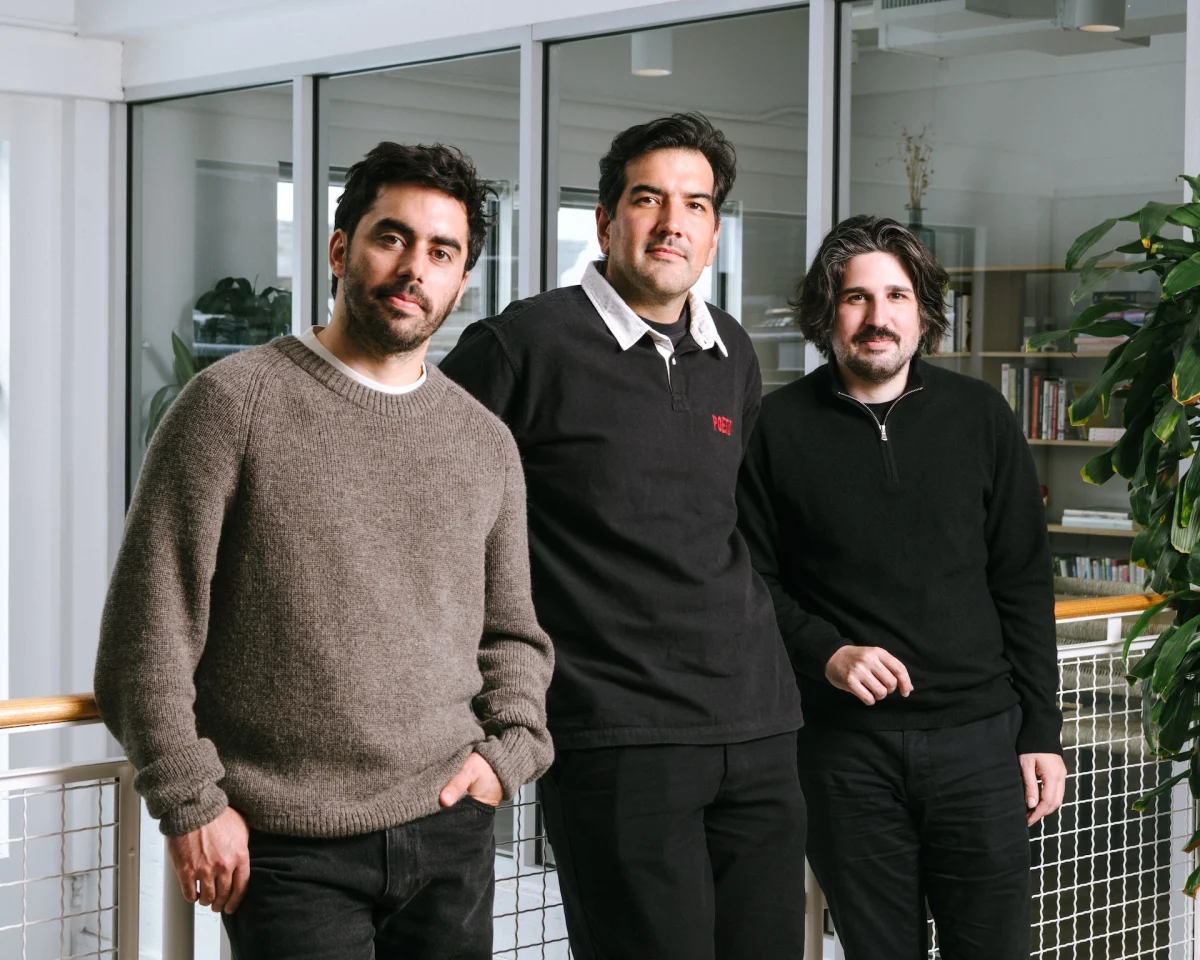
In the rapidly evolving landscape of artificial intelligence, a distinctive New York-based startup named Runway is charting an unconventional course, aiming to fundamentally redefine the very nature of AI intelligence. Unlike many of its Silicon Valley counterparts, Runway eschews the typical narrative of founders from elite computer science programs or vast nine-figure seed rounds designed to insulate them from early revenue pressures. Instead, its three founders—two from Chile, one from Greece—converged at New York University’s Tisch School of the Arts, a background that has arguably imbued their venture with a unique blend of artistic sensibility and technological ambition.
While much of the AI industry, particularly over the past several years, has heavily invested in the premise that intelligence primarily resides in language—a belief exemplified by the rise of large language models (LLMs) like OpenAI’s ChatGPT and Anthropic’s Claude—Runway is placing its bets on a different foundation. This startup posits that the next paradigm of AI intelligence will not emerge from text-based learning, but rather from video and "world models" that grasp the intrinsic mechanics of how the world operates, moving beyond mere human descriptions of it. This distinction, though seemingly academic, carries profound implications for the future trajectory of AI development and its potential applications across diverse sectors.
A Different Pedigree in the AI Landscape
Runway’s origins stand in stark contrast to the often-homogenous startup culture of Silicon Valley. Its co-founders, Cristobal Valenzuela, Anastasis Germanidis, and Alejandro Matamala Ortiz, met in 2016 at NYU’s Interactive Telecommunications Program (ITP), a graduate program Valenzuela aptly described as an "art school for engineers." Germanidis, who cultivated a passion for programming from an early age in Athens, initially pursued neuroscience and film before returning to computer science, intentionally stepping away from the Silicon Valley environment he found culturally limiting. Valenzuela, hailing from Santiago, Chile, studied economics and worked in film before transitioning to software. Matamala Ortiz, also from Santiago, brought a background in advertising and design.
This diverse cultural and academic melting pot, away from the traditional tech hubs, fostered an environment of independent thought and scrappiness. The absence of immediate access to the enormous war chests often afforded to Bay Area startups meant Runway had to prioritize generating revenue from its inception, a discipline that some argue provides a more robust foundation for long-term sustainability. This unconventional beginning, characterized by a multidisciplinary approach and a pragmatic need for self-sufficiency, has allowed Runway to cultivate a distinctive culture that champions rapid innovation and challenges established norms. As early investor Michael Dempsey, managing partner at Compound, noted, this background has enabled the team to be "early, to be right more often than not, and to build a culture that moves incredibly quickly."
Shifting Paradigms: From Language to World Models
The prevailing narrative in AI has been dominated by large language models, which have demonstrated unprecedented capabilities in understanding, generating, and manipulating human language. These models are trained on vast corpora of text data from the internet, effectively distilling existing human knowledge as expressed through written communication. While immensely powerful for tasks ranging from content creation to complex reasoning, this approach inherently limits AI to what humans have articulated.
Runway’s co-founder and co-CEO Anastasis Germanidis champions a different frontier: training models directly on observational data from the world, particularly video. He contends that relying solely on human-generated language data, which reflects our subjective interpretations and biases, creates an inherent ceiling for AI’s understanding. To truly advance beyond current capabilities, Germanidis argues, AI needs to learn how the physical world behaves through direct observation, rather than through secondary linguistic descriptions.
This is where "world models" come into play. These are sophisticated AI systems designed to simulate environments with such fidelity that they can accurately predict how those environments will behave under various conditions. By learning from visual and other sensory data, these models can develop an intrinsic understanding of physics, causality, and interaction—elements that are often implicit or abstracted in language. The companies that successfully harness this observational learning, Germanidis believes, will be the ones that unlock the next generation of AI intelligence. This analytical commentary suggests a profound philosophical shift: from an AI that understands human communication to an AI that understands reality itself, potentially leading to more robust, generalizable, and less biased forms of artificial intelligence.
Foundations in Filmmaking: A Path to Broader Horizons
Founded in 2018, Runway initially carved out its niche by empowering filmmakers with advanced AI tools. The founders, all of whom harbored aspirations of becoming filmmakers at various points, began with a straightforward mission: leveraging AI to make filmmaking accessible to everyone. This led to the development of sophisticated video-generation models, including their latest iteration, Gen-4.5, which allows users to transform text prompts into editable, cinematic content.
The evolution of Runway’s video generation technology has been remarkable. Its first video-generation model, released in February 2023, was a rudimentary precursor to the capabilities seen today. Within a relatively short period, the technology advanced rapidly, prompting the company to refine its mission from simply enabling "everyone a filmmaker" to "everyone a great filmmaker." This rapid improvement underscores the fast-paced innovation characteristic of the AI sector.
Runway’s technology has since become an integral part of production workflows for filmmakers and advertising agencies alike. The company has secured significant deals with major media entities such as Lionsgate and AMC Networks, underscoring its growing influence within the entertainment industry. Notably, Runway’s tools have even been employed in acclaimed films like "Everything Everywhere All At Once," demonstrating the practical and creative utility of generative AI in contemporary cinema. The market impact of such tools is transformative, democratizing access to complex visual effects and animation, potentially reducing production costs, and accelerating creative pipelines. This shift could empower independent creators and allow studios to explore more experimental projects, fundamentally altering how visual content is conceived and produced.
Financially, Runway has experienced significant growth, now boasting a valuation of $5.3 billion. The company reported adding $40 million in annual recurring revenue in the second quarter of 2026, signaling strong market adoption and commercial viability for its existing AI video solutions.
The Grand Ambition: Simulating Reality
Having established a strong foothold in AI video generation, Runway is now actively executing its ambitious pivot towards world models. This strategic expansion commenced with the launch of its first world model in December, with plans for another release within the current year. World models, as previously defined, are AI systems capable of simulating complex environments and predicting their behaviors. This move represents a significant leap from assisting creative endeavors to tackling some of humanity’s most complex challenges.
The near-term applications of physics-aware video models transitioning into world models are already becoming apparent across several sectors. These include interactive entertainment, where AI could generate dynamic and responsive game worlds; gaming, allowing for more realistic and unpredictable virtual environments; and robotics training, where AI can simulate countless scenarios for robots to learn and adapt without real-world risks. Runway has already launched a dedicated robotics unit, with Germanidis confirming real-world testing and deployments underway.
However, the long-term vision extends far beyond these immediate applications. Germanidis views world models as a form of "scientific infrastructure." He envisions a future where training a single model on an expansive array of sensory data and observations—encompassing text, video, voice, and other sensor inputs—could culminate in a working "digital twin of the universe." Such a model would allow scientists to conduct experiments at speeds unimaginable in traditional laboratories, compressing the time required for research and discovery. As Germanidis articulates, much of the scientific process is characterized by waiting for results; if this waiting period could be significantly shortened, the pace of scientific progress itself would accelerate. He posits that if humanity could build an AI capable of being a "better scientist than human scientists," it would profoundly accelerate our understanding of the universe and our ability to solve pressing problems like drug discovery, climate modeling, and even the complexities of anti-aging research, which Germanidis identifies as a personal moonshot goal. This pursuit represents a bold, almost philosophical, quest for universal simulation and understanding.
The High-Stakes Race for General Intelligence
Runway is not alone in its pursuit of world models. The field is rapidly becoming a competitive arena, attracting significant players and substantial investment. Startups like Luma and World Labs are on similar trajectories, developing unified intelligence models and commercial products aimed at creating realistic simulations. Tech giants are also heavily invested, with Google pointing its "Genie" world model in the same direction. Esteemed figures in AI, such as former Meta chief scientist Yann LeCun and "AI godmother" Fei-Fei Li, are also actively engaged in advancing world model research.
The transition from specialized video intelligence to generalized reasoning through world models remains an unproven hypothesis. Kian Katanforoosh, CEO of AI skills benchmarking company Workera and a Stanford lecturer, highlights this critical challenge. While not impossible, making this leap requires immense resources, with compute power being paramount. Runway has forged partnerships with CoreWeave and Nvidia, but whether it possesses the dedicated cluster access—the guaranteed, large-scale compute infrastructure essential for training frontier models—remains an open question. Katanforoosh notes, "How are you going to build a foundational model without a cluster? I don’t think anybody can do that."
The financial landscape of this race further emphasizes the high stakes. Runway has raised an impressive $860 million to date, including a $315 million round in February from strategic partners like AMD Ventures and Nvidia. This funding level is comparable to its immediate competitors: Luma AI has raised around $900 million, and World Labs approximately $1.29 billion, according to PitchBook data. However, these figures pale in comparison to the war chests of industry behemoths. OpenAI, for instance, has raised an estimated $175 billion, while Google’s parent company, Alphabet, commands a market capitalization of $4.86 trillion.
Google, in particular, represents Runway’s most formidable competitor. Its Veo model directly challenges Runway’s established AI video generation business, while its Genie world model targets the same long-term territory Runway is striving to conquer. The intense competition underscores the potential for rapid technological shifts and market consolidation. The recent shutdown of OpenAI’s Sora video platform, reportedly due to astronomical compute costs (estimated at $1 million per day) with minimal revenue, serves as a stark reminder that even with vast resources, success in this domain is not guaranteed. It highlights the immense capital intensity of frontier AI research and development, and the need for a sustainable business model.
Despite these challenges, there are precedents for smaller, agile companies outperforming larger incumbents. Katanforoosh points to AI audio startup ElevenLabs, which has surpassed OpenAI and Google on their own benchmarks despite lacking their scale and pedigree. Runway’s founders believe their non-Silicon Valley background and "scrappier" culture provide a similar edge, fostering diversity of thought and a relentless drive for innovation. Michelle Kwon, Runway’s chief operating officer, affirms that the company is not currently in a rush to raise additional funds, even as compute demands continue to escalate with scale.
Ultimately, Runway’s journey is a testament to the power of vision and a willingness to challenge established norms. Valenzuela’s personal philosophy, inspired by the Chilean poet Nicanor Parra, emphasizes that "rules are just rules they invented," advocating for a rejection of conventional wisdom and a willingness to "scrub them all and start again." This ethos permeates Runway’s approach to AI development, positioning it as a significant, albeit audacious, player in the global pursuit of next-generation artificial intelligence. Whether its bet on world models will pay off, transforming everything from filmmaking to scientific discovery, remains to be seen, but its trajectory has certainly captured the attention of the tech world.







 Azin Asro