Amir Mahmud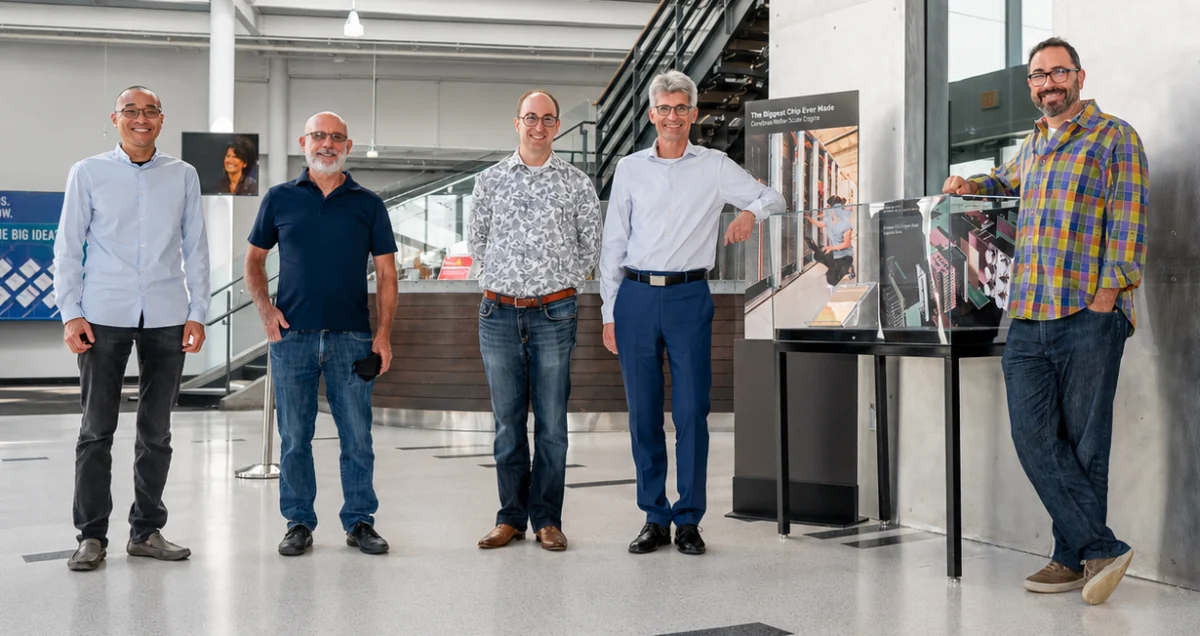
The recent blockbuster initial public offering of Cerebras Systems, which saw the artificial intelligence chip maker debut as a $60 billion public entity and elevate its co-founders to billionaire status, stands as a testament to audacious vision and relentless engineering. Now a formidable supplier of AI inference chips to industry titans like OpenAI and AWS, the company’s path to success was far from linear, marked by a harrowing period in 2019 where it teetered on the precipice of financial collapse, incinerating millions in a desperate bid to solve an intractable technical puzzle.
The Genesis of a Grand Vision
Cerebras Systems was founded in 2015 by a team of seasoned entrepreneurs, including CEO Andrew Feldman, Gary Lauterbach, Michael James, Sean Lie, and Jean-Philippe Fricker. This wasn’t their first rodeo; the same core group had previously built and successfully sold SeaMicro, a pioneering cloud server startup, to AMD for a reported $334 million in 2012. Their prior success in challenging established hardware paradigms imbued them with both the confidence and the capital to tackle an even more ambitious undertaking. They entered an emerging market defined by the burgeoning demands of artificial intelligence, a field rapidly outgrowing the capabilities of general-purpose processors.
At the heart of Cerebras’s founding philosophy was a radical departure from conventional semiconductor manufacturing. For over five decades, the microprocessor industry had meticulously refined the art of cramming an ever-increasing number of transistors onto silicon wafers, subsequently dicing these wafers into smaller, individual chips. This approach, famously encapsulated by Moore’s Law, had driven computing power forward for generations. However, the advent of deep learning and complex neural networks introduced an unprecedented need for computational horsepower. Traditional solutions often involved "stringing together" hundreds or even thousands of individual graphics processing units (GPUs)—the workhorses of early AI—requiring complex and power-intensive communication between them.
Cerebras’s founders posited a simple yet revolutionary idea: what if, instead of segmenting the wafer, the entire silicon wafer itself became one monolithic, giant chip? This "wafer-scale engine" promised to eliminate the latency and power consumption associated with inter-chip communication, offering a single, massively parallel processing unit tailored for AI workloads. On paper, the concept was elegant and intuitively appealing, promising a dramatic acceleration in AI compute capabilities. In practice, it was an engineering nightmare that the semiconductor industry had largely dismissed as unachievable.
The Unprecedented Technical Gauntlet
The history of semiconductor design is littered with ambitious projects that failed to bridge the gap between theoretical potential and practical execution. Crafting a single chip the size of an entire wafer—dozens of times larger than any commercially produced processor—introduced an exponential increase in design complexity and manufacturing challenges. The sheer number of microscopic electronic components that had to function flawlessly across such a vast, yet infinitesimally thin, surface meant that even the slightest imperfection could render the entire unit useless. Orchestrating the simultaneous operation of billions of transistors, ensuring uniform power distribution, and managing data flow at unprecedented scales were problems that had eluded the brightest minds in the field for decades.
Early on, Cerebras achieved a significant milestone by designing its mega-chip and partnering with Taiwan Semiconductor Manufacturing Company (TSMC), a global leader in chip fabrication, to manufacture the silicon itself. This initial success, however, only brought them face-to-face with the true Goliath of their endeavor: the "packaging" problem. This critical phase encompasses everything that happens after the silicon die is manufactured, transforming a raw piece of processed silicon into a functional component ready for integration into a computer system. It involves meticulously adhering the massive chip to a specialized motherboard, delivering colossal amounts of electrical power, devising novel cooling mechanisms to dissipate extreme heat, and creating the high-bandwidth "pipes" necessary to shuttle vast quantities of data into and out of the processor.
According to CEO Andrew Feldman, Cerebras’s wafer-scale chips were an astounding 58 times larger than conventional chips and consumed approximately 40 times the power of any existing processor. This scale introduced unprecedented engineering hurdles. There were no off-the-shelf solutions for heat sinks capable of cooling such a behemoth, no readily available vendors for specialized components, and no established manufacturing partners equipped to handle the unique requirements of their design. The entire process, from mechanical mounting to electrical interconnection and thermal management, had to be invented from scratch.
A Multimillion-Dollar Gamble on Packaging
The period leading up to mid-2019 was a crucible for Cerebras. The company found itself in a perilous financial situation, hemorrhaging capital at an alarming rate. "We were spending about $8 million a month," Feldman recounted, detailing a period where nearly $200 million had been "incinerated" in the relentless pursuit of solving this singular, seemingly insurmountable technical problem. Every few weeks, Feldman faced the daunting task of reporting continued failures and escalating burn rates to a board that, while supportive, undoubtedly felt the immense pressure of such a high-stakes gamble.
The decision to persevere, despite the mounting financial drain and repeated setbacks, was born of necessity. Without a viable packaging solution, the revolutionary wafer-scale engine was nothing more than an expensive paperweight. The team embarked on an exhaustive regimen of trial and error, a process that Feldman acknowledged involved "destroy[ing] an enormous number of chips" and, by extension, an enormous amount of cash. Each failure, however, was meticulously analyzed, providing invaluable data points that slowly chipped away at the complexity of the problem.
The breakthroughs were incremental but critical. They had to invent entirely new methodologies for cooling a chip that generated unprecedented thermal loads, and novel ways to move data efficiently across its vast surface. In one particularly illustrative instance, the team was forced to design and build a specialized machine capable of simultaneously bolting 40 screws into the delicate wafer-board assembly, ensuring even pressure distribution to prevent the massive silicon die from cracking—a testament to the bespoke solutions required at every turn.
The Breakthrough Moment and Its Aftermath
Then, in July 2019, after years of relentless effort, countless failures, and a near-catastrophic drain on resources, the impossible became possible. Feldman vividly recalled the day the team finally succeeded. The packaged chip was carefully installed into a computer system, powered on, and to the collective astonishment of the entire founding team, it worked. "Watching a computer run is about as exciting as watching paint dry," Feldman mused, "But there we were watching lights flashing on the computer, stunned that we’d solved this." For Feldman, it was "one of the greatest moments of my life," a profound validation of their unwavering belief and an epic triumph of engineering perseverance.
This pivotal breakthrough not only saved Cerebras from imminent demise but also positioned it as a unique contender in the fiercely competitive AI hardware market. The company had not only conceived of a radical new architecture but had also overcome the practical challenges of bringing it to life, solving problems that had stumped the industry for decades.
Navigating the AI Compute Landscape
The market for AI compute has exploded in recent years, driven by the insatiable demand for processing power from large language models, advanced machine learning, and deep learning applications. Nvidia, with its dominant position in GPUs, has largely cornered this market, but Cerebras’s wafer-scale engine offers a compelling alternative, particularly for training and inference of extremely large models that benefit from single-chip parallelism. Its architecture is designed to minimize the communication bottlenecks inherent in multi-chip systems, potentially offering significant performance advantages for specific workloads.
This unique positioning has attracted high-profile customers and partners. Interestingly, the journey to becoming a partner with OpenAI had its own twists. Approximately two years before Cerebras’s packaging breakthrough in 2019, OpenAI, then a much younger organization, had reportedly considered acquiring the nascent chip startup. Those acquisition talks ultimately fell through amidst internal disagreements among OpenAI’s founders, some of whom were, coincidentally, early angel investors in Cerebras.
Today, however, the relationship has evolved into a strategic partnership. OpenAI is not just a customer but also a key financial ally. The S-1 filing for Cerebras’s IPO revealed that OpenAI extended a $1 billion loan to Cerebras, secured by warrants that conditionally grant OpenAI approximately 33 million shares of Cerebras stock. At the closing price of $279 on the Friday following its IPO, these shares would be valued at over $9 billion, underscoring the immense value OpenAI places on Cerebras’s technology.
Strategic Alliances and Future Horizons
As part of this significant loan agreement, Cerebras also assented to a temporary restriction on selling its hardware to certain OpenAI competitors. While Feldman did not explicitly name the restricted entities, it is widely understood that such clauses often target rapidly growing rivals like Anthropic. Feldman clarified that this restriction is time-limited and primarily designed to ensure that Cerebras could provide OpenAI with the necessary capacity as it scales its own AI endeavors.
This strategic prioritization reflects Cerebras’s current operational realities. The company, despite its monumental technological achievements and recent IPO success, is still in the process of scaling its manufacturing and deployment capabilities. Feldman likened the challenge of serving the burgeoning AI model market to an "all-you-can-eat buffet." Instead of attempting to cater to every potential customer simultaneously, Cerebras is strategically focusing on key partners to build out its infrastructure and refine its offerings. "We’re going to work with part of the buffet only, and we’re going to get comfortable with that, before we attack the rest," he explained, indicating a measured, capacity-driven approach to market expansion.
The journey of Cerebras Systems from a bold, seemingly impossible idea to a multi-billion-dollar public company highlights the high-stakes nature of innovation in the AI era. It underscores the immense capital and unwavering resolve required to push the boundaries of technology, particularly in the complex and capital-intensive semiconductor industry. As the demand for AI compute continues its exponential growth, Cerebras’s unique wafer-scale architecture positions it as a critical player in shaping the future capabilities of artificial intelligence, a future that was nearly extinguished before it truly began. The company’s story serves as a powerful reminder that behind every revolutionary technology often lies a saga of near-death experiences, visionary leadership, and relentless engineering prowess.







 Azin Asro