Amir Mahmud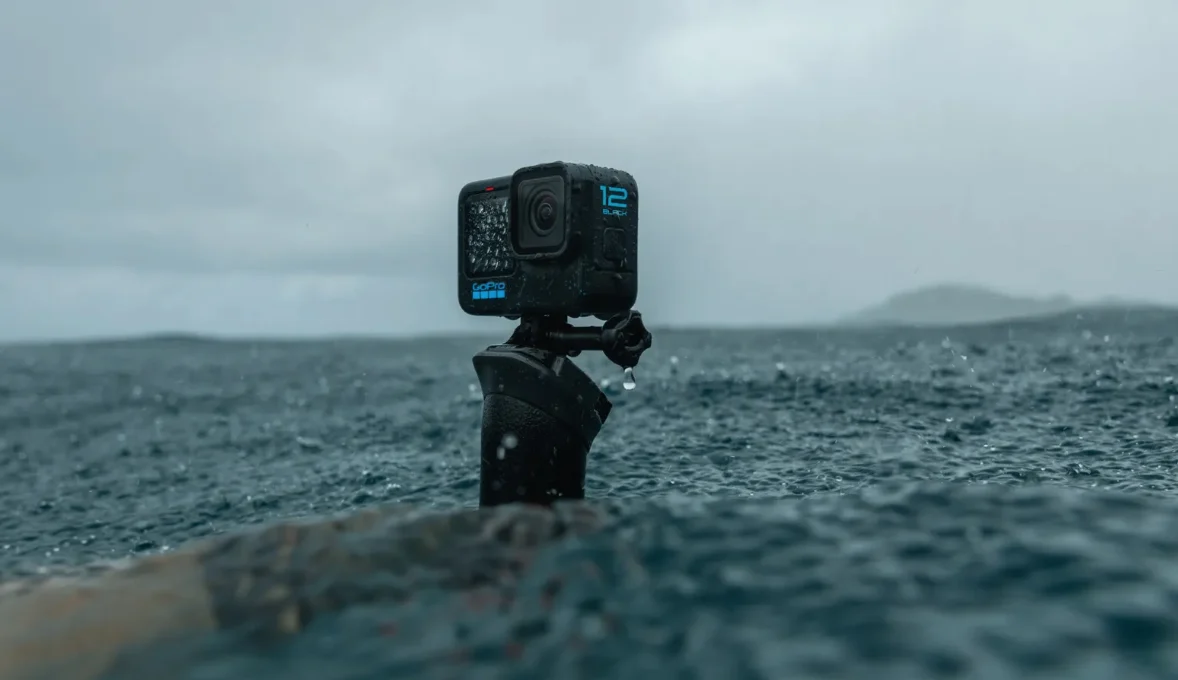
In an era defined by geopolitical shifts and a fervent drive for technological innovation, a distinct trend is emerging within the investment community: a pronounced pivot towards sectors deemed essential for national security, infrastructure, and advanced computing. This environment, characterized by robust government spending and a pressing need for resilient digital and energy solutions, is drawing significant capital into defense, data center development, and advanced energy storage. Amidst this broader reorientation of capital, even a consumer electronics giant synonymous with adventure and extreme sports, GoPro, finds itself exploring unconventional strategic avenues, including a foray into defense markets, culminating in the consideration of a potential sale.
A Shifting Investment Landscape
The current economic climate underscores a dramatic revaluation of industries. While consumer tech once dominated headlines with rapid growth and venture capital inflows, a new hierarchy of investment priorities is taking shape. Public markets and private investors are increasingly favoring companies that address foundational needs or benefit from substantial governmental backing. This includes enterprises building the physical and digital infrastructure for artificial intelligence, developing next-generation energy solutions, or contributing to defense capabilities.
For instance, Ford’s burgeoning energy-storage division, though still in its nascent stages and considerably smaller than competitors, recently propelled its stock to levels not seen in years, signaling investor enthusiasm for AI-adjacent power solutions. Similarly, Redwood Materials, a prominent player in battery recycling, successfully raised $425 million from industry titans like Google and Nvidia, largely by positioning itself to address the energy storage demands of data centers. The remarkable initial public offering of Cerebras, a company specializing in AI accelerators, further illustrates the intense investor appetite for technologies underpinning the AI revolution. In the defense sector, the trend is equally pronounced, with companies like Anduril continuing to attract massive funding rounds, including a recent $5 billion infusion that doubled its valuation to an impressive $61 billion. This confluence of factors creates a powerful incentive for any enterprise with even a tangential capability to secure government contracts or tap into these vital sectors.
GoPro’s Enduring Legacy and Evolving Challenges
GoPro’s journey began in 2002, when founder Nick Woodman conceived the idea for a wrist camera to capture surfing photos. What started as a niche product for action sports enthusiasts rapidly evolved into a global phenomenon. By the mid-2010s, GoPro had not only invented the action camera category but had also become its undisputed leader, transforming how individuals documented their lives, from extreme adventures to everyday moments. Its durable, high-definition cameras democratized professional-grade videography, inspiring a generation of content creators and influencing social media culture. The company’s initial public offering in 2014 was met with significant fanfare, reflecting its status as a tech darling.
However, market dominance in consumer electronics is notoriously fleeting. As the decade progressed, GoPro faced mounting challenges. The proliferation of increasingly sophisticated smartphone cameras, capable of capturing high-quality video in many scenarios, began to erode GoPro’s unique selling proposition. Simultaneously, a wave of competitors, often dubbed "GoPro killers," emerged, offering similar products at lower price points or with specialized features. While many of these rivals ultimately failed to dethrone the original, they contributed to market commoditization. GoPro’s own attempts to diversify, notably with its Karma drone, proved costly and ultimately unsuccessful, leading to a significant financial setback. The company struggled to innovate beyond its core product, grappling with declining sales, mounting losses, and a stock price that had largely flatlined around the $1 mark two years prior to these recent developments. The challenge for a hardware company in a software-first world is immense; differentiation becomes harder to maintain, and the lifecycle of innovation demands constant, costly reinvention.
The Defense Pivot: A Strategic Lifeline or Temporary Boost?
In response to its mounting financial pressures and the broader shift in investor interest, GoPro announced a strategic initiative last month: a plan to "explore defense and aerospace market opportunities." On the surface, this move possesses a certain logical appeal. GoPro cameras are renowned for their exceptional image quality, compact form factor, and unparalleled durability, capable of withstanding extreme conditions, from high-impact motorcycle crashes to the vacuum of space, as demonstrated by their use in various scientific and aerospace applications. These attributes could theoretically make them suitable for a range of military and defense applications, such as reconnaissance, surveillance, training simulations, or integration into unmanned systems operating in rugged environments.
The market’s initial reaction was swift and positive, with the company’s stock price nearly doubling for a brief period following the announcement. This surge underscored the prevailing investor sentiment towards the defense sector, suggesting that even a hint of involvement could unlock significant value. However, this optimism proved short-lived, with the stock quickly retreating to its previous levels. This retraction serves as a critical analytical commentary on the complexities of such a pivot. Entering the defense market is not merely a matter of product suitability; it involves navigating stringent regulatory hurdles, lengthy procurement cycles, specialized certifications, and the need to develop bespoke solutions that meet precise military specifications. Consumer-grade technology, no matter how robust, often requires significant modification and integration efforts to meet the exacting standards of defense contractors and government agencies. The brief stock rally, followed by a decline, suggests that while the concept generated initial excitement, investors quickly recognized the significant challenges and long timelines associated with transforming a consumer brand into a defense contractor.
Exploring Strategic Alternatives: The Path to a Potential Sale
The recent hiring of investment bank Houlihan Lokey to "evaluate a potential sale and other strategic alternatives" marks a critical juncture for GoPro. This development, announced on a recent Thursday, signifies a formal acknowledgment of the company’s precarious position and its active pursuit of transformative solutions. The company’s board of directors revealed that it had received "several unsolicited inbound strategic inquiries from parties across various sectors including defense, consumer and financial." While framed as an exploration of various options, such announcements often precede a definitive change in ownership or strategic direction, effectively signaling that the company is "on the block."
This is not GoPro’s first dance with the prospect of a sale; founder and CEO Nick Woodman previously confirmed that a sale was "briefly on the table" back in 2018. However, the current circumstances appear far more dire. Beyond the flatlined stock and declining sales, the company recently announced significant workforce reductions, laying off a quarter of its employees. This follows a trend of shrinking its team from a peak of approximately 1,500 employees to fewer than 600. These internal impacts ripple through employee morale and brand perception, creating an environment of uncertainty. The potential buyers for a company like GoPro could range widely: established defense contractors seeking dual-use technologies, larger consumer electronics conglomerates looking to acquire a recognized brand, or private equity firms aiming for a turnaround or strategic carve-out. Each scenario presents distinct implications for GoPro’s brand identity, product roadmap, and future market positioning.
The Broader Implications for Tech Innovation
GoPro’s journey from a niche product to a global icon, and now to a company actively seeking strategic alternatives, serves as a poignant case study in the relentless cycles of innovation and disruption within the technology sector. It highlights the immense pressure on hardware-centric companies to adapt in a rapidly evolving digital landscape where software, services, and connectivity often command higher valuations and greater customer loyalty.
Furthermore, GoPro’s pivot towards defense markets underscores a broader societal trend: the increasing convergence of civilian technology and military applications. As geopolitical tensions rise and national security concerns intensify, the lines between consumer-grade innovation and defense capabilities are blurring. Technologies initially developed for commercial use, like advanced imaging, drones, and AI, are increasingly finding dual-use applications in military contexts. This trend is driven, in part, by massively ballooning defense budgets, such as the substantial budget requests from the Pentagon, which present an attractive, albeit complex, revenue stream for tech companies facing saturation or stagnation in their traditional markets. The narrative of GoPro, once synonymous with capturing personal adventures, now intersects with the strategic imperatives of national defense, reflecting a volatile world where even iconic consumer brands must navigate unexpected paths to survival and relevance.






 Azin Asro