Amir Mahmud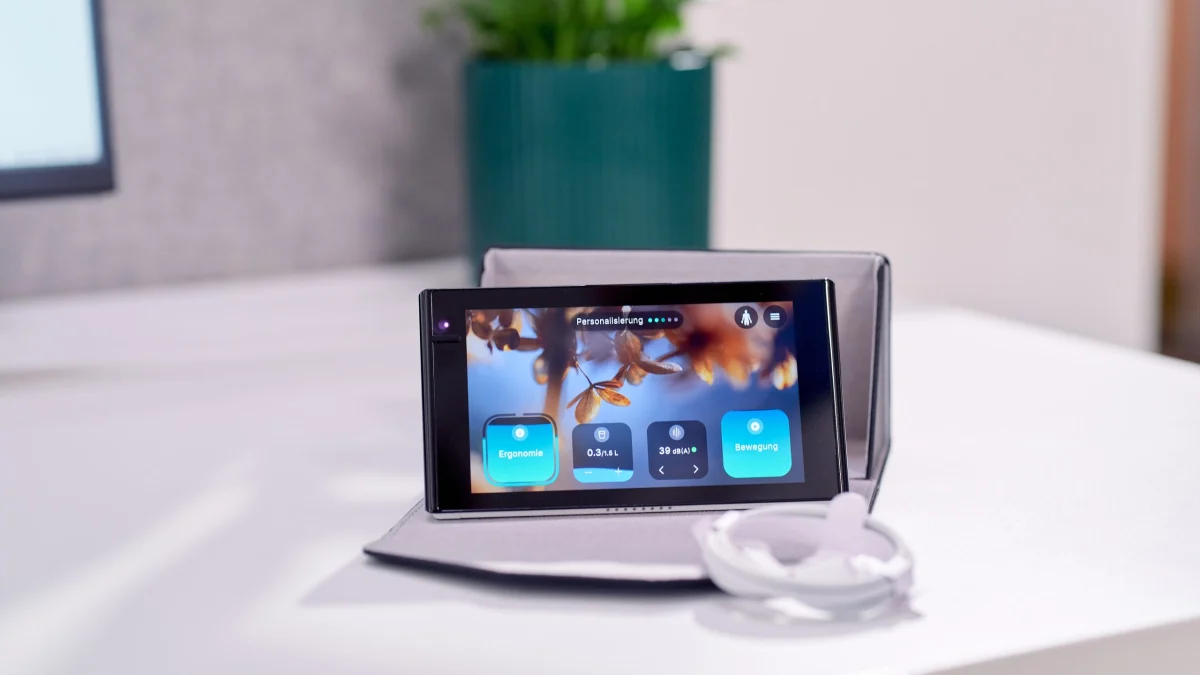
In an era increasingly defined by remote and hybrid work models, the challenges to maintaining physical well-being and a healthy workspace have become acutely apparent for millions globally. Prolonged periods spent at desks, often in suboptimal ergonomic setups, contribute significantly to a litany of musculoskeletal issues, including chronic back pain, neck strain, and repetitive stress injuries. While numerous digital applications and wearable technologies have emerged, promising to nudge users toward better habits, many fall short, often dismissed due to their intrusive nature or the sheer ease with which their alerts can be ignored. Amidst this backdrop, a German startup, Deep Care, has introduced Isa, an innovative desk-bound gadget that aims to tackle these pervasive problems with a distinctive, privacy-centric approach.
The Evolution of the Modern Workspace and its Health Implications
The shift towards widespread remote work, accelerated dramatically by global events, has fundamentally reshaped our professional landscapes. What began as a temporary necessity for many has evolved into a preferred mode of operation for a significant portion of the workforce, offering flexibility but also introducing new ergonomic and lifestyle challenges. Before this pivot, the traditional office environment often provided some degree of structured movement, whether through commutes, walking to meetings, or interacting with colleagues. At home, these natural breaks often disappear, leading to prolonged sedentary periods.
The market for ergonomic solutions has a rich history, evolving from basic adjustable office chairs in the mid-20th century to sophisticated standing desks, ergonomic keyboards, and monitor arms in recent decades. Early attempts at digital posture correction often involved software running on computers, using webcams or simple algorithms to detect slouching. More recently, wearable sensors have entered the fray, attaching to clothing or directly to the body to provide real-time feedback. However, these solutions have often struggled with consistent user adoption. Software can be easily closed or muted, and wearables require constant charging and can feel cumbersome. The underlying issue is often a lack of sustained engagement and an inability to provide a truly holistic view of the user’s immediate environment. The growing public awareness of data privacy and the pervasive nature of always-on cameras and internet-connected devices have also fostered a degree of skepticism towards solutions that might monitor personal spaces.
Isa: A Privacy-First Approach to Desk Wellness
Deep Care’s Isa distinguishes itself by embracing an entirely offline operational model, foregoing cameras and internet connectivity for its core functions. This design philosophy directly addresses the escalating concerns surrounding digital surveillance and personal data security in the home environment. Unlike many contemporary smart devices that constantly upload user data to cloud servers, Isa processes all its sensor information locally, providing real-time feedback without compromising privacy. This deliberate choice positions Isa as a compelling alternative for individuals and businesses wary of sharing sensitive personal health and activity data.
The device itself presents as a sleek, minimalist table clock, featuring a 5.5-inch IPS HD screen. Powering this intelligent companion is a standard USB-C connection, with a modest power consumption rating of approximately 2.45W, making it energy efficient and compatible with existing charging infrastructure. Its unassuming aesthetic allows it to blend seamlessly into various desk setups, from minimalist home offices to more traditional corporate environments, without drawing undue attention. This blend of subtle design and powerful, privacy-focused technology is a testament to Deep Care’s thoughtful approach to integrating wellness into daily routines.
Under the Hood: How Advanced Sensors Drive Insight
The technological core of Isa lies in its sophisticated array of integrated sensors, designed to provide a comprehensive understanding of a user’s posture, movement, and surrounding environment. The primary sensor responsible for tracking posture and movement is a Time-of-Flight (ToF) 3D depth sensor, a technology more commonly found in advanced facial recognition systems and high-end smartphone cameras. This sensor accurately maps the user’s three-dimensional position relative to the device, enabling precise detection of slouching, leaning, and prolonged periods of inactivity. Its operational range, spanning from 0.15 meters to 1.8 meters, means it can effectively monitor the user whether seated or standing at the desk, even registering movement when they step away.
Beyond posture, Isa integrates a suite of additional sensors that contribute to a holistic wellness profile. These include a ToF 1D sensor, a gyroscope for orientation detection, and a barometer for atmospheric pressure changes. Crucially, environmental sensors such as a light sensor, sound level sensor, CO2/Volatile Organic Compound (VoC) sensor, and temperature and humidity sensor are also embedded. This combination allows Isa to not only track personal habits but also assess the quality of the immediate workspace environment. For instance, high CO2 levels can indicate poor ventilation, leading to reduced concentration and fatigue, while inadequate lighting can contribute to eye strain. By monitoring these variables, Isa provides actionable insights that extend beyond mere physical posture, fostering a more productive and healthier overall workspace. The device’s capacity to detect drinking habits, currently in a beta phase, further underscores its ambition to promote comprehensive well-being.
User Experience and Behavioral Nudges
Setting up Isa is designed to be intuitive, requiring a few initial details about the user and their daily work rhythm. While the current time zone support is limited to EU and US regions, a broader global reach is a logical future enhancement for a device with such international appeal. Once configured, Isa’s 5.5-inch screen becomes a dynamic dashboard for health metrics.
Central to its user interface is a "squircle" (a rounded square) ring, reminiscent of popular activity trackers, which visually represents posture quality. This ring dynamically fills or empties, transitioning from green (good posture) to yellow or red (poor posture) based on the user’s sitting position. This immediate, color-coded feedback serves as a surprisingly effective psychological nudge, often prompting an instinctive correction. Similarly, a water-tank-style widget visually tracks hydration levels, encouraging regular fluid intake. For prolonged periods of slouching, the device provides a gentle haptic vibration alert, indicating not just general poor posture but also whether the user is leaning too far forward or backward, guiding them towards corrective adjustments.
Furthermore, Isa actively combats sedentary behavior. A dedicated movement widget tracks periods of inactivity, and if a user remains stationary for an extended duration, the device suggests taking a break and even offers on-device guided exercises. This proactive encouragement to move and stretch is vital for counteracting the negative health impacts of desk-bound work. Upon returning to the desk after a break, the movement tracker intelligently resets, ready to monitor the next work segment. These behavioral cues, delivered through a combination of visual, haptic, and instructional feedback, aim to foster sustainable healthy habits without requiring constant conscious effort from the user.
Navigating the Trade-offs: Privacy vs. Precision
The deliberate choice to exclude cameras, a cornerstone of Isa’s privacy-first design, naturally presents certain functional trade-offs. While the ToF 3D depth sensor is highly capable, it is not immune to misinterpretation. Objects placed between the user and the sensor, such as a water bottle or a stack of books, can occasionally be mistaken for the user, leading to inaccurate "stationary" readings. Similarly, pets or other household members passing within the sensor’s range might trigger false alerts, or momentarily confuse the device’s tracking.
Though Isa generally intelligently transitions to a simple digital clock display when it detects the user has truly stepped away, the absence of a manual "away" button can be a minor inconvenience for users seeking absolute control over tracking periods. These instances, while infrequent, highlight the fine balance between ensuring user privacy and achieving absolute tracking precision. However, for many, the peace of mind offered by a camera-free, offline device outweighs these occasional inaccuracies. The core objective—to consistently prompt better posture and encourage movement—is effectively achieved, leading to a noticeable improvement in user habits over time. The analytical commentary suggests that these minor issues are acceptable compromises for the significant privacy benefits.
Market Landscape and Business Strategy
Deep Care’s journey with Isa reflects a strategic evolution in its business model. Initially, the German startup focused on a B2B strategy, selling Isa directly to corporations as part of broader workplace wellness programs. This approach allowed them to refine the product and gather valuable feedback in controlled environments. The recent expansion into the direct-to-consumer (B2C) market signifies a confident stride into a more competitive retail space, indicating Deep Care’s belief in the mainstream appeal and scalability of their solution.
The pricing strategy for Isa positions it as a premium wellness device. Priced at €299 (approximately $354 USD), the hardware represents a significant upfront investment. This is coupled with a subscription model, offering two tiers: the Core plan (€4.99 per month) and the Pro plan (€7.99 per month). The Core plan unlocks essential features like posture tracking, healthy sitting habit monitoring, drinking habit detection, and access to the exercise library. The Pro plan expands upon this by including environmental tracking for light, noise, and CO2 levels, providing a more comprehensive overview of the working environment’s health. This hybrid model—premium hardware combined with recurring subscription revenue—is a common strategy in the smart device market, aiming to ensure ongoing development and service while creating a sustained revenue stream. Its success will depend on consumers’ willingness to invest not just in a device, but in a continuous wellness service.
The Future of Workplace Wellness: Beyond Posture
Deep Care’s long-term vision for Isa extends beyond mere physical posture and environmental monitoring. The company is actively exploring the integration of mental health-related tracking, leveraging the device’s existing sensor suite to infer deeper insights into user well-being. By analyzing subtle signals such as posture shifts, head movements, and chest movements, Isa aims to measure breathing patterns, which are often indicative of stress levels. Paired with existing environmental data—like noise levels, ambient light, and CO2 concentrations—the company plans to develop a "stress-related score."
This ambitious expansion into mental health analytics positions Isa at the forefront of holistic wellness technology. The connection between physical health, environmental quality, and mental state is well-established, and a device capable of providing objective, real-time feedback on these interconnected factors could be immensely valuable. This evolution underscores a broader cultural trend towards the "quantified self," where individuals seek data-driven insights to optimize various aspects of their health and lifestyle. The potential for Isa to offer personalized recommendations for stress reduction, based on its comprehensive data collection, could mark a significant advancement in personal wellness technology.
Conclusion: A Thoughtful Investment in Well-being
Isa represents a thoughtful and innovative response to the growing health challenges posed by modern work environments. By prioritizing user privacy through its offline, camera-free design, Deep Care has carved out a unique niche in the competitive wellness tech market. While the initial investment and ongoing subscription costs are not insignificant, the device offers a robust and effective solution for individuals committed to improving their posture, increasing their movement, and optimizing their immediate workspace.
For the vast number of remote workers, freelancers, and anyone spending extended hours at a desk, Isa provides a consistent and non-intrusive mechanism for fostering healthier habits. Its blend of advanced sensor technology, intuitive feedback, and a clear roadmap towards more comprehensive wellness tracking positions it as a compelling choice for those seeking to make a tangible, positive impact on their long-term health and productivity. As the nature of work continues to evolve, devices like Isa are likely to become increasingly indispensable tools in the pursuit of sustained well-being.







 Azin Asro