Amir Mahmud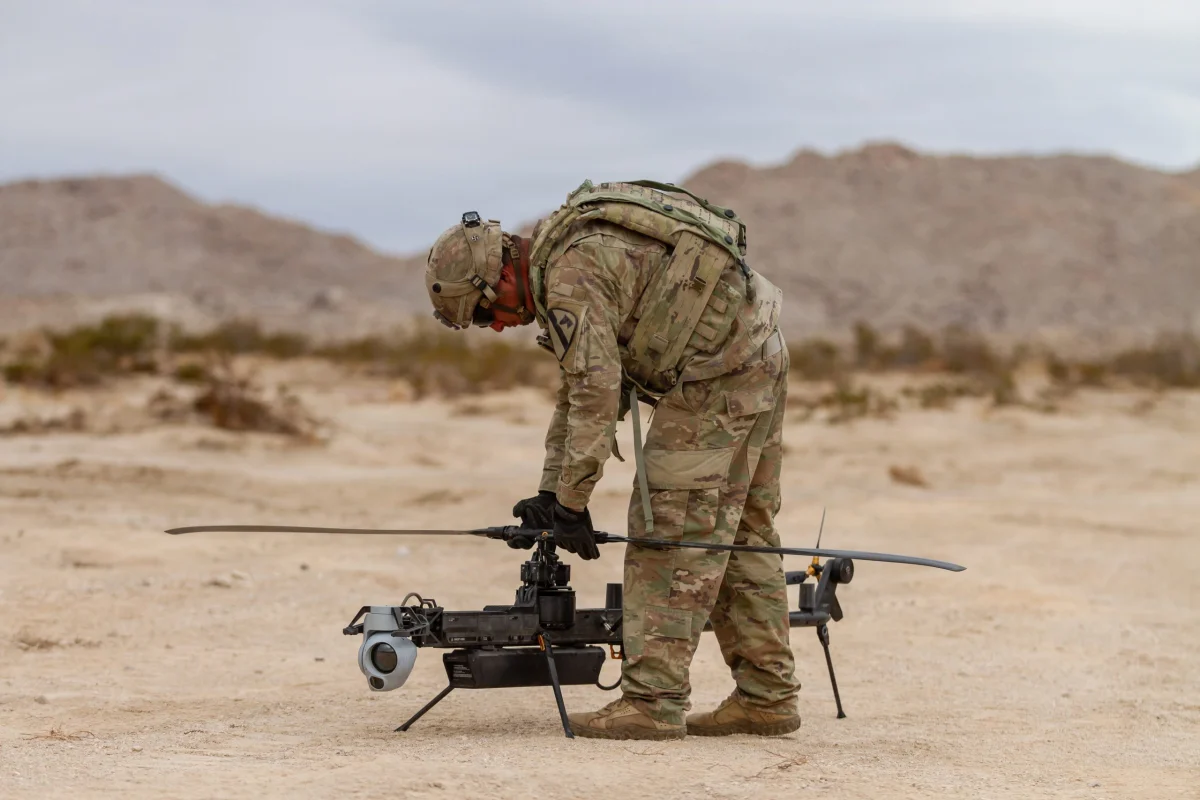
Anduril Industries, a prominent defense technology company, is reportedly in advanced discussions to secure a new round of funding that could catapult its valuation to an astonishing $100 billion. This potential capital infusion, first reported by Reuters citing anonymous sources, would mark an unprecedented surge in the company’s financial standing, more than tripling its valuation in just over a year and signifying a seismic shift in investor confidence toward the rapidly evolving defense sector. The rumored figure would represent an approximately $40 billion increase from its most recent valuation of $61 billion, established in a $5 billion funding round concluded just last May.
The Meteoric Rise of Anduril Industries
Founded in 2017 by Palmer Luckey, known for co-founding Oculus VR, Anduril Industries emerged with a clear vision: to revolutionize national security capabilities by integrating cutting-edge Silicon Valley innovation with the urgent demands of the defense establishment. Luckey’s ambition was to inject agility, advanced software, and autonomous systems into a sector traditionally dominated by large, legacy aerospace and defense contractors often perceived as slow-moving and reliant on decades-old technologies. Anduril’s core philosophy centers on developing sophisticated, AI-powered defense platforms, including autonomous drones, networked command-and-control systems, and advanced sensors, designed to be more agile, cost-effective, and adaptable than conventional military hardware.
The company’s growth trajectory has been nothing short of spectacular. In June 2025, Anduril completed a Series G funding round, valuing the company at $30.5 billion. Less than a year later, in May of the current year, it successfully raised another $5 billion, doubling its valuation to $61 billion. This rapid appreciation underscores a profound belief among investors in Anduril’s business model and its ability to capture a significant share of the burgeoning defense tech market. The latest discussions suggest a potential two-stage fundraising process, with the second stage attracting investors at the higher, $100 billion valuation. If successful, both tranches could be finalized within the current year, further cementing Anduril’s position as a dominant force in modern defense innovation.
A New Era for Defense Technology Investment
Anduril’s dramatic valuation hike is not an isolated event but rather a leading indicator of a broader renaissance sweeping through the defense technology industry. This resurgence is primarily fueled by a complex and increasingly volatile global geopolitical landscape. The ongoing conflicts in Eastern Europe and the Middle East have served as stark reminders of the critical importance of advanced defense capabilities, particularly in areas like unmanned aerial systems (UAS), artificial intelligence (AI), and autonomous warfare. These conflicts have demonstrated the decisive impact of readily deployable, intelligent, and often expendable (or "attritable") systems on the modern battlefield.
Venture capital, traditionally cautious about the long sales cycles and regulatory complexities of the defense sector, has embraced this shift with unprecedented enthusiasm. In the first six months of the current year, venture funding for defense technology startups more than doubled, reaching over $12 billion. This figure already eclipses the nearly $10 billion raised by startups in the entire previous year (2025), signaling a robust and sustained interest from investors. This influx of capital is driven by several factors: the urgent need for technological superiority, the potential for significant returns in a high-stakes market, and a growing understanding that innovative solutions are crucial for national security in an era of peer competition.
Anduril’s Strategic Contracts and Revenue Growth
Anduril’s financial success is directly linked to its ability to secure lucrative contracts with key defense entities worldwide. The company has forged significant partnerships with the U.S. Department of Defense, including the U.S. Air Force and the U.S. Army, deploying its cutting-edge technology across various domains. Beyond domestic shores, Anduril has also expanded its global footprint, securing agreements with the Dutch Ministry of Defence, the North Atlantic Treaty Organization (NATO), the U.K. Ministry of Defence, and the government of Poland, among others. These diverse contracts highlight the widespread recognition of Anduril’s capabilities in addressing contemporary security challenges.
The tangible results of these partnerships are evident in the company’s financial performance. In 2025, Anduril reported revenues of $2.2 billion, a figure that more than doubled its earnings from the previous year. This rapid revenue growth underscores the operational effectiveness of its products and the increasing demand for its integrated defense solutions. Anduril’s portfolio often includes its flagship Lattice AI operating system, which serves as a common backbone for its various hardware platforms like the Ghost sUAS (small Unmanned Aerial System), the Fury autonomous jet, and Sentry surveillance towers, enabling these systems to communicate, analyze data, and operate collaboratively with unparalleled efficiency.
The "Attritable" Paradigm Shift
A unifying theme across the flourishing defense tech landscape is the strategic pivot towards "attritable" systems. This concept represents a departure from the traditional defense procurement model, which historically focused on developing a limited number of highly sophisticated, incredibly expensive, and difficult-to-replace military assets. Instead, attritable systems are designed to be cheaper, more numerous, and capable of being produced at scale, making them more expendable in high-intensity conflict scenarios.
Mach Industries CEO Ethan Thornton has explicitly championed this approach, noting that his startup designs systems for the current era of warfare at significantly lower costs than established defense contractors. He frequently cites Ukraine’s extensive and effective use of autonomous drones as a prime example of how this paradigm can fundamentally alter battlefield dynamics. The shift towards attritable systems is not merely an economic consideration; it reflects a fundamental change in military doctrine, emphasizing distributed lethality, swarm tactics, and the ability to overwhelm adversaries through sheer volume and technological sophistication, rather than relying solely on individual, high-value platforms. This trend also carries significant implications for supply chain management and industrial capacity, as it necessitates rapid manufacturing capabilities and resilient production networks.
Broader Industry Momentum and Supply Chain Resilience
Anduril is not the sole beneficiary of this defense tech boom. Several other innovative startups are also experiencing substantial growth and attracting significant investment. Shield AI, a military aircraft maker specializing in AI pilot software for autonomous flight, raised $1.5 billion in March, pushing its valuation to $12.7 billion, a 140% increase following a major U.S. Air Force deal. Mach Industries, a burgeoning defense tech company, quadrupled its valuation to $1.8 billion recently. Similarly, Europe’s Helsing, another prominent AI-driven defense firm, recently secured $1.8 billion in funding at an $18 billion valuation. These companies, like Anduril, are at the forefront of developing technologies that integrate AI, autonomy, and advanced manufacturing to deliver next-generation defense capabilities.
A critical challenge for this new wave of defense innovation, however, lies in ensuring robust and independent supply chains. Both Mach Industries and Anduril have proactively moved to secure their own propulsion supplies, recognizing a significant bottleneck in the availability of essential components like solid rocket motors. In May, Mach Industries acquired solid rocket motor manufacturer Exquadrum for $50 million, a strategic move to internalize a crucial production capability. Concurrently, the Pentagon has actively supported Anduril’s initiatives to expand domestic solid rocket motor manufacturing capacity, allocating an additional $43.7 million in Defense Production Act Title III funding. These actions highlight a broader awareness within the industry and government of the need to strengthen industrial bases and reduce reliance on potentially vulnerable external supply lines, a concern that predates but is amplified by the current focus on high-volume, low-cost weapons systems.
Analytical Commentary and Future Outlook
The potential $100 billion valuation for Anduril reflects a profound transformation in how national security challenges are perceived and addressed, and how capital is allocated to solve them. It underscores a growing belief that agile, software-driven companies are better positioned to innovate and respond to the rapid pace of technological change in modern warfare than traditional, often more bureaucratic, defense primes. The involvement of prominent investors such as Thrive Capital, Andreessen Horowitz, Founders Fund, ICONIQ, Flux Capital, Greycroft, Altimeter, and 1789 Capital, alongside figures like current U.S. Vice President JD Vance (according to PitchBook), further validates this shift, bringing significant financial muscle and strategic expertise to the sector.
However, such rapid growth and high valuations also come with inherent complexities and expectations. Anduril will need to navigate the delicate balance of maintaining its innovative edge and rapid development cycles while scaling its operations to meet the demands of global defense contracts. Challenges include ensuring product reliability in critical applications, adhering to stringent military standards, navigating complex international regulations, and addressing potential ethical considerations surrounding autonomous warfare. The long-term sustainability of this defense tech boom will depend on continued geopolitical instability, sustained government investment, and the ability of these companies to deliver on their ambitious promises.
In response to the reports, Anduril issued a statement, maintaining a measured stance: "No decisions have been made about any future financing, and anyone claiming knowledge of its terms, structure, pricing, or timing is speculating or misinformed. As a private company, we regularly evaluate opportunities to fund the growth of the business." This cautious comment is standard for companies in confidential funding discussions, but it does little to dampen the widespread market speculation surrounding Anduril’s extraordinary trajectory. The company’s journey continues to symbolize a pivotal moment in the defense industry, where Silicon Valley’s innovative spirit is increasingly shaping the future of global security.