Amir Mahmud
A new artificial intelligence research laboratory, Prentis, co-founded by serial entrepreneur Ritankar Das and tech industry titans Reid Hoffman and Mark Pincus, is currently engaged in discussions to secure $100 million in funding, potentially valuing the company at $1 billion. This significant financial endeavor underscores the burgeoning interest and investment in AI agents designed to revolutionize how office workers interact with digital systems and manage routine tasks.
The Vision: Automating the Digital Workspace
Launched in April, Prentis focuses on developing advanced AI models capable of learning and mimicking human interaction with computers. The core objective is to create sophisticated AI agents that can autonomously control software applications, navigating complex workflows across various documents and digital platforms. This initiative represents a significant leap beyond traditional robotic process automation (RPA), aiming for a more intelligent, adaptive form of "cognitive automation" that understands context and intent.
The practical applications envisioned by Prentis are broad, targeting industries with repetitive, data-intensive administrative processes. For instance, these AI agents could streamline the handling of intricate insurance claims or automate the processing of customs duty refund exceptions, tasks that currently demand substantial human effort in gathering and verifying paperwork. By offloading such mundane yet critical operations, Prentis aims to free human employees for more strategic and creative endeavors, fundamentally reshaping daily office productivity.
A High-Stakes Funding Round
The ongoing talks to raise $100 million at a $1 billion valuation place Prentis squarely in the spotlight as a potential "unicorn" — a private startup valued at over one billion dollars. This valuation reflects robust investor confidence not only in the company’s innovative technology but also in the vast, untapped market for intelligent office automation. Such a substantial investment round would provide Prentis with considerable resources to accelerate research and development, scale its operations, and expand its market reach.
Indications of early market traction are already strong. Prentis has reportedly secured contracts worth up to $50 million with a diverse clientele, including a healthcare management service organization, a prominent manufacturer, and several goods and clothing production companies. Internal investor materials, as cited by sources familiar with the discussions, project an estimated $75 million annualized run rate by the third quarter of this year. It’s important to note, however, that these figures represent estimated annualized values based on contracted fees, calculated as 20% of realized savings, and are explicitly stated as "performance-dependent and subject to final execution." This detail highlights the outcome-based nature of Prentis’s business model, where success is intrinsically linked to the demonstrable efficiency gains provided to its customers.
The Minds Behind Prentis
The leadership team behind Prentis brings a formidable combination of entrepreneurial acumen, technological foresight, and investment savvy.
At the helm as CEO is Ritankar Das, a figure whose academic and professional trajectory is nothing short of remarkable. At just 18, Das became UC Berkeley’s youngest University Medalist in over a century, graduating with dual degrees in bioengineering and chemical biology, followed by a master’s in biomedical engineering from Oxford. His journey into the AI realm took a turn when he dropped out of a PhD program at Cambridge, where he was a Gates Cambridge Scholar, to found Titan in 2014. Titan is a unique holding company model, intentionally structured to build and operate AI enterprises, reminiscent of venerable conglomerates like Berkshire Hathaway. Crucially, Titan funds its ventures through its own exits rather than relying on external limited partners. This model has already yielded significant successes, including Tala Health, an AI-powered virtual care provider that raised a $100 million seed round, and Forta Health, an autism care startup that secured $55 million in Series A funding. Dascena, another Titan-founded company focused on disease prediction, was acquired by CirrusDx in 2022, further solidifying Das’s reputation as a visionary builder of AI-centric businesses.
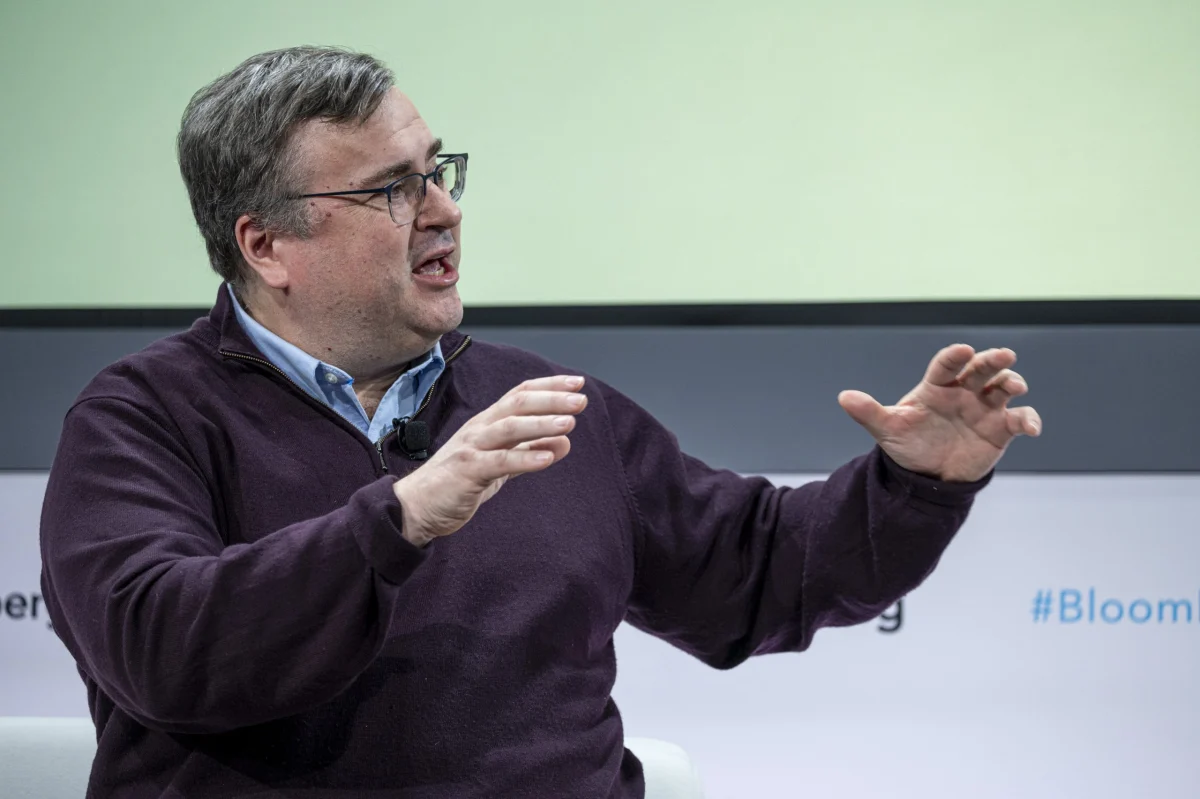
Joining Das are two of Silicon Valley’s most influential figures. Reid Hoffman, the co-founder of LinkedIn and a prominent partner at Greylock, is a legendary investor with a track record of backing groundbreaking technologies. His early investment in OpenAI and his co-founding of Inflection AI (whose team was largely absorbed by Microsoft in 2024) underscore his deep commitment to the frontier of artificial intelligence. Hoffman recently announced his departure from Microsoft’s board to immerse himself in "founder mode" with Manas AI, an AI drug-discovery startup he also supports, indicating his direct engagement with transformative AI ventures. His involvement with Prentis signals a strong endorsement of its potential.
Mark Pincus, best known as the founder of social gaming giant Zynga, also lends his strategic expertise to Prentis. Pincus now co-manages the investment firm Reinvent Capital alongside Hoffman, serving as a senior adviser. His recent memoir, "Life at the Speed of Play," offers insights into his entrepreneurial journey. The combined experience of Das, Hoffman, and Pincus provides Prentis with a formidable blend of technical depth, strategic vision, and market-making capabilities.
Furthermore, Prentis has rapidly assembled a high-caliber team, boasting over 25 employees. Their website indicates that these researchers and engineers previously honed their skills at leading AI and technology firms, including OpenAI, Google DeepMind, Meta, Tencent, and Alibaba, bringing a wealth of expertise to the burgeoning lab.
Competitive Edge in a Crowded Field
Prentis enters a highly competitive landscape, where numerous well-funded entities are vying to dominate the AI agent space for computer use. Major players like Anthropic, OpenAI, and Mira Murati’s Thinking Machines Lab are actively developing similar solutions, underscoring the perceived market opportunity. The intensity of this competition is further highlighted by Anthropic’s recent acquisition of Vercept, a Seattle-based computer-use AI startup, earlier this year. This strategic move saw Anthropic integrate Vercept’s founders and talent, effectively consolidating expertise in this specialized domain.
In this fiercely contested arena, Prentis asserts a significant technological advantage with its proprietary Hive-32B model. The company claims its model outperforms rivals, specifically citing OpenAI’s GPT-5.4 and Anthropic’s Claude Opus 4.6, on two crucial computer-use benchmarks. The WindowsAgentArena evaluates a model’s ability to complete end-to-end tasks within real Windows applications, while ScreenSpot-v2 assesses its precision in identifying and interacting with on-screen controls. Prentis’s pitch deck posits that its edge stems from running a much smaller and therefore more economical model. This efficiency purportedly translates to a roughly ten-fold lower cost per task compared to frontier APIs, making it a more viable and scalable solution for widespread deployment across everyday business workflows. It is important to note, however, that these benchmark results have not been independently verified by TechCrunch.
Prentis’s strategic gamble rests on the conviction that automating routine office tasks will soon emerge as AI’s most impactful and widespread application, potentially surpassing even the automation of coding. While coding automation remains a significant area of AI development, Prentis believes the sheer volume and ubiquity of administrative and operational tasks across all industries present an even larger opportunity for transformative efficiency gains.
Transforming the Future of Work
The advent of sophisticated AI agents like those Prentis is developing heralds a profound transformation in the nature of work. The potential societal and economic impacts are immense, ranging from significant boosts in productivity and operational efficiency for businesses to a redefinition of job roles and skill requirements for the human workforce.
For businesses, the ability to automate mundane, repetitive tasks at scale promises substantial cost savings and accelerated processing times. In healthcare, for example, Prentis’s agents could drastically reduce the administrative burden associated with patient records and claims. In manufacturing and logistics, the automation of supply chain management, inventory tracking, and customs documentation could lead to smoother operations and reduced errors. This shift towards "cognitive automation" allows organizations to reallocate human capital to higher-value activities that require creativity, critical thinking, and interpersonal skills, fostering innovation and enhancing customer service.
However, this transformation also necessitates careful consideration of its implications for employment. While AI agents are expected to augment human capabilities and create new roles, concerns about job displacement in certain sectors are legitimate. This underscores the need for proactive strategies in workforce reskilling and upskilling to ensure a smooth transition into an AI-augmented future. The cultural impact on workplaces, including trust in AI systems and the adoption of new human-AI collaborative paradigms, will also be significant.
Looking Ahead: Opportunities and Challenges
The journey for Prentis and its competitors is just beginning, fraught with both immense opportunities and considerable challenges. The market for AI-driven office automation is undeniably vast, promising unprecedented levels of productivity and efficiency across industries. However, building trust in autonomous AI agents, ensuring their accuracy and reliability in diverse and often unpredictable real-world scenarios, and handling complex edge cases will be critical for widespread adoption. Ethical considerations, including data privacy, security, and accountability for AI-driven decisions, will also require robust frameworks and transparent operations.
While Prentis chose not to respond to TechCrunch’s request for comment on these developments, the substantial backing from prominent tech figures and the ambitious technological claims position the company as a formidable contender in the race to redefine the future of work through intelligent automation. The coming months will reveal how effectively Prentis can translate its innovative vision and early traction into sustained market leadership.