Amir Mahmud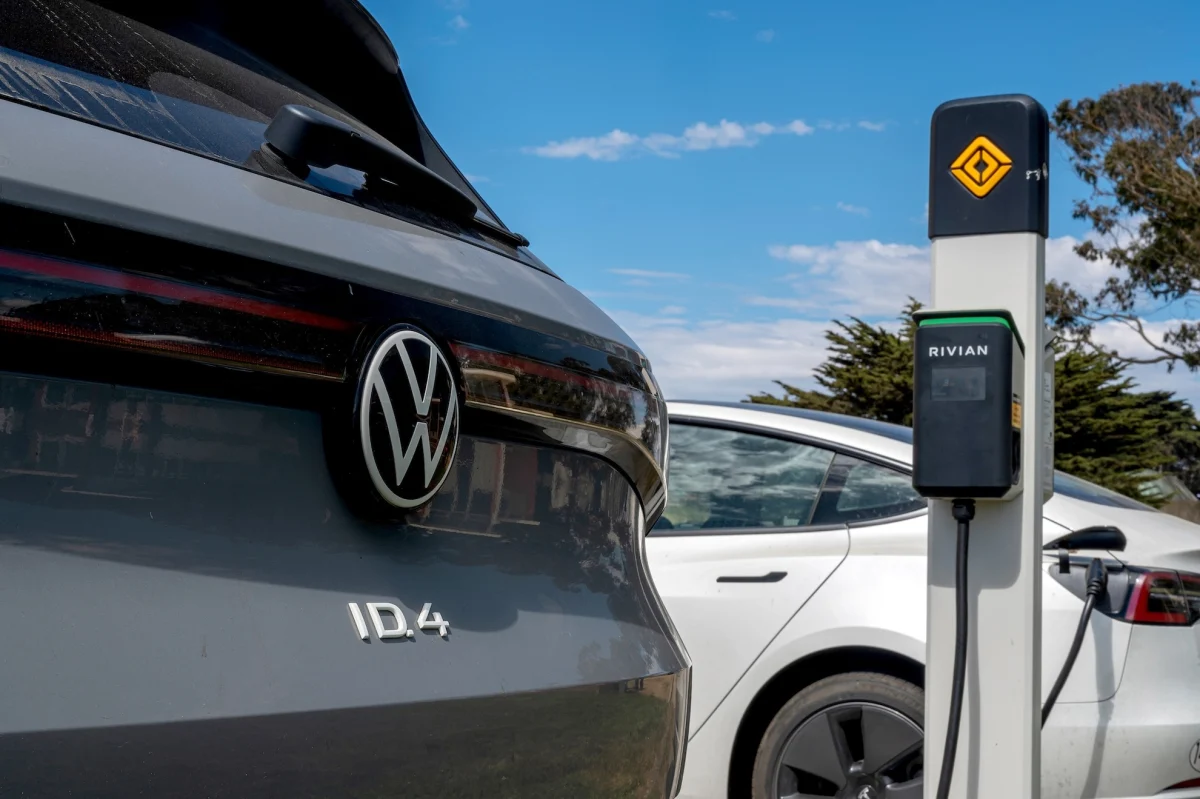
Federal prosecutors have brought severe charges against two engineers employed by German automotive giant Volkswagen, alleging a sophisticated insider trading scheme linked to the company’s significant joint venture with electric vehicle manufacturer Rivian. Michael Stamp and Marcus Plank stand accused of securities fraud, with the U.S. Department of Justice claiming they illicitly profited by leveraging confidential, non-public information regarding the strategic partnership. The indictment, unsealed by the U.S. District Attorney for the Southern District of New York, details an alleged operation that netted the individuals more than $300,000 through calculated stock and options trades.
The Genesis of the Allegations: Project Climb
The core of the federal indictment centers on "Project Climb," the internal codename for the collaboration between Volkswagen and Rivian. According to the prosecution, Stamp and Plank, both Volkswagen employees, gained access to sensitive information concerning the impending joint venture long before it was publicly disclosed. Armed with this privileged insight, they allegedly acquired Rivian stock and options, anticipating a surge in share value upon the official announcement. This strategic positioning, prosecutors contend, allowed them to capitalize unfairly on information not available to the general investing public.
The partnership itself, unveiled on June 25, 2024, was heralded as a pivotal moment for both companies. It outlined a multi-billion-dollar alliance focused on accelerating the development of electric vehicle architecture and advanced software solutions. Volkswagen initially pledged an investment of $5 billion into Rivian, structured to be released incrementally as specific project milestones were achieved. This commitment has since expanded to $5.8 billion, a testament to the strategic importance of the collaboration, culminating in Volkswagen becoming Rivian’s largest shareholder. The market responded enthusiastically to the news, with Rivian’s stock price experiencing a substantial 23% increase immediately following the announcement. It was at this juncture, the indictment suggests, that Stamp and Plank allegedly liquidated their positions, realizing significant profits. Stamp reportedly secured approximately $250,000, Plank an estimated $50,000, and a close family member associated with Plank also allegedly profited by around $12,000.
The Strategic Imperative: Volkswagen’s EV Ambitions and Rivian’s Innovation
To fully grasp the magnitude of the alleged scheme, it’s crucial to understand the backdrop of the electric vehicle (EV) market and the strategic positions of Volkswagen and Rivian. Volkswagen, a titan of the automotive industry with a century-long legacy, has been aggressively pivoting towards electrification in the wake of the "Dieselgate" emissions scandal. This scandal, which exposed widespread cheating on emissions tests, severely damaged the company’s reputation and prompted a massive, multi-billion-dollar shift in strategy towards sustainable mobility. Projects like "Accelerate" outlined Volkswagen’s ambitious roadmap to become a global leader in electric mobility and digitalization, investing heavily in EV platforms, battery technology, and, crucially, software development.
However, despite its immense resources, Volkswagen has faced challenges, particularly in the realm of advanced software development, an area where newer, agile tech-focused companies often hold an edge. This is where Rivian enters the picture. Launched in 2009, Rivian quickly carved out a niche as an innovator in the premium electric truck and SUV segment. Its R1T pickup and R1S SUV garnered critical acclaim for their design, performance, and off-road capabilities. Yet, like many EV startups, Rivian has been capital-intensive, requiring substantial investments to scale production and develop new technologies. The company went public in a high-profile IPO in late 2021, raising billions, but subsequently faced production hurdles and market volatility.
The joint venture, therefore, represented a symbiotic relationship: Volkswagen gained access to Rivian’s innovative EV platform and software expertise, potentially accelerating its own development timelines and reducing costs. Rivian, in turn, secured a much-needed infusion of capital and the backing of a global automotive powerhouse, providing stability and credibility in a competitive market. The confidential nature of these high-stakes negotiations made any pre-disclosure information exceptionally valuable, providing an illicit opportunity for those with access.
Understanding Insider Trading: A Threat to Market Integrity
Insider trading, at its core, involves the buying or selling of a security in breach of a fiduciary duty or other relationship of trust and confidence, while in possession of material, non-public information about the security. It is a fundamental violation of fair market principles, designed to ensure that all participants have equal access to information that can influence investment decisions. When individuals exploit privileged information for personal gain, it undermines the integrity of financial markets, erodes public confidence, and disadvantages ordinary investors who do not have such access.
U.S. Attorney Jay Clayton, in a statement accompanying the indictment, underscored these concerns: "Michael Stamp and Marcus Plank’s alleged exploitation of their employer’s confidential information allowed them to make more than $300,000 in illegal profits. When people misuse confidential information for their own financial gain, they undermine the principles that allow our markets to function fairly and efficiently." Clayton emphasized the commitment of his office to vigorously pursue such crimes, noting their ripple effect through the financial system, harming average investors and diminishing trust in the market’s fairness.
The prosecution’s case against Stamp and Plank appears to be strengthened by allegations of their apparent awareness of the illegality of their actions. Investigators contend that just eight days before the joint venture’s public announcement, Stamp reportedly searched for "statute of limitations insider trading" online. Similarly, a close family member of Plank allegedly conducted a search in German for "how is insider trading prosecuted?" These search queries, if proven in court, could serve as compelling evidence of the defendants’ knowledge that their activities were potentially unlawful and their attempts to gauge the legal ramifications.
The Broader Impact: Trust, Ethics, and the EV Race
The charges against the Volkswagen engineers reverberate beyond the individuals themselves, touching upon broader themes of corporate ethics, investor confidence, and the fierce competition within the electric vehicle industry. In an era where corporate transparency is increasingly scrutinized, and public trust in institutions, including financial markets, can be fragile, incidents of alleged insider trading inflict significant damage. They foster a perception that the system is rigged, favoring those with connections or privileged access over the diligent analysis of public information.
For Volkswagen, while the company itself has not been accused of wrongdoing, the incident raises questions about internal controls and employee compliance. Post-Dieselgate, Volkswagen has been working hard to rebuild its image, emphasizing a renewed commitment to ethical conduct and corporate responsibility. An alleged insider trading scheme involving its employees, even if isolated, can cast a shadow on these efforts and prompt a review of internal information security protocols, particularly concerning highly sensitive strategic partnerships. Similarly, Rivian, though a victim in this scenario, finds its name linked to a federal criminal investigation, which, while not implicating the company directly, adds an element of distraction.
The high-stakes nature of the EV market amplifies the significance of such alleged breaches. The race to dominate electric mobility involves massive investments, rapid technological advancements, and intense competition for market share. Strategic partnerships like the one between Volkswagen and Rivian are critical competitive advantages, and the integrity of the information surrounding these deals is paramount.
Historically, the U.S. Department of Justice and the Securities and Exchange Commission (SEC) have aggressively prosecuted insider trading, viewing it as a serious threat to capital market integrity. High-profile cases, from Ivan Boesky in the 1980s to Martha Stewart in the early 2000s and Raj Rajaratnam in the 2010s, underscore the government’s consistent commitment to deterring and punishing such offenses, regardless of the individuals’ status or the amounts involved. This consistent enforcement sends a clear message that exploiting confidential information for personal financial gain carries severe consequences.
Legal Proceedings and Company Responses
Michael Stamp and Marcus Plank, both residents of San Jose, California, were arrested on Friday and are scheduled to appear in the U.S. District Court for the Northern District of California. The federal securities fraud charges they face carry a maximum potential sentence of up to 25 years in prison, reflecting the gravity with which the U.S. legal system views these offenses. The case has been assigned to U.S. District Judge Katherine Polk Failla.
In response to the unfolding legal developments, Rivian declined to offer any comment on the matter. Volkswagen, through a spokesperson, acknowledged awareness of the Department of Justice’s action concerning the two individuals. The company emphasized that the charges are focused on specific individuals and do not involve any allegations against Volkswagen itself. Citing the ongoing nature of the legal proceedings, the spokesperson stated that the company was unable to provide further comment at this time.
As the legal process unfolds, this case will serve as a stark reminder of the vigilant oversight of financial markets and the severe repercussions awaiting those who attempt to subvert the principles of fair play for personal enrichment. It underscores the critical importance of robust ethical frameworks and stringent information security within global corporations, especially in rapidly evolving and highly competitive sectors like electric vehicles.