Amir Mahmud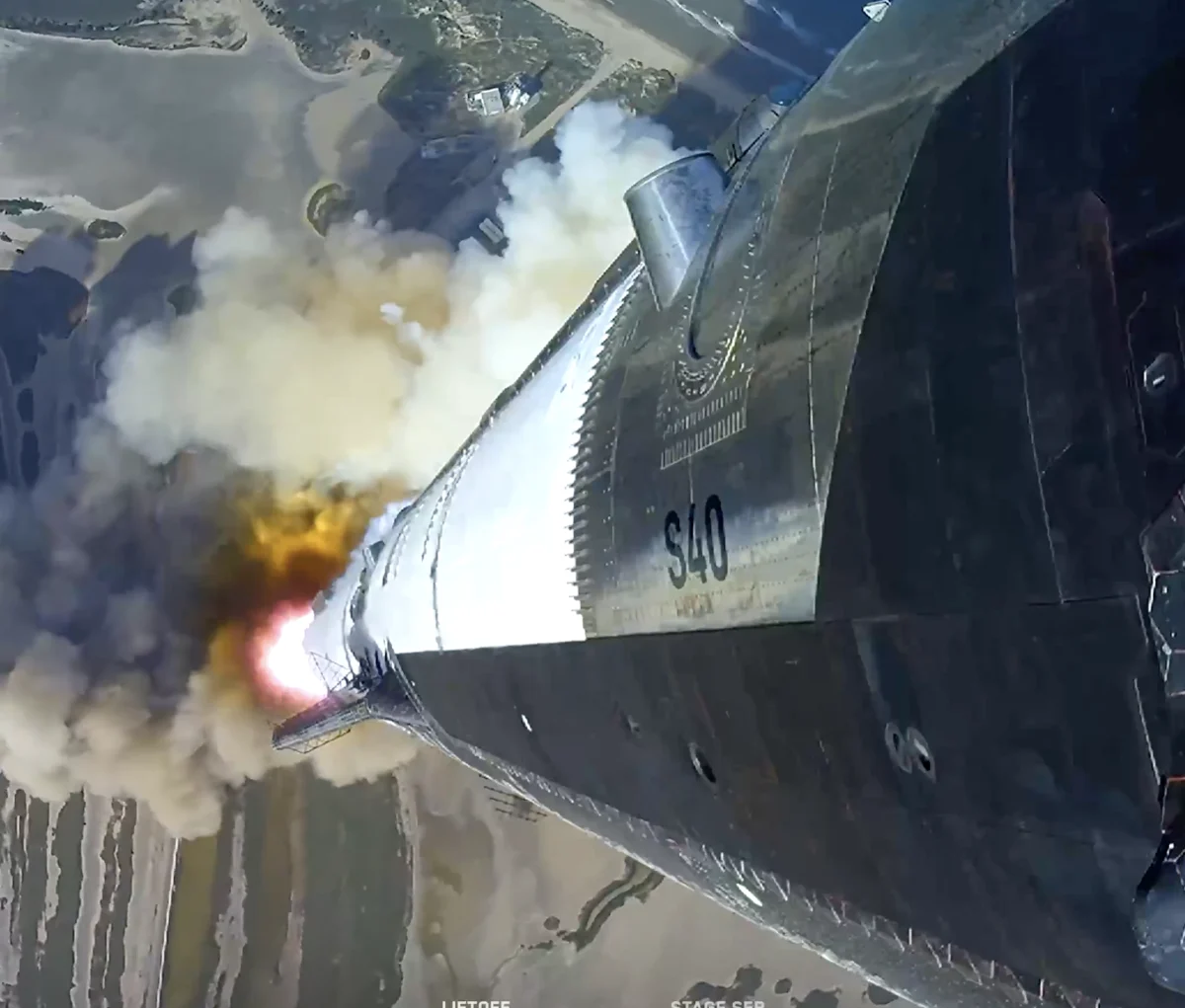
Friday’s test flight of SpaceX’s colossal Starship system marked a pivotal moment in the ambitious development of its next-generation launch vehicle, showcasing both significant progress and persistent engineering hurdles. While the massive rocket successfully deployed the inaugural third-generation Starlink satellites, a crucial component of the company’s global broadband internet constellation, the Super Heavy booster experienced an unexpected failure during its planned simulated landing attempt in the Gulf of Mexico. This event underscores the inherent complexities of pushing the boundaries of spaceflight technology, a hallmark of SpaceX’s iterative development philosophy.
The dual outcome of the mission — a successful satellite deployment contrasted with a booster setback — encapsulates the challenging yet rapid pace of innovation at SpaceX. It was the thirteenth integrated test flight for the Starship system, a fully reusable two-stage-to-orbit launch vehicle designed for deep space missions to the Moon and Mars, as well as rapid Starlink deployment and even point-to-point travel on Earth. The flight followed closely on the heels of a prior launch attempt that was aborted due to multiple engine failures, necessitating the replacement of six Raptor engines before this latest endeavor.
The Starship Program: A Vision for the Future
SpaceX’s Starship program represents perhaps the most audacious undertaking in modern rocketry. Conceived by Elon Musk, the system aims to dramatically reduce the cost of space access by making all its components fully and rapidly reusable, mirroring the success seen with the Falcon 9 rocket. Starship itself is the upper stage, designed to carry cargo and crew, while the Super Heavy booster provides the initial thrust to escape Earth’s gravity. Together, standing nearly 400 feet tall, they form the most powerful rocket ever built.
The development trajectory for Starship has been characterized by a public, "fly, fail, fix" approach, a methodology that has yielded rapid prototyping and testing but also visible setbacks. Early prototypes, known as Starhopper and later SN (Starship Number) series, conducted short hop tests and higher-altitude flights, often ending in dramatic explosions. These tests, however, provided invaluable data, leading to design refinements. The transition to integrated flights, where both the Super Heavy booster and Starship upper stage fly together, began with much anticipation. Each subsequent test flight has pushed the envelope further, incrementally validating different aspects of the complex system, from engine ignition and stage separation to atmospheric re-entry and landing maneuvers. The ultimate vision for Starship extends beyond satellite deployment; it is positioned as the primary transport system for NASA’s Artemis program to return humans to the Moon and, ultimately, for establishing a permanent human presence on Mars.
The Persistent Challenge of Reusability
Despite the significant stride in deploying advanced Starlink satellites, the Super Heavy booster’s failure during its simulated landing attempt highlighted a persistent engineering challenge. During Friday’s mission, the booster ascended successfully, achieving greater altitude and velocity than in previous tests. However, as it initiated its descent and prepared for the critical landing burn over the Gulf of Mexico, it reportedly failed to ignite all the necessary engines. This deficiency in thrust control led to an uncontrolled, faster-than-expected impact with the water, resulting in its explosion.
This incident marks the second consecutive integrated Starship flight where the Super Heavy booster has not completed its mission as intended. In May, during the first V3 Starship flight, the booster encountered an issue during the critical stage separation maneuver, failing to execute its planned return sequence. The repeated difficulties with the Super Heavy’s controlled descent and landing underscore the immense technical hurdles involved in precisely maneuvering and restarting multiple powerful engines in rapid succession under extreme conditions. The successful recovery and reuse of the Super Heavy booster are absolutely foundational to Starship’s economic viability. Without it, the fundamental promise of radically cheaper space access, which underpins much of SpaceX’s long-term strategy, remains unfulfilled. The company’s S-1 filing, a document submitted to the U.S. Securities and Exchange Commission, explicitly stated that without a fully reusable Starship, progress on its Starlink constellation "would be at a slower pace and higher cost."
In stark contrast to the booster’s fate, the Starship V3 upper stage, or "Ship" as SpaceX refers to it, performed commendably. Unlike the previous V3 launch in May, where an engine was lost, this flight saw the Ship operate flawlessly through its ascent and the deployment of the Starlink satellites. Furthermore, it successfully endured the harsh forces of atmospheric reentry, performing a simulated landing in the Indian Ocean approximately an hour after liftoff. Crucially, the Ship did not explode upon tipping over into the water, a common outcome in earlier test flights. Instead, it remained largely intact and floated, providing SpaceX with an unprecedented opportunity to use a drone for close-up examination of its heat shield tiles, offering invaluable data for future design iterations and reusability efforts.
Starlink’s Evolving Network
The successful deployment of the new third-generation (V3) Starlink satellites represents a significant operational victory for SpaceX. While Starship is not yet capable of achieving Earth orbit and the satellites subsequently burned up in the atmosphere roughly 20 minutes after deployment, SpaceX confirmed it was able to establish communication with all of them during their brief time in space. This crucial data acquisition validates the performance of the V3 hardware and marks a vital step forward for the Starlink program.
Starlink is not merely a side project; it is currently the only profitable segment of SpaceX’s diverse business portfolio. The V3 satellites are designed to be considerably more capable than their predecessors, offering enhanced throughput and efficiency. SpaceX has indicated that launching a full complement of 60 V3 satellites on a single Starship mission could represent a "potential twenty-fold increase" in downlink capacity deployed compared to a single Falcon 9 launch. This substantial increase in capacity per launch is critical for expanding Starlink’s global footprint and improving service for its rapidly growing subscriber base.
The Starlink constellation provides high-speed, low-latency broadband internet access, particularly benefiting rural and underserved areas globally, where traditional terrestrial infrastructure is often lacking or prohibitively expensive. It has also proven vital in providing connectivity during disaster relief efforts and in conflict zones. The ability to deploy these more capable V3 satellites at scale via Starship is essential for Starlink to maintain its competitive edge against rivals such as OneWeb and Amazon’s Project Kuiper, both of which are also building out their own satellite internet constellations. The long-term economic viability and global impact of Starlink are intrinsically linked to Starship’s ability to provide high-volume, low-cost access to space.
Market Implications and Investor Outlook
The latest Starship test occurred in a unique financial context for SpaceX, being its first integrated launch since the company’s highly anticipated initial public offering (IPO) in June, which was heralded as the largest in history. While the "fly, fail, fix" development model is deeply ingrained in SpaceX’s engineering culture, its implications are viewed through a different lens by public market investors.
Following a previous launch abort, SpaceX’s stock experienced a decline, contributing to a broader downward trend since its IPO. Shares had dropped from a peak of over $200 per share to $115 at the close of trading on Friday. In after-hours trading, the news of the booster failure initially caused a further 2% dip in SpaceX shares, before paring some of those losses as the full context of the mission’s dual outcome became clearer. This volatility reflects the inherent tension between the long-term, transformative vision of Starship and the immediate operational challenges that can impact quarterly results and investor confidence. Analysts often comment on how the market evaluates such high-tech, high-risk ventures, balancing the potential for monumental returns against the significant capital expenditure and development timelines. While the Starlink success offers a positive signal for the company’s revenue-generating arm, the booster setback highlights the continued investment required in Starship’s development before its full economic benefits can be realized.
The Path Forward
Friday’s Starship test flight offers a microcosm of SpaceX’s ambitious journey: a testament to remarkable engineering progress intertwined with the stark realities of developing a groundbreaking space system. The successful deployment and communication with the advanced V3 Starlink satellites undeniably mark a significant operational achievement, paving the way for a more robust and capable global internet network. Concurrently, the Super Heavy booster’s failure serves as a crucial reminder that the path to fully reusable, routine spaceflight is fraught with complex engineering challenges that demand persistent iteration and refinement.
SpaceX’s commitment to its rapid, iterative development philosophy remains unwavering. Each test, whether fully successful or marked by a setback, yields invaluable data that informs subsequent design changes and operational procedures. The detailed examination of the intact Starship upper stage, for instance, provides critical insights into reentry dynamics and heat shield performance, accelerating the learning curve. The journey to a fully operational and reusable Starship system is a marathon, not a sprint, demanding both technical prowess and a high tolerance for risk. As SpaceX continues to push the boundaries of what is possible, the world watches, recognizing that the ultimate success of Starship holds profound implications not just for the company, but for the future of space exploration, global connectivity, and humanity’s reach beyond Earth.